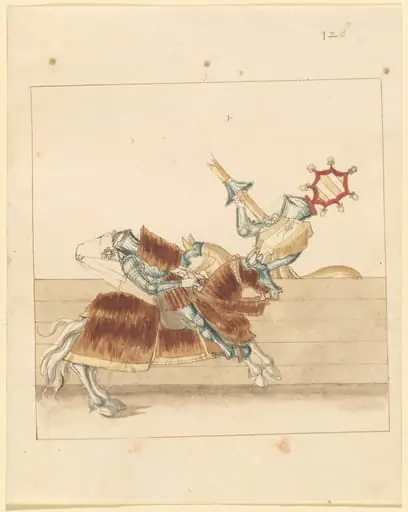
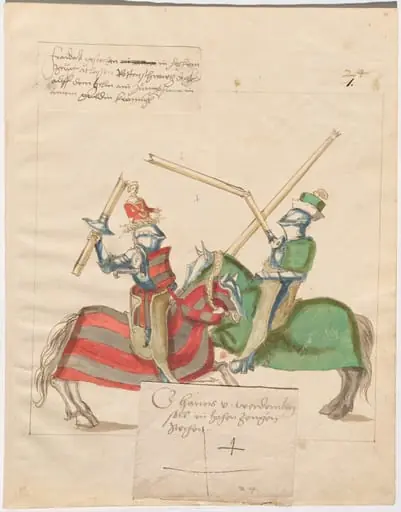
Artwork
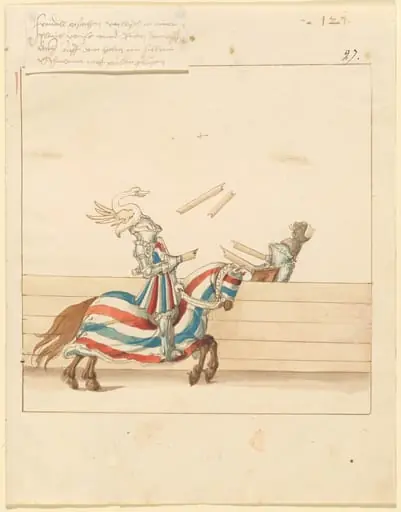
Italian Joust of Peace
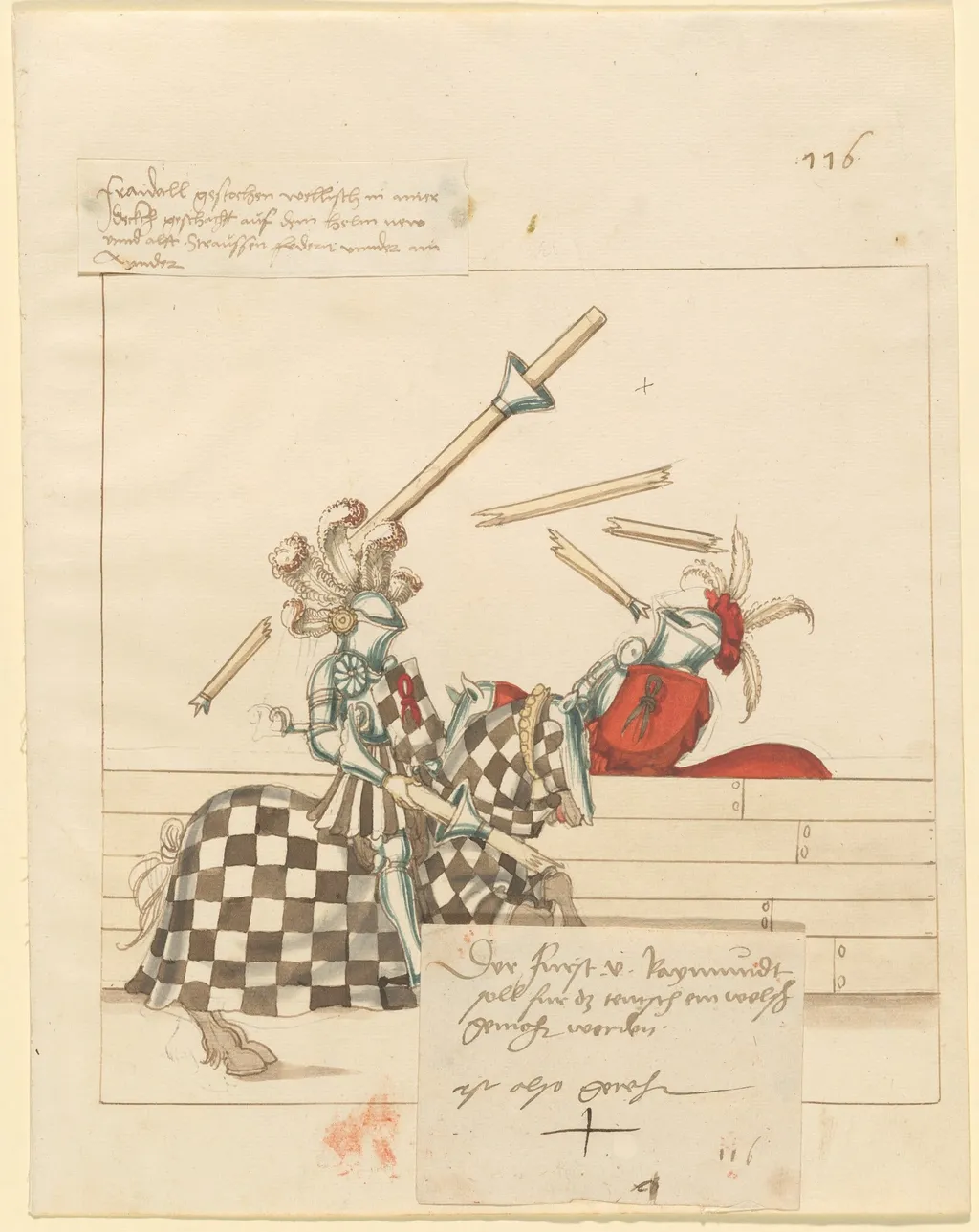
Italian Joust of Peace is an ink drawing by the Renaissance artist German 16th Century. It dates from 1514 and is held in the collection of the National Gallery of Art.
- Inscription
- Inscribed:upper left by unknown hand in brown ink, on separate paper pasted down: Fraidall gestochen wellisch in ainer deckch geschachtt, auf dem helm new unnd altt straussenfedern unnderainannder; upper right by unknown hand in brown ink: 116; lower center by unknown hand in brown ink on separate paper laid down: Der furst von Raymundt / soll fur daz teutsch ein welsch gemocht werden. / Ist also gerecht / 116; lower left on mount in black ink: 116; lower right on mount in black ink: A 205
About this work
Overview
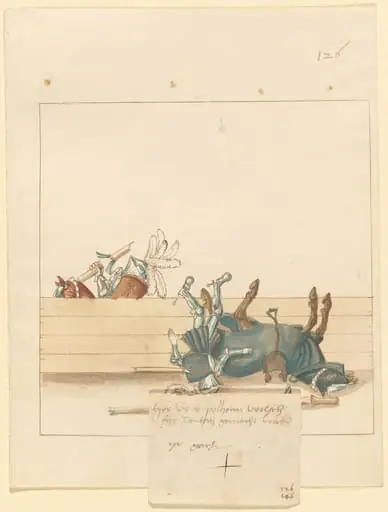
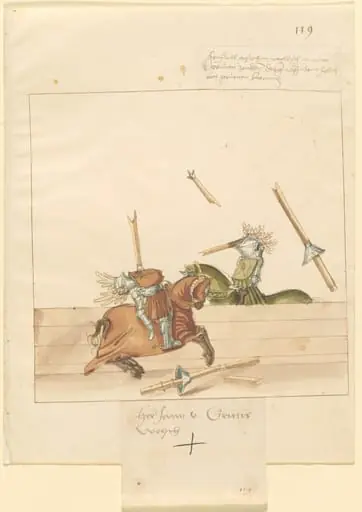
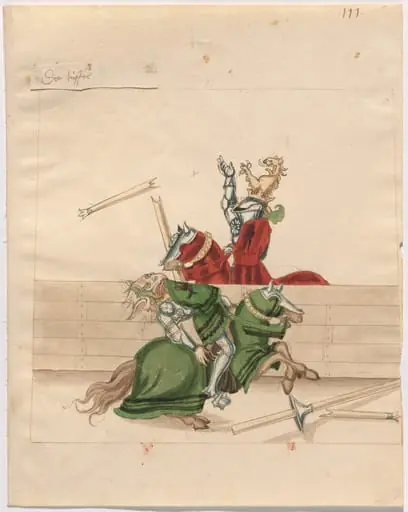
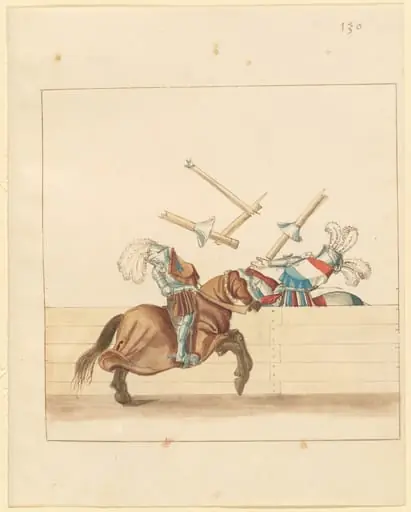
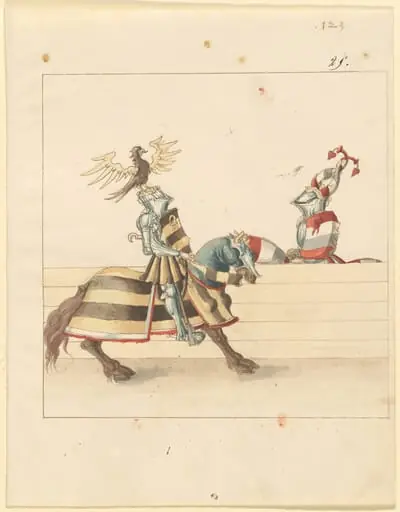
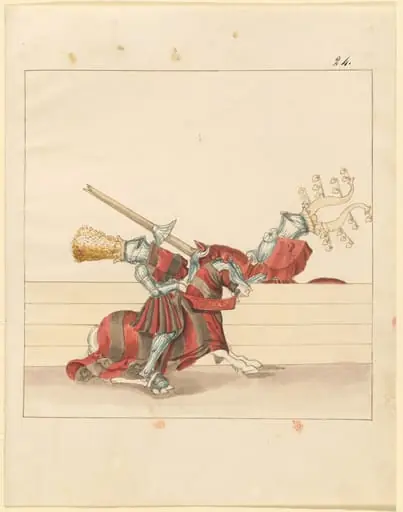
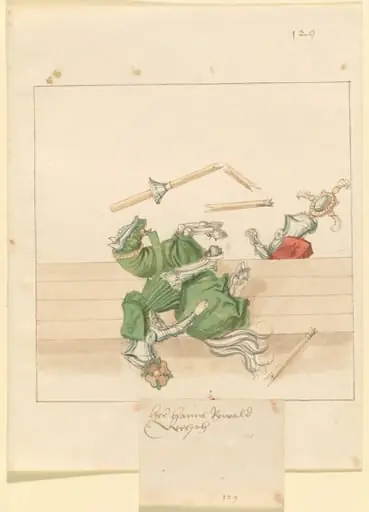
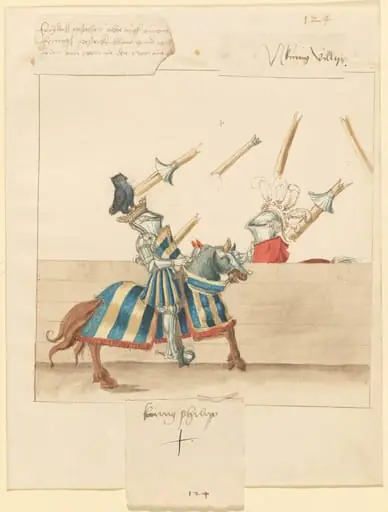
Italian Joust of Peace is a 16th‑century drawing executed in pen and brown ink with watercolor applied over a leadpoint sketch on laid paper. The work portrays a jousting scene between two heavily armored riders on richly ornamented horses, one lance breaking upon impact with the opponent’s breastplate. It is part of the collection of the National Gallery of Art in Washington, D.C.
Subject & Meaning
The composition captures a moment of martial competition, emphasizing the spectacle of chivalric sport. The detailed armor and vivid horse trappings highlight the pageantry of the event, while the shattered lance suggests both the violence and the ritualized nature of the joust. The title links the image to Italian themes, reflecting a cross‑cultural interest in peace through martial display.
Technique & Style
This combination of precise northern drawing with the softer tonal effects typical of Italian Renaissance illustration demonstrates a hybrid visual approach.
The artist employed fine, controlled pen lines to define figures and equipment, then layered translucent watercolor washes that lend depth and a sense of atmosphere. The underlying leadpoint drawing remains visible, revealing the preparatory stage of the work. This combination of precise northern drawing with the softer tonal effects typical of Italian Renaissance illustration demonstrates a hybrid visual approach.
History & Provenance
Created by an anonymous German artist active in the 1500s, the drawing entered the National Gallery of Art’s holdings through acquisition in the 20th century. Its provenance prior to museum ownership is not extensively documented, but the work exemplifies the period’s exchange of artistic ideas between the German lands and Italy.
Context
During the 16th century, German artists frequently adopted Italian subject matter while retaining their own meticulous draftsmanship. This piece illustrates that trend, merging an Italian‑styled jousting narrative with the detailed rendering and material sensitivity characteristic of Northern European art.
Artist & collection

Artist
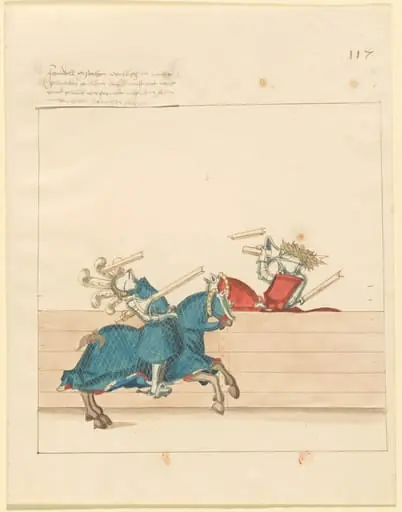
A German artist of the late 1500s drew knights clashing in parades and mock battles, filling sheets with detailed ink colored lightly in watercolor: soldiers mid-joust, shields flying, foot soldiers sparring with spears.

![Abraham Entertaining the Angels [verso], by German 16th Century](https://artifactworldgallery.com/img/german-16th-century--abraham-entertaining-the-angels-verso--69d1b25f4eba0a53-w320.webp)