Artwork
Detroit Trio
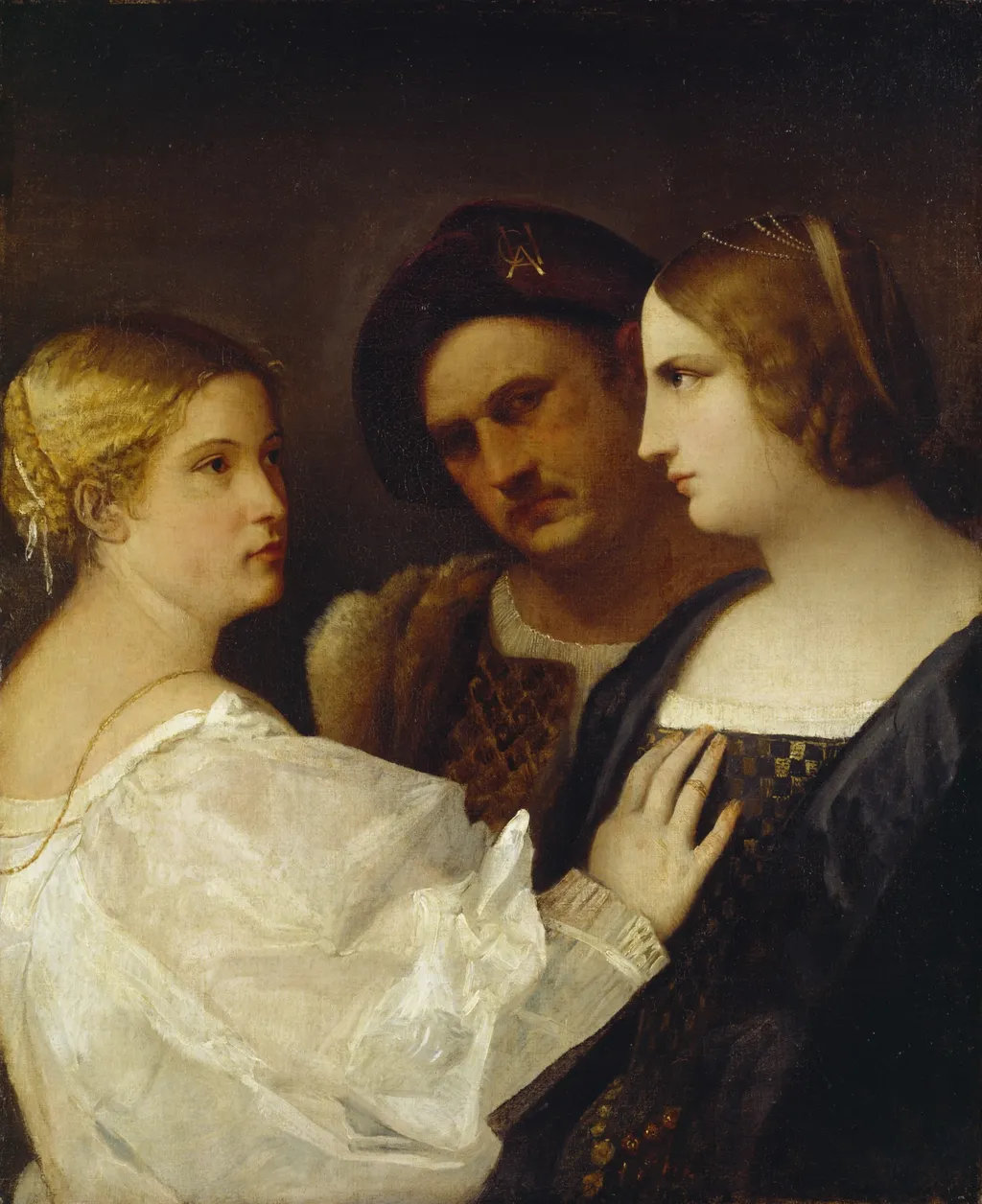
Detroit Trio is an oil painting by the High Renaissance artist Giorgione. It dates from 1510 and is held in the collection of the Detroit Institute of Arts.
About this work
Subject & Meaning
The Detroit Trio depicts three half-length figures, two women and a man, arranged in varied poses against a dark ground.
The Detroit Trio depicts three half-length figures, two women and a man, arranged in varied poses against a dark ground. The central male figure wears a beret embroidered with the letters ACH, which scholars have interpreted as possible mottos such as “Amor, Concordia e Honor” or “Amor, Charitas e Humanitas,” or as an allusion to Jason flanked by Medea and Creusa. The composition’s mood is intimate yet enigmatic, heightened by the leftmost woman’s hand resting on the rightmost woman’s chest, a gesture that may convey restraint or consolation. Despite these readings, the work’s exact meaning remains unresolved, with interpretations oscillating between allegories of love and harmony and narratives from classical myth. The iconography’s ambiguity has fueled ongoing debate, with some favoring moral or philosophical readings and others questioning the painting’s attribution and even its authenticity.
Technique & Style
The Detroit Trio is an oil painting executed on canvas, measuring 84 cm in height and 69 cm in width. The work is attributed to Giorgione, Titian, and Sebastiano del Piombo, with an inscription on the reverse suggesting a collaborative effort where Giorgione may have begun the piece and his assistants completed it after his death in 1510. Stylistically, the half-length figures display distinct handling that aligns with the proposed authors: the central male figure exhibits soft contours and subtle chromatic transitions characteristic of Giorgione, while the woman on the left shows more intense chiaroscuro and volumetric definition associated with Titian. The figure on the right is rendered with a more traditional approach linked to Sebastiano del Piombo. The composition features three figures against a dark background, arranged in varied poses including profile and three-quarter views, with a notable interaction where the left woman places her hand on the right woman's chest.
History & Provenance
The Detroit Trio, an oil on canvas portrait, is dated variously to around 1500 or to 1510 (sources 1,2,3,4). It is attributed to Giorgione, Titian and Sebastiano del Piombo, with a reverse inscription reading 'Fra Sebastiano del Piombo, Giorzon, Tizian' that some scholars interpret as evidence the work was begun by Giorgione and finished by his pupils after his death in 1510, while others consider it a later fake or attribute it to artists such as Giovanni Cariani or Palma il Vecchio (sources 3,4). Provenance records show the painting belonged to the Oldenburg grand ducal collection, owned successively by Peter II, Grand Duke of Oldenburg, Frederick Augustus II, Grand Duke of Oldenburg, and Erwin von Schönborn‑Wiesentheid, before passing through the Augusteum and the gallery of Julius Böhler AG and entering the Detroit Institute of Arts, where it remains today (sources 2,3,4).
The Detroit Trio is held in the collection of the Detroit Institute of Arts (DIA), where it is listed under inventory number 1975.1.1.
The work entered the museum's holdings through the acquisition of the Grand ducal Oldenburg collection, which was bequeathed to the DIA by the family of the late collector and philanthropist, Charles L. R. Smith, in 1922.
Exhibition history includes its display in the DIA's European Paintings galleries since the 1930s, and it was featured in the 1998 exhibition "Renaissance Masterpieces from Northern Europe" at the museum.
The painting has also traveled to major venues such as the Kunsthistorisches Museum in Vienna (2001) and the Musée du Louvre in Paris (2005) as part of loan exhibitions focusing on High Renaissance portraiture.
Context
The Detroit Trio is described as a High Renaissance portrait painted in oil on canvas around 1500, depicting three half-length figures, a man and two women, arranged in profile and three-quarter views against a dark background. Scholars have interpreted the ACH letters on the man's beret as possibly standing for 'Amor, Concordia e Honor' or 'Amor, Charitas e Humanitas', while others read the scene as Jason with Medea and Creusa. An inscription on the reverse attributes the work to Fra Sebastiano del Piombo, Giorgione, and Titian, suggesting Giorgione may have begun the painting and his assistants completed it after his 1510 death, though some argue it is a 16th-century imitation or the work of Giovanni Cariani or Palma il Vecchio. The Detroit Institute of Arts holds the original, and a faithful 17th-century copy survives in Venice's Gallerie dell'Accademia.
Own this work as a print
Artist & collection




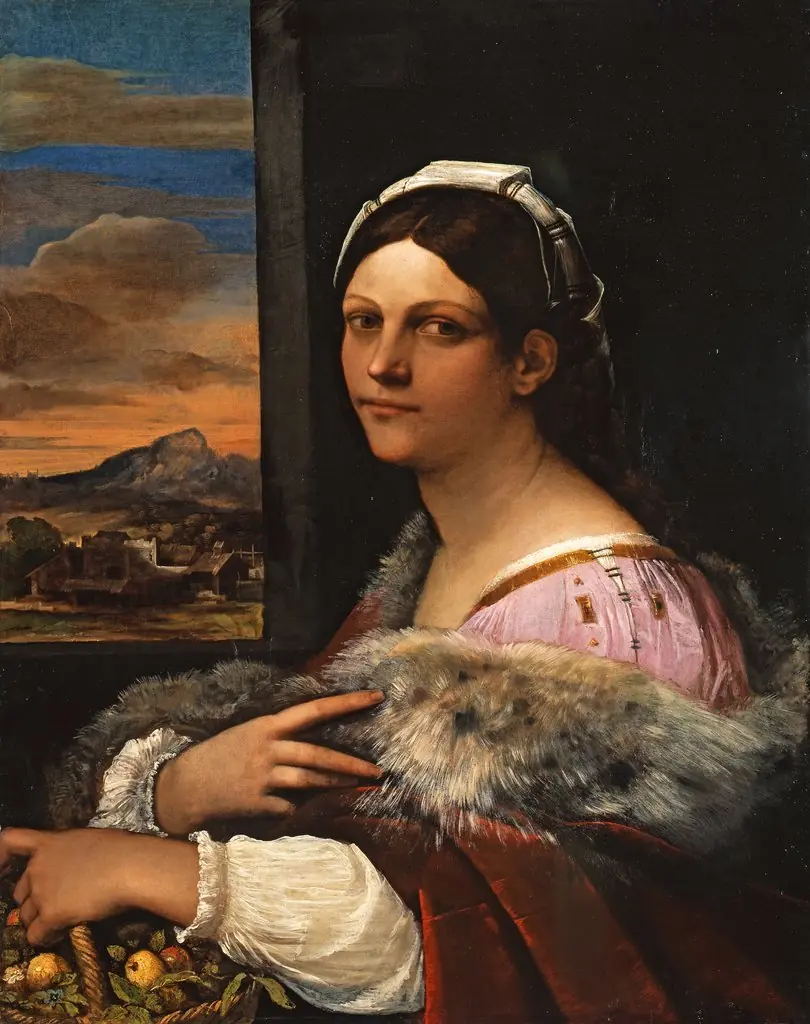 A Young Roman Woman
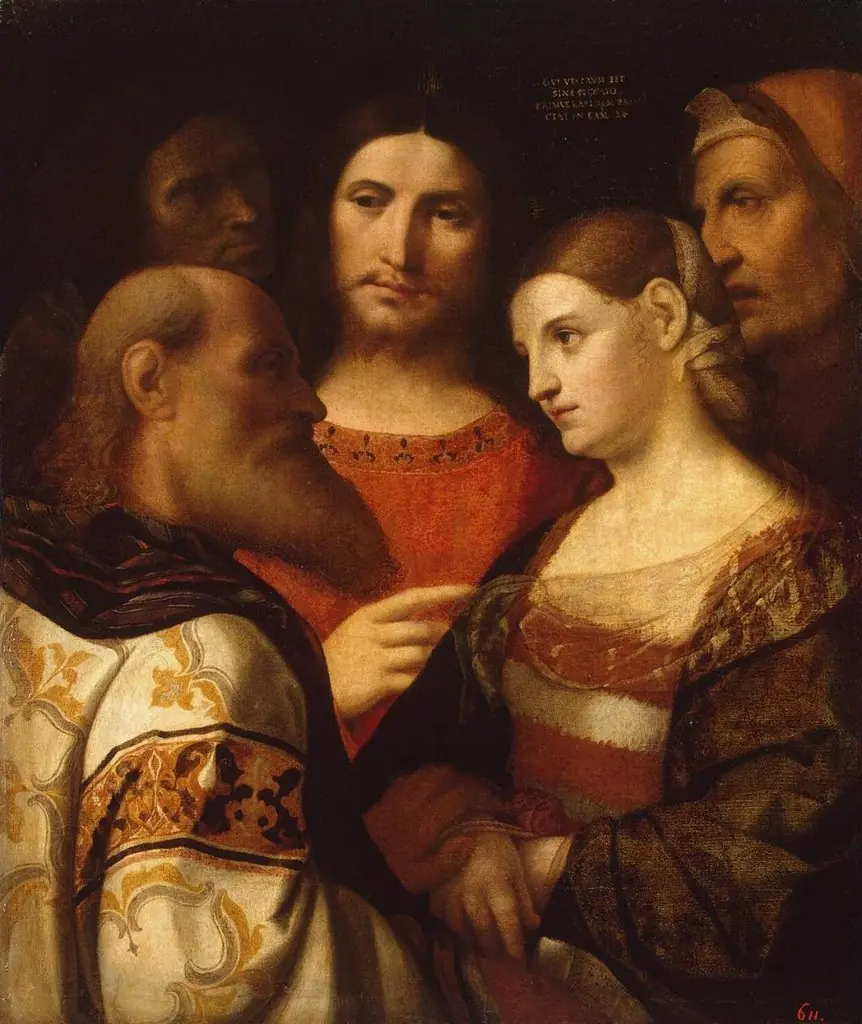 Christ and the Woman Taken in Adultery
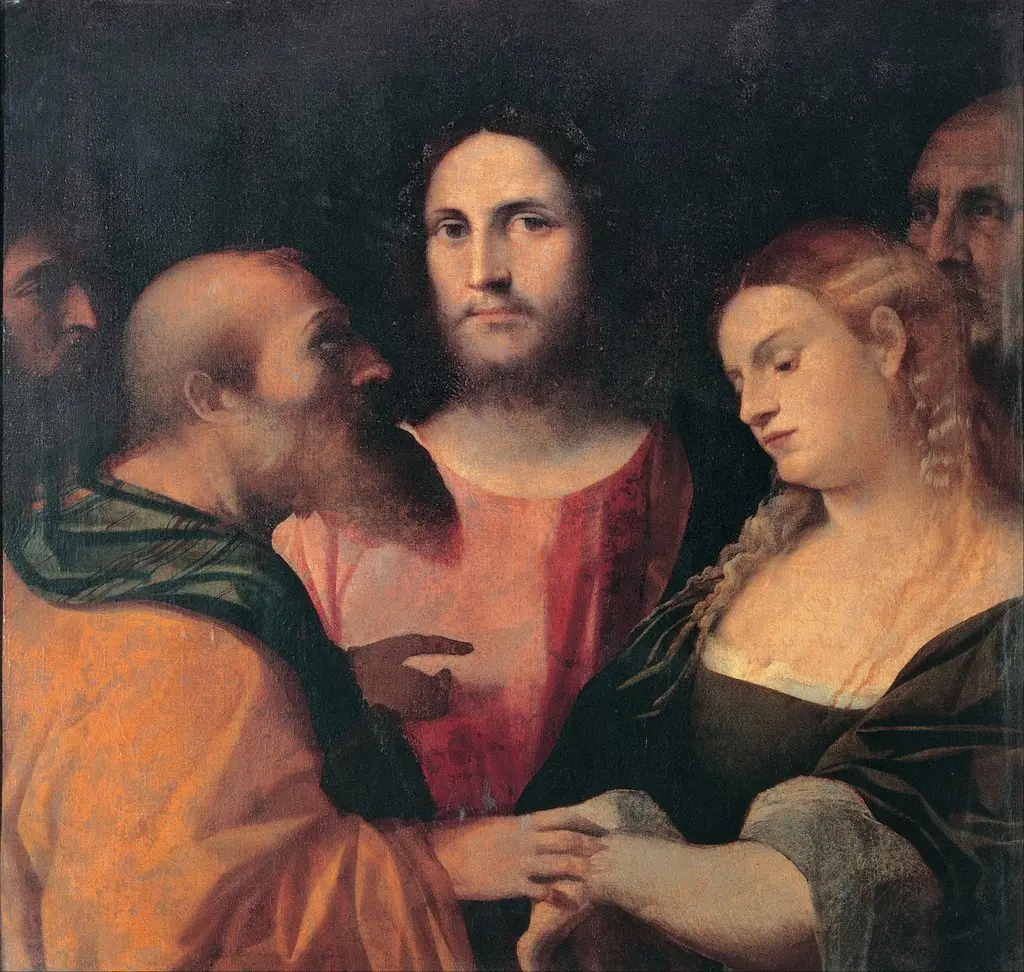 Christ and the adulteress
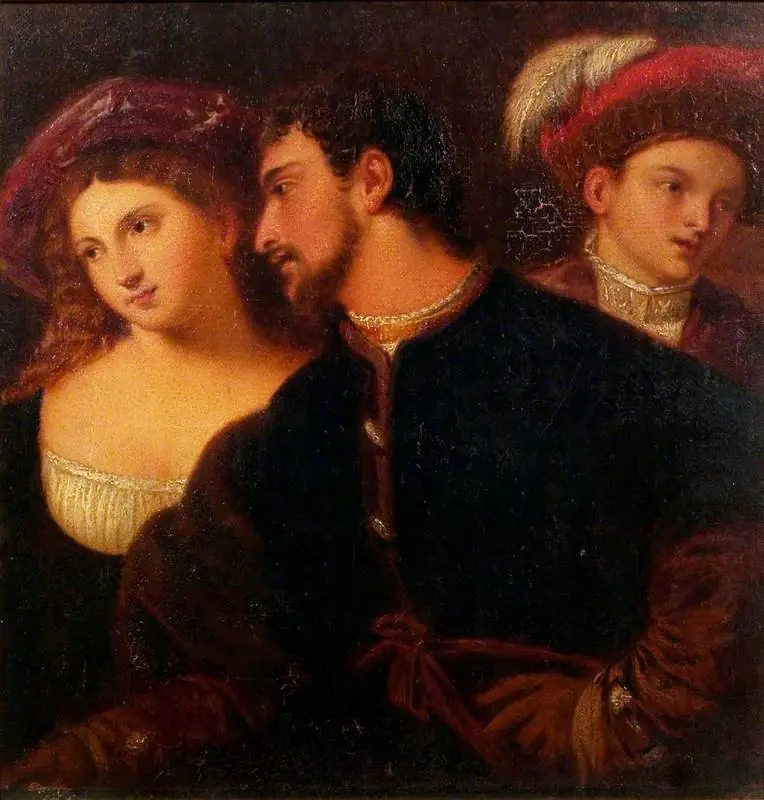 Triple Portrait (after Giorgione)
 Girl Before the Mirror
 Young Woman in blue Gown with Feather
 The Fortune Teller
 Latinus Offering his Daughter Lavinia to Aeneas in Matrimony
 Portrait of a Girl
 Judith met het hoofd van Holofernes
 Flora
Flora- Musical Group