Artwork
Flora
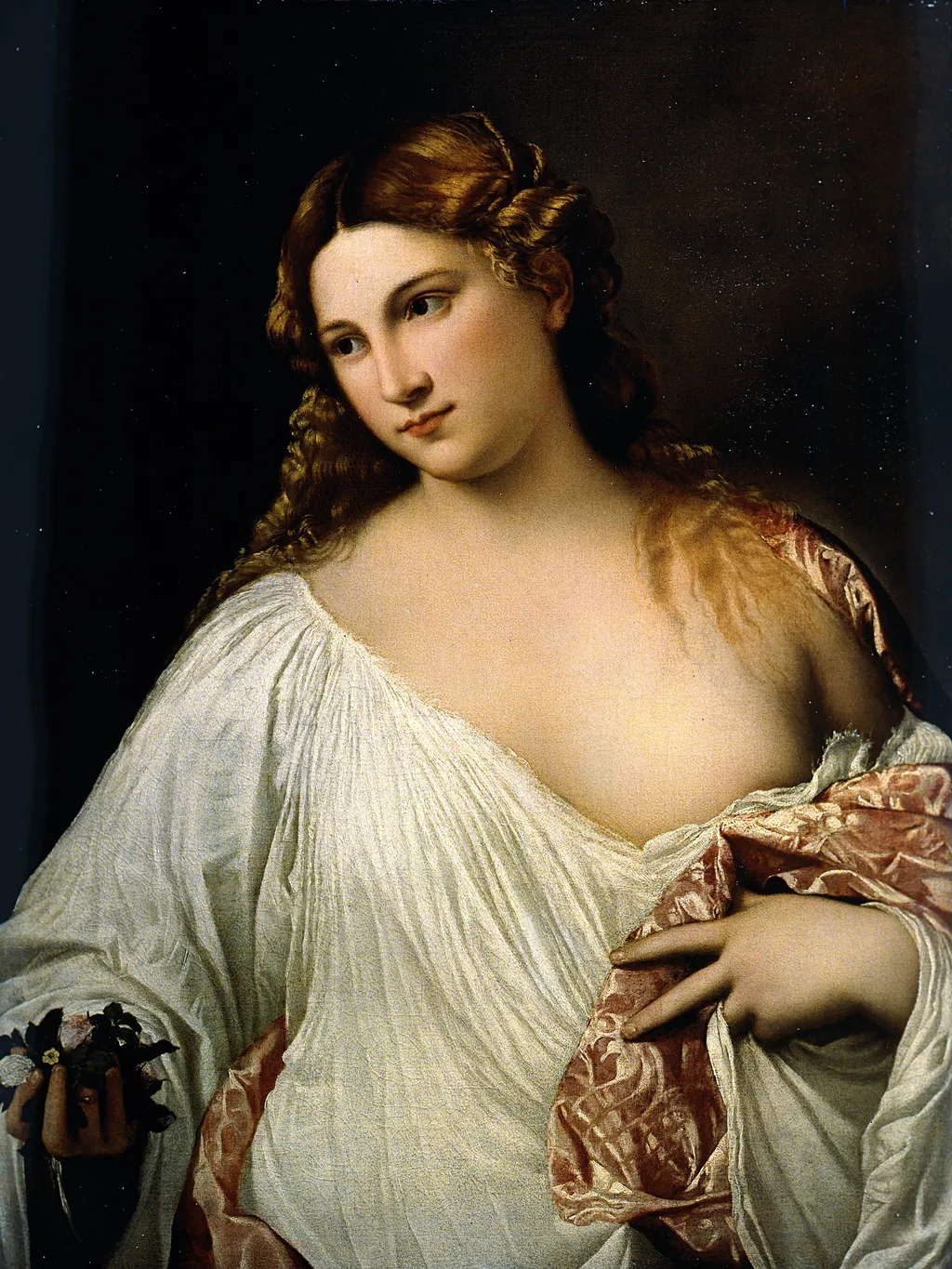
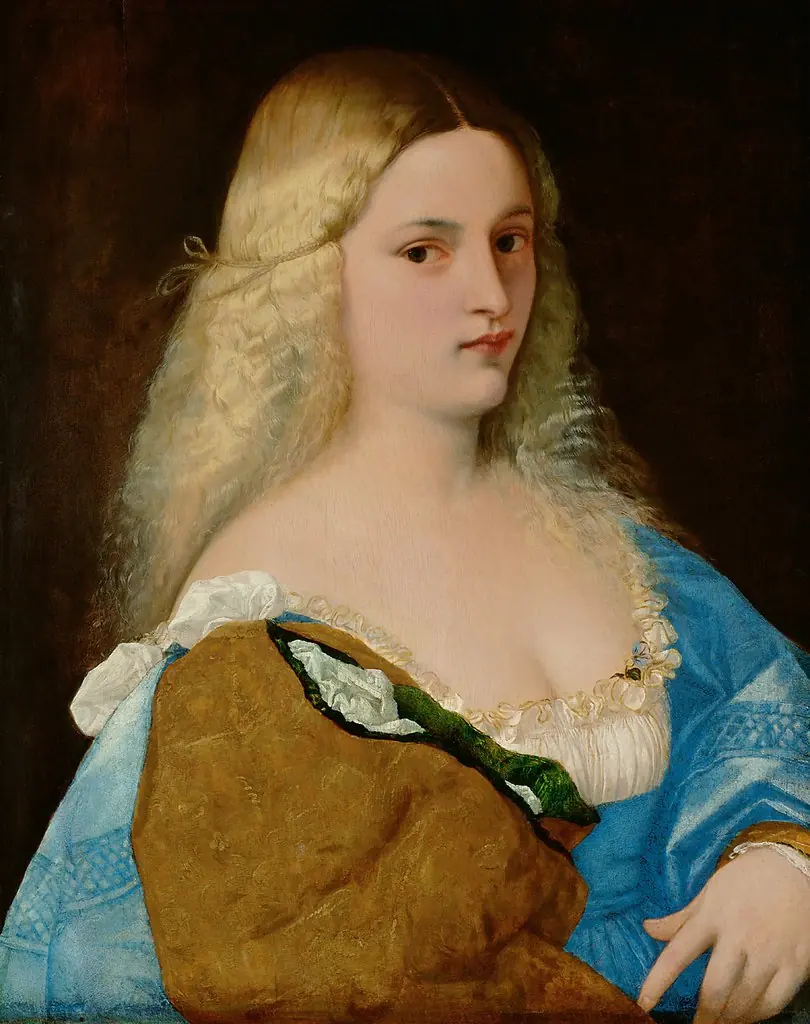
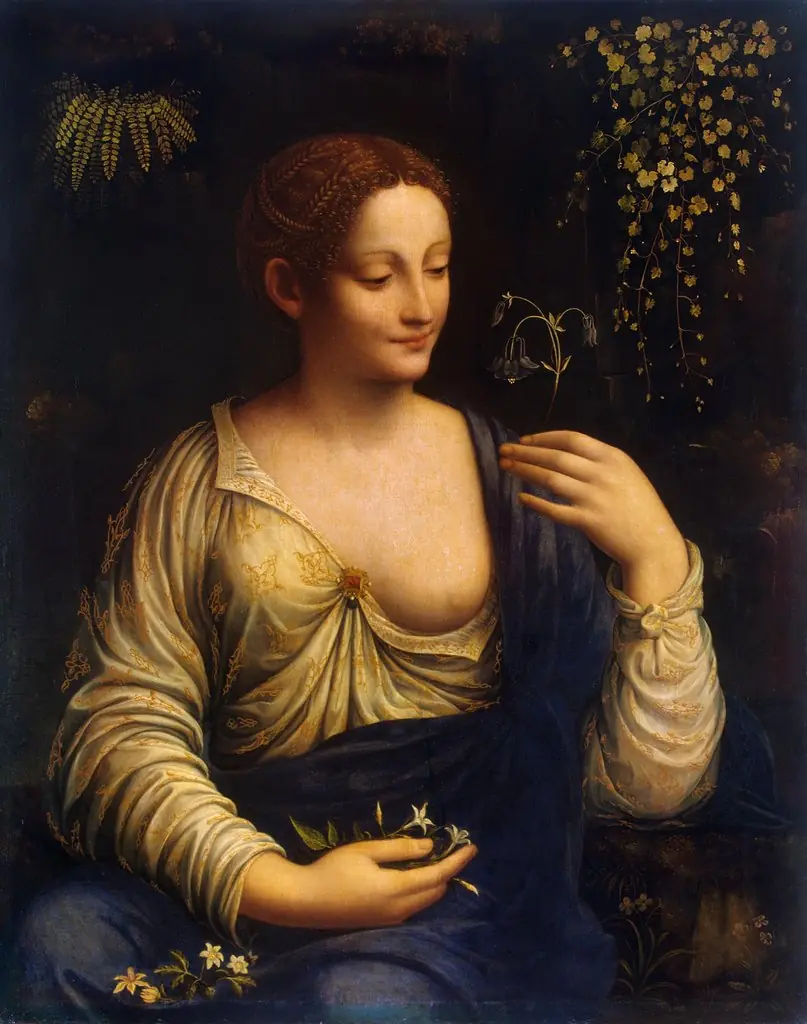
Flora is an oil painting by the High Renaissance artist Titian. It dates from 1517 and is held in the collection of the Uffizi Gallery.
About this work
Subject & Meaning
The painting depicts an idealized young woman with long blond hair, holding a bouquet of spring flowers, including violets, rosebuds, and jasmine, in her right hand while grasping a white garment with her left. Although the title identifies the subject as Flora, the ancient goddess of spring and vegetation, this interpretation relies on the floral attributes and was likely applied in the 17th century by Joachim von Sandrart. The work's true meaning remains disputed; some scholars suggest the figure represents a courtesan, possibly based on 16th-century inscriptions, while others view her as a symbol of nuptial love, noting a faint ring on her finger and the modest yet sensual exposure of her chest. Rather than a strict mythological portrait, the image may primarily celebrate female beauty, blending sensuality with chastity in the Venetian tradition established by Giorgione.
Technique & Style
The painting is executed in oil on canvas, a support typical of Venetian Renaissance practice.
The painting is executed in oil on canvas, a support typical of Venetian Renaissance practice. The work measures 79 cm in height by 63 cm in width. Titian renders the figure with a delicate chiaroscuro that emphasizes the softness of skin and the translucency of fabric, while the handling of brushwork conveys the tactile quality of the garments and the subtle gradations of light across the mantle and hair. Stylistically, the composition combines the naturalistic detail of the Venetian school with a poetic idealization of feminine beauty, evident in the poised gesture, the gentle turn of the head, and the restrained yet sensuous pose. The inclusion of spring flowers in the figure’s hand links the subject to allegorical associations with Flora, the Roman goddess of spring and vegetation, though the precise symbolic intent remains debated.
History & Provenance
The painting titled Flora was created by Titian in 1517 and has been part of the Uffizi Gallery collection in Florence since its transfer in the late 18th century. It was originally owned by Archduke Leopold Wilhelm of Austria, who acquired it from the Spanish ambassador in Amsterdam in the 17th century. The work was later exchanged with the Kunsthistorisches Museum in Vienna and entered the Uffizi's holdings through a series of art exchanges. Prior to its attribution to Titian, the painting was mistakenly credited to Palma the Elder in the 18th century. Its provenance includes a documented series of ownership changes involving Brussels, Vienna, and Amsterdam, with the earliest clear record linking it to the Archduke’s collection. The painting’s dating is established by the 1517 inscription noted in archival records and corroborated by multiple sources.
Flora is currently held by the Uffizi Gallery in Florence, where it is displayed in Room 28. The painting's early provenance remains partially unclear, though it passed through collections in Brussels and Vienna before surfacing in Amsterdam during the 1630s within the private collection of Alfonso López, the Spanish ambassador to the Netherlands. Archduke Leopold Wilhelm of Austria subsequently purchased the work, bringing it to Vienna where it entered the Imperial collections and later the Kunsthistorisches Museum. In 1793, it was transferred to the Uffizi Gallery as part of a broader art exchange between the Imperial collections and the Grand Dukes of Tuscany.
Context
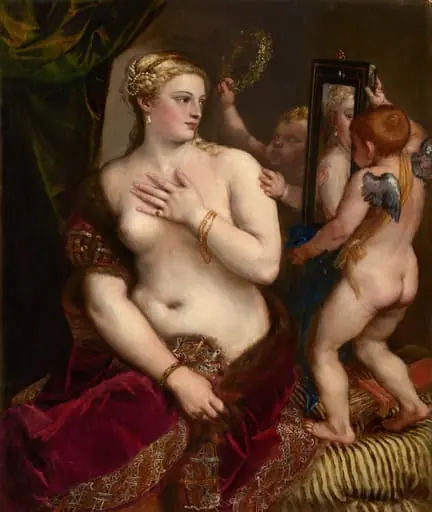
Titian’s *Flora* (1517) occupies a pivotal place in the Venetian High Renaissance, embodying the school’s preoccupation with idealized female beauty. Scholars debate its allegorical meaning: some interpret the figure as the goddess Flora, a symbol of spring and fertility, while others link her to contemporary courtesans or nuptial love, citing inscriptions on 16th-century reproductions (source 3, 4, 5). The work’s ambiguity aligns with Titian’s broader exploration of female subjects during this period, including *Woman at the Mirror* and *Salome*, where similar models appear (source 3, 6). The painting’s influence extended beyond Venice, notably inspiring Rembrandt’s *Saskia as Flora* and other portraits after it entered Archduke Leopold Wilhelm’s collection (source 3, 6). Its sensual yet restrained depiction, marked by luminous skin, flowing hair, and a partially revealed garment, became a touchstone for later artists, reflecting Titian’s synthesis of classical ideals and Venetian colorism.
Legacy
Flora became a touchstone for later artists and scholars. 16th‑century etchings reproduced the composition, and Rembrandt cited it in his 1635 Saskia Dressing, later using the motif in two portraits. The work was exchanged between the Kunsthistorisches Museum in Vienna and the Uffizi in 1793, cementing its status as a key piece of the Venetian school. Contemporary accounts, including those of Joachim von Sandrart, linked the painting to the mythological figure of Flora, reinforcing its reputation as an allegory of spring and fertility. Later critics and historians, such as Francesco Valcanover, highlighted its influence on Baroque portraiture and its role in shaping the idealized female nude in Western art.
Own this work as a print
Artist & collection

Artist
Tiziano Vecellio (Italian:; c. 1488/1490 – 27 August 1576), Latinized as Titianus, hence known in English as Titian ( TISH-ən), was an Italian Renaissance painter. The most important artist of Renaissance Venetian…