Artwork
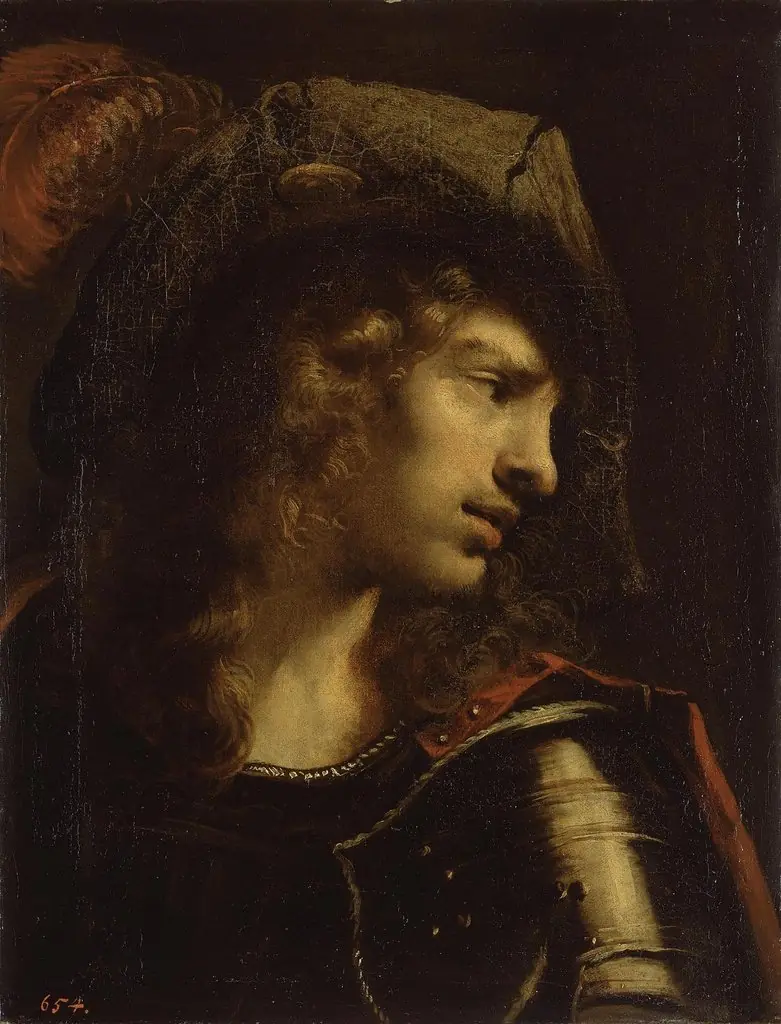
Portrait of a Warrior
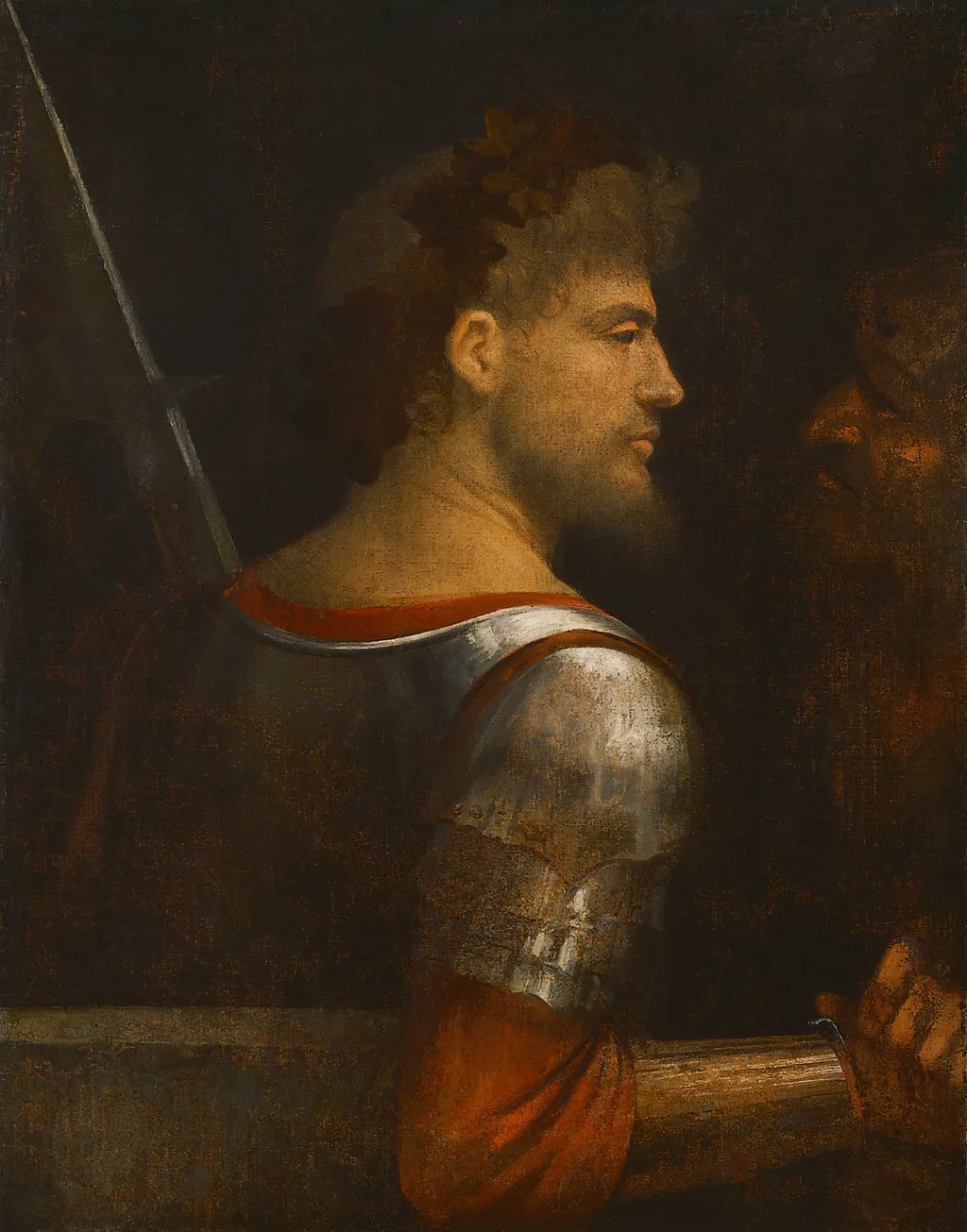
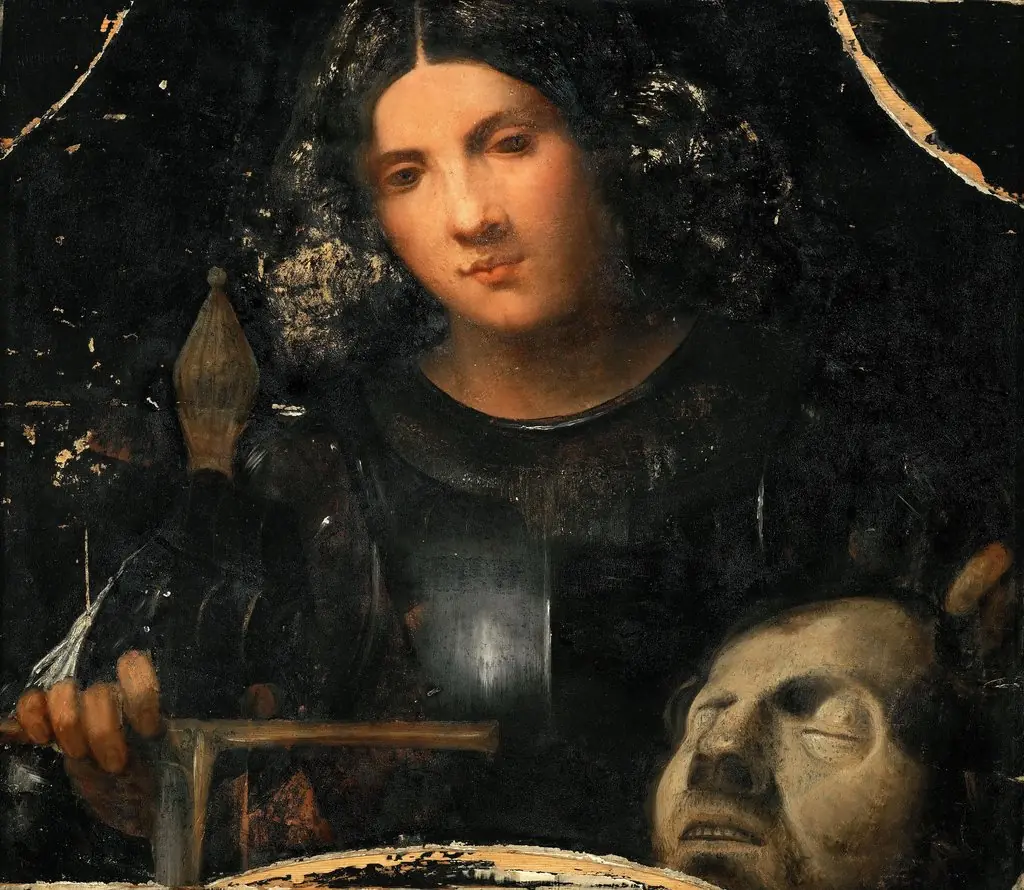
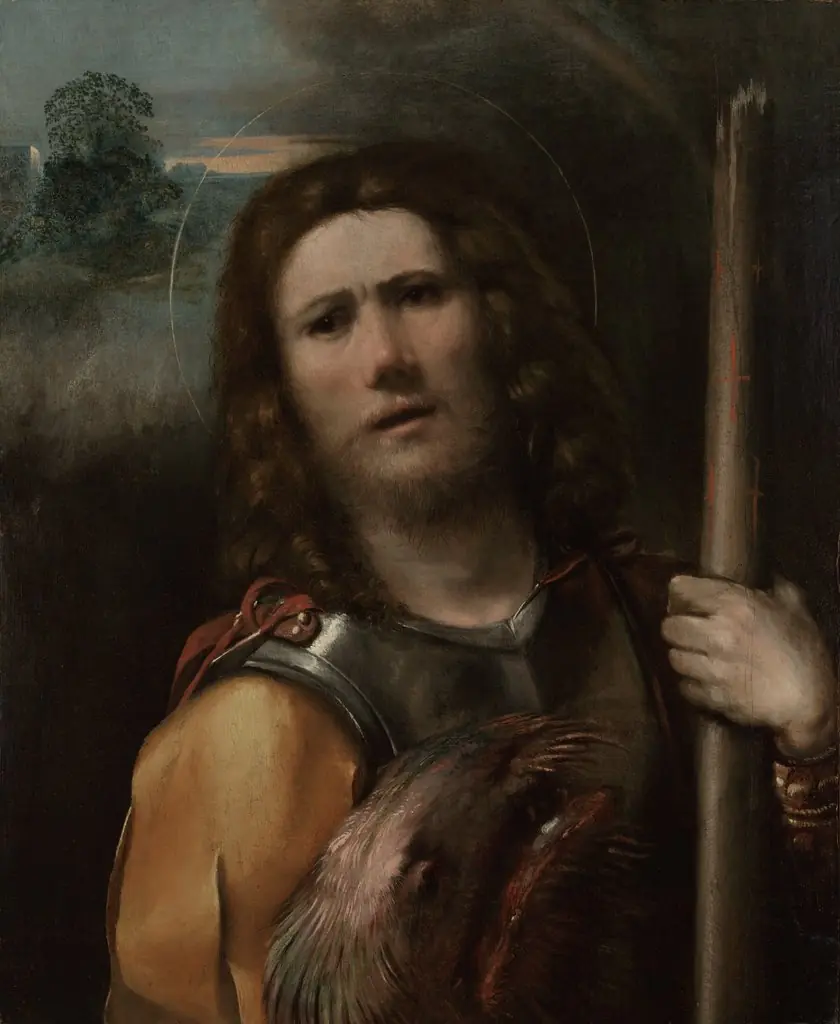
Portrait of a Warrior is an unspecified painting by the High Renaissance artist Giorgione. It dates from 1505 and is held in the collection of the Kunsthistorisches Museum.
About this work
Subject & Meaning
His left hand supports a hallebarde, and his hair is crowned with a garland of ivy leaves.
The painting depicts an unidentified man in plate armour, shown half-length in profile turned to the right, with his right arm resting on a parapet, a compositional formula typical of Venetian portraiture derived from Flemish models. His left hand supports a hallebarde, and his hair is crowned with a garland of ivy leaves. The ivy wreath carries amorous and funerary associations rooted in classical tradition, linking the sitter to themes of love, fidelity, and the transience of life, while the armour and weapon signal his status as a warrior or nobleman.
To the right of the sitter, set against the dark background, is a contrasting figure with dark skin and a grotesque, almost caricatured expression, now difficult to read because of the painting's poor condition. This secondary figure has been linked to the influence of Leonardo da Vinci's caricatures, made during his time in Venice in March 1500, lending the composition a moralizing contrast between ideal beauty and deformity.
The sitter's identity has been debated: based on early notes by Michiel, the man has been identified either as the Venetian nobleman Girolamo Marcello or as Giovanni Antonio Venier.
Technique & Style
Created around 1505–1510, the work is an oil painting on canvas measuring 72 by 56.5 cm. The composition features a half-length figure in profile set against a dark background, with the subject's right arm resting on a parapet, a motif derived from Flemish models. The handling of the paint reveals a significant deterioration in the canvas's condition; a grotesque, dark-skinned figure positioned to the right is now barely legible due to this poor state of conservation. Stylistically, the painting reflects High Renaissance Venetian portraiture, incorporating a garland of ivy leaves on the sitter's head and an alabard held in the left hand.
The obscured secondary figure is noted for its grotesque expression, which art historians have linked to the influence of Leonardo da Vinci's caricatures.
History & Provenance
The painting was recorded in 1528 in the collection of Giovanni Antonio Venier, subsequently passing to the Priuli family in Venice and then to the Hamilton collection between 1638 and 1649. It entered the holdings of Archduke Leopold Wilhelm of Austria and remained within the Habsburg collections thereafter, eventually being housed in the Kunsthistorisches Museum in Vienna. The work is dated to circa 1505–1510 and measures 72 by 56.5 cm. It depicts a man in half-length profile, wearing plate armor and a sword, with a halberd held in his left hand and a laurel wreath of ivy on his hair, set against a dark background; a grotesque figure appears to the right, reflecting influences from Leonardo da Vinci’s caricatures and his portrait of Isabella d'Este.
The attribution to Giorgione was recognized early, with records linking the portrait to Giovanni Antonio Venier and later to the Priuli and Hamilton families before its acquisition by the Habsburgs.
Portrait of a Warrior is held in the Kunsthistorisches Museum in Vienna. Its inventory number is KHM 1136. The work entered the museum through the collection of Archduke Leopold Wilhelm of Austria, who bequeathed his holdings to the museum.
Its exhibition history includes displays in the museum's Renaissance galleries and in the 1953 exhibition "Giorgione: The Venetian Renaissance" at the Kunsthistorisches Museum. The painting was previously owned by Giovanni Antonio Venier in 1528, then passed to the Priuli family, and later to the Hamilton collection between 1638 and 1649 before arriving in the Habsburg collections.
Context
The painting is catalogued within Giorgione's mature Venetian output, conventionally dated to between 1505 and 1510 and associated with the High Renaissance. Scholarly attention has focused on its compositional debts and on the identification of the sitter. The half-length profile turned to the right, with one arm resting on a parapet, is recognized as a motif typical of Venetian portraiture derived from Flemish models.
The grotesque, dark-skinned figure set in contrast on the right has been read as showing the influence of Leonardo da Vinci's caricatures, drawn during his time in Venice in March 1500, and of his portrait of Isabella d'Este, now in the Louvre.
The work has been linked, on the basis of Michiel's notes, to Girolamo Marcello, while alternative hypotheses identify the sitter as Giovanni Antonio Venier. Bibliography on the painting includes Alessandra Fregolent's monograph on Giorgione (Electa, Milan, 2001) and Carlo Pedretti's study on the Giorgione–Leonardo relationship and the origin of the shoulder portrait, presented at the 1978 Castelfranco conference.
Overview
Created around 1505, this portrait by the Venetian painter Giorgione presents a solitary figure clad in full plate armor. The work belongs to the High Renaissance period and is currently displayed in Vienna’s Kunsthistorisches Museum. The composition focuses on a single, solemn warrior rendered in profile against a darkened backdrop.
Artist & collection