Artwork
Apollo and Marsyas
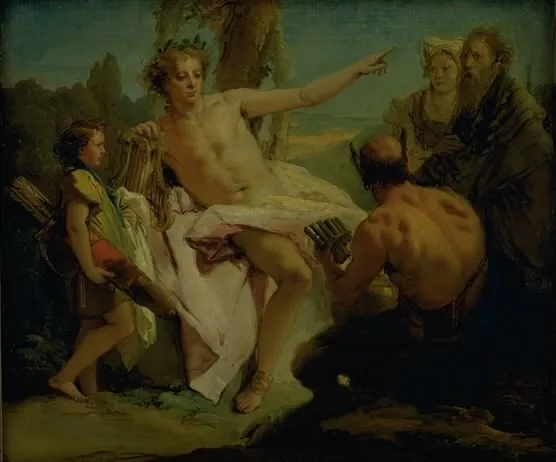
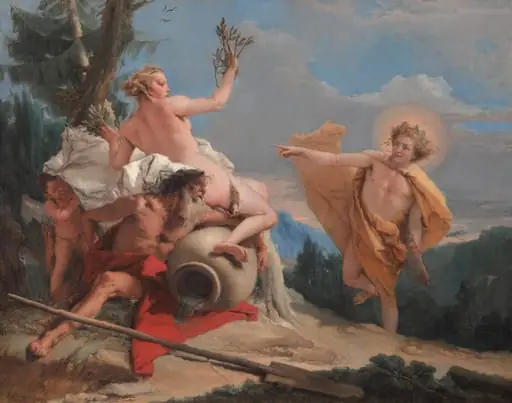
Apollo and Marsyas is an unspecified painting by the Rococo painting artist Giovanni Battista Tiepolo. It dates from 1757 and is held in the collection of the Statens Museum for Kunst.
About this work
History & Provenance
It was created in 1757 and has been part of the museum's exhibition schedule, appearing in displays of mythological paintings and Rococo works.
Giovanni Battista Tiepolo executed the mythological painting Apollo and Marsyas in 1757. The work was created during the Rococo period and depicts the classical contest between the god Apollo and the satyr Marsyas. The painting is currently held in the collection of the Statens Museum for Kunst, where it remains part of the institution's holdings.
The painting Apollo and Marsyas by Giovanni Battista Tiepolo is held in the collection of the Statens Museum for Kunst, where it is catalogued under the inventory number that corresponds to its accession within the museum's holdings. It was created in 1757 and has been part of the museum's exhibition schedule, appearing in displays of mythological paintings and Rococo works.
Overview
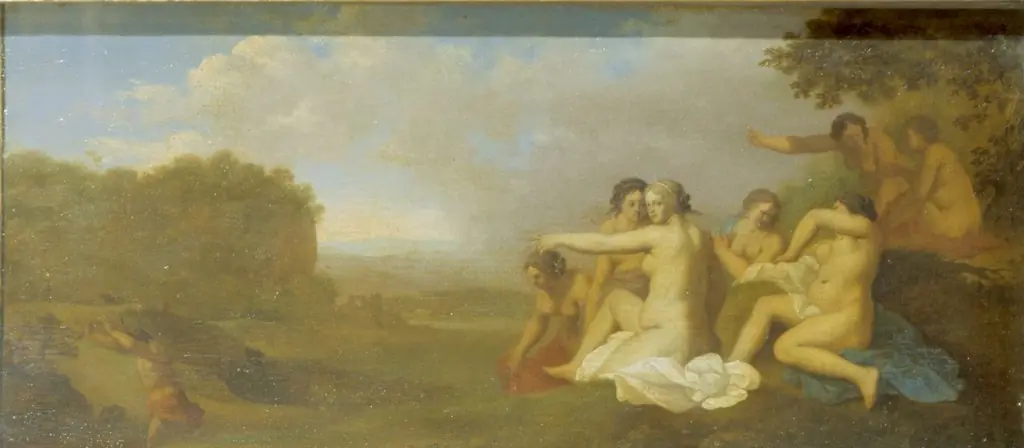
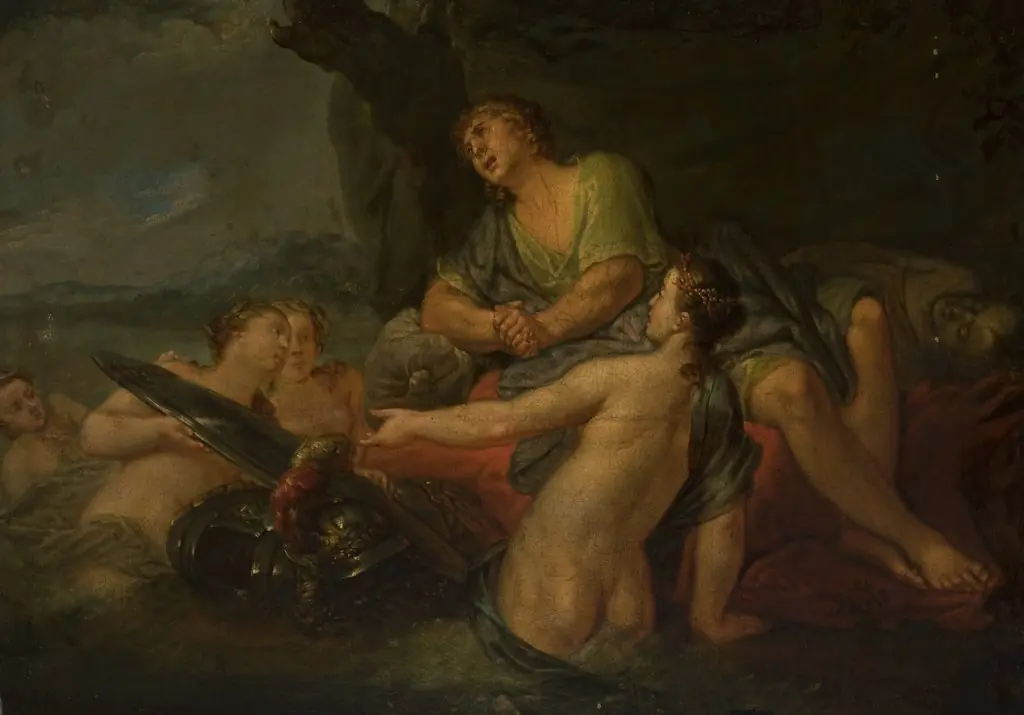
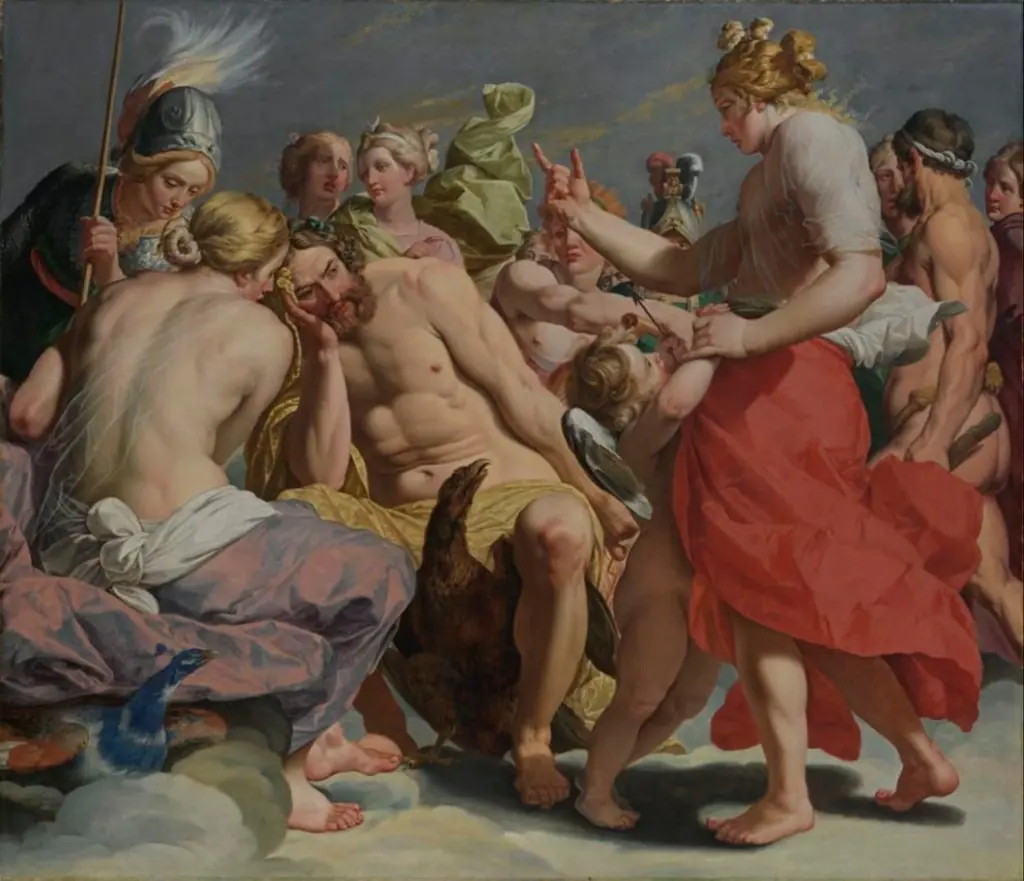
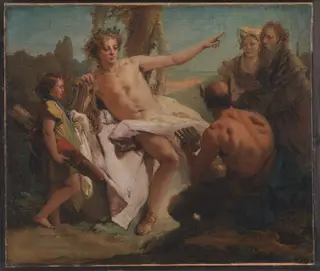
Giovanni Battista Tiepolo’s 1757 canvas presents a mythological episode set in a wooded landscape. A nude male figure dominates the foreground, gesturing toward a younger boy who clutches a flute. Behind them, a woman in a white gown and a armored man linger near a tree, while gentle blue‑green hills recede into the distance.
Subject & Meaning
The work visualizes the ancient contest between Apollo, the god of music, and Marsyas, a mortal who dared to challenge the deity with his own flute playing. Apollo’s confident posture and the boy’s restrained position allude to the myth’s outcome, in which the god triumphs and the challenger suffers a severe punishment, underscoring themes of hubris and divine authority.
Technique & Style
Executed in the light, decorative manner typical of the Rococo, the painting employs a luminous palette and fluid brushwork. Tiepolo’s handling of atmospheric perspective softens the background hills, while the figures are rendered with delicate modeling that emphasizes the sensuality of flesh and the elegance of the surrounding foliage.
Context
Tiepovo’s depiction aligns with the period’s fascination with classical mythology as a vehicle for moral illustration. By choosing the Apollo‑Marsyas narrative, the artist engages contemporary debates about artistic merit, the limits of human ambition, and the role of divine judgment in the cultural discourse of Enlightenment Europe.
Artist & collection

Artist
Giovanni Battista Tiepolo, also known as Giambattista Tiepolo, was an Italian painter and printmaker from the Republic of Venice who painted in the Rococo style, considered an important member of the 18th-century Venetian school.