Artwork
The Blessed Andrea Gallerani (died 1251)
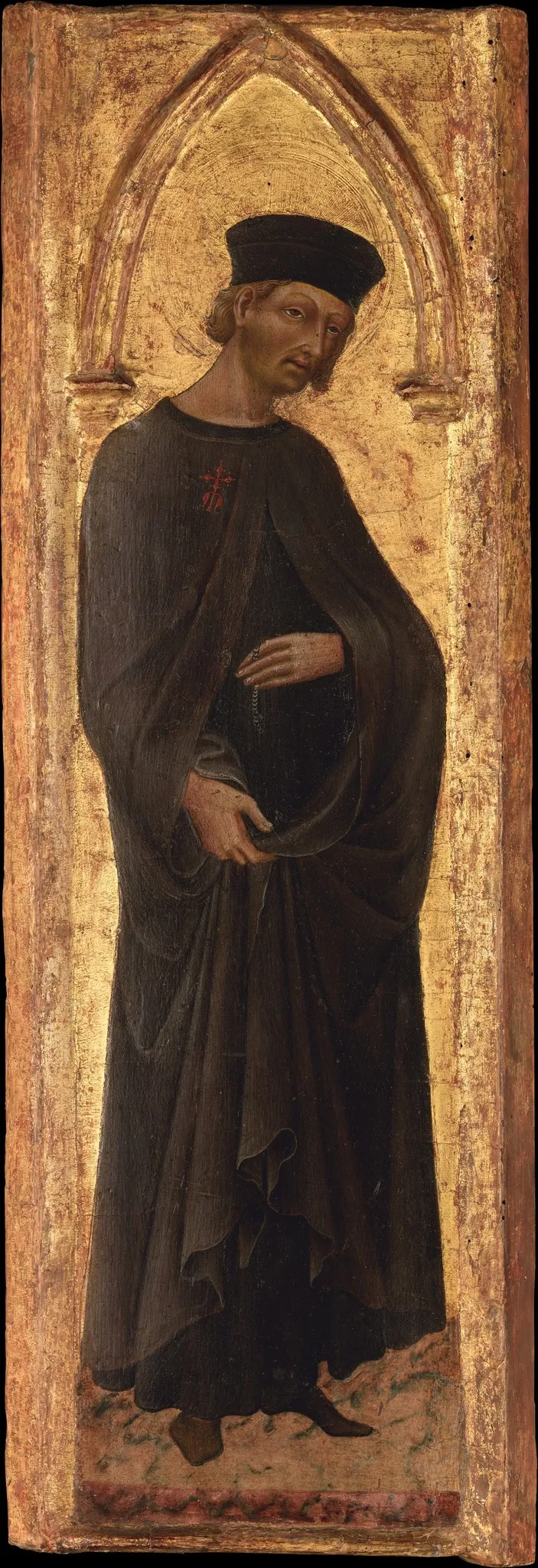
The Blessed Andrea Gallerani (died 1251) is a tempera painting by the Early Renaissance artist Giovanni di Paolo. It dates from 1450 and is held in the collection of the Metropolitan Museum of Art.
About this work
Subject & Meaning
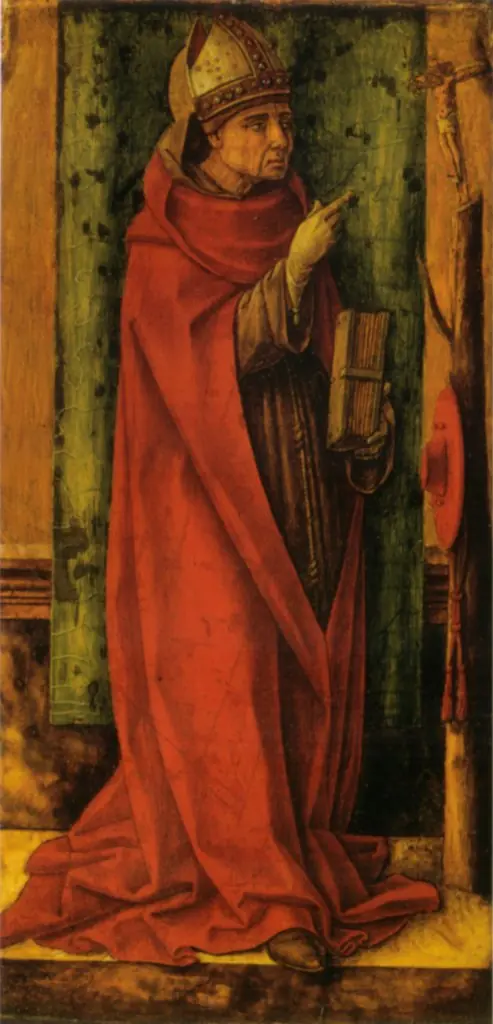
The painting presents the blessed Andrea Gallerani as a male portrait, identified in the work’s title and depicted by Giovanni di Paolo in 1450.
The painting presents the blessed Andrea Gallerani as a male portrait, identified in the work’s title and depicted by Giovanni di Paolo in 1450. Executed in tempera on panel, the composition follows the conventions of early Sienese portraiture, emphasizing a sober likeness rather than narrative storytelling. As a representation of a canonized figure, the image functions as a devotional image that affirms the subject’s sanctity within the cultural context of 15th‑century Siena.
The work is part of the Metropolitan Museum of Art’s collection, formerly owned by Robert Lehman, and is displayed in Gallery 956 dedicated to Fifteenth‑Century Sienese Paintings.
Technique & Style
Executed in 1450, this portrait utilizes tempera paint applied to a wooden panel support. The work is characterized by its exceptionally narrow, vertical format, measuring 48.3 cm in height and only 12.4 cm in width. These diminutive proportions and the specific choice of medium reflect the technical conventions of fifteenth-century Sienese painting. The composition focuses entirely on the depiction of the subject, Andrea Gallerani, within this constrained physical space.
History & Provenance
The portrait of the Blessed Andrea Gallerani, attributed to Giovanni di Paolo, was created circa 1450 as a tempera painting on panel measuring 48.3 cm by 12.4 cm. It is recorded as a 15th‑century Sienese work and is classified as a portrait. The work entered the collection of Robert Lehman, whose holdings later became part of the Metropolitan Museum of Art, where it remains on view in Gallery 956 dedicated to Fifteenth‑Century Sienese Paintings.
The painting is housed in the Metropolitan Museum of Art, displayed in Gallery 956 dedicated to Fifteenth‑Century Sienese Paintings. It belongs to the Robert Lehman Collection, which the museum acquired through the bequest of Robert Lehman. The work is catalogued as a tempera portrait on panel, created circa 1450, depicting the Blessed Andrea Gallerani.
Exhibition records for the piece are not detailed in the consulted documentation, indicating that its public presentation has been limited to its permanent installation at the museum.
Context
Giovanni di Paolo’s 1450 tempera portrait The Blessed Andrea Gallerani, housed in the Metropolitan Museum of Art’s Lehman collection (Gallery 956, Fifteenth‑Century Sienese Paintings), depicts the saintly figure of Andrea Gallerani, who died in 1251. The work exemplifies the Sienese painter’s blend of devotional imagery and individual portraiture, reflecting broader trends in mid‑15th‑century Sienese art that combined narrative piety with realistic likeness. Scholarship identifies the painting as a subtle example of the transition from Gothic ornamentalism toward a more naturalistic rendering of space and texture, positioning it within the corpus of Giovanni di Paolo’s mature output.
Museum catalogues cite it as a noteworthy specimen of early Sienese portraiture, though its critical discussion remains limited to specialist literature.
Overview
Painted in 1450 by Giovanni di Paolo, The Blessed Andrea Gallerani depicts the 13th-century Sienese lay brother and founder of the Order of the Blessed Virgin Mary of Mercy. The work presents a full-length portrait of the subject standing against a traditional gold ground, framed by a pointed arch that evokes a Gothic architectural setting. Gallerani is shown in a long black habit marked by a small red cross on the chest, signifying his religious affiliation, while his hands clasp a string of beads.
His expression is solemn and direct, characteristic of the artist's approach to sacred portraiture during his mature period. The figure stands upon a rocky, uneven terrain with sparse green vegetation, a detail that contrasts with the flat, luminous background. Executed in tempera, the painting reflects Giovanni di Paolo's distinctive style, which blends the linear elegance of the Sienese tradition with a heightened emotional intensity.
This work serves as a devotional image honoring the local saint, created during a time when the artist was producing numerous religious commissions for Sienese institutions. The composition emphasizes the spiritual gravity of the subject, utilizing the gold leaf not merely as decoration but as a symbol of divine light surrounding the holy figure.
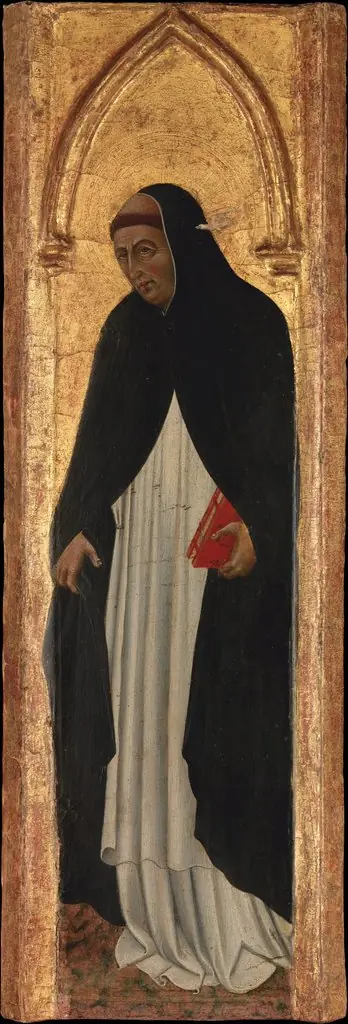
Artist & collection

Artist
Giovanni di Paolo di Grazia was an Italian painter, working primarily in Siena, becoming a prolific painter and illustrator of manuscripts, including Dante's texts.

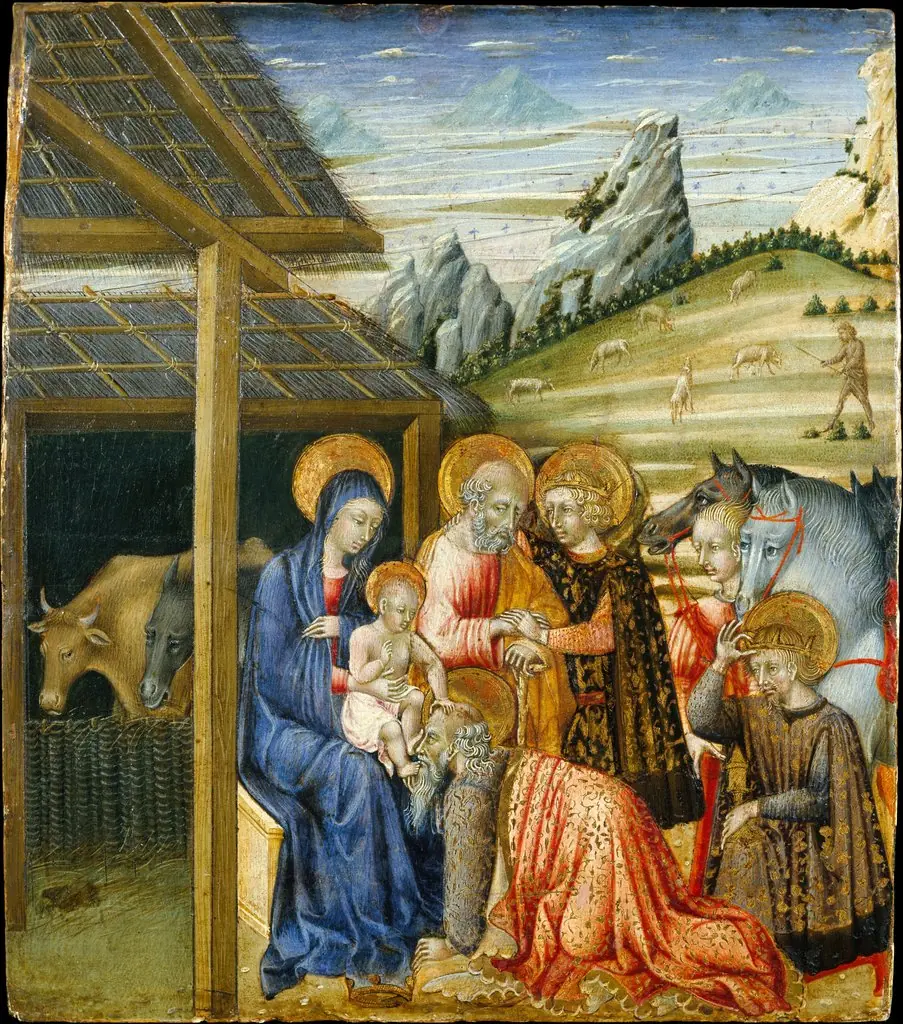 The Adoration of the Magi
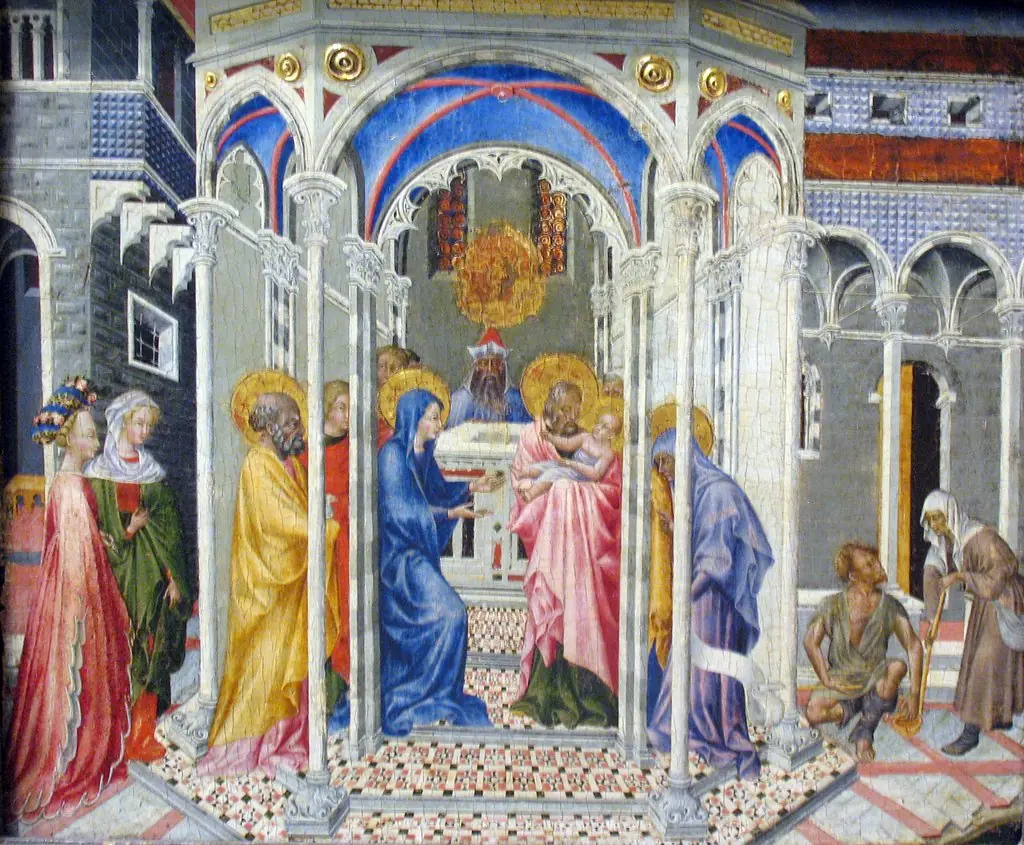 The Presentation of Christ in the Temple
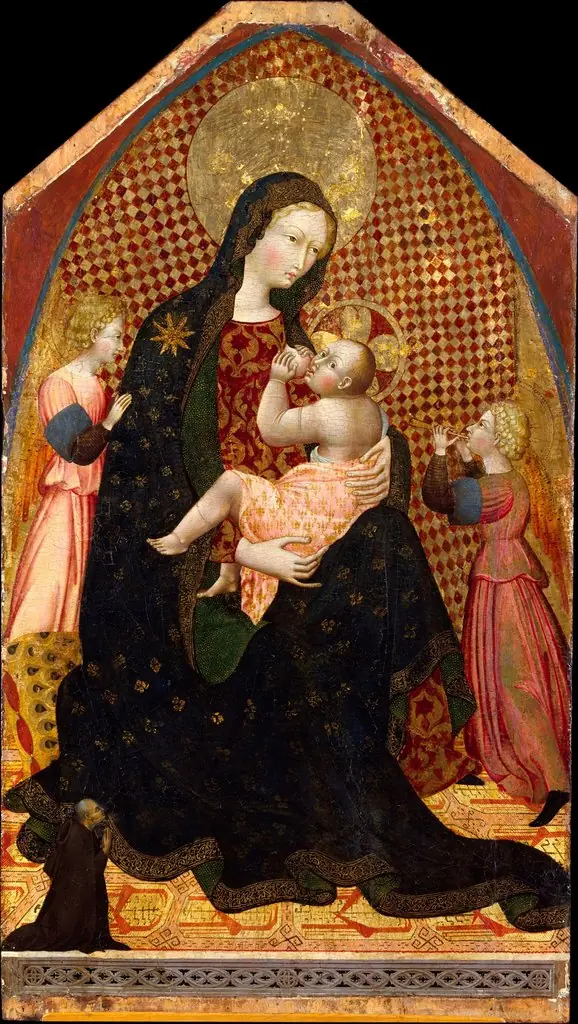 Madonna and Child with Two Angels and a Donor
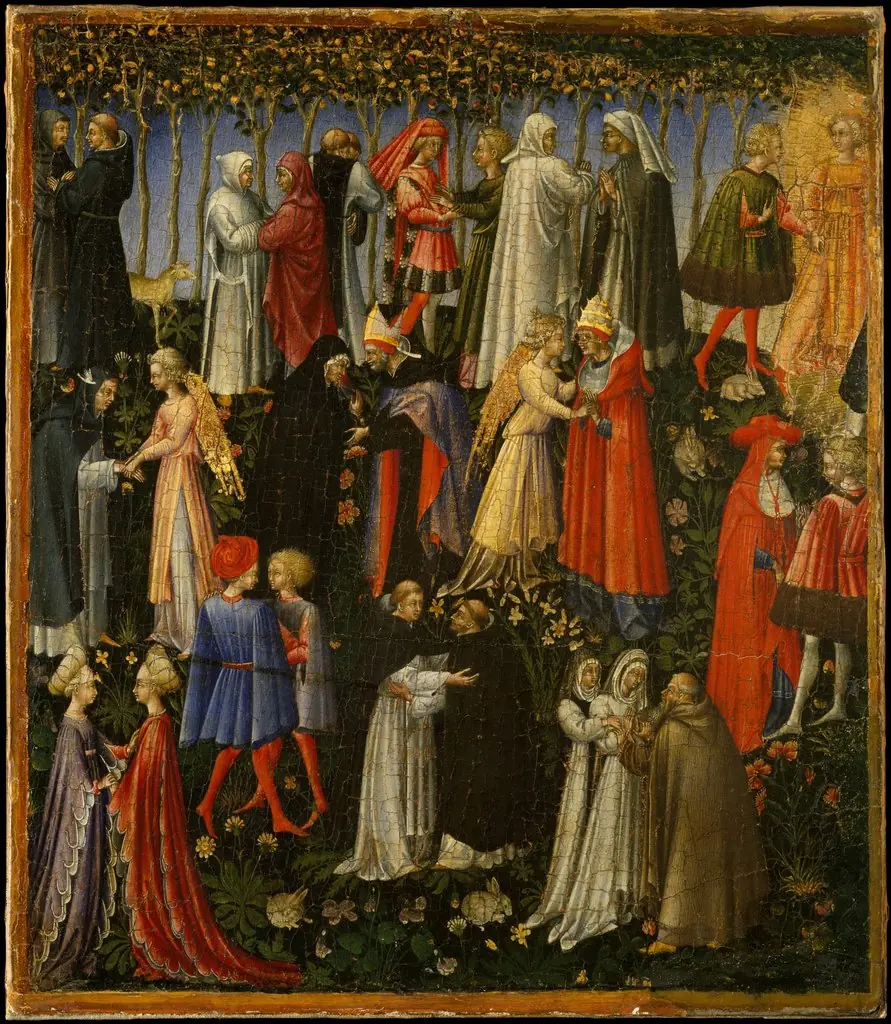 Paradise
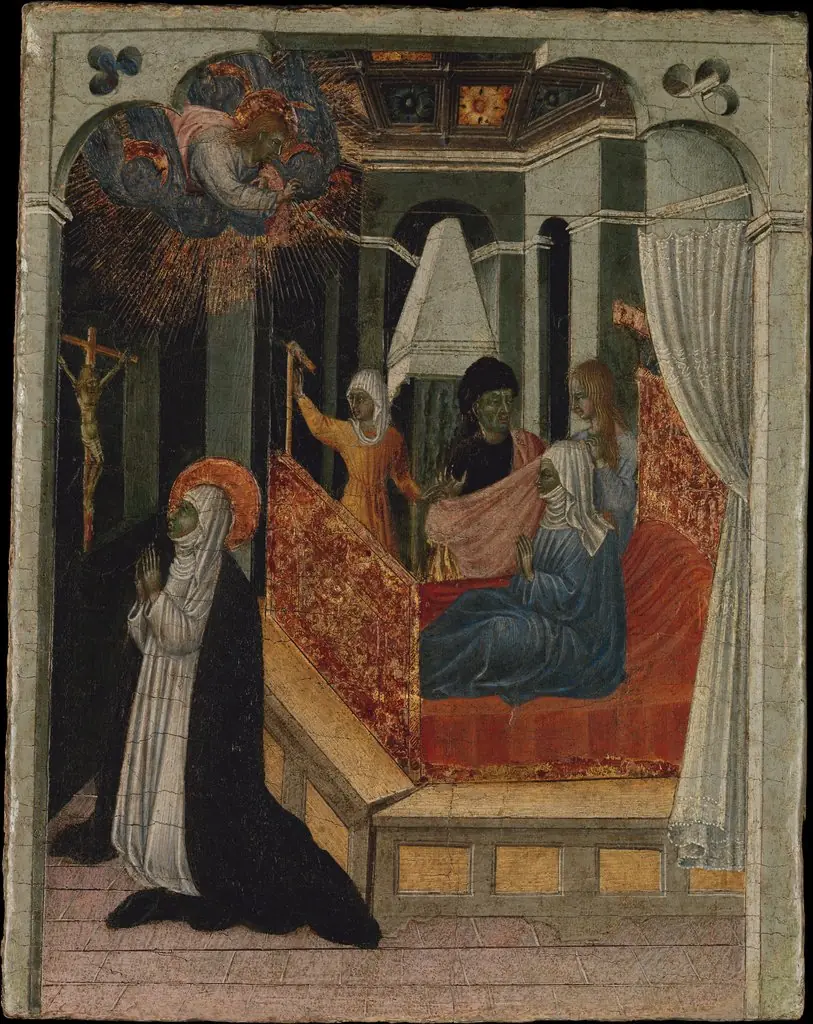 Saint Catherine of Siena Beseeching Christ to Resuscitate Her Mother
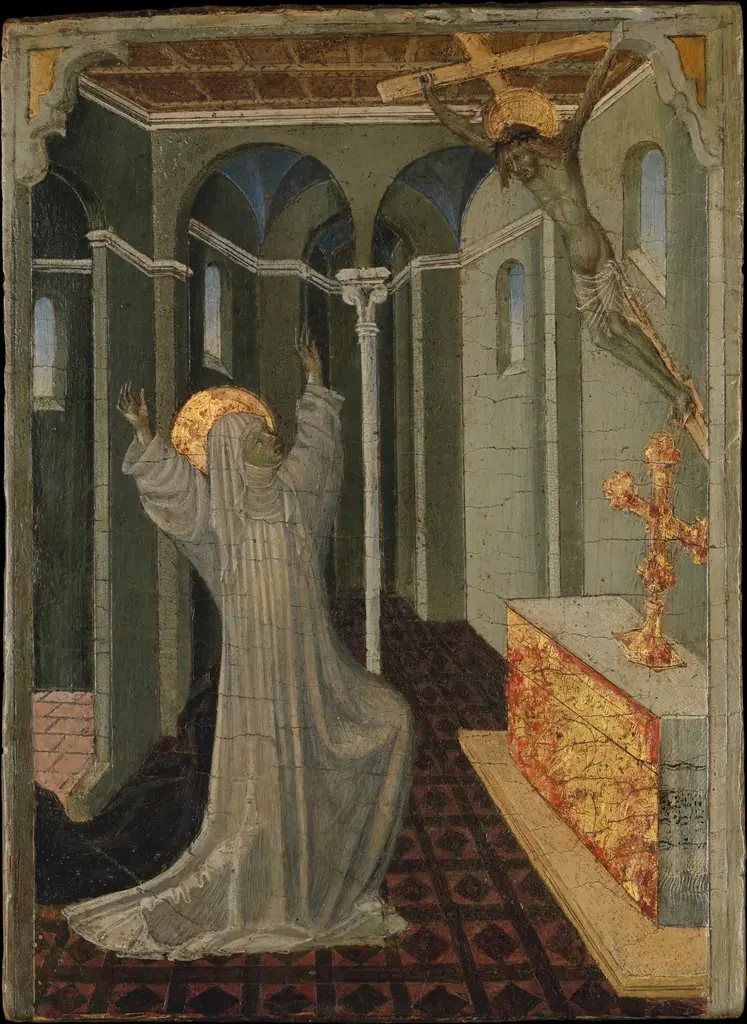 Saint Catherine of Siena Receiving the Stigmata
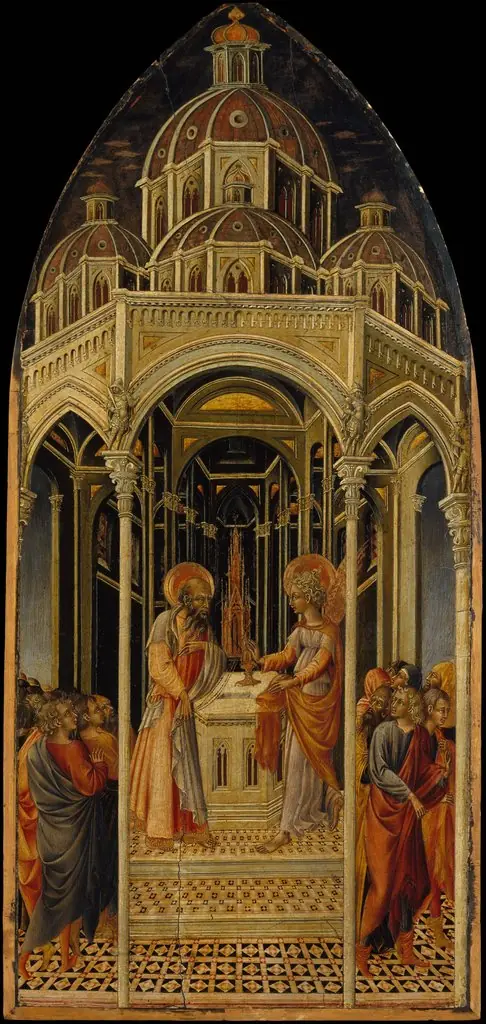 The Annunciation to Zacharias; (verso) The Angel of the Annunciation
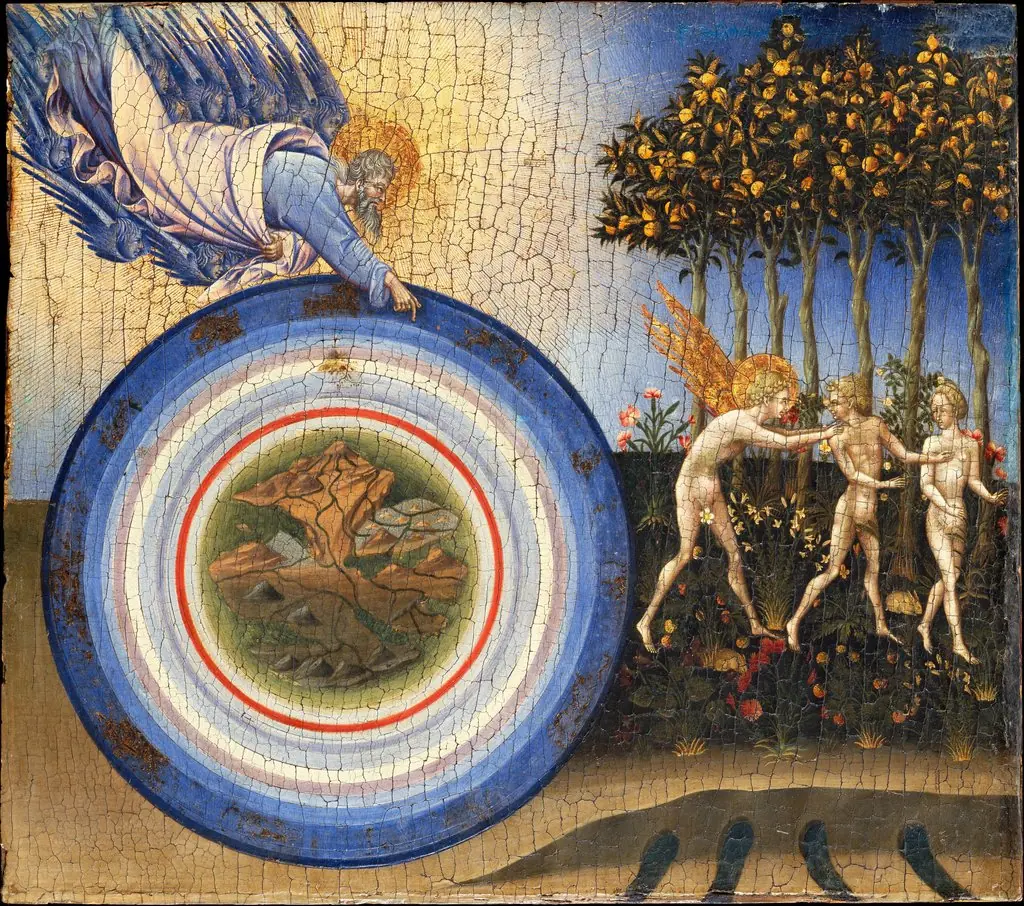 The Creation of the World and the Expulsion from Paradise
- The Blessed Ambrogio Sansedoni (1220–1286)
 Saint Anthony Abbot
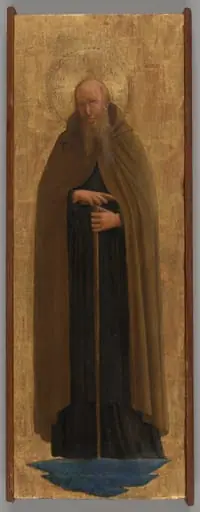 Saint Anthony Abbot
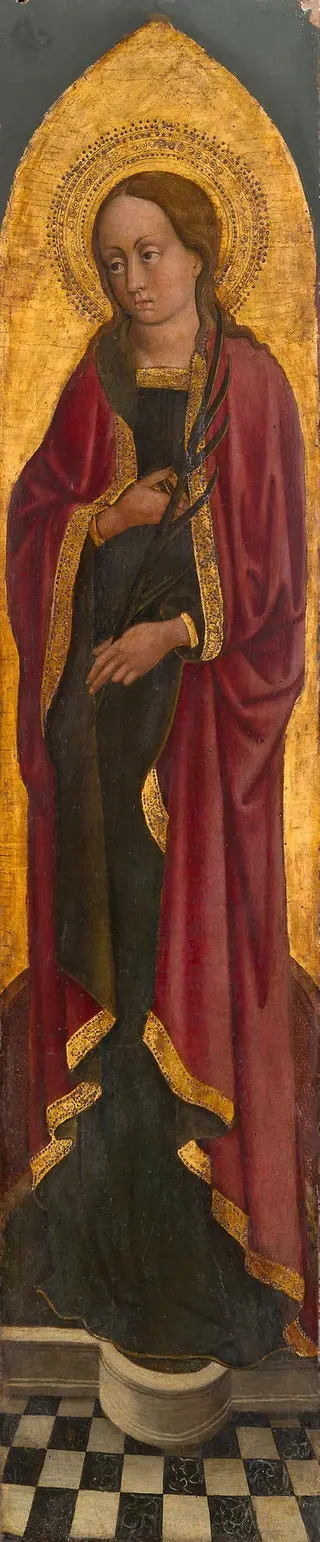 Saint Giustina of Padua from an Augustinian altarpiece
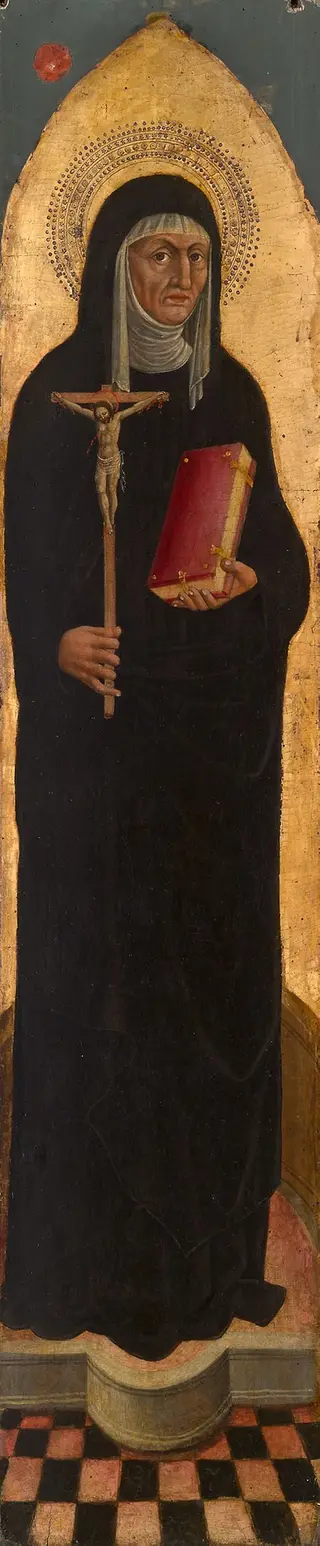 Saint Monica from an Augustinian altarpiece
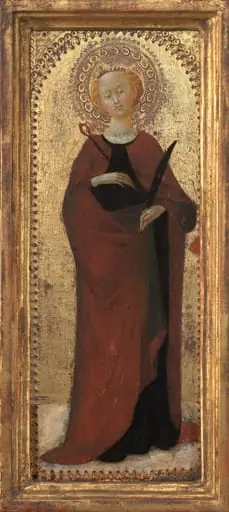 Saint Apollonia
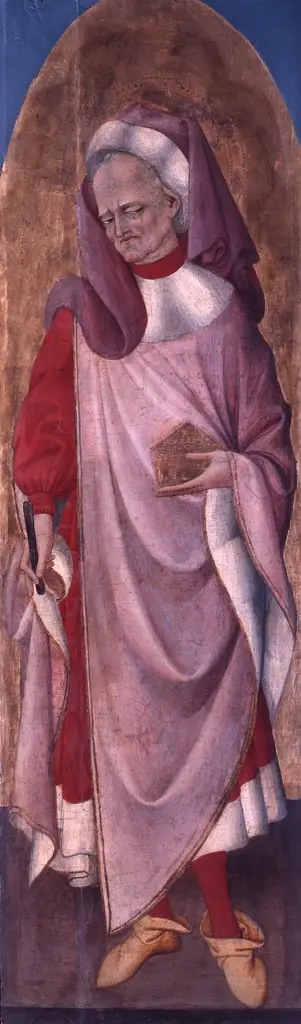 Saint Cosma
 St Matthias. The wing from the altar retable from Trzebunia
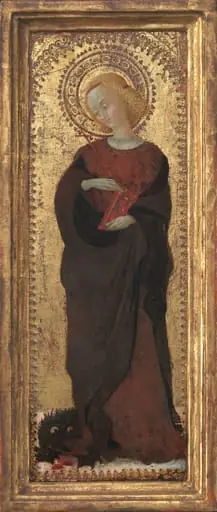 Saint Margaret
 Bonaventure
 Saint John the Baptist and Saint Dominic
 The Mourning Madonna