Artwork
Lucretia and her Husband Lucius Tarquinius Collatinus
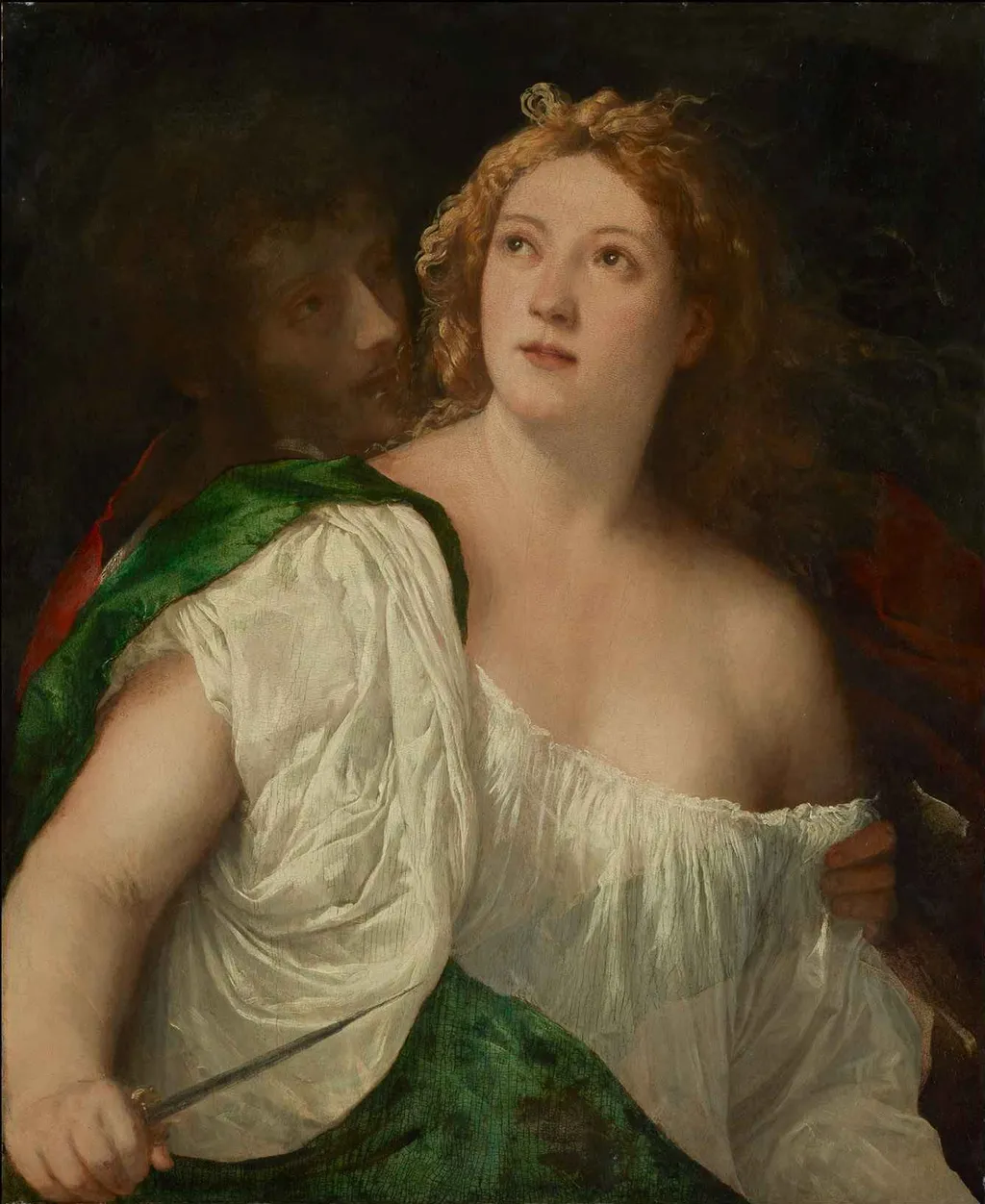
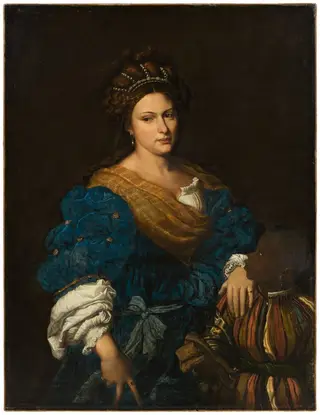
Lucretia and her Husband Lucius Tarquinius Collatinus is an oil painting by the High Renaissance artist Titian. It dates from 1515 and is held in the collection of the Kunsthistorisches Museum. The work, an oil painting from around 1515, is held in Vienna’s Kunsthistorisches Museum.
About this work
Subject & Meaning
The painting shows Lucretia poised with a dagger, about to take her own life after revealing she had been raped by Sextus Tarquinius, a moment that embodies Roman female virtus and the sacrifice required to preserve honor. Her upward gaze toward divine illumination supplies the strength for this decisive act, while sensual details such as her falling robe and exposed shoulder highlight the work's erotic undertones. The green drapery, noted for its vividness, reflects the high-quality pigments available in Venice, and the composition places her alongside a male figure that sources disagree on identifying as her husband Lucius Tarquinius Collatinus or as the rapist Tarquin himself.
Technique & Style
The attribution to Titian remains traditional but uncertain, with some scholars suggesting Palma Vecchio as an alternative author.
The painting is executed in oil on poplar panel, measuring approximately 83 by 68 cm. The handling aligns with Titian’s early-1510s Venetian style of half-length figures, where closely grouped heads and enigmatic expressions structure the composition. Lucretia’s pose and the fall of her green drapery over one shoulder emphasize rhythmic contours and a softly modeled figure, while the upward glance toward a divine light spotlights her virtuous resolve. The palette features a notably bright green, reflecting the high quality of Venetian pigments of the period.
The attribution to Titian remains traditional but uncertain, with some scholars suggesting Palma Vecchio as an alternative author.
History & Provenance
Attributed to Titian but with uncertain authorship that some scholars assign to Palma Vecchio, the painting is dated to approximately 1515. It likely belongs to a series of half-length female figures created by Titian between 1514 and 1515. The work may correspond to a piece recorded by Carlo Ridolfi in 1648 within the gallery of Charles I of England, whose collection largely originated from the purchase of the Gonzaga holdings in Mantua.
Following the English Civil War, the painting reportedly entered the collection of Archduke Leopold Wilhelm of Austria. It is currently housed in the Kunsthistorisches Museum in Vienna, where it remains part of the permanent collection.
The painting Lucretia and her Husband Lucius Tarquinius Collatinus by Titian is held in the Kunsthistorisches Museum in Vienna. Its inventory number is not specified in the sources. It was owned by Charles I of England and later by Archduke Leopold Wilhelm of Austria before entering the Kunsthistorisches Museum collection.
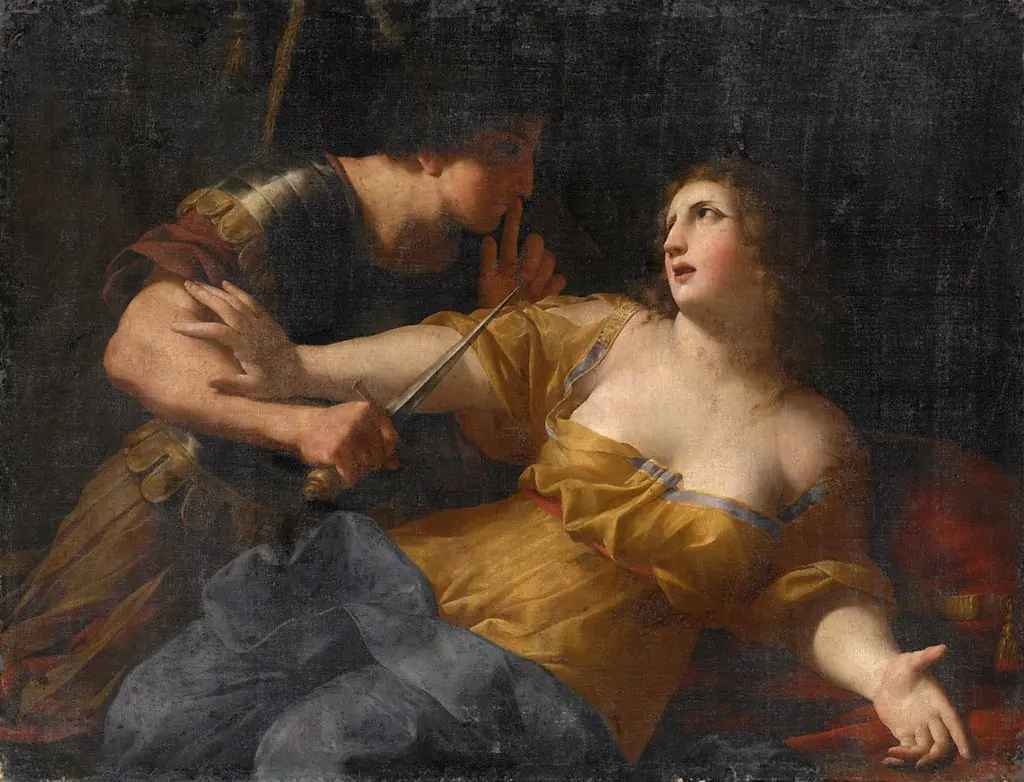
The work was noted by Ridolfi in 1648 as being in the gallery of Charles I, whose Italian paintings largely came from the Gonzaga collection in Mantua. The painting has also been exhibited in exhibitions focusing on Titian's works and Venetian Renaissance art, though specific exhibition names and dates are not provided in the sources. A related version is held in the Royal Collection, where the male figure is identified as Sextus Tarquinius, the rapist, rather than Lucius Tarquinius Collatinus, her husband.
Context
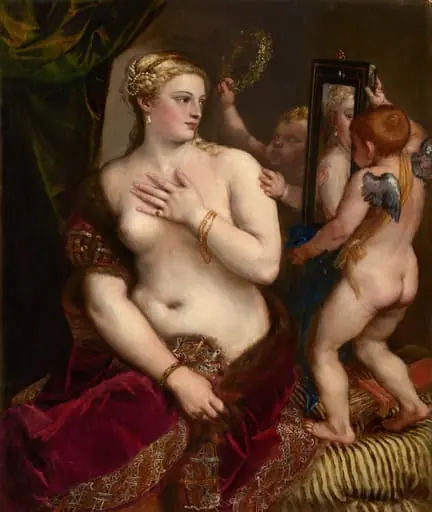
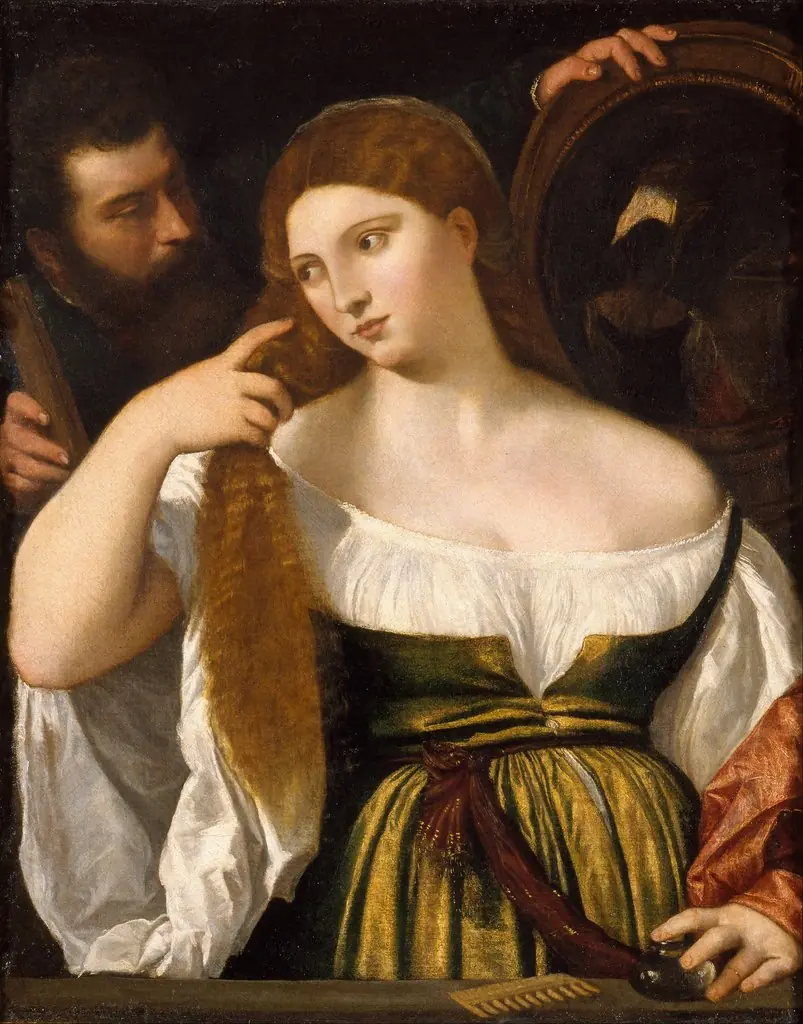
Attributed traditionally to Titian but with uncertain authorship, the work is sometimes linked to Palma Vecchio due to its brightened palette. Scholars often situate the painting within Titian's 1514–1515 series of half-length female figures, which includes works such as the Flora and Woman with a Mirror. The composition is notable for its unique inclusion of a male figure behind the protagonist; while the Kunsthistorisches Museum identifies him as her husband Collatinus, most historical sources and the Royal Collection identify him as her rapist, Sextus Tarquinius.
This ambiguity reflects the complex Venetian tradition of enigmatic half-length figures from the 1510s. The painting serves as an early treatment of the Lucretia narrative, preceding Titian's more famous 1571 depiction of the same subject. Its provenance traces to the collection of Charles I of England, likely acquired from the Gonzaga holdings, before entering the Habsburg collections.
Overview
The work, an oil painting from around 1515, is held in Vienna’s Kunsthistorisches Museum. Traditionally linked to Titian, its authorship remains debated, with some scholars noting a brighter palette that could point to Palma Vecchio. The composition features a half‑length female figure, a format Titian explored in several early works.
Own this work as a print
Artist & collection
Artist
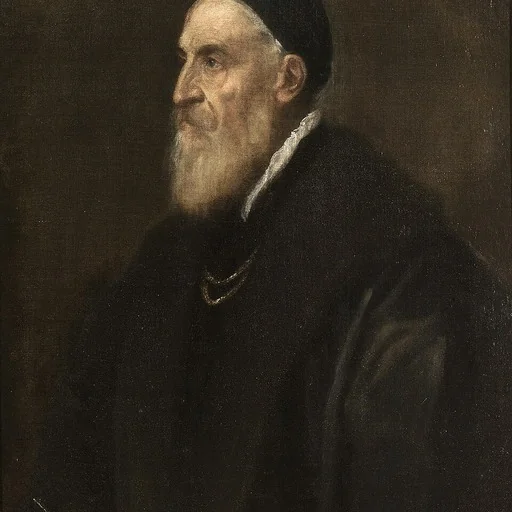
Tiziano Vecellio (Italian:; c. 1488/1490 – 27 August 1576), Latinized as Titianus, hence known in English as Titian ( TISH-ən), was an Italian Renaissance painter. The most important artist of Renaissance Venetian…