Artwork
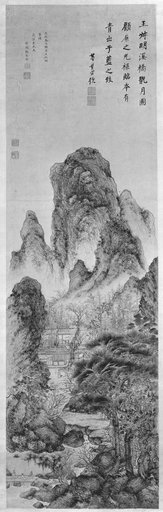
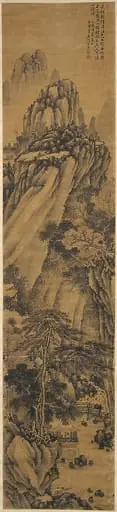
明 顧懿德 倣王蒙玩月圖 軸|Enjoying the Moon: Landscape in the Manner of Wang Meng
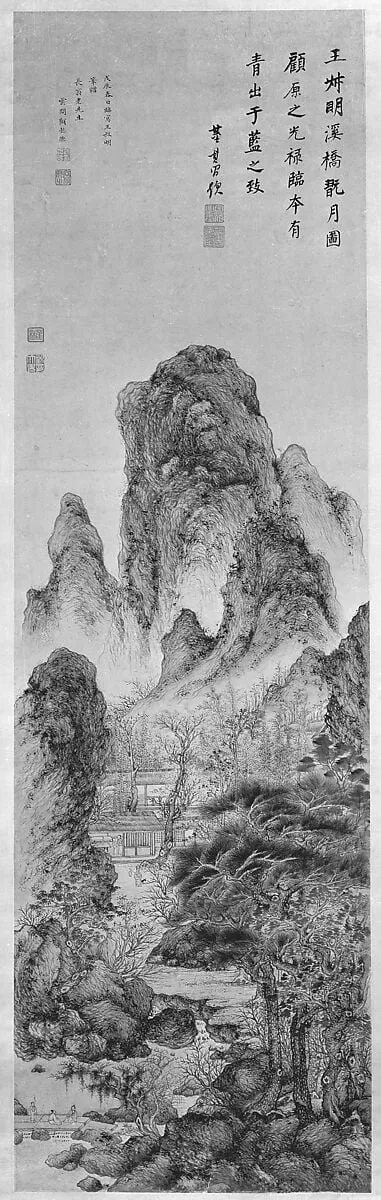
明 顧懿德 倣王蒙玩月圖 軸|Enjoying the Moon: Landscape in the Manner of Wang Meng is an ink painting by the Ming dynasty painting artist Gu Yide. It dates from 1628 and is held in the collection of the Metropolitan Museum of Art.
- Accession no.
- 13.220.111
- Credit line
- John Stewart Kennedy Fund, 1913
About this work
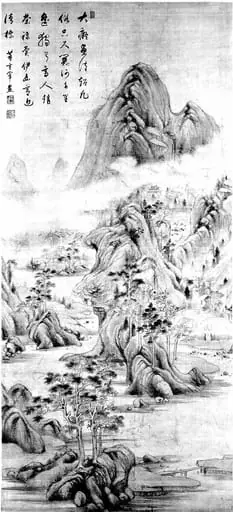
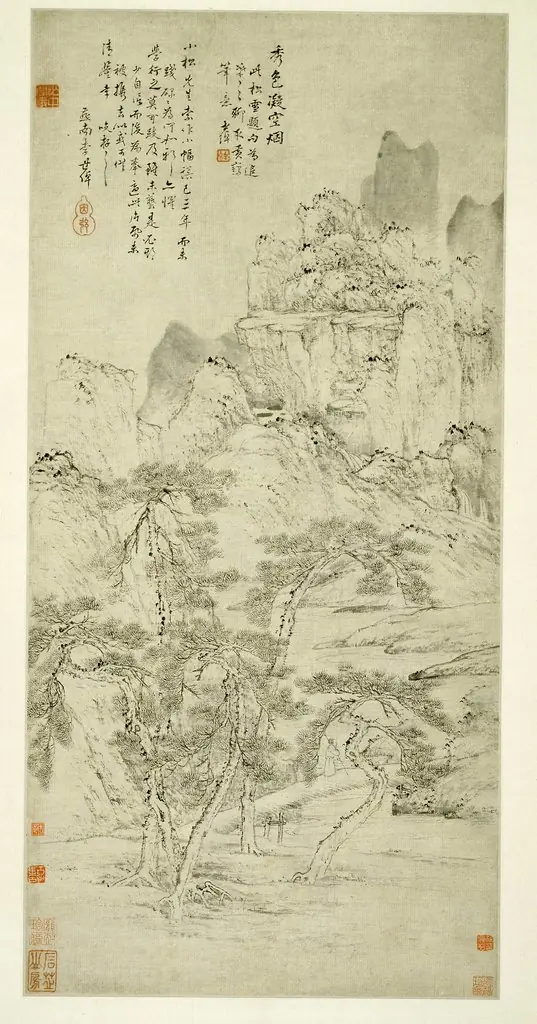
A tall scroll of ink mountains rising like waves, dotted with tiny scholars taking tea under pine trees. Gu Yide painted it in 1628 in the style of a 1300s master, then signed his own name in the corner, like crediting a cover song. The brushwork is so fine you can almost feel the ridges of the rock.
History & Provenance
The hanging scroll Enjoying the Moon: Landscape in the Manner of Wang Meng was created by the Ming artist Gu Yide in 1628.
The hanging scroll Enjoying the Moon: Landscape in the Manner of Wang Meng was created by the Ming artist Gu Yide in 1628. Executed in ink and color on paper, the work originates from China and depicts a mountainous landscape, explicitly adopting the manner of the earlier master Wang Meng. While specific commission details and the chain of ownership prior to the modern era are not recorded, the painting is now held in the Metropolitan Museum of Art, New York, catalogued within the museum's Paintings department under the landscape genre.
No publicly disclosed accession number or exhibition history is available in the cited records. Its creation date of 1628 situates it within the early seventeenth-century, late-Ming artistic milieu.
Overview
Gu Yide's "Enjoying the Moon: Landscape in the Manner of Wang Meng," created in 1628, is a hanging scroll rendered with ink and color on paper. This painting presents a vast mountainous landscape, populated by small figures of scholars. The work is a deliberate stylistic homage to the aesthetic principles of Wang Meng, a prominent painter from the 14th century, yet it bears Gu Yide's own signature.
Subject & Meaning
The composition features towering mountains that rise dramatically, resembling undulating waves. Nestled within this grand natural setting are diminutive figures of scholars, depicted beneath pine trees. These individuals are shown engaging in activities such as drinking tea, implying a moment of quiet contemplation and appreciation for the natural world. Such scenes typically convey ideals of scholarly retreat and harmony with nature.
Technique & Style
Gu Yide executed this landscape using fine brushwork that creates a sense of texture and depth, particularly evident in the depiction of the rock formations. The artist consciously adopted the stylistic conventions of Wang Meng, a master from the Yuan dynasty, reflecting a practice of artistic emulation. However, Gu Yide asserted his individual authorship by affixing his own name to the work, even while working within an established tradition.
Artist & collection