Artwork
Apoll schindet Marsyas
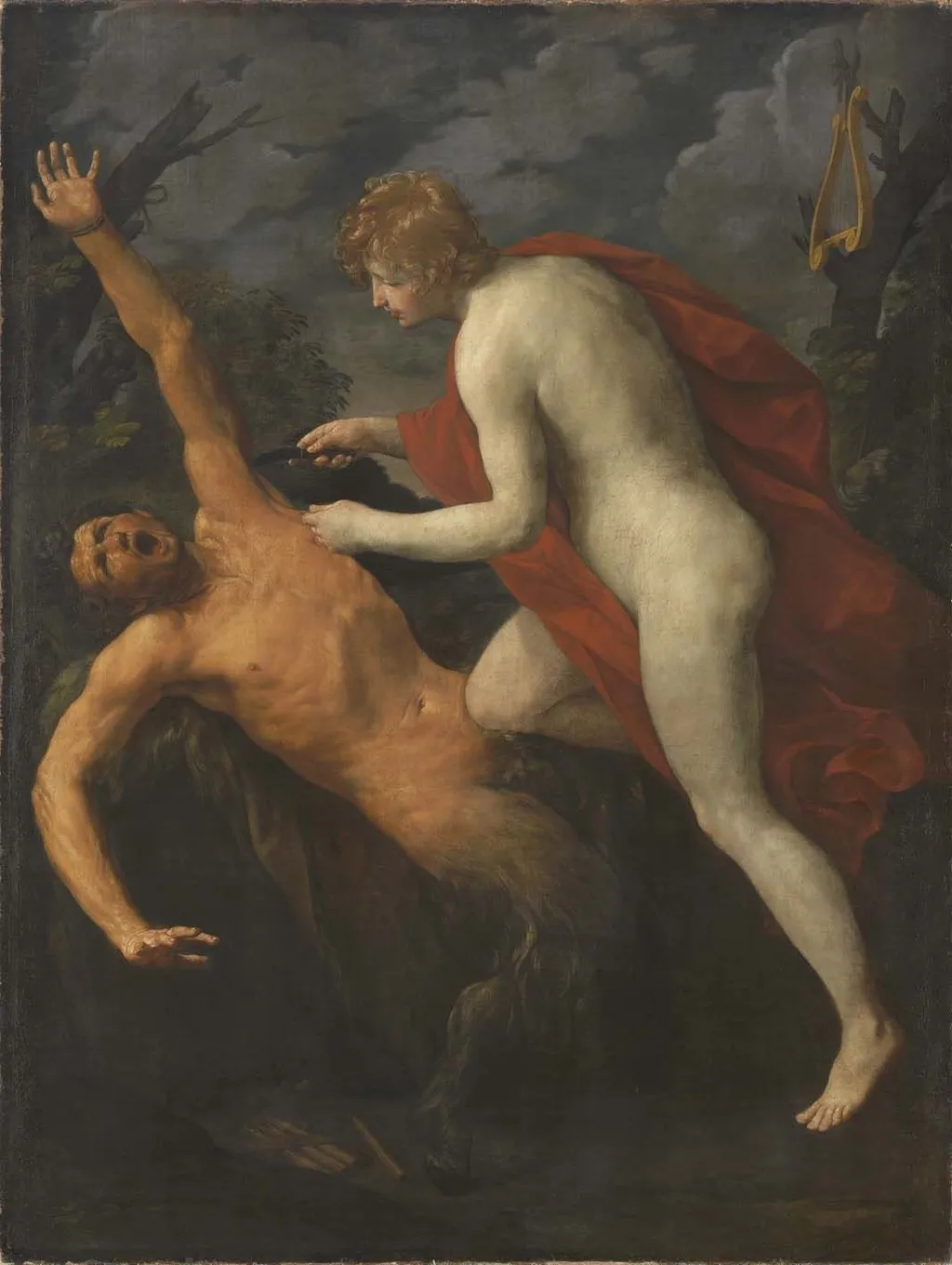
Apoll schindet Marsyas is an unspecified painting by the Early Baroque Italian artist Guido Reni. It dates from 1633 and is held in the collection of the Bavarian State Painting Collections.
About this work
Subject & Meaning
The work is interpreted as an allegory representing the victory of classical art over naturalism, a thematic shift noted in Reni's later style after 1620.
Guido Reni's painting depicts the mythological scene of Apollo flaying Marsyas, illustrating the confrontation between the two figures. The work is interpreted as an allegory representing the victory of classical art over naturalism, a thematic shift noted in Reni's later style after 1620. Visually, the composition contrasts the cold, greenish, and murky flesh of the nude Apollo, draped in a red mantle, with the heated, brick-toned skin of the suffering Marsyas.
This stark color dichotomy emphasizes the physical and symbolic distinction between the divine artist and the mortal challenger, reinforcing the programmatic idealism of the piece.
Technique & Style
Executed around 1633, this work is an oil painting on canvas measuring approximately 223.3 by 169.5 cm. The composition features a nude Apollo set against a red drapery background, creating a stark visual contrast with the figure of Marsyas. Stylistically, the artist employs a distinct color palette to differentiate the subjects: Apollo's flesh is rendered in cold, greenish, and somewhat turbid tones, while the suffering Marsyas is depicted with baked, brick-red hues. This chromatic opposition serves to highlight the thematic tension between the figures.
The handling of the paint reflects a programmatic return to idealistic traditions, moving away from naturalism through these calculated stylistic choices.
History & Provenance
Guido Reni executed the oil painting Apollo Flaying Marsyas around 1633. While Joachim von Sandrart mentioned the canvas generally in 1683, specific documentation places the work at Schleißheim Castle by at least 1852 prior to its transfer to the Alte Pinakothek in Munich. Art historian Jacob Hess analyzed the piece in 1934, interpreting its idealistic approach as a deliberate shift away from naturalism following the 1620s.
Otto Kurz subsequently confirmed the dating to approximately 1633. The composition was preceded by at least two preparatory drawings of Marsyas's head, which are currently held in the Royal Collection and the Louvre.
Guido Reni's painting Apollo and Marsyas is held by the Bavarian State Painting Collections at the Alte Pinakothek in Munich. Prior to its current location, the work was housed at Schleißheim Castle from at least 1852. The inventory history notes that Joachim von Sandrart referenced the canvas generically in 1683.
While the painting is currently displayed in Munich, its provenance traces back through the Schleißheim collection before entering the Alte Pinakothek. Specific accession numbers or detailed exhibition catalogs are not provided in the available records, though the work's presence at Schleißheim is documented for the mid-nineteenth century.
Context
The painting was cited by Joachim von Sandrart in 1683 and was located at Schloss Schleißheim before entering the Bavarian State Painting Collections, where it has been displayed at the Alte Pinakothek since at least 1852. Otto Kurz situates the work within Guido Reni's output around 1633, while Jacob Hess interpreted its idealizing style as part of a deliberate shift away from Reni's earlier naturalism after 1620, framing it as an allegory of classical art's triumph. Scholarship highlights the artwork's role in this stylistic transition and its representation of classical themes within the Baroque period, contextualizing it within the broader trajectory of Reni's career and the evolution of European painting.
Overview
Guido Reni’s 1633 canvas presents a mythological encounter between the god Apollo and the satyr Marsyas. Executed for a private collection, the work now resides in Munich’s Alte Pinakothek. The composition centers on two nude figures whose opposing gestures generate a palpable sense of conflict and movement.
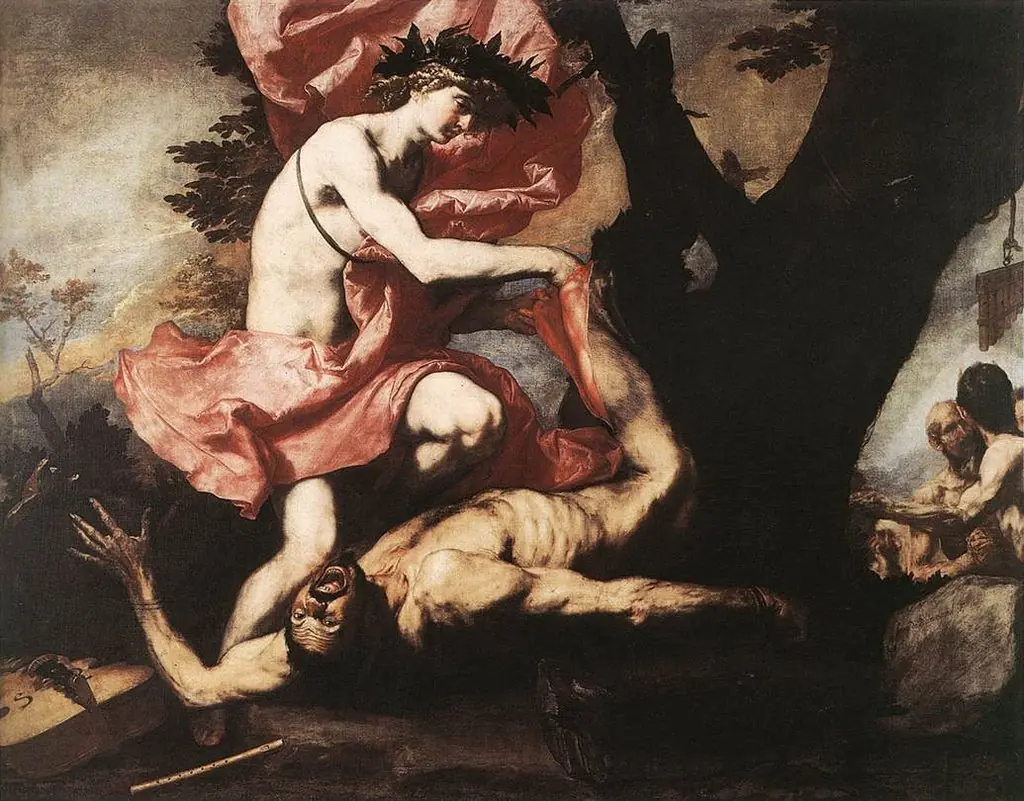
Artist & collection
Artist
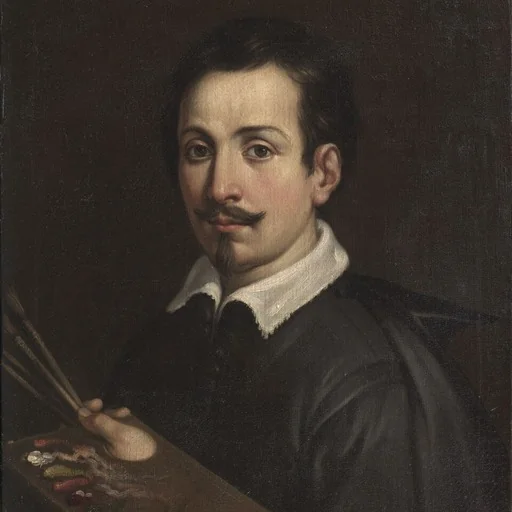
Guido Reni was an Italian Baroque painter, although his works showed a classical manner, similar to Simon Vouet, Nicolas Poussin, and Philippe de Champaigne.

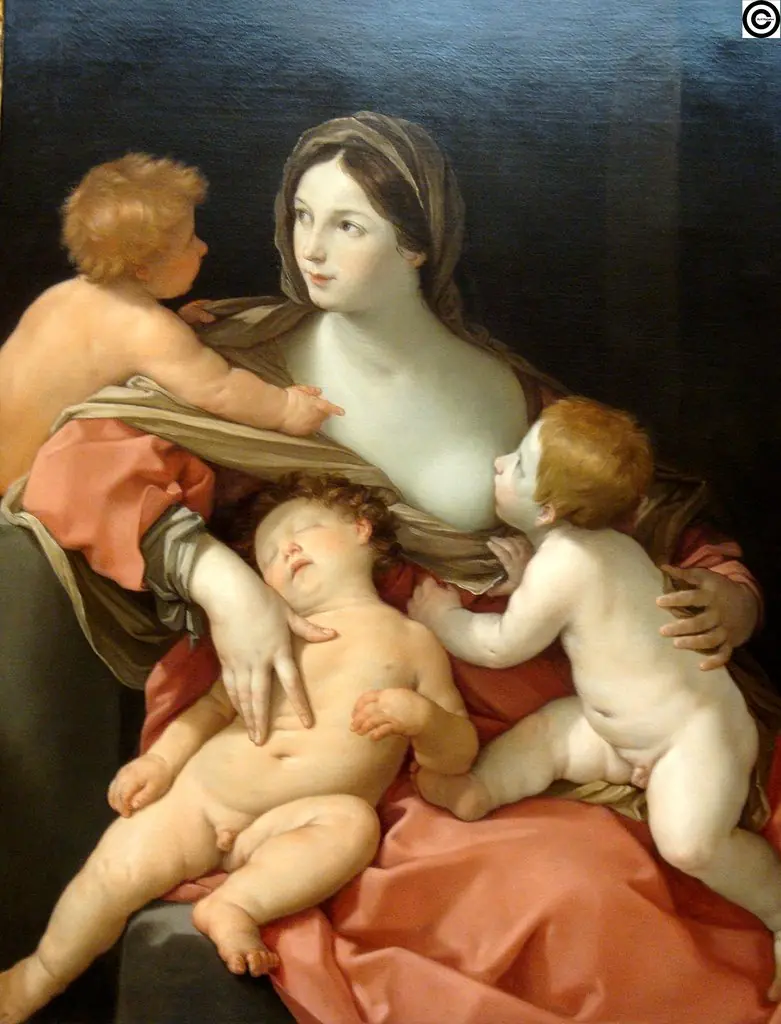
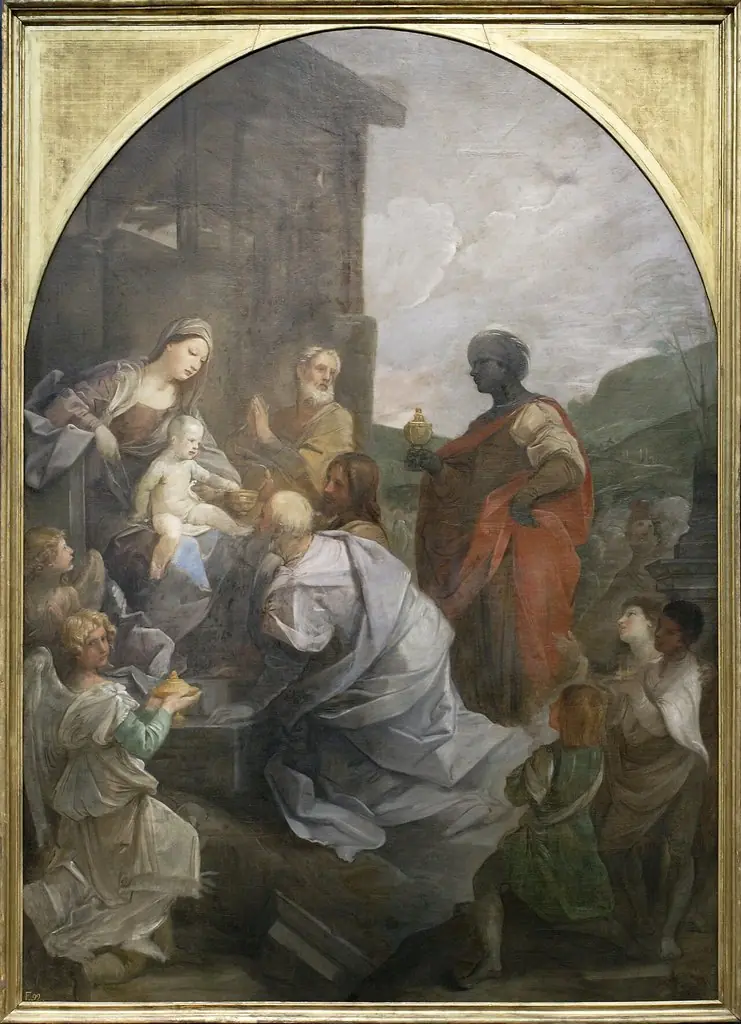
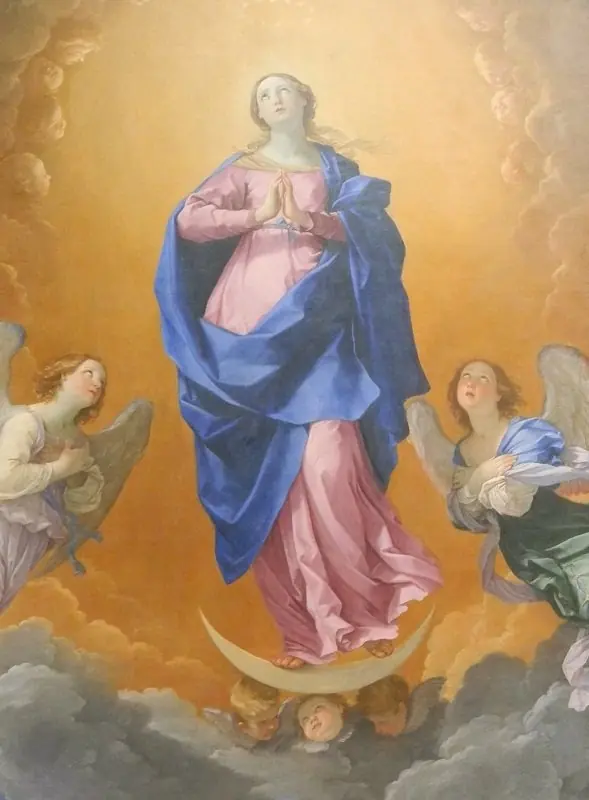
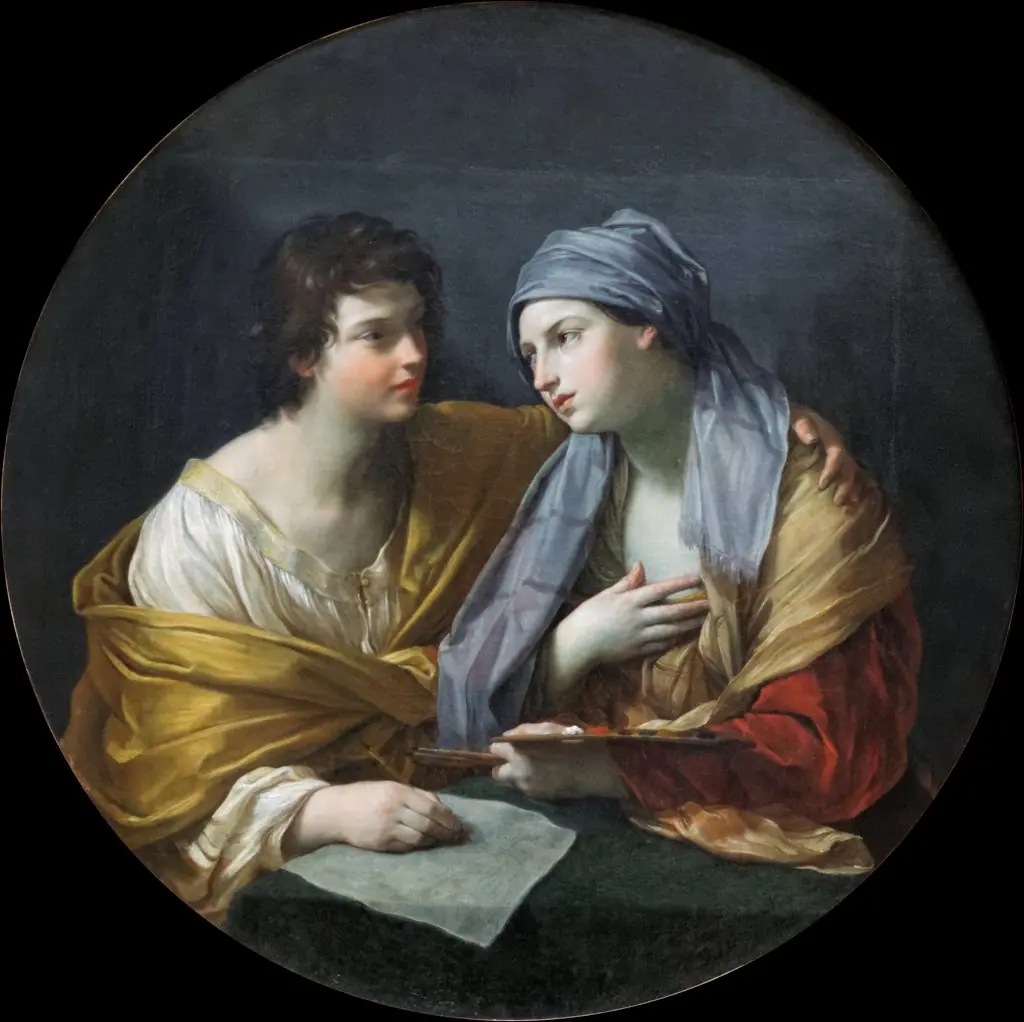
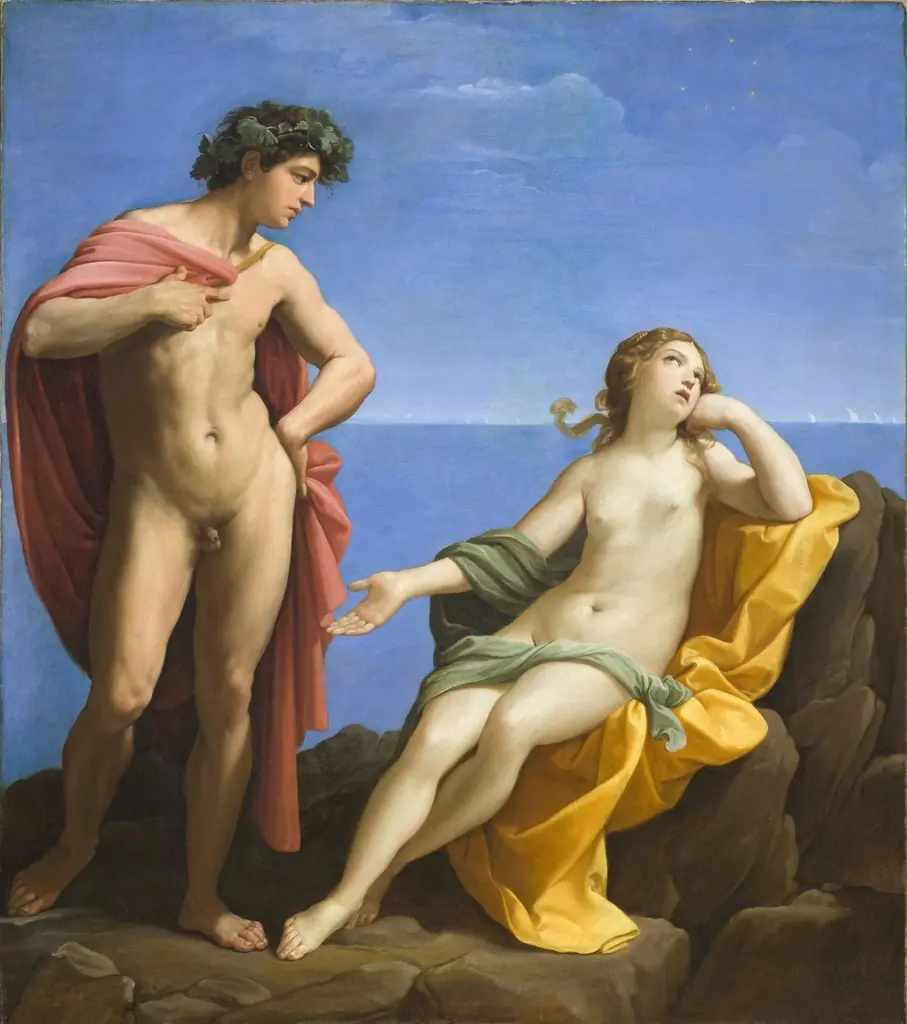
- Apollo Flaying Marsyas
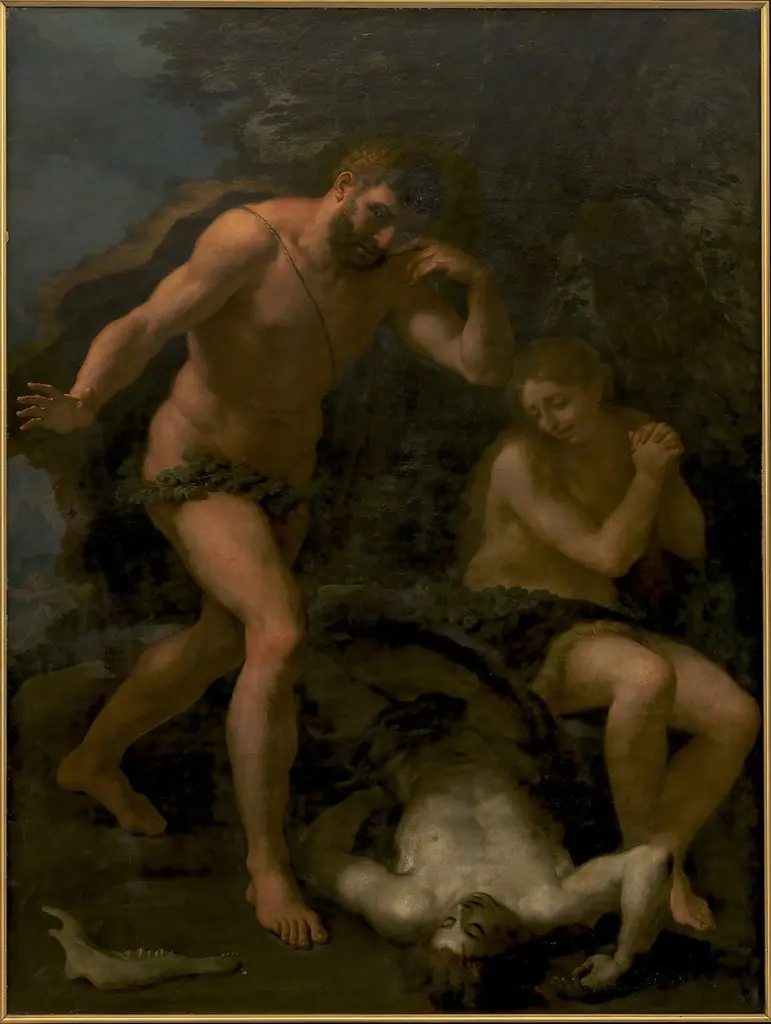 Adam and Eve Lamenting over the Body of Abel
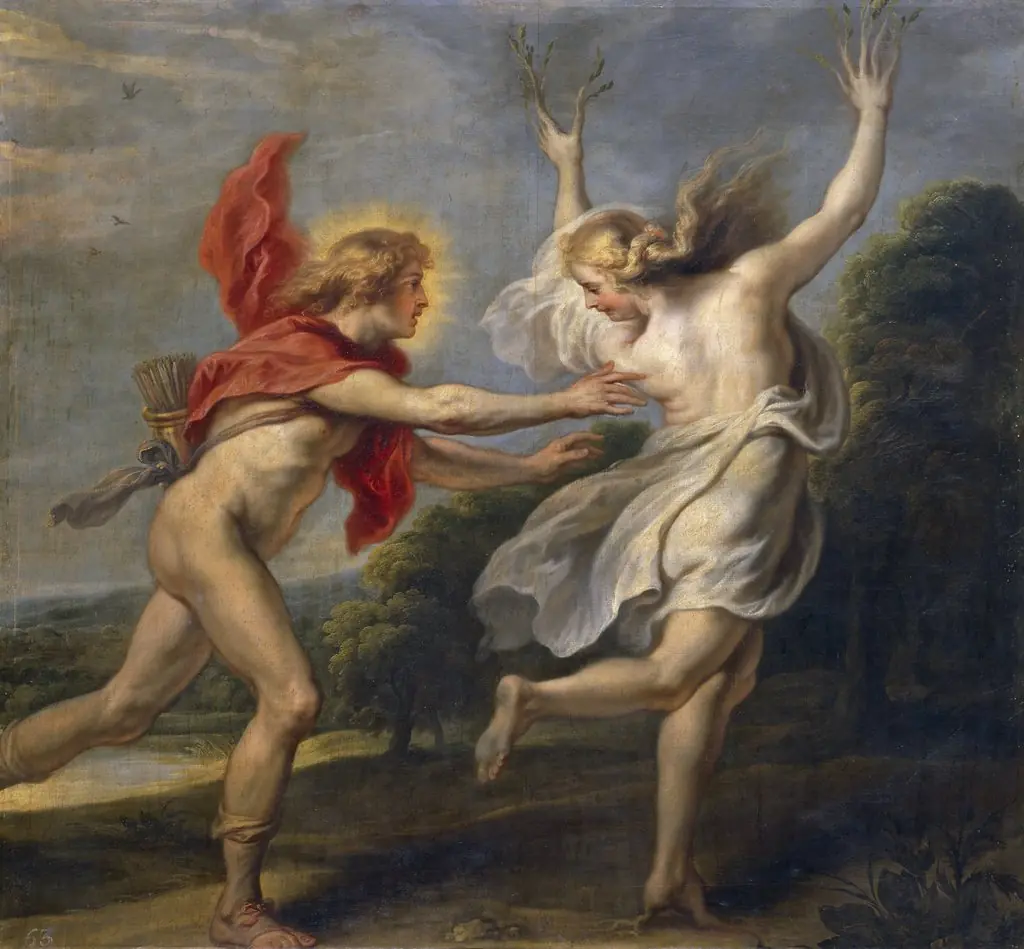 Apollo and Daphne
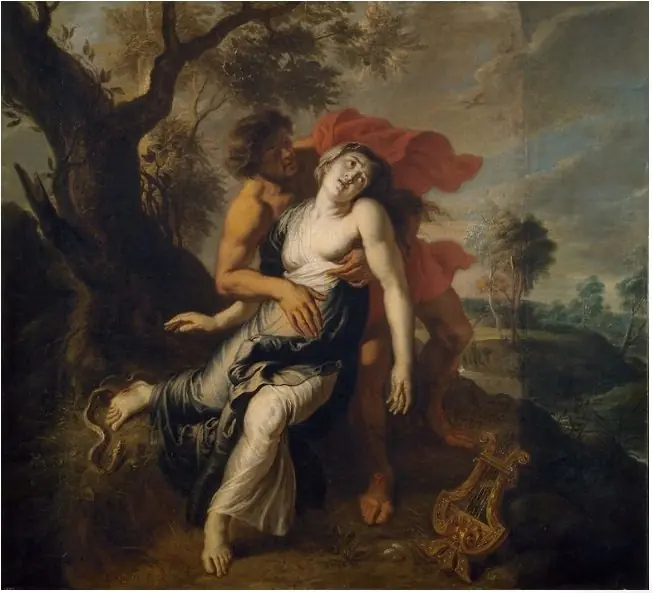 The Death of Eurydice
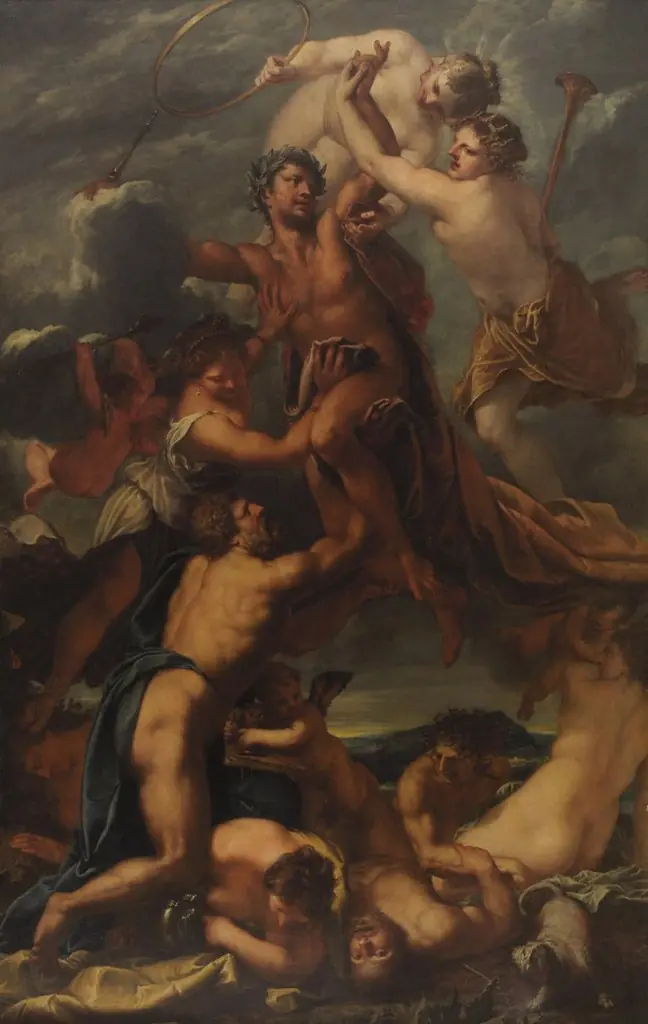 The apotheosis of Emperor Leopold I
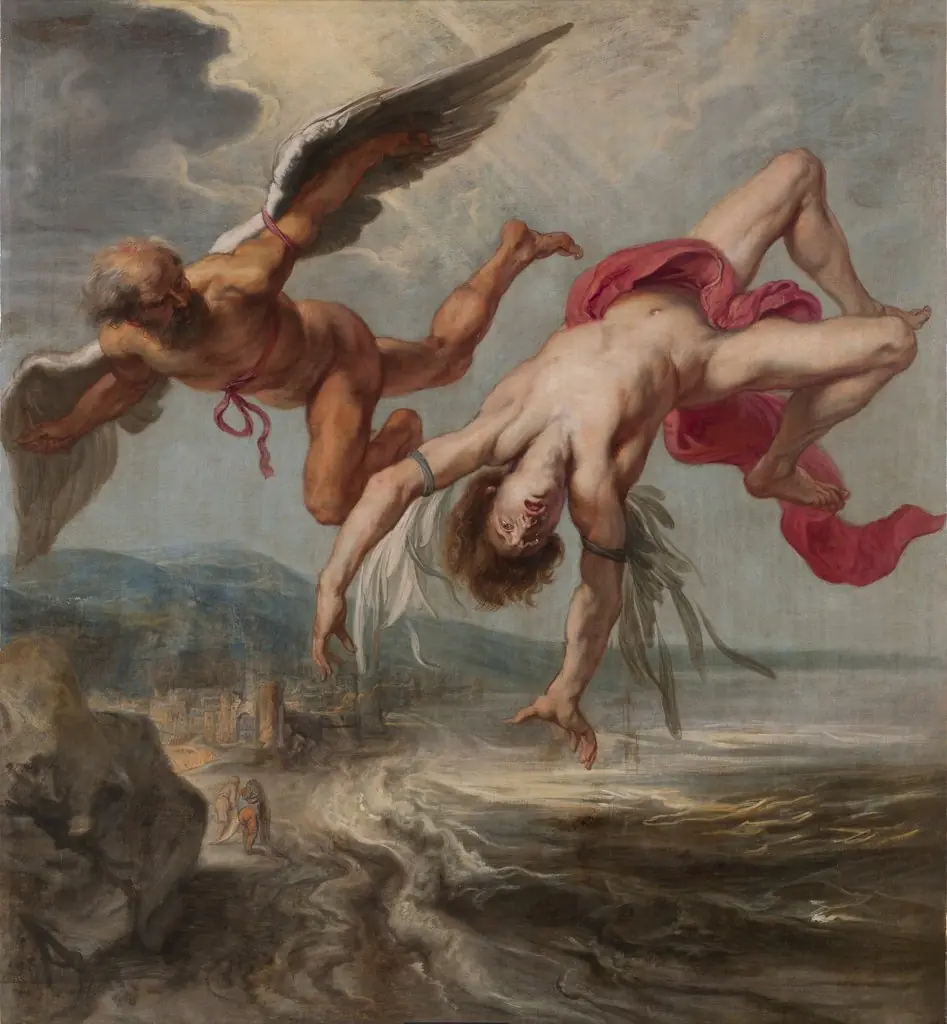 The Fall of Icarus
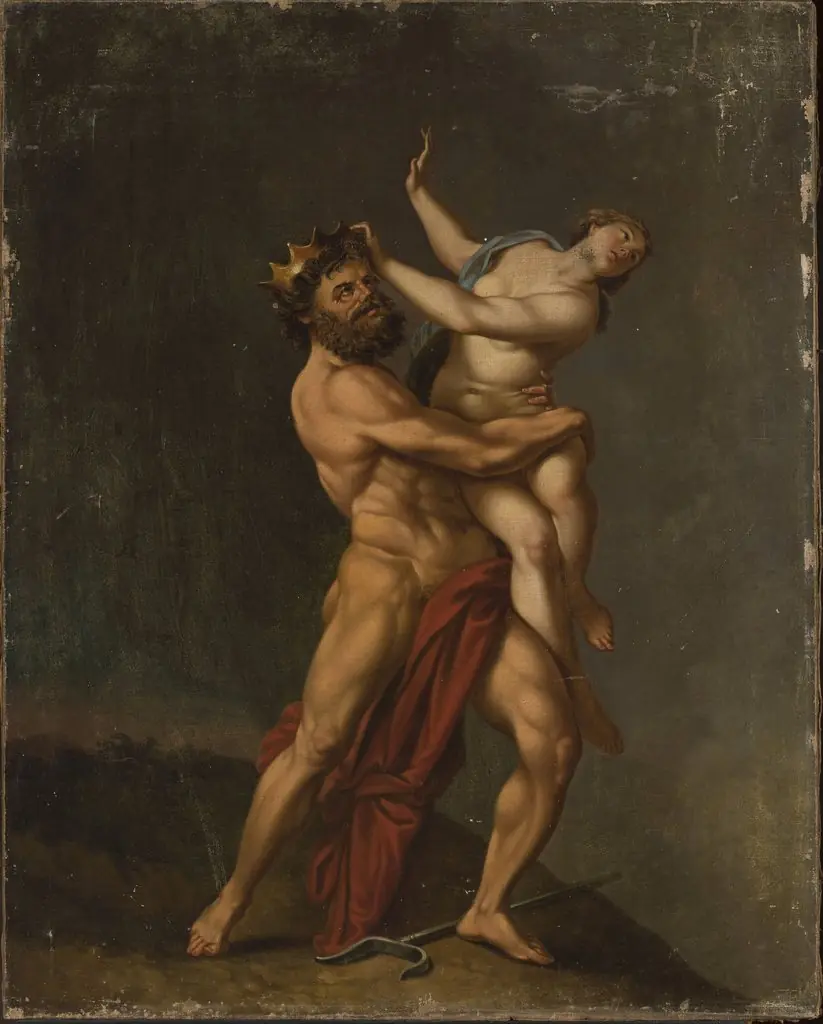 Abduction of Proserpina by Pluto
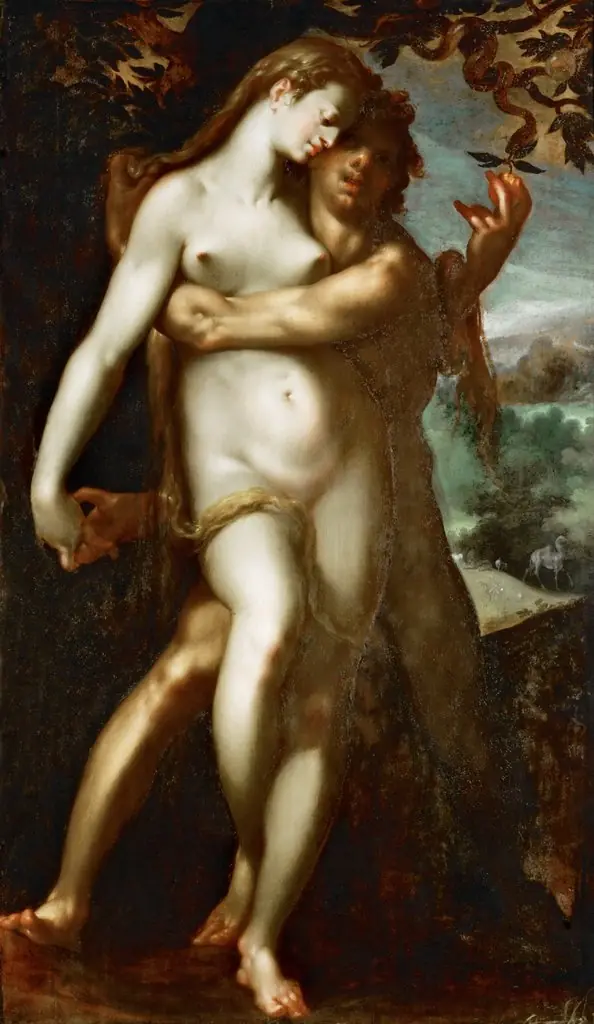 Fall of Man
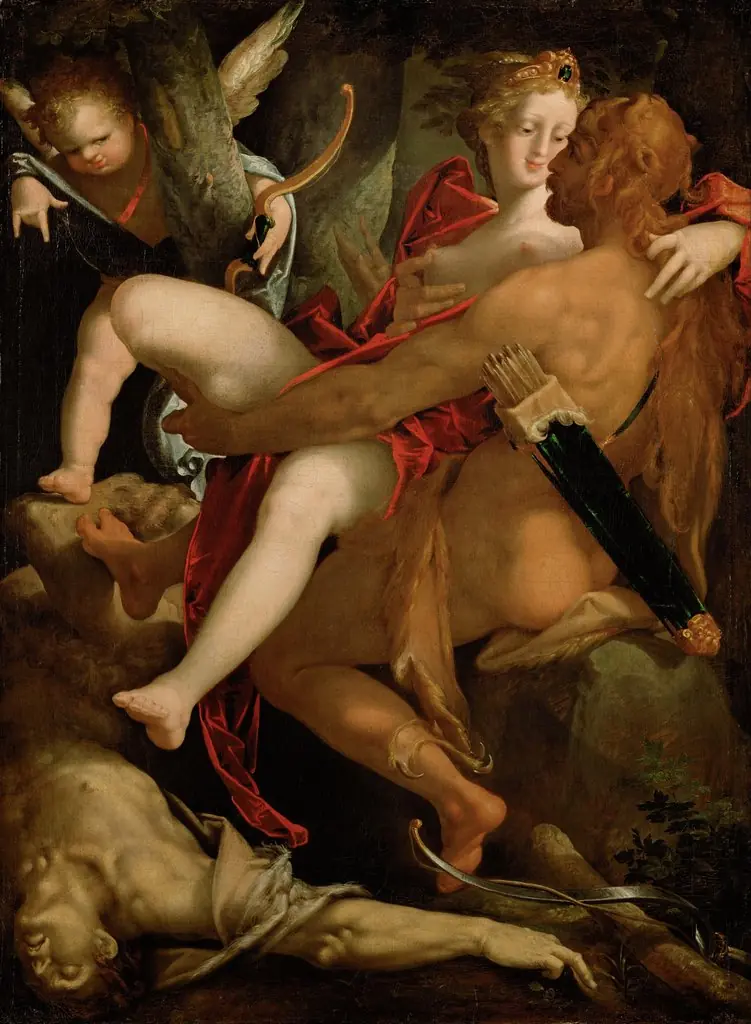 Hercules, Deianira, and Nessus
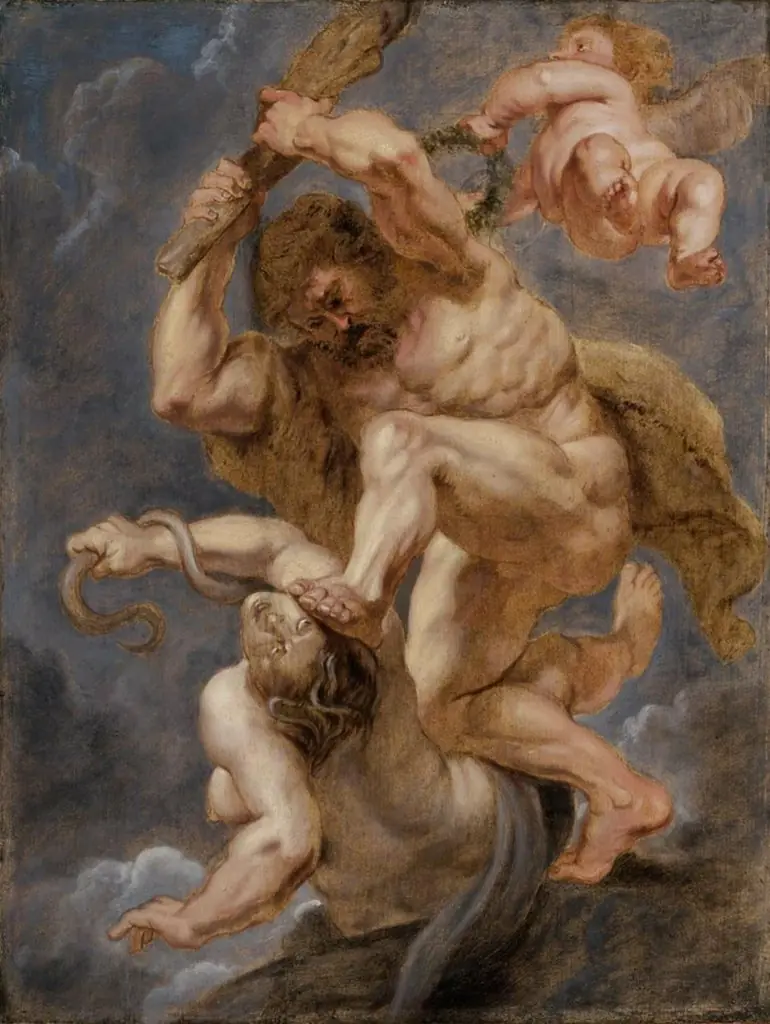 Hercules as Heroic Virtue Overcoming Discord
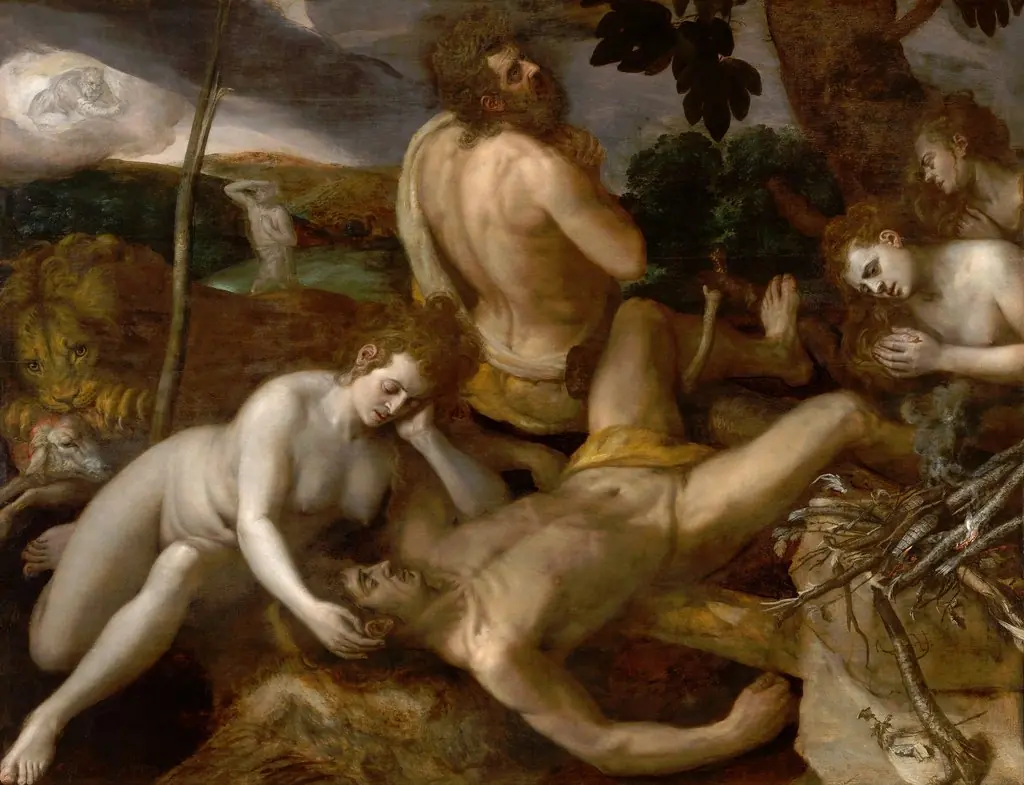 Adam and Eve grieve over the Dead Body of Abel