Artwork
Scenes of Country Life: Fishing
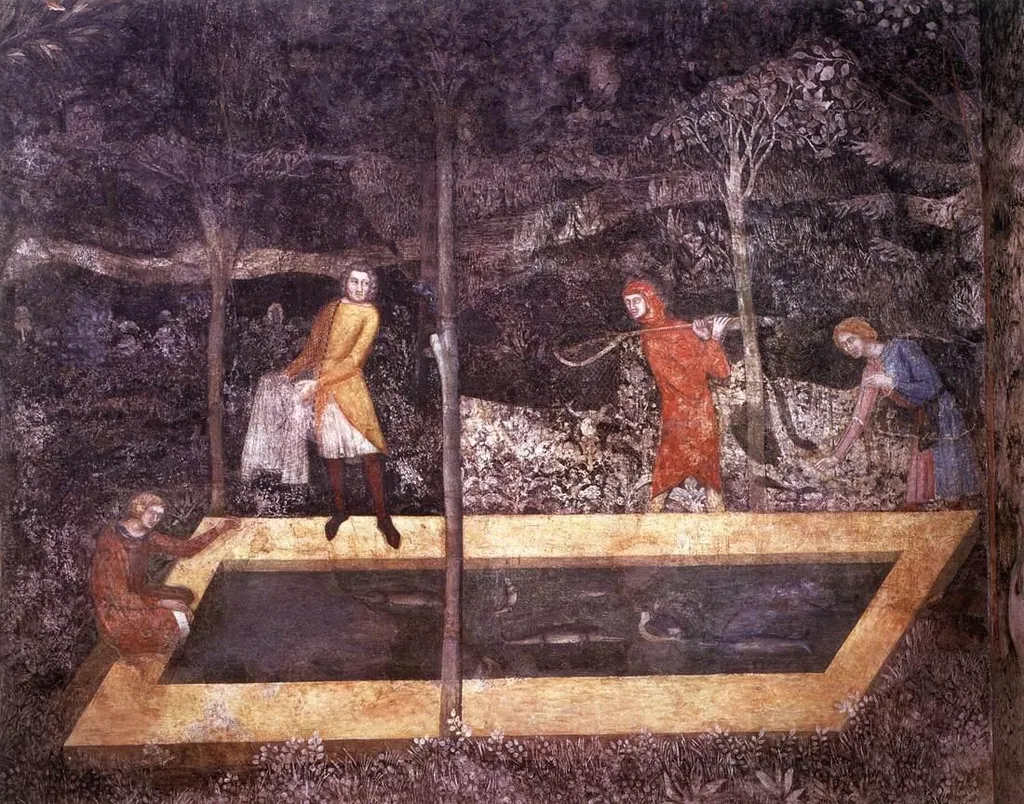
Scenes of Country Life: Fishing is an unspecified painting by the Gothic painting artist Unknown. It dates from 1343 and is held in the collection of the Palais des Papes. This painting captures a quiet moment of rural labor in a wooded setting, focusing on ordinary figures engaged in daily tasks.
About this work
Overview
This painting captures a quiet moment of rural labor in a wooded setting, focusing on ordinary figures engaged in daily tasks.
This painting captures a quiet moment of rural labor in a wooded setting, focusing on ordinary figures engaged in daily tasks. No dramatic narrative is present, only the subdued rhythm of work and rest. The composition is grounded in naturalism, with figures arranged to suggest spatial depth and unforced interaction. Muted earth tones and careful light modeling reinforce the scene’s tranquility and authenticity.
Subject & Meaning
The figures are engaged in activities related to fishing and land-based labor: one stands on a platform, another observes from above, a third holds a long pole, and a woman tends to something at ground level. These actions suggest cooperative, localized work rather than spectacle. The absence of grandeur or symbolism points to an appreciation for the dignity of routine rural life, rendered without idealization or moralizing.
Technique & Style
The artist employs chiaroscuro to model forms with subtle gradations of light and shadow, giving volume to figures and terrain alike. The palette is restrained, dominated by browns, olives, and grays, enhancing the sense of quiet realism. Brushwork is controlled but not polished, allowing texture in clothing and foliage to emerge naturally. Compositionally, the figures are placed to guide the eye across the scene without focal dominance.
History & Provenance
The painting’s origin and early ownership are undocumented in available records. It appears to belong to a tradition of 17th-century Northern European genre scenes, though no definitive attribution or exhibition history has been established. Its survival suggests it was preserved by private collectors, likely valued for its quiet observation rather than its artist’s fame.
Context
Created during a period when rural life was increasingly romanticized in art, this work resists sentimentality. It aligns with regional traditions that depicted peasants and laborers with observational accuracy, distinct from the theatricality of courtly painting. The setting, wooded, unremarkable, reflects the everyday landscapes of modest communities, where survival depended on seasonal, collective effort.
Legacy
Though not widely exhibited or reproduced, the painting contributes to a broader understanding of how ordinary life was recorded in pre-industrial Europe. Its unembellished approach offers a counterpoint to more celebrated genre works, reminding viewers that historical art often documented the unnoticed moments of labor, not just the exceptional.
Artist & collection









 Episodes from the Lives of Mary Magdalen and Saint John the Baptist
 The Assassination and Funeral of Julius Caesar
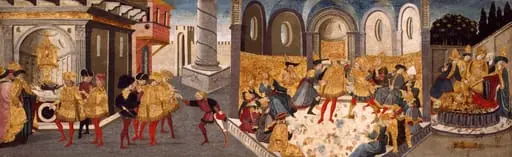 The Assassination and Funeral of Julius Caesar
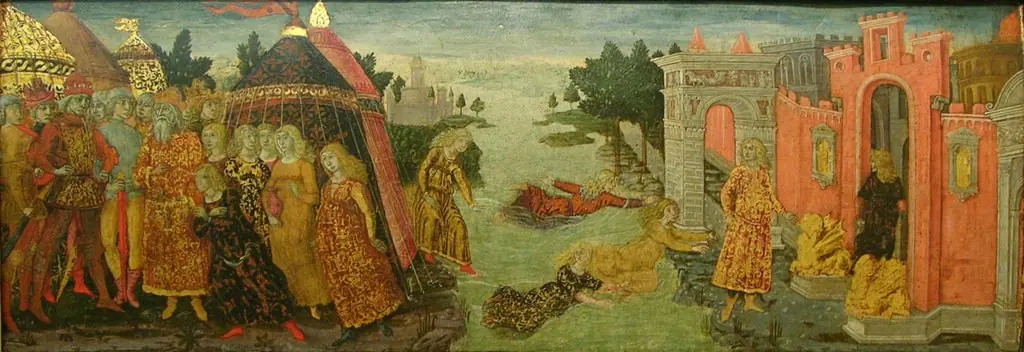 The Legend of Cloelia
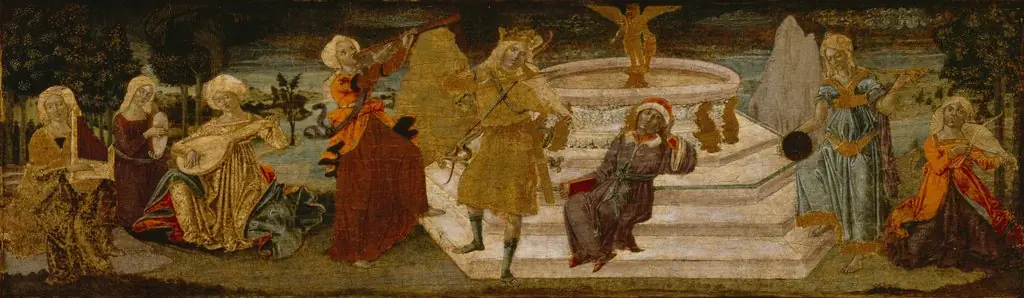 Apollo and the Muses
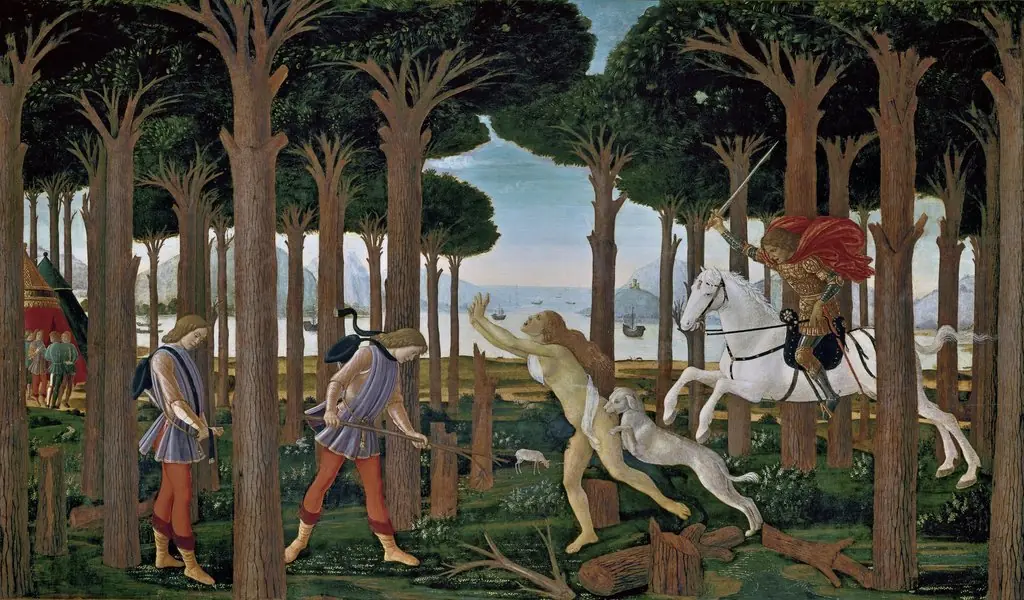 The Story of Nastagio Degli Onesti, part one
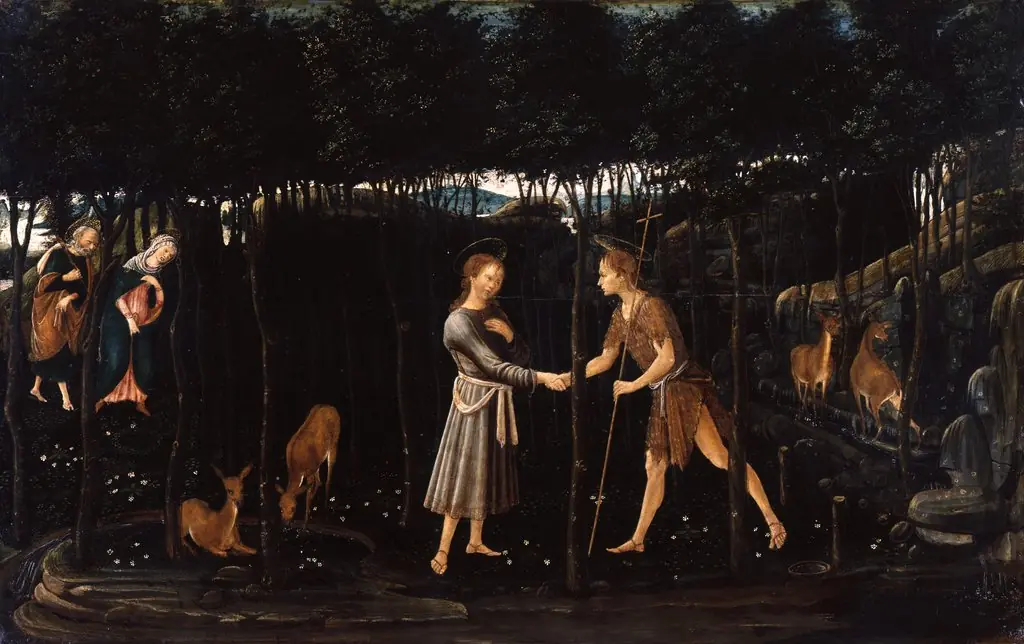 The Meeting of the Young Christ and the Young St. John
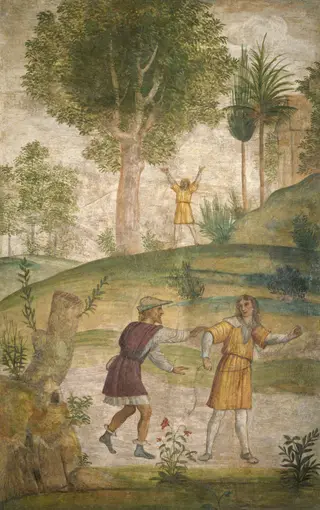 The Despair of Cephalus
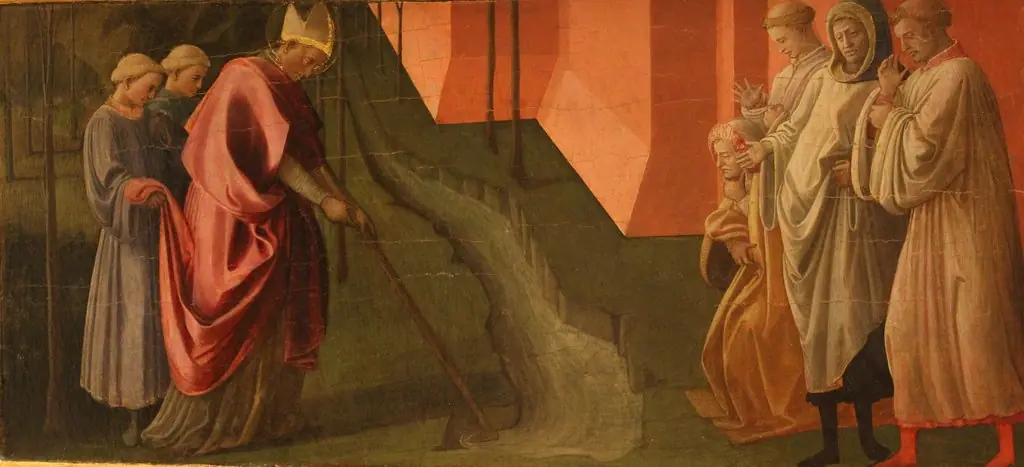 St Fredianus Diverts the River Serchio
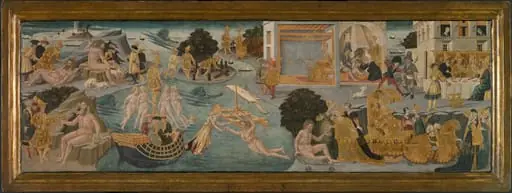 The Adventures of Ulysses
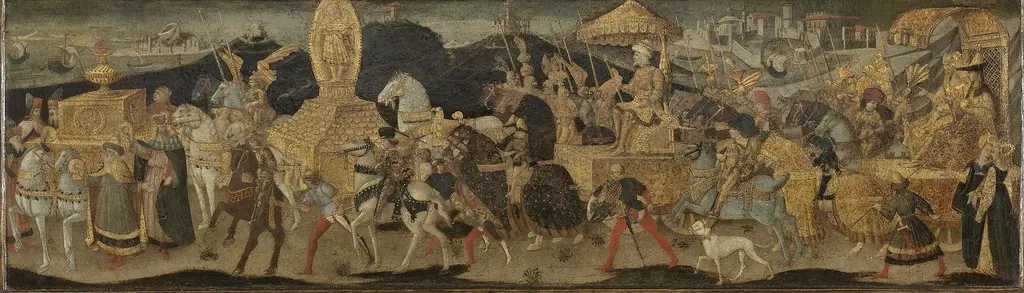 Darius Marching to the Battle of Issus
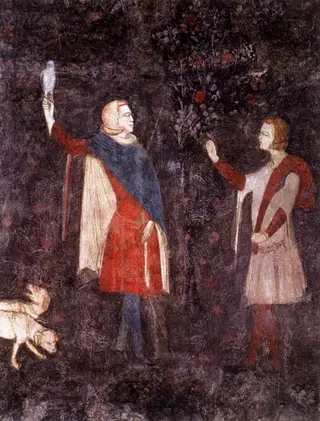
- Scenes of Country Life: Falconry