Artwork
The Good Samaritan
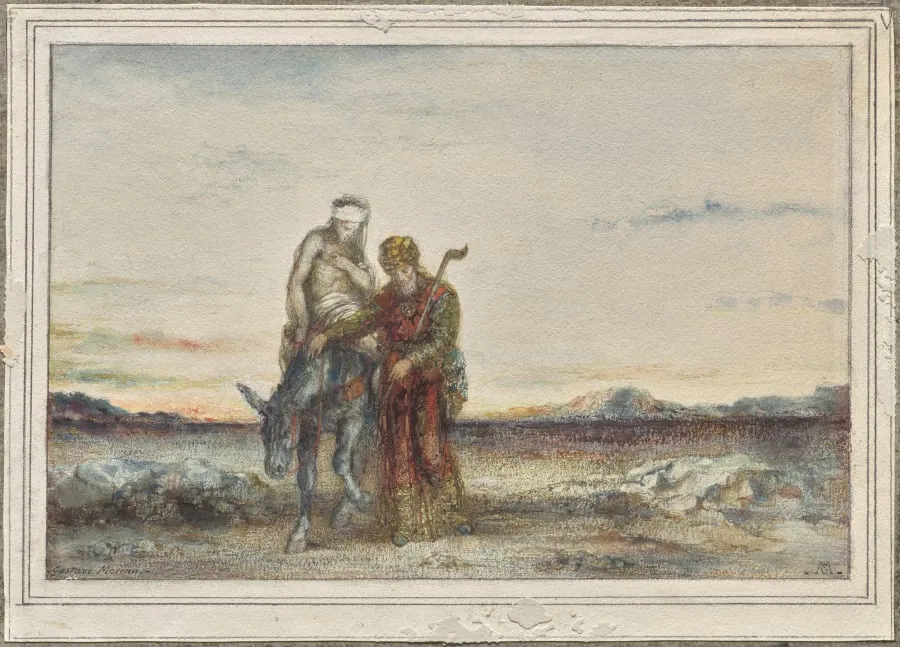
The Good Samaritan is a drawing by the Impressionist artist Gustave Moreau. It dates from 1868 and is held in the collection of the Cleveland Museum of Art.
- Accession no.
- 2024.32
- Credit line
- Leonard C. Hanna Jr. Fund
About this work
Overview
The Good Samaritan is a drawing by Gustave Moreau, created using watercolor to achieve a dense, layered effect. The work depicts a scene from a biblical parable.
Subject & Meaning
The drawing illustrates the moment when the Samaritan relinquishes his mount to aid a wounded traveler, emphasizing the act of selfless kindness between two individuals from different backgrounds.
Technique & Style
Moreau employed watercolor in a way that yields a rich, jewel-like quality, imbuing the scene with an emotional and dreamlike atmosphere. The figures are set against a backdrop of dark, swirling rocks, creating a sense of depth and mystery.
Context
This work is characteristic of Symbolism, a movement that prioritized the expression of inner experiences and ideas over realistic representation. Moreau's interpretation of a traditional biblical narrative reflects this emphasis on imagination and interiority.
Artist & collection

Artist
Gustave Moreau was a French artist and an important figure in the Symbolist movement.

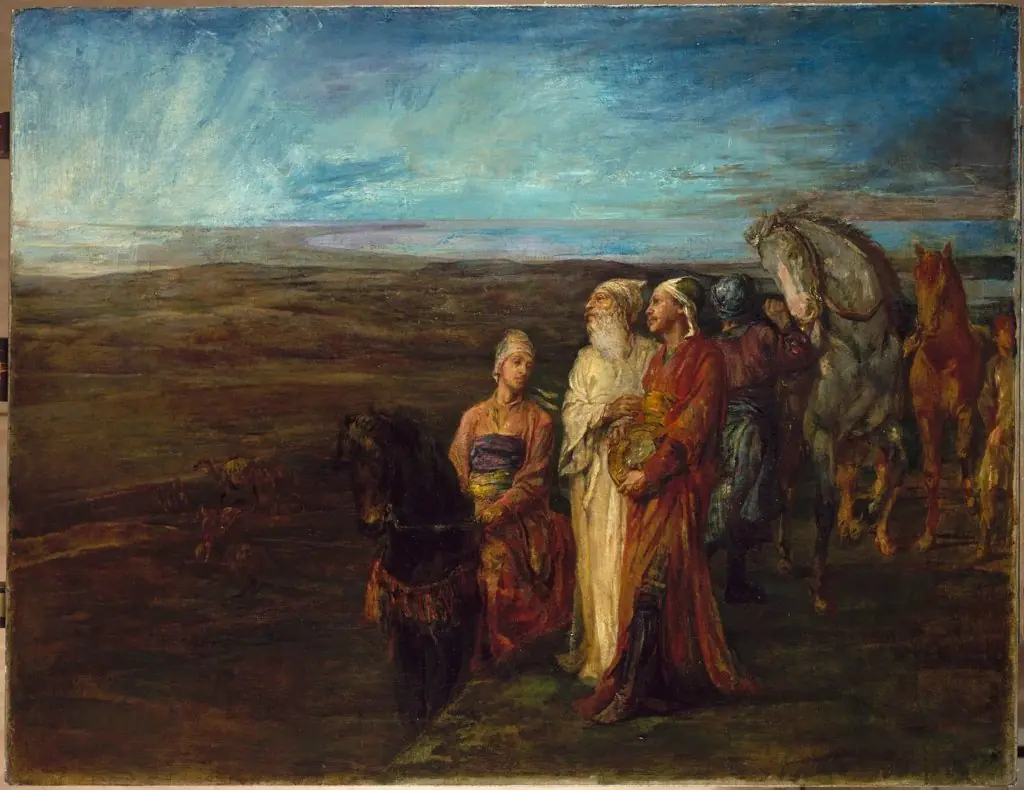 The Three Wise Men
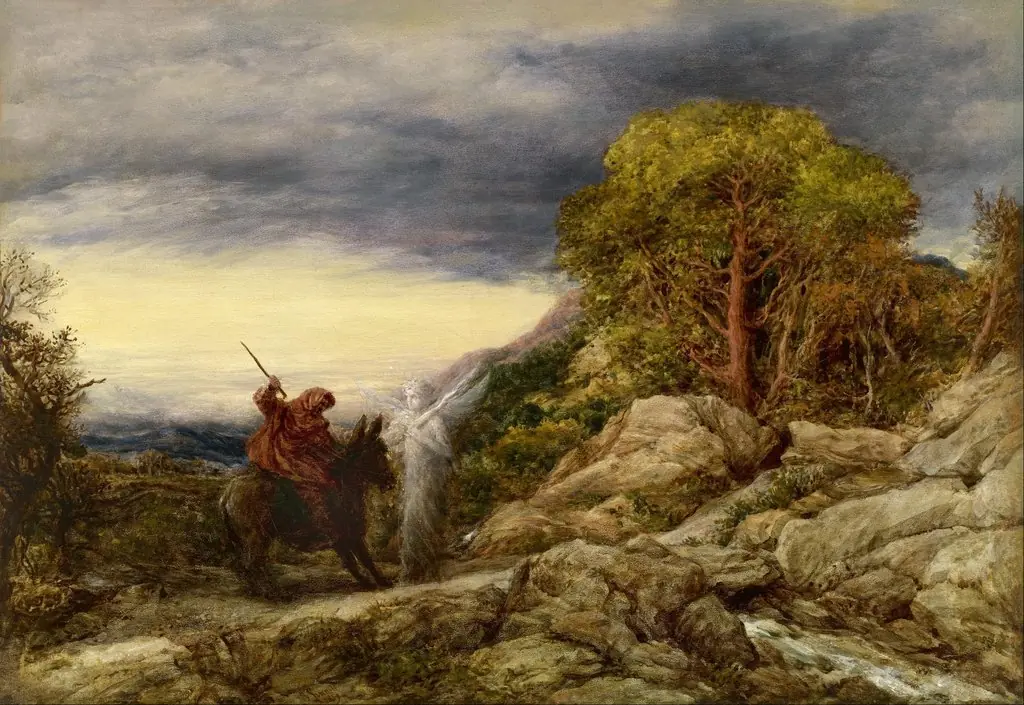 The Prophet Balaam and the Angel
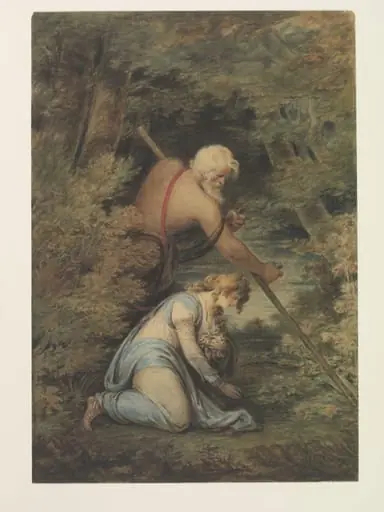 Memory gathering the flowers mowed down by time
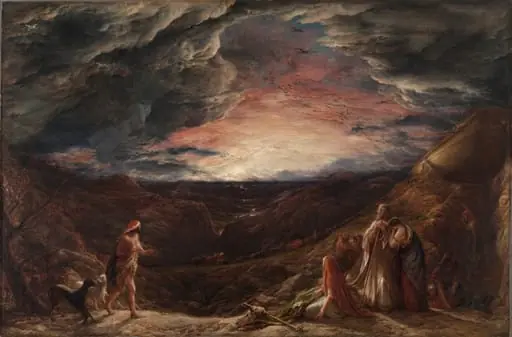 Noah: The Eve of the Deluge
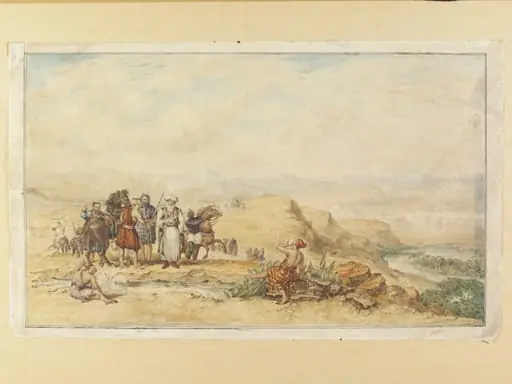 Halt at an Oasis
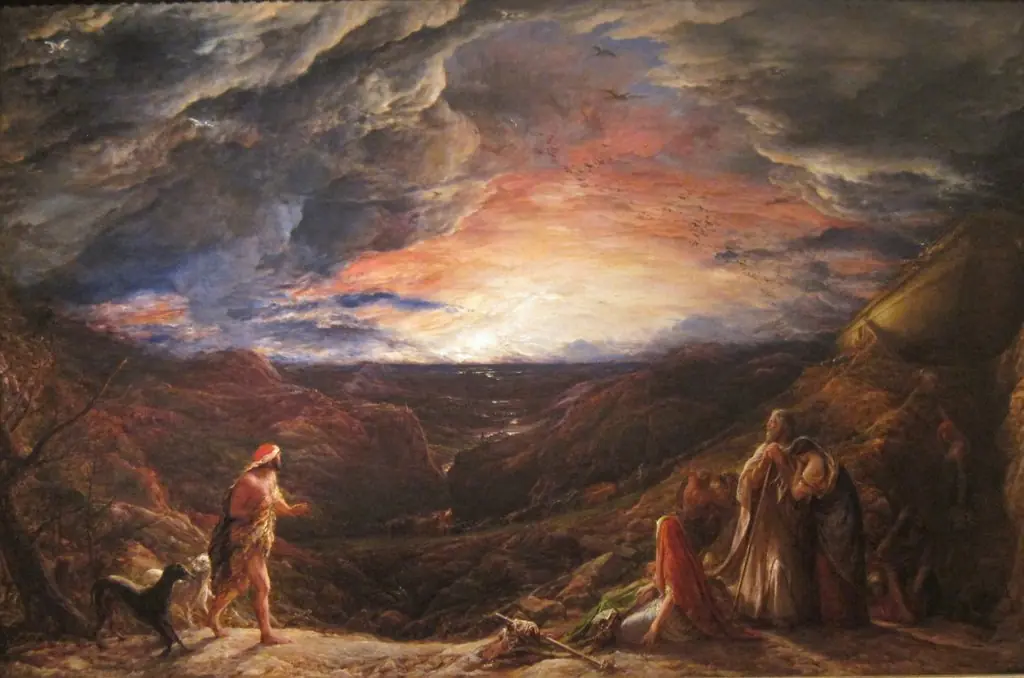 Noah: The Eve of the Deluge
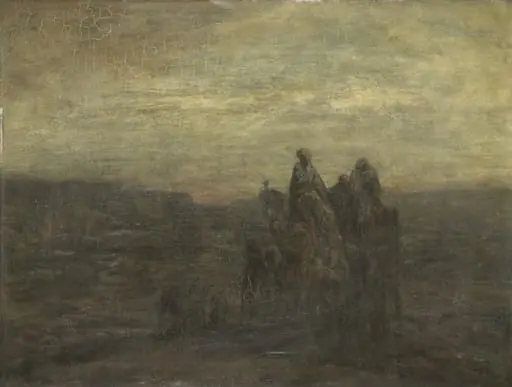 Caravan
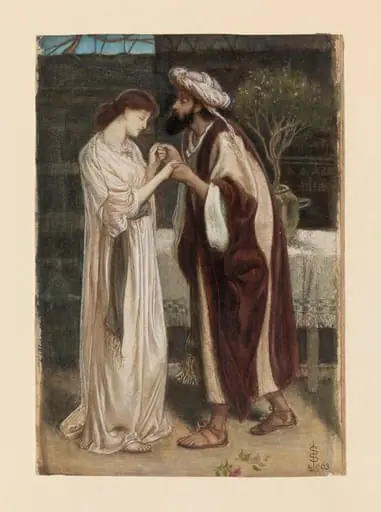 Isaac and Rebekah
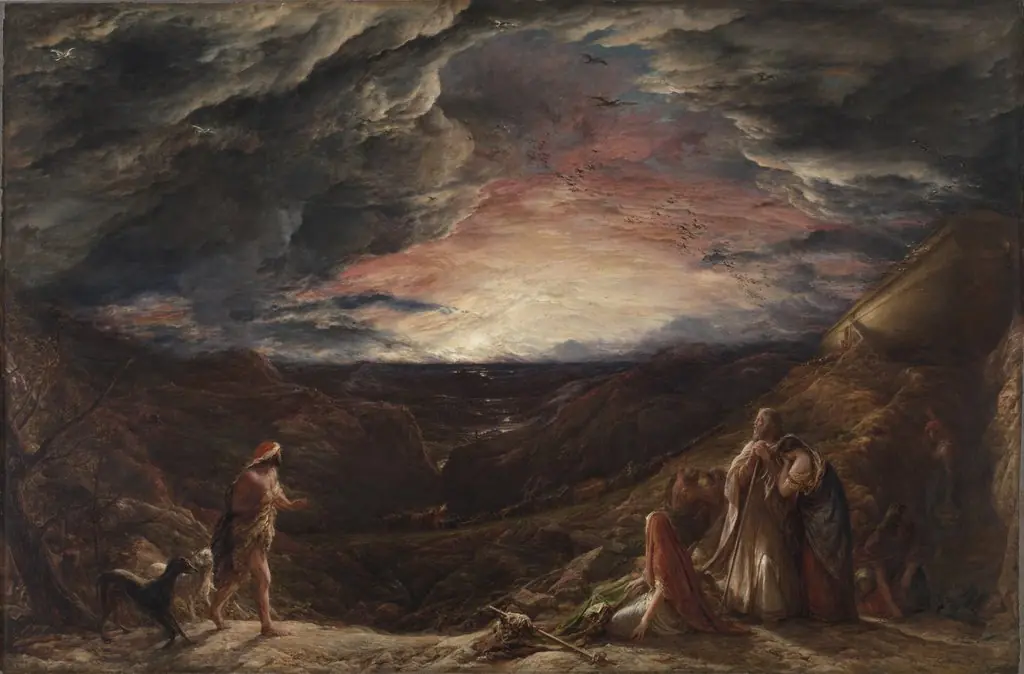 Noah: The Eve of the Deluge
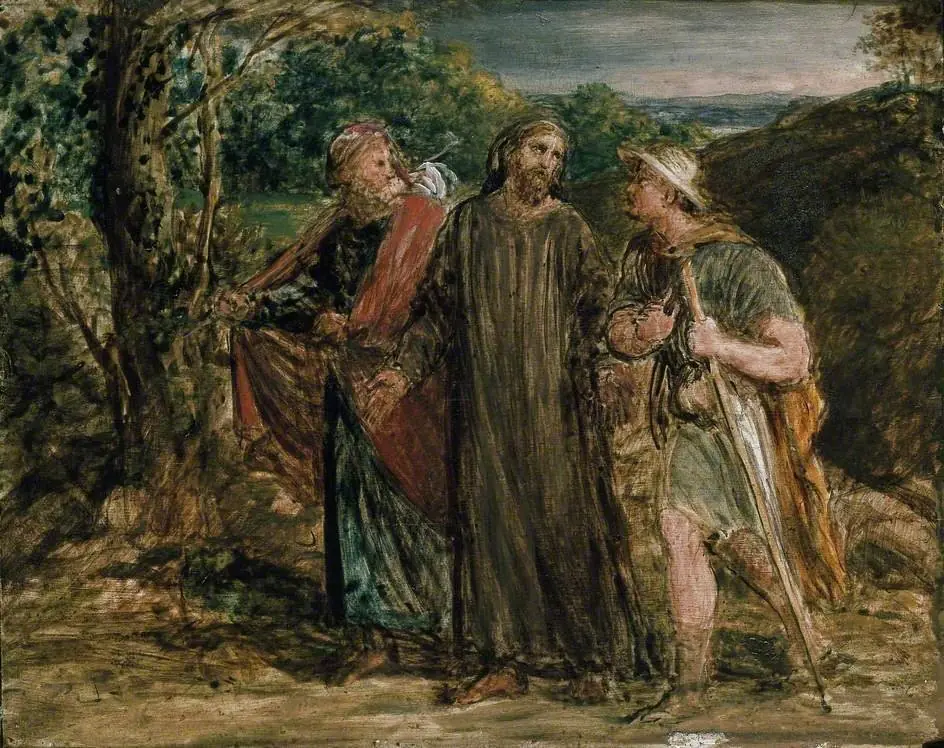 Sketch for 'Christ's Appearance to the two Disciples journeying to Emmaus'
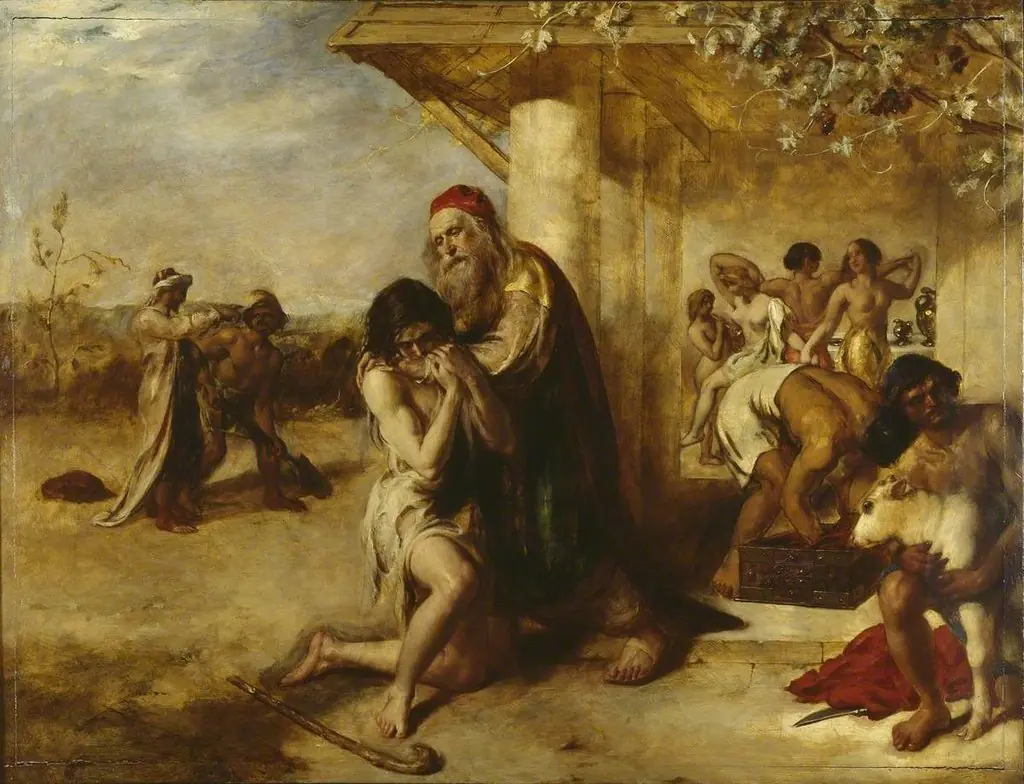 The Repentant Prodigal's Return to his Father
- The Good Samaritan