Artwork
The Bewitched Groom
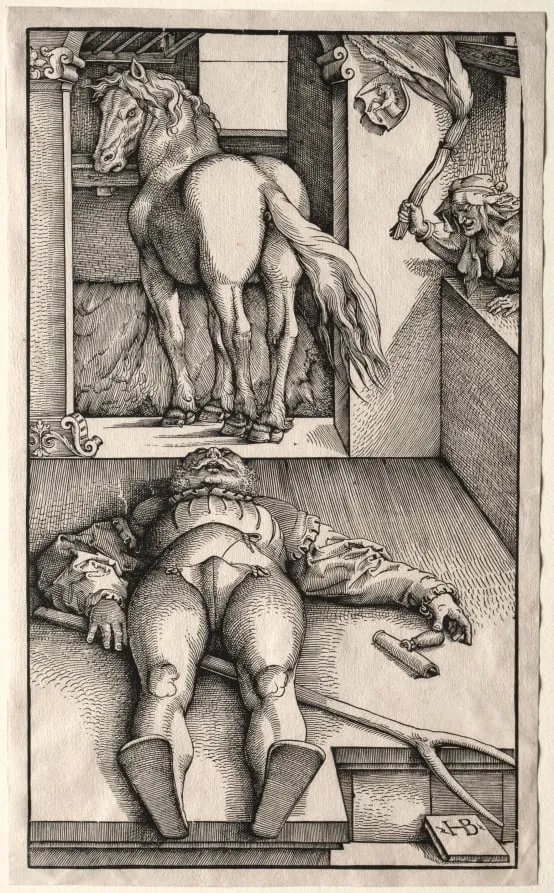
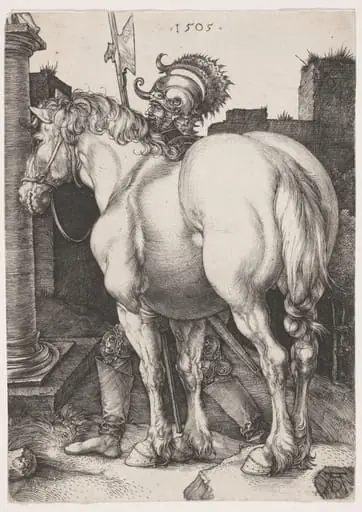
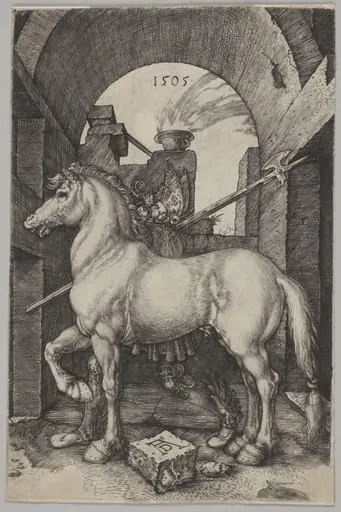
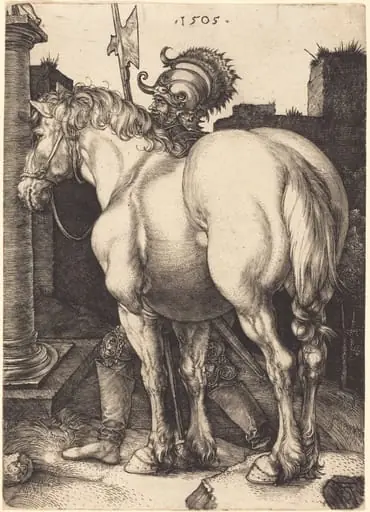
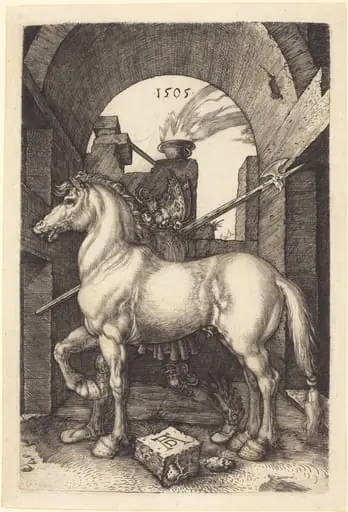
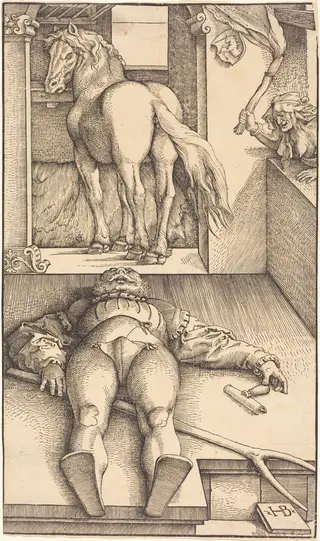
The Bewitched Groom is a print by the Renaissance artist Hans Baldung Grien. It dates from 1544 and is held in the collection of the Cleveland Museum of Art. This woodcut by Hans Baldung depicts a groom collapsed on the ground beneath a towering horse, while a witch lurks in the shadows.
- Accession no.
- 1966.172
- Credit line
- Mr. and Mrs. Charles G. Prasse Collection
About this work
Overview
This woodcut by Hans Baldung depicts a groom collapsed on the ground beneath a towering horse, while a witch lurks in the shadows. The scene conveys a moment of supernatural intrusion, where the boundaries between the natural and the occult blur. The quiet stillness of the figure suggests an irreversible loss of agency, reinforcing a mood of helplessness against unseen forces.
Subject & Meaning
The groom’s unconscious state and the horse’s menacing gaze imply that magic has been enacted through the animal, a common motif in early 16th-century folklore.
The groom’s unconscious state and the horse’s menacing gaze imply that magic has been enacted through the animal, a common motif in early 16th-century folklore. The witch, though passive in posture, embodies a feared feminine power linked to death and moral corruption. The image reflects anxieties about uncontrollable desire and the perceived threat of female agency in a time of religious upheaval.
Technique & Style
Baldung employs stark contrasts of light and shadow to heighten the scene’s unease. The horse’s glowing eyes and the witch’s obscured hands, clutching ambiguous objects, draw attention to the unseen magic at work. The flat, linear quality of the woodcut enhances the eerie stillness, while the lack of detailed background isolates the figures in a psychological space rather than a physical one.
History & Provenance
Baldung’s personal coat of arms appears on the wall behind the groom, and the figure’s facial features resemble known portraits of the artist. This suggests a possible self-referential layer, positioning Baldung as both observer and subject. The print was produced during a period of intense witch-hunting and moral regulation, aligning its imagery with contemporary fears and theological debates about sin and temptation.
Context
In early 16th-century Germany, witchcraft was increasingly associated with female sexuality and moral decay, especially under the influence of reformist religious thought. Baldung’s repeated depictions of women as agents of chaos reflect broader cultural anxieties. His work does not merely illustrate superstition but interrogates the psychological weight of fear, guilt, and the perceived fragility of male reason.
Legacy
Baldung’s treatment of witchcraft moved beyond mere illustration to explore psychological and existential themes. His integration of personal symbolism and emotional tension influenced later Northern Renaissance artists interested in the darker facets of human nature. The print remains a significant example of how art could channel societal fears into visually compelling, ambiguous narratives.
Artist & collection
Artist
Hans Baldung (1484 or 1485 – September 1545), called Hans Baldung Grien, (being an early nickname, because of his predilection for the colour green), was a painter, printer, engraver, draftsman, and stained glass…