Artwork
Christ in the House of Lazarus
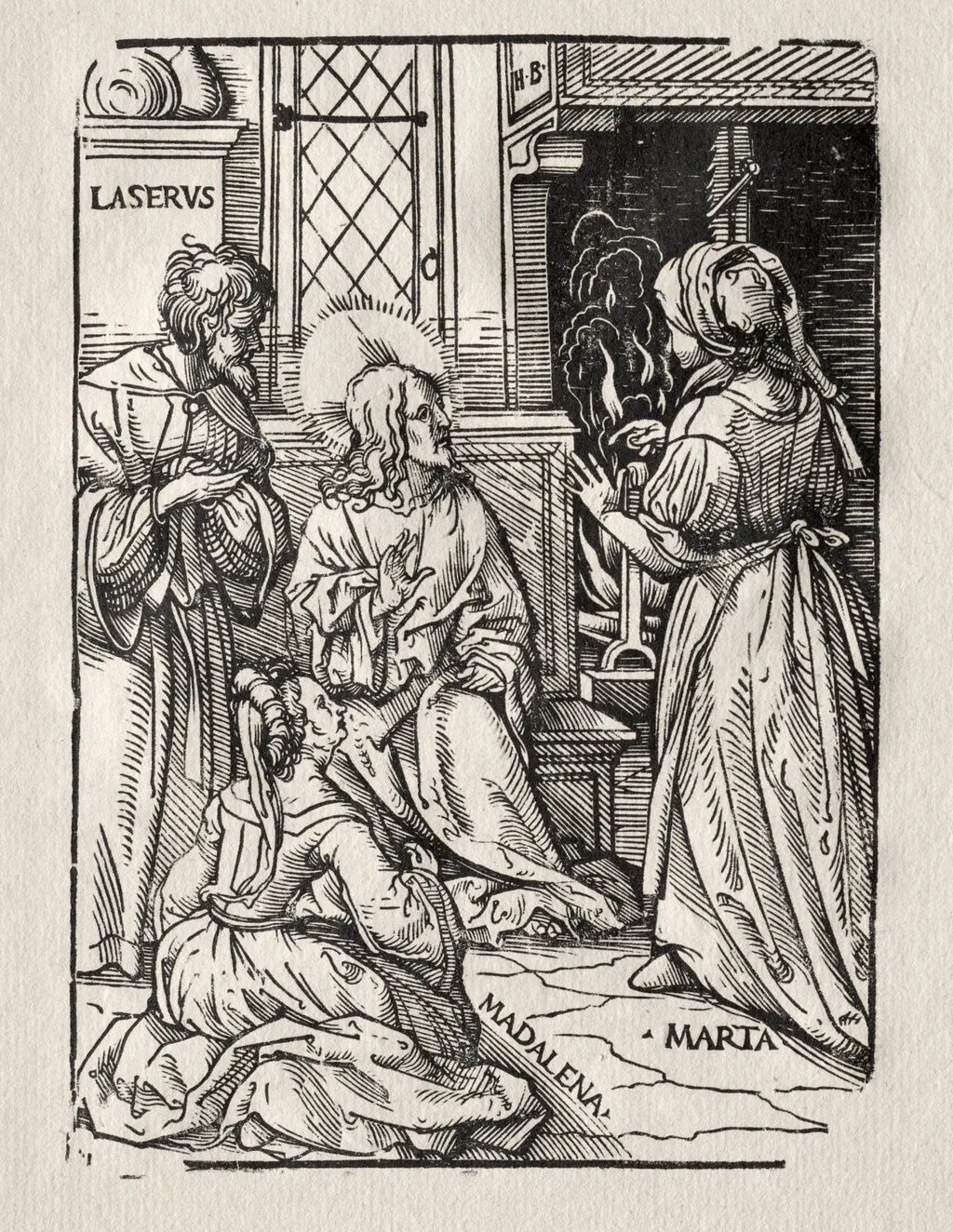
Christ in the House of Lazarus is a print by the Renaissance artist Hans Burgkmair I. It dates from 1510 and is held in the collection of the Cleveland Museum of Art. Created in 1510 by Hans Burgkmair, this black-and-white woodcut depicts a quiet interior scene centered on Christ in the home of Lazarus.
- Accession no.
- 1923.392
- Credit line
- Charles W. Harkness Endowment Fund
About this work
" The candlelight creates a soft contrast between light and shadow, a trick artists used to make scenes feel more real.
This black-and-white woodcut shows three people in a dim room. A bearded man sits on the floor, holding a small child and looking up. A woman stands beside him, holding a candle that casts a faint glow.
Another woman kneels, reaching toward the seated man. The room has a small window with diamond-shaped glass and a door labeled "LASERVS."
The candlelight creates a soft contrast between light and shadow, a trick artists used to make scenes feel more real. This print was made in 1510 by an artist who loved detailed scenes like this one.
Next, look up chiaroscuro to see how artists used light and shadow in their work.
Overview
Created in 1510 by Hans Burgkmair, this black-and-white woodcut depicts a quiet interior scene centered on Christ in the home of Lazarus. Rendered with fine linear detail, the print belongs to the collection of The Cleveland Museum of Art. Its restrained palette and intimate composition reflect the Northern Renaissance emphasis on spiritual narrative through everyday settings, rather than grandeur.
Subject & Meaning
The scene illustrates Christ visiting the household of Lazarus, as referenced in the Gospel of Luke. The bearded figure seated with a child is understood to be Christ, while the woman holding the candle and the kneeling figure represent Mary and Martha. The inclusion of the name 'LASERVS' on the door anchors the biblical reference, emphasizing humility and devotion over spectacle in the moment of divine presence.
Technique & Style
Burgkmair employed woodcut printing to achieve sharp contrasts between light and dark, using fine lines to model form and suggest volume. The candle’s glow is implied through graded shadows, a technique that enhances spatial depth without color. The diamond-paned window and detailed door hardware reveal his attention to architectural realism, characteristic of German printmaking of the period.
History & Provenance
The print was produced in 1510 during Burgkmair’s active years in Augsburg, a center for woodcut production. It entered The Cleveland Museum of Art’s collection in the 20th century, though its earlier ownership history remains undocumented. As a relatively common medium for devotional imagery, such prints circulated among middle-class households seeking personal religious connection.
Context
In early 16th-century Germany, woodcuts served as affordable religious images for private devotion, especially as literacy rose and the Reformation approached. Burgkmair’s focus on domestic spirituality aligns with broader trends that emphasized intimate encounters with sacred figures, contrasting with the monumental altarpieces of the time.
Legacy
This print exemplifies how Northern Renaissance artists used printmaking to democratize religious imagery. Burgkmair’s nuanced handling of light and gesture influenced later generations of printmakers, contributing to the evolution of narrative clarity in woodcuts. Its preservation allows continued study of how everyday spaces were imbued with theological meaning.
Own this work as a print
Artist & collection

- Life of the Virgin: Adoration of the Virgin and Child by Saints and Angels
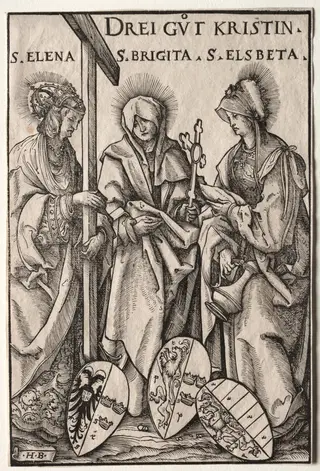 The Three Christian Heroines: Saints Helen, Bridget and Elizabeth
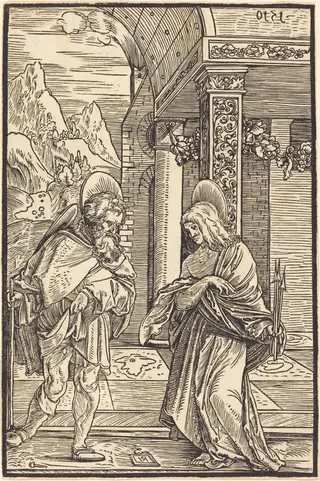 Saint Roch and Saint Sebastian
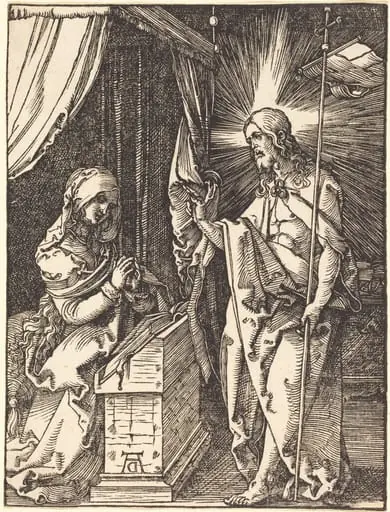 Christ Appearing to His Mother
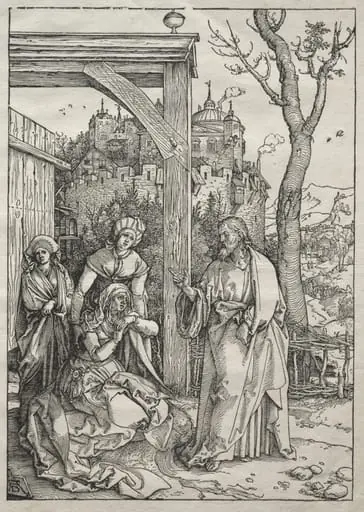 Life of the Virgin: Christ Taking Leave of His Mother
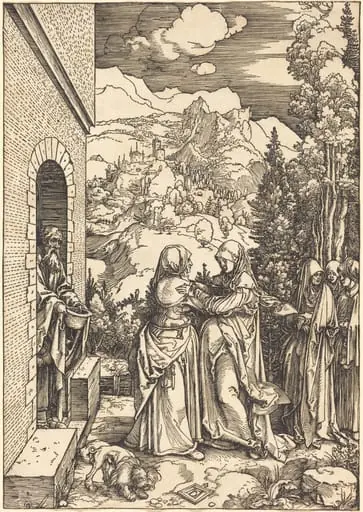 The Visitation
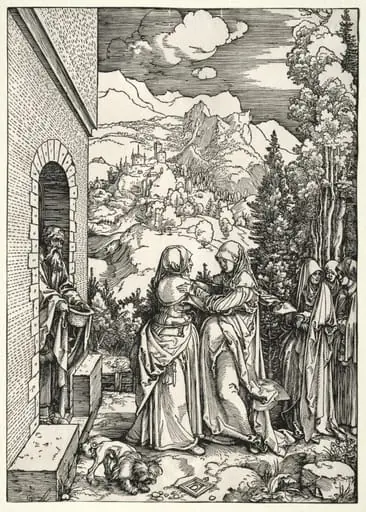 The Visitation
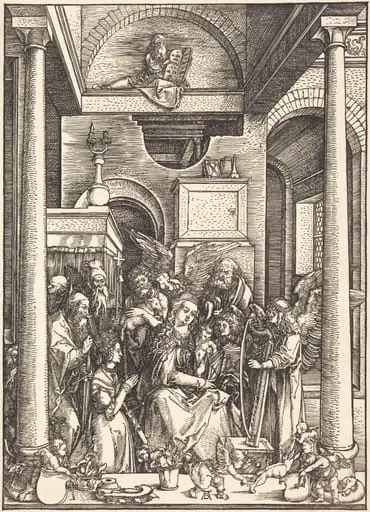 The Glorification of the Virgin
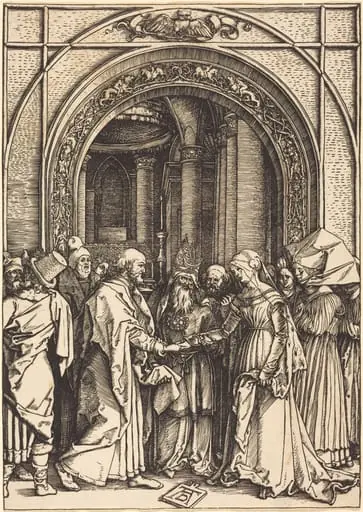 The Betrothal of the Virgin
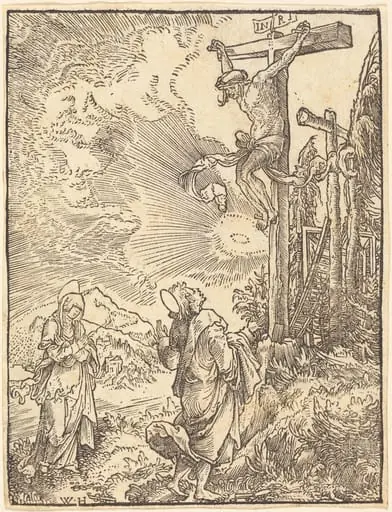 The Crucifixion
 The Adoration of the Magi
 The Small Passion: Christ Taking Leave of the Virgin