Artwork
Tommaso di Folco Portinari (1428–1501); Maria Portinari (Maria Maddalena Baroncelli, born 1456)
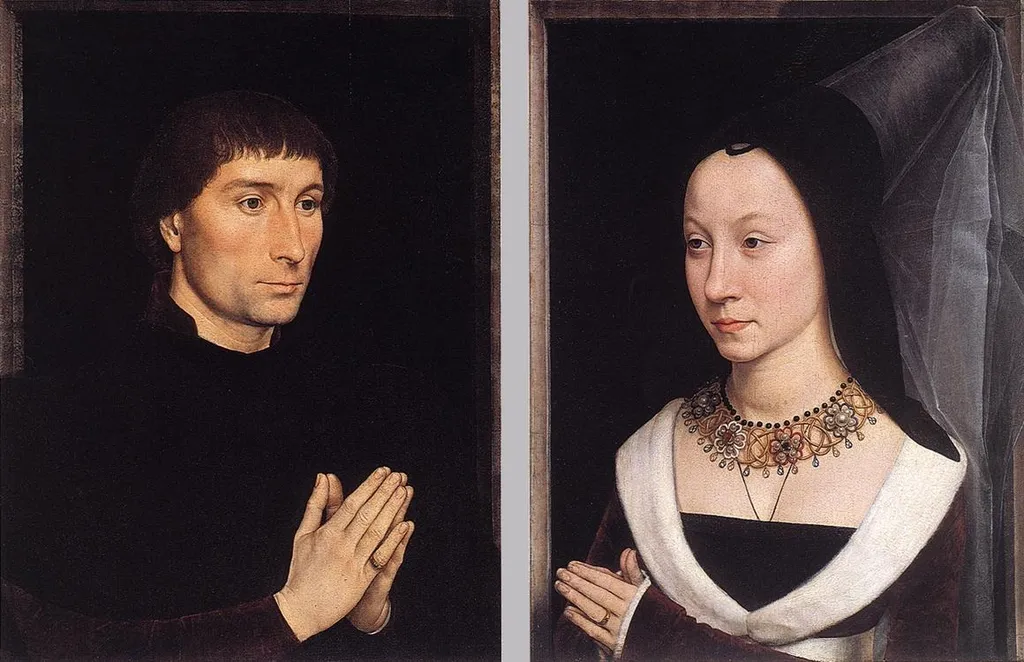
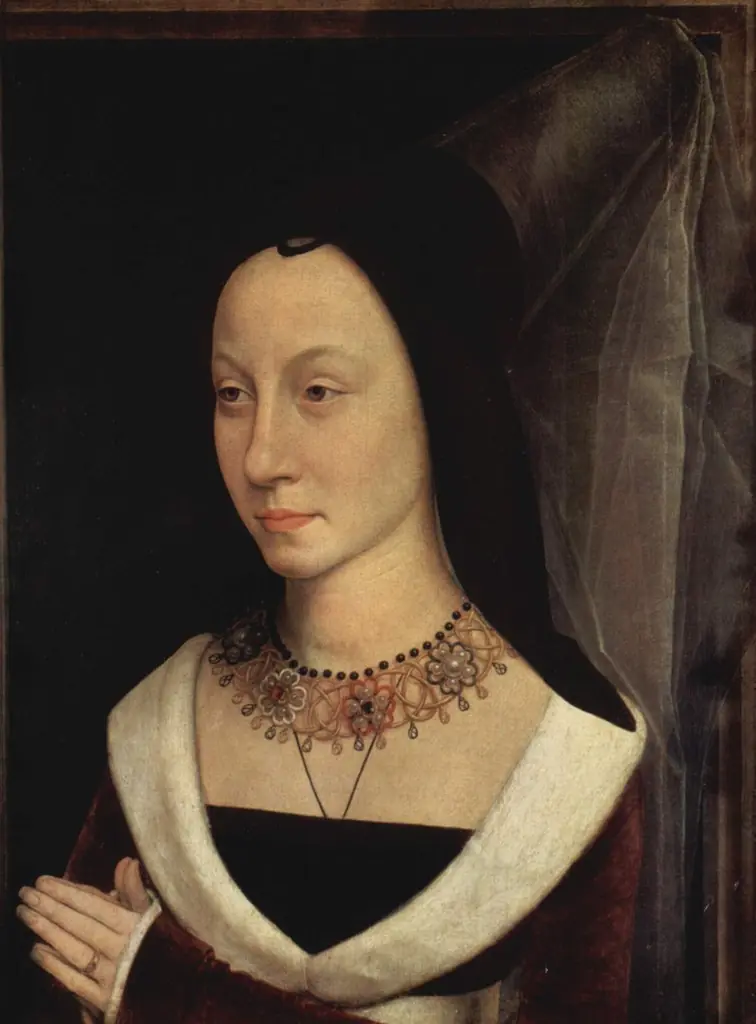
Tommaso di Folco Portinari (1428–1501); Maria Portinari (Maria Maddalena Baroncelli, born 1456) is an oil painting by the Northern Renaissance artist Hans Memling. It dates from 1470 and is held in the collection of the Metropolitan Museum of Art.
About this work
Subject & Meaning
Both figures are rendered in half-length, three-quarter view with hands resting on an imagined parapet, a pose typical of early Netherlandish donor portraits.
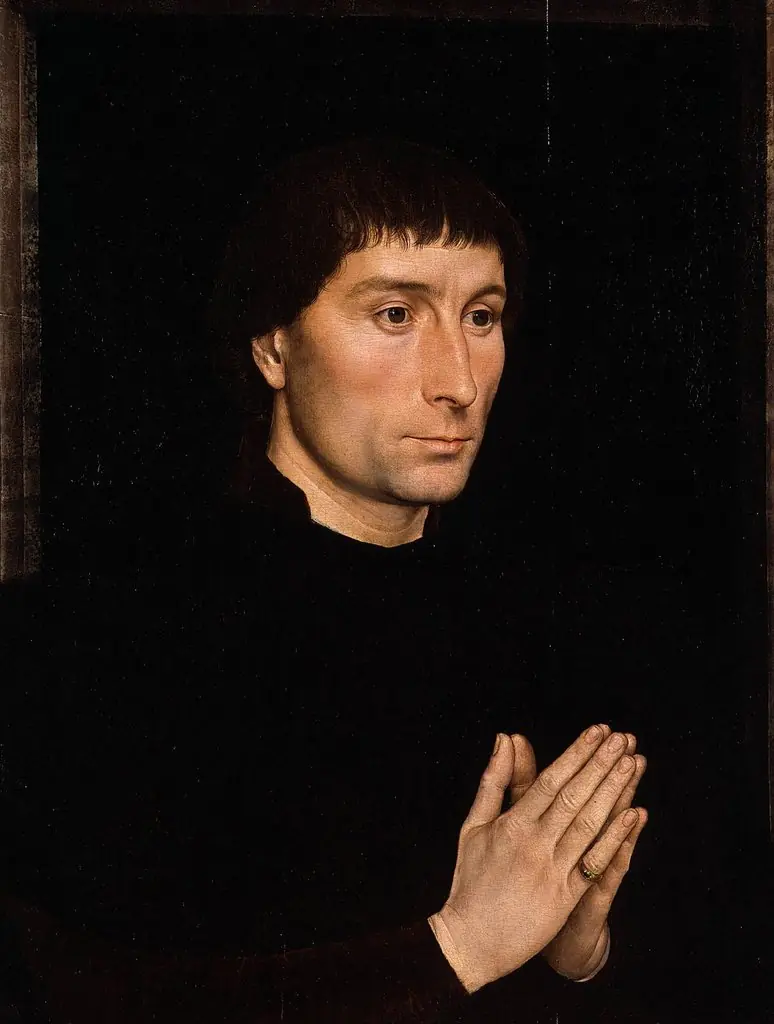
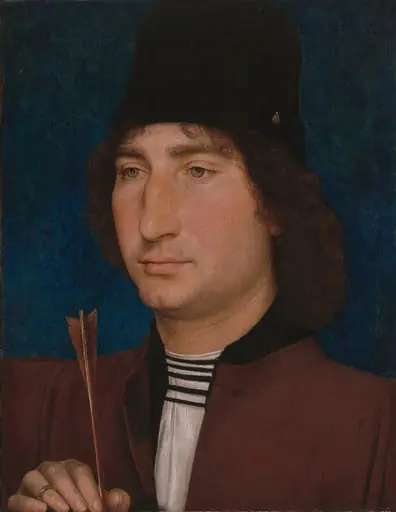
The pair of portraits presents Tommaso Portinari in the left panel and his wife Maria Maddalena Baroncelli in the right, each shown as a donor flanking a now-lost central panel of the Virgin and Child. Both figures are rendered in half-length, three-quarter view with hands resting on an imagined parapet, a pose typical of early Netherlandish donor portraits. Memling dresses Tommaso in a black mantle with a ring on his little finger, while Maria wears a conical hennin, a transparent veil, and a jeweled necklace that mirrors contemporary Burgundian bridal attire; the hennin's fillet bears the interlaced initials T and M, a monogram revealed by X-ray analysis. These details convey both personal devotion and the family's elite mercantile status within Bruges society.
Technique & Style
The Portinari portraits are executed in oil paint on panel, a technique characteristic of Early Netherlandish painting. Each panel is small in scale, measuring approximately 44 × 34 cm, consistent with their original function as the flanking wings of a devotional triptych enclosing a now-lost central Madonna and Child. Memling renders both sitters in three-quarter bust length against dark grounds, with elbows resting on an implied parapet aligned with the lower frame edge, a compositional convention typical of his portrait practice.
Tommaso is shown turned to the right in a black cloak over dark garments, while Maria faces left in Flemish dress, her tall conical hennin with a transparent veil drawn forward of the picture plane to bring the figure closer to the viewer, an effect Memling employs repeatedly. Facial features are rendered with great precision: soft hair falling in points over forehead, ears, and nape, intense downcast eyes, a fine sharp nose, thin mouth, and pointed chin. Heads are slightly enlarged relative to the bodies, in keeping with contemporary portrait convention.
Radiographic examination has revealed the letters "T" and "M", the initials of Tommaso and Maria, on the hennin, paralleling the Hugo van der Goes Portinari Triptych. Maria wears a sumptuous necklace set with pearls, rubies, and sapphires, closely comparable to one worn by Margaret of York at her 1468 marriage to Charles the Bold, an event the Portinari couple attended.
History & Provenance
The Portinari portraits are held by the Metropolitan Museum of Art in New York, where they entered the collection through a 1913 donation by collector Benjamin Altman, who had purchased the work in New York from the dealer Kleinberger in 1910. Earlier provenance traces the panels through the Portinari-Salviati palace in Florence, a 1544 bequest by Tommaso's son Francesco to the Hospital of Santa Maria Nuova, the collection of Prince Anatole Demidoff of San Donato, and successive sales in 1870 and 1901 through dealers including Agnew in London and Léopold Goldschmidt in Paris. A documented exhibition history includes the Exposition des primitifs flamands à Bruges.
Context
The Portinari portraits by Hans Memling belong to Early Netherlandish painting and are catalogued as wings of a devotional triptych, now in the Metropolitan Museum of Art. The work adapts the devotional diptych model introduced by Rogier van der Weyden into a triptych format, with a lost central Madonna and Child. According to French scholarship, the refined and sumptuous character of the panels suggests the work was intended not solely for private devotion but for a restricted audience, likely at the Portinari residence of Hof Bladelin in Bruges.
Tommaso Portinari, a Medici bank representative in Bruges from 1465 and a prominent figure in the Florentine colony, was familiar with Charles the Bold. The painting was exhibited at the Exposition des primitifs flamands à Bruges. Provenance research traces the work through the Hospital of Santa Maria Nuova, the Demidoff collection, and Benjamin Altman, who donated it to the Met in 1913.
Legacy
The Portinari portraits entered Florence by an unknown date and remained in the Portinari-Salviati palace until Tommaso's death in 1501, after which they were recorded as part of the family's devotional ensemble. In 1544 Francesco Portinari bequeathed them to Florence's Hospital of Santa Maria Nuova, where they stayed until the Napoleonic confiscations. By 1870 they had passed through private hands and were sold with an attribution to Dirk Bouts.
Rediscovered in Rome around 1900 by Elia Volpi, they briefly returned to Florence before entering the London and Paris art markets. Acquired by Benjamin Altman in New York in 1913, they were donated to The Metropolitan Museum of Art, where they became a touchstone for scholarship on Early Netherlandish portraiture and donor iconography. Their refined scale and sumptuous detail have sustained scholarly attention as a paradigm of Memling's portrait style and of fifteenth-century devotional portraiture.
Overview
This diptych, created by Hans Memling around 1470, presents individual portraits of Tommaso di Folco Portinari and his wife, Maria Maddalena Baroncelli. Executed in oil paint, the two panels are now housed at The Metropolitan Museum of Art. The work exemplifies the detailed realism characteristic of Northern Renaissance portraiture, capturing the likenesses and social standing of its Florentine subjects.
Artist & collection
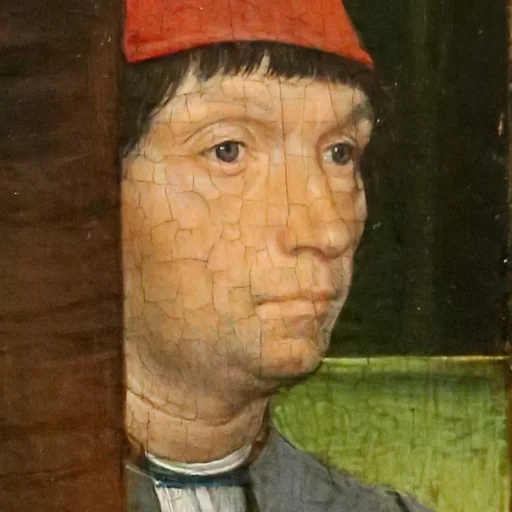
Artist
Hans Memling was a German-Flemish painter who worked in the tradition of Early Netherlandish painting.

![Saint Veronica [obverse], by Hans Memling](https://artifactworldgallery.com/img/hans-memling--saint-veronica-obverse--5a649fd8b09c96b9-w320.webp)
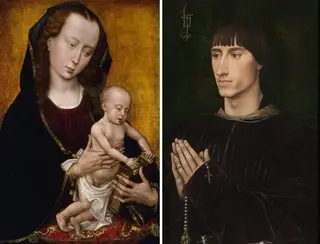 Diptych of Philip de Croÿ with The Virgin and Child
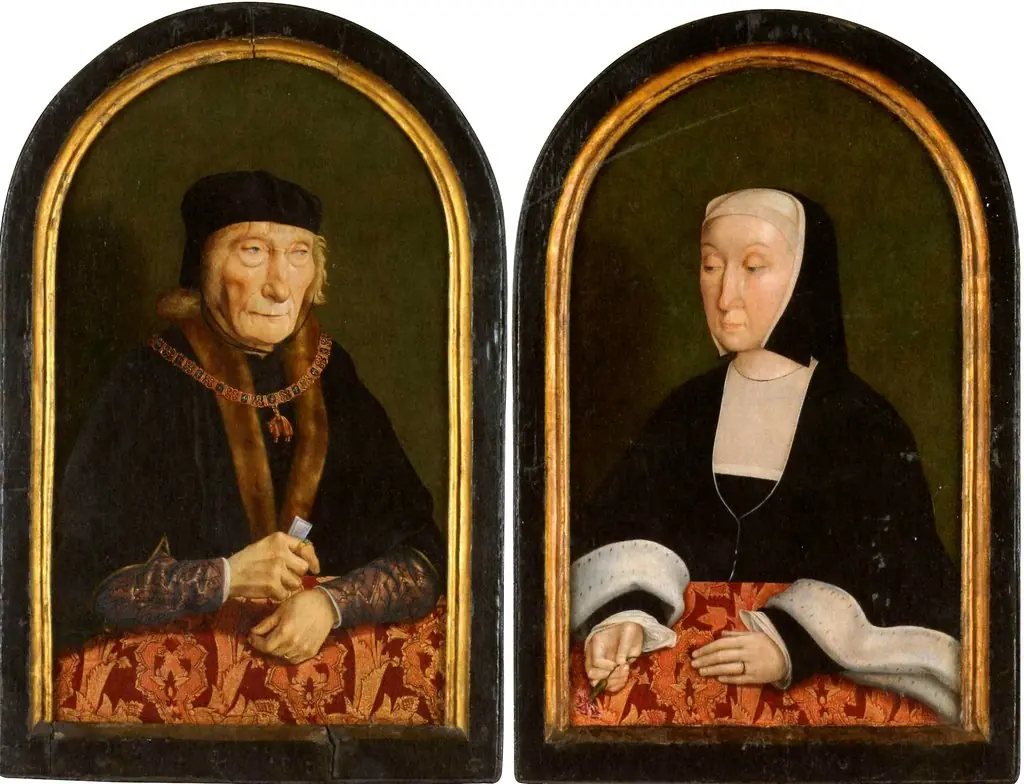 Portrait of Jan III, First Count of Egmond (1438–1516) and his wife Magdalena van Werdenburg, Countess of Egmond (1464–1538)
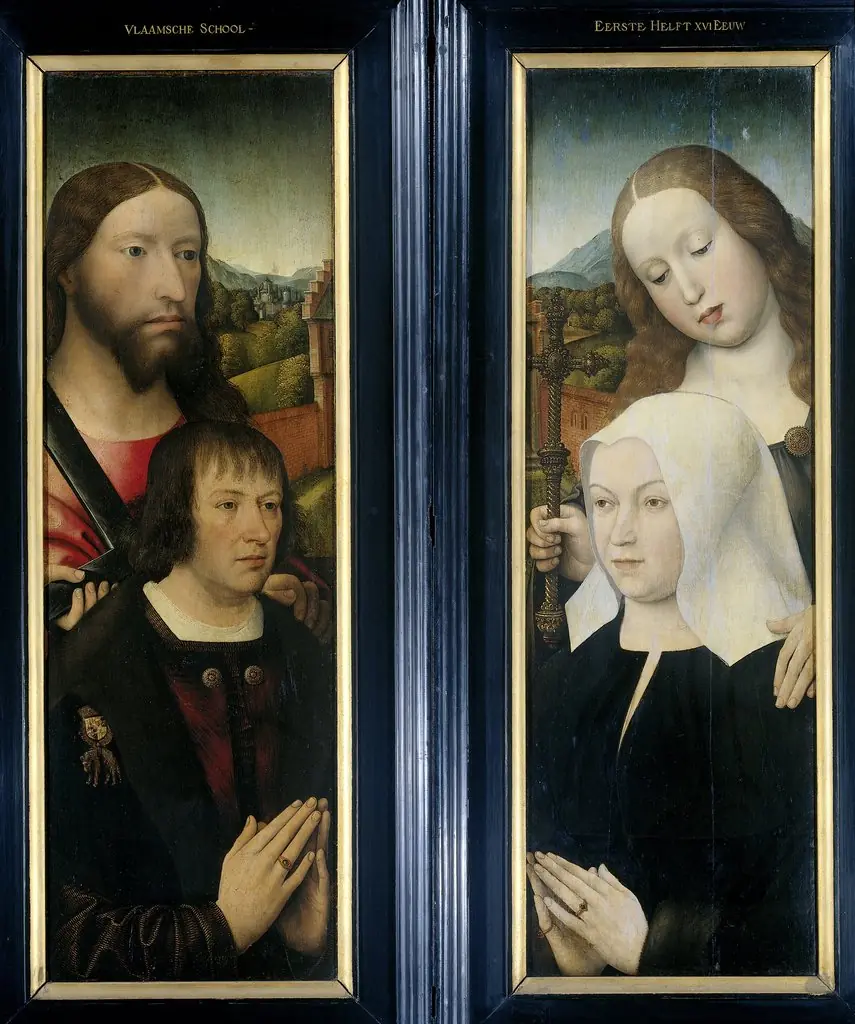 Two Wings of a Triptych with the Donor, Thomas Isaacq, accompanied by Saint Thomas (left, outer wing), and the Donor's Wife accompanied by Saint Margaret (right, outer wing)
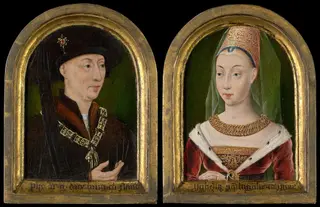 Philip the Good, Duke of Burgundy; Isabelle of Bourbon (?)
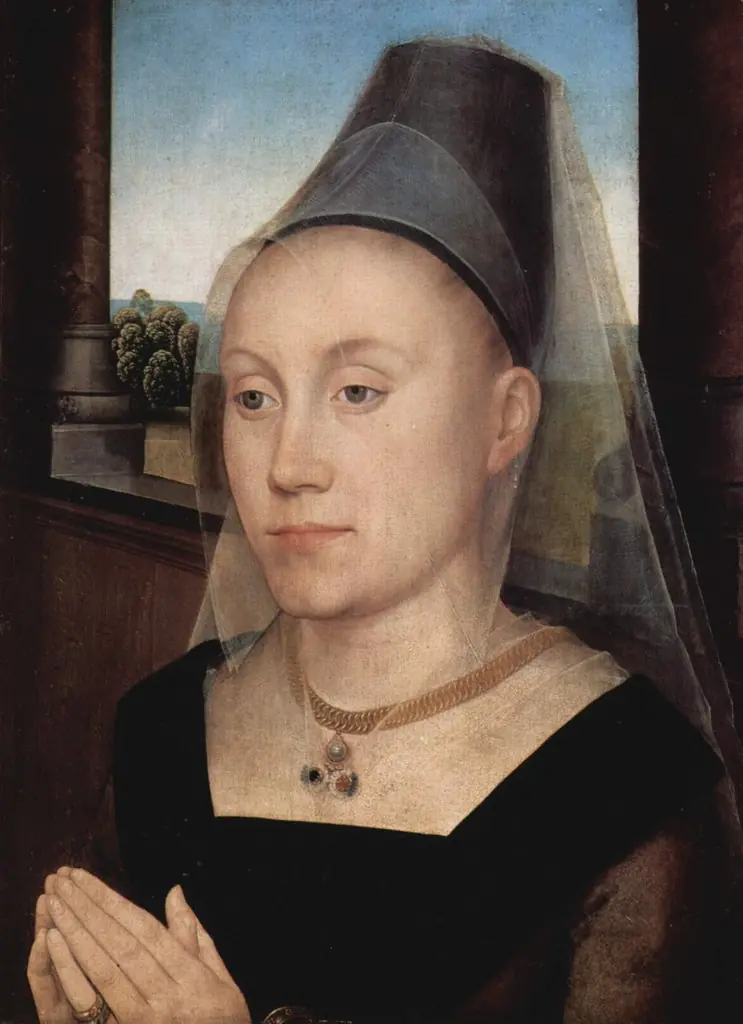 Portrait of Barbara van Vlaendenbergh
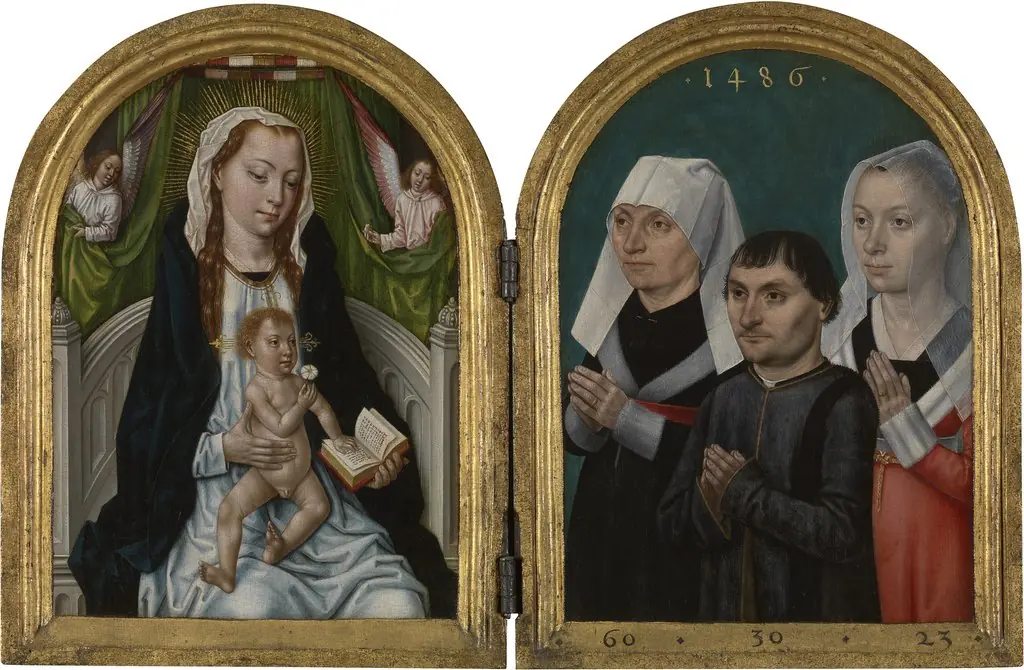 Diptych with the Virgin and Child and Three Donors
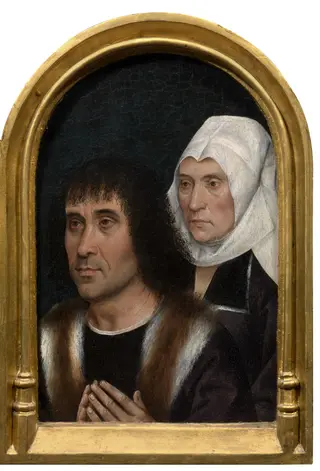 Two donors (interior right wing)
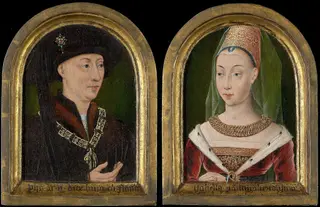 Philip the Good, Duke of Burgundy; Isabelle of Bourbon (?)
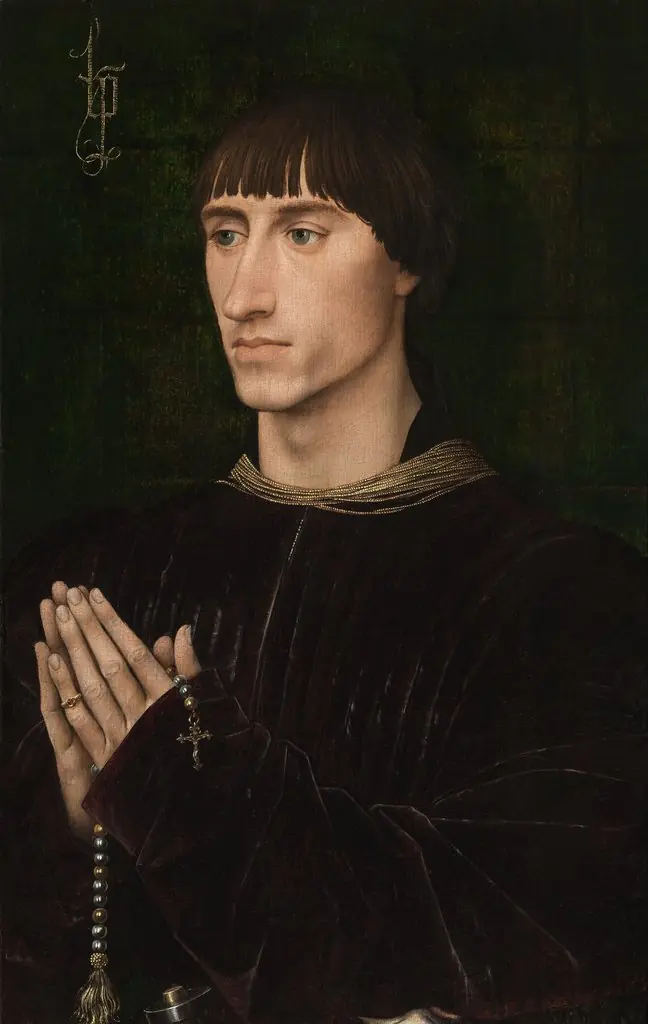 Portrait of Philippe de Croy
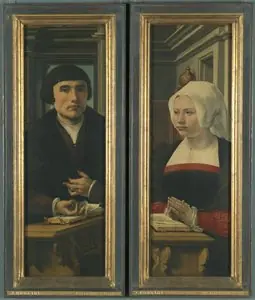 Side wings of the Norfolk Triptych: portraits of donors