Artwork
Roman Charity
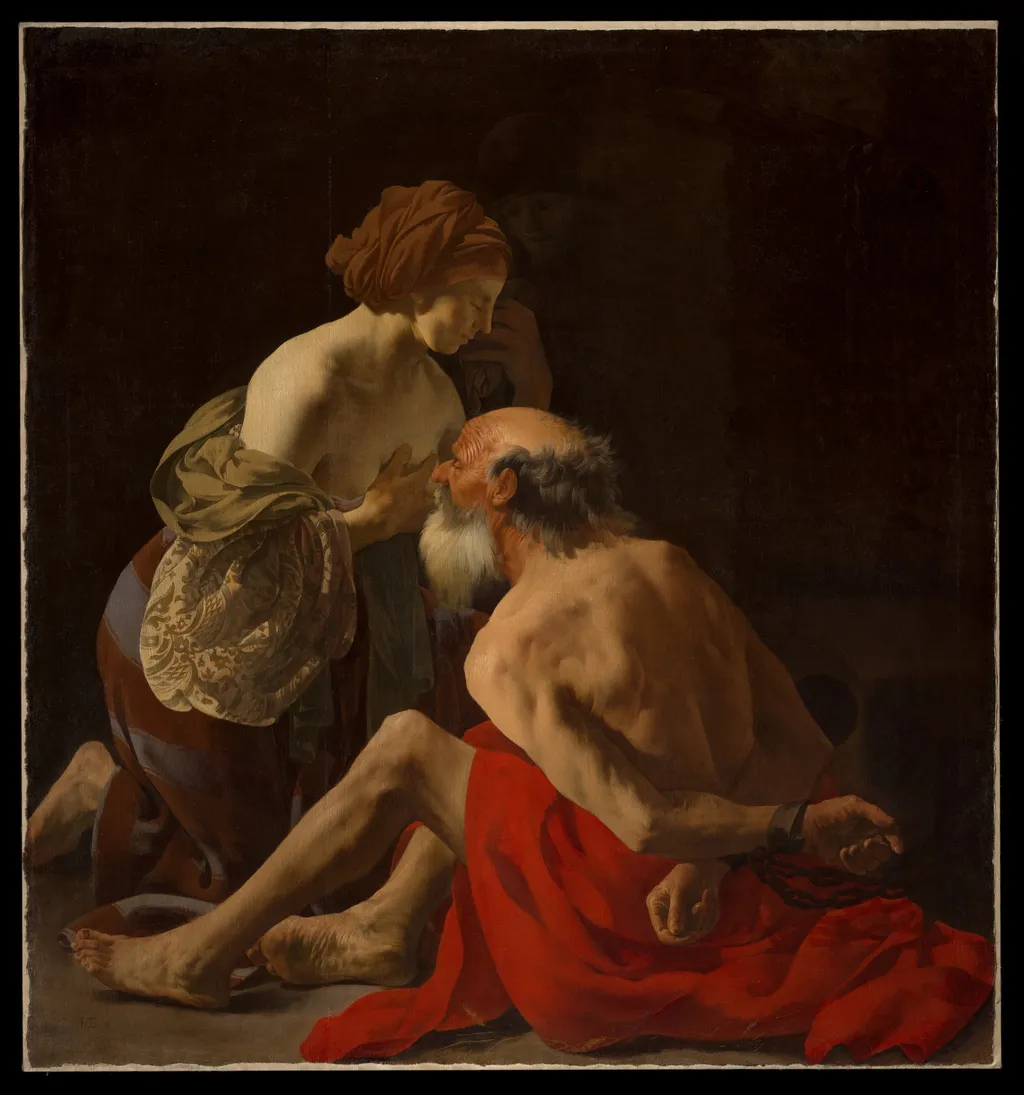
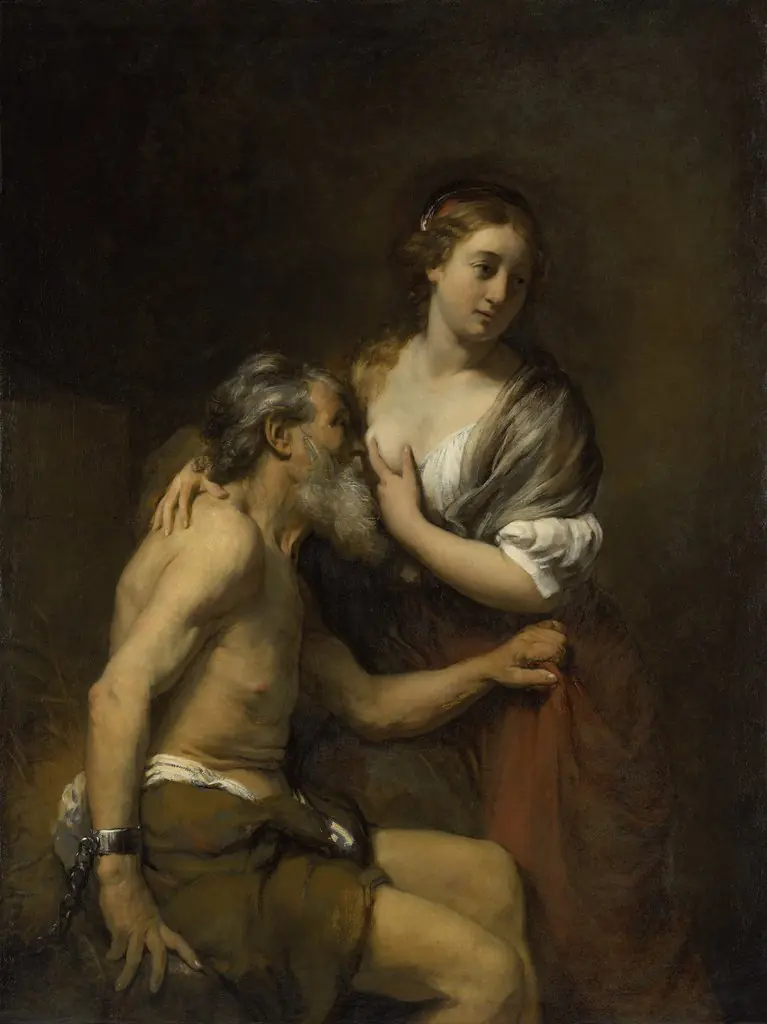
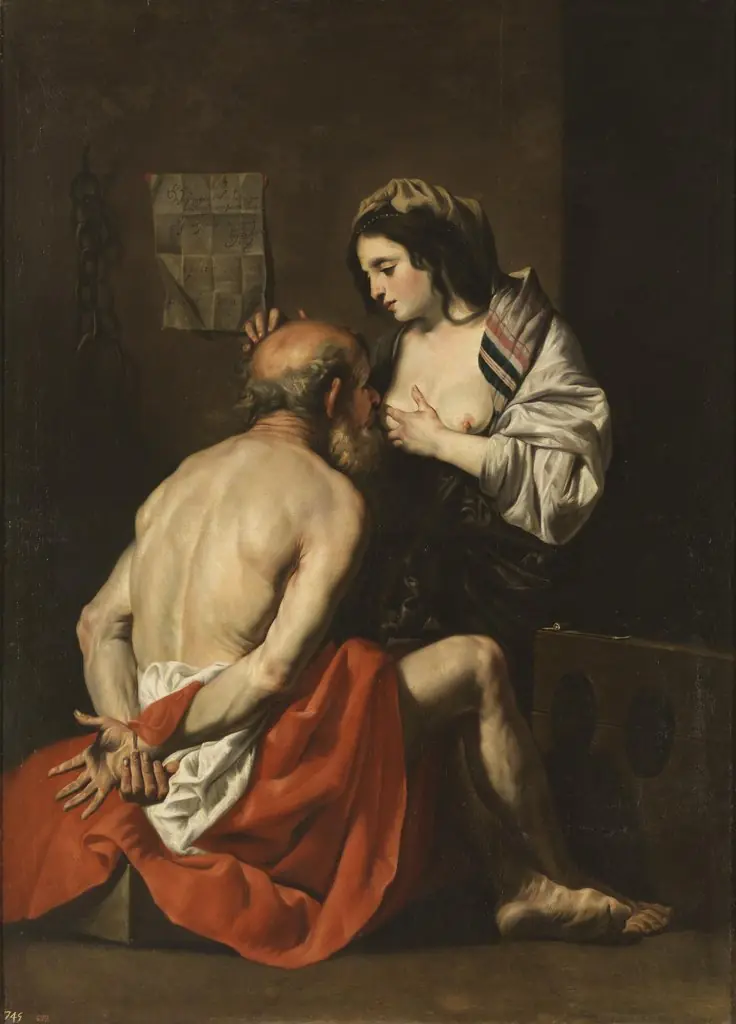
Roman Charity is an oil painting by the Caravaggisti artist Hendrick ter Brugghen. It dates from 1623 and is held in the collection of the Metropolitan Museum of Art.
About this work
Technique & Style
The brushwork remains relatively restrained, reflecting the influence of Caravaggisti naturalism while retaining a distinct, smooth surface finish.
Roman Charity is an oil painting executed on canvas by Hendrick ter Brugghen in 1623. The work measures 149 cm in height by 136 cm in width and depicts the biblical scene of a mother secretly nursing her imprisoned father. Ter Brugghen applied oil paint to achieve fine modeling of the figures and a subtle chiaroscuro that emphasizes the intimate gesture.
The brushwork remains relatively restrained, reflecting the influence of Caravaggisti naturalism while retaining a distinct, smooth surface finish. The painting’s condition is stable, with no recorded interventions noted in the Metropolitan Museum of Art’s catalogue entry. Its formal composition balances dramatic lighting with a tight spatial arrangement, creating a focused narrative moment.
History & Provenance
Roman Charity is an oil painting on canvas created in 1623 by Hendrick ter Brugghen. The work entered the collection of the Metropolitan Museum of Art, where it remains on display. Its provenance traces directly from the artist’s workshop to the museum’s acquisition, with no recorded private owners prior to institutional transfer.
Roman Charity is part of the Metropolitan Museum of Art's collection, listed under accession number 2020.320. The work has been featured in exhibitions at the Met, including the 2020 exhibition "Hendrick ter Brugghen: The Sacred and the Profane," which highlighted his contributions to Dutch Golden Age painting.
The painting was created in 1623 and is executed in oil on canvas, measuring 149 cm in height and 136 cm in width. It depicts the biblical scene of a Roman woman secretly nursing her father, embodying an act of charitable love.
Overview
Hendrick ter Brugghen’s Roman Charity (1623) presents an intimate tableau in which a young woman nurses an elderly man. The figures are set against a deep, shadowed backdrop, their forms illuminated by a warm, focused light that emphasizes the tender exchange. Executed in oil on canvas, the composition balances narrative clarity with a quiet, contemplative mood.
Subject & Meaning
The work draws on the ancient Roman legend of Cimon and Pero, in which a daughter sustains her imprisoned father through secret nursing. Ter Brugghen captures the moment of nourishment, highlighting themes of filial devotion, self‑sacrifice, and the paradox of vulnerability and strength that the story traditionally conveys.
Context
Roman Charity belongs to a period when Dutch artists adapted Caravaggio’s dramatic lighting to local religious and moral subjects. Ter Brugghen’s rendering of a classical narrative through a naturalistic, genre‑like approach illustrates the synthesis of Italian influence and Northern sensibility that defined early‑17th‑century Utrecht painting.
Own this work as a print
Artist & collection
Artist
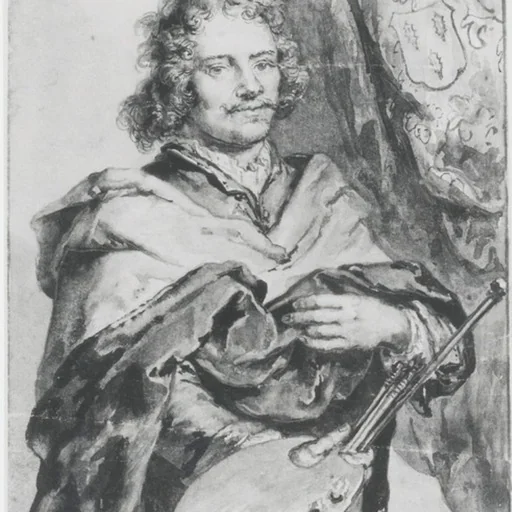
Hendrick Jansz ter Brugghen (or Terbrugghen; 1588 – 1 November 1629) was a Dutch painter of genre scenes and religious subjects.