Artwork
Bagpipe Player
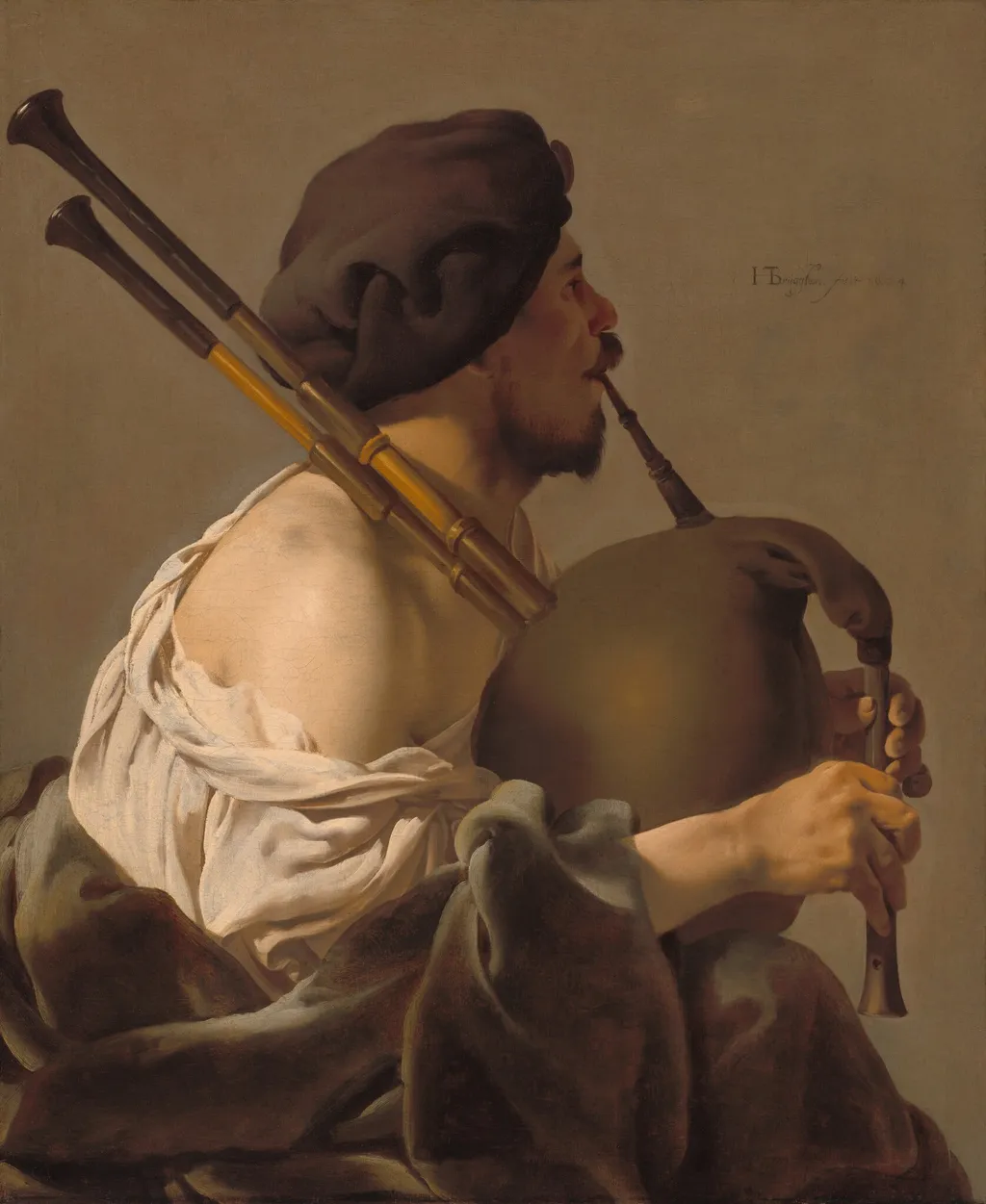
Bagpipe Player is an oil painting by the Baroque artist Hendrick ter Brugghen. It dates from 1624 and is held in the collection of the National Gallery of Art.
- Inscription
- Inscribed:upper right, in brown paint, HTB in monogram: HTBrugghen fecit 1624
About this work
Technique & Style
The canvas support and oil medium are consistent with ter Brugghen's typical practice of working on canvas with oil paint.
Bagpipe Player is an oil on canvas painting executed by Hendrick ter Brugghen in 1624. The work measures 100.7 cm in height by 82.9 cm in width. Classified as a genre scene, the painting belongs to the tradition of Dutch Golden Age genre painting associated with the Utrecht Caravaggisti circle, of which ter Brugghen was a leading member.
The canvas support and oil medium are consistent with ter Brugghen's typical practice of working on canvas with oil paint. The painting's documented provenance extends back to a 1676 Utrecht inventory entry describing a bagpipe subject by ter Brugghen, indicating the work has survived in identifiable condition for over three centuries, though no specific conservation or condition report is recorded in the available sources.
History & Provenance
Painted in 1624, this work may have belonged to Aernout van Lingen in Utrecht by 1676, based on an inventory listing a bagpipe piece by the artist. By 1915, the painting was likely with a Berlin dealer before entering the collection of Gustav Klemperer in Dresden and subsequently his son, Herbert von Klemperer, in Berlin. Forced to surrender the artwork upon fleeing Germany in 1938, Herbert von Klemperer's family saw it sold at a Berlin auction that November.
The Wallraf-Richartz-Museum in Cologne acquired the piece, holding it until restitution to the Klemperer heirs in July 2008. Following a sale at Sotheby's New York in January 2009, the painting passed through several dealers before its purchase by the National Gallery of Art in Washington, D.C., in April 2009.
The painting is currently held by the National Gallery of Art in Washington, D.C., having been acquired in April 2009. Its provenance traces back to an inventory of Aernout van Lingen in Utrecht in 1676, followed by ownership by the Klemperer family in Dresden and Berlin. The work was held by the Wallraf-Richartz-Museum in Cologne under inventory number 2613 before being restituted to the Klemperer heirs in July 2008.
Following restitution, it was sold at Sotheby's in New York on January 9, 2009, before entering the National Gallery of Art's collection.
Overview
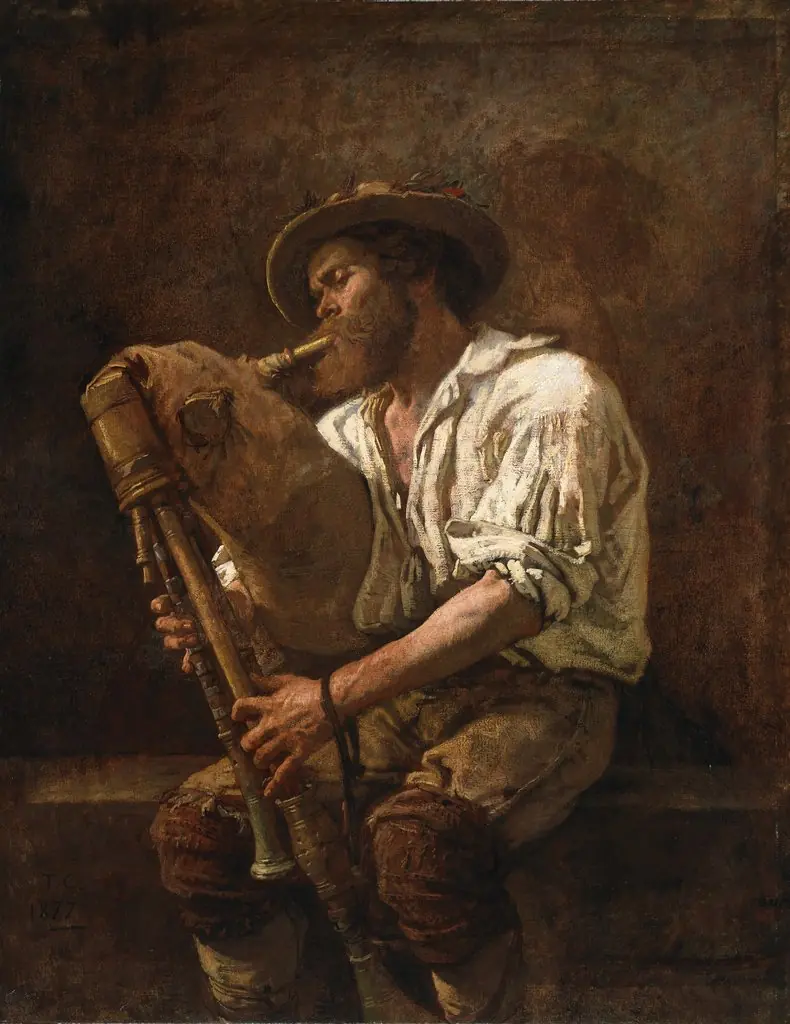
Hendrick ter Brugghen's 'Bagpipe Player' (1624) is a genre scene executed in oil on canvas, depicting a solitary musician in the midst of performance. The composition centers on a male figure seated in a three-quarter view, holding a set of bagpipes under his left arm while his fingers manipulate the chanter. He is dressed in a loose white shirt, a dark robe draped over his shoulder, and a dark head covering, attire typical of the Dutch Golden Age's interest in contemporary or rustic subjects.
Ter Brugghen employs his characteristic tenebrist style, utilizing strong chiaroscuro to model the figure against a dark, indistinct background, which isolates the subject and emphasizes the texture of the fabric and the concentration on the player's face. Painted in 1624, this work falls within the artist's mature period in Utrecht, where he was a leading figure of the Utrecht Caravaggisti. The painting reflects the movement's adaptation of Caravaggio's dramatic lighting to Northern European themes, focusing on the immediacy of the moment and the psychological presence of the common man rather than idealized mythology or religious narrative.
Subject & Meaning
The painting centers on a seated man intently playing a bagpipe. He is depicted wearing a light-colored shirt, contrasted by a dark head covering and a dark garment draped over one shoulder. His posture suggests concentration, with the instrument held firmly beneath his arm as he produces its sound.
This portrayal of an ordinary person engaged in a simple activity is characteristic of genre painting, a popular category in 17th-century Dutch art.
Context
Executed in 1624, this work aligns with the broader Baroque movement and the specific artistic currents in the Netherlands. Hendrick ter Brugghen was a key figure among the Utrecht Caravaggisti, a group of Dutch artists who adopted elements from the Italian painter Caravaggio. Their approach often involved depicting everyday individuals with a sense of directness and realism, qualities evident in this portrayal of a musician. Such genre scenes gained considerable popularity during this period.
Own this work as a print
Artist & collection
Artist
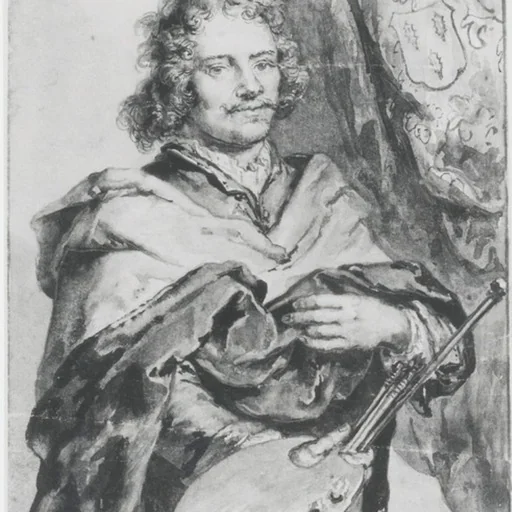
Hendrick Jansz ter Brugghen (or Terbrugghen; 1588 – 1 November 1629) was a Dutch painter of genre scenes and religious subjects.

 Compared in the Caravaggio & Baroque course