Artwork
Interior with an Etruscan Vase (Intérieur au vase étrusque)
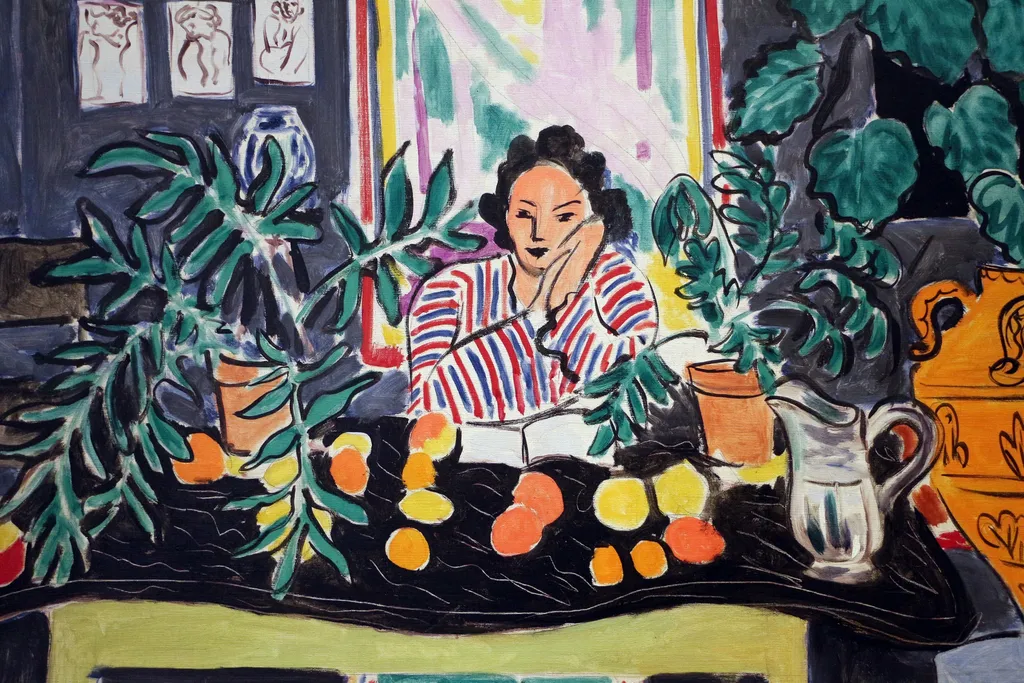
Interior with an Etruscan Vase (Intérieur au vase étrusque) is an oil painting by the Fauvist artist Henri Matisse. It dates from 1940 and is held in the collection of the Munich Central Collecting Point.
About this work
Subject & Meaning
The composition centers on the vase, which the title identifies as Etruscan, linking the contemporary room to an ancient ceramic tradition.
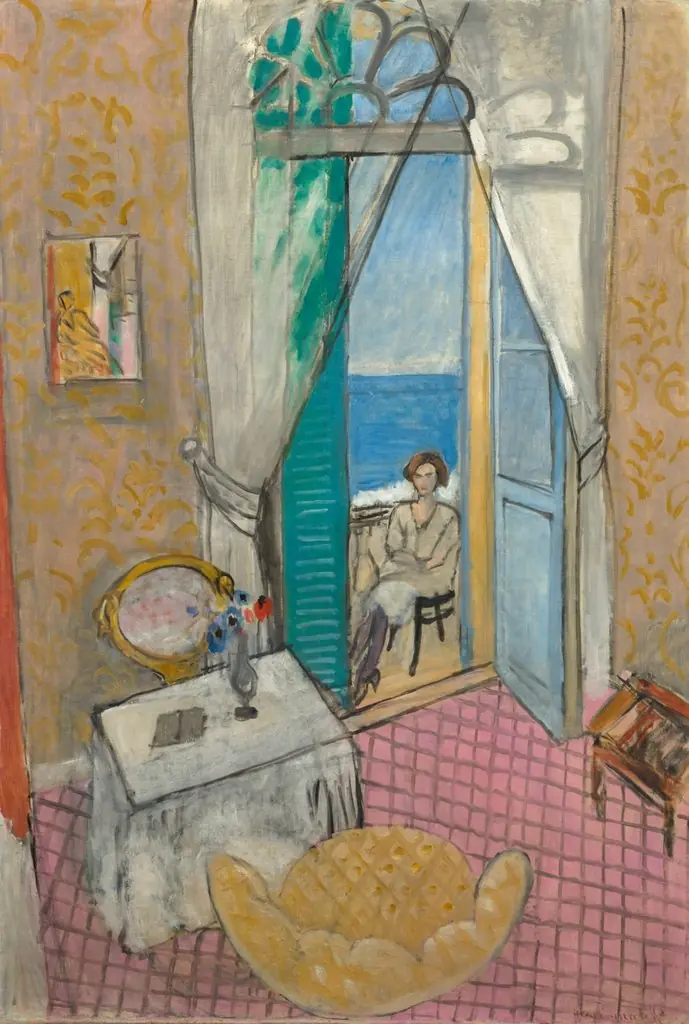
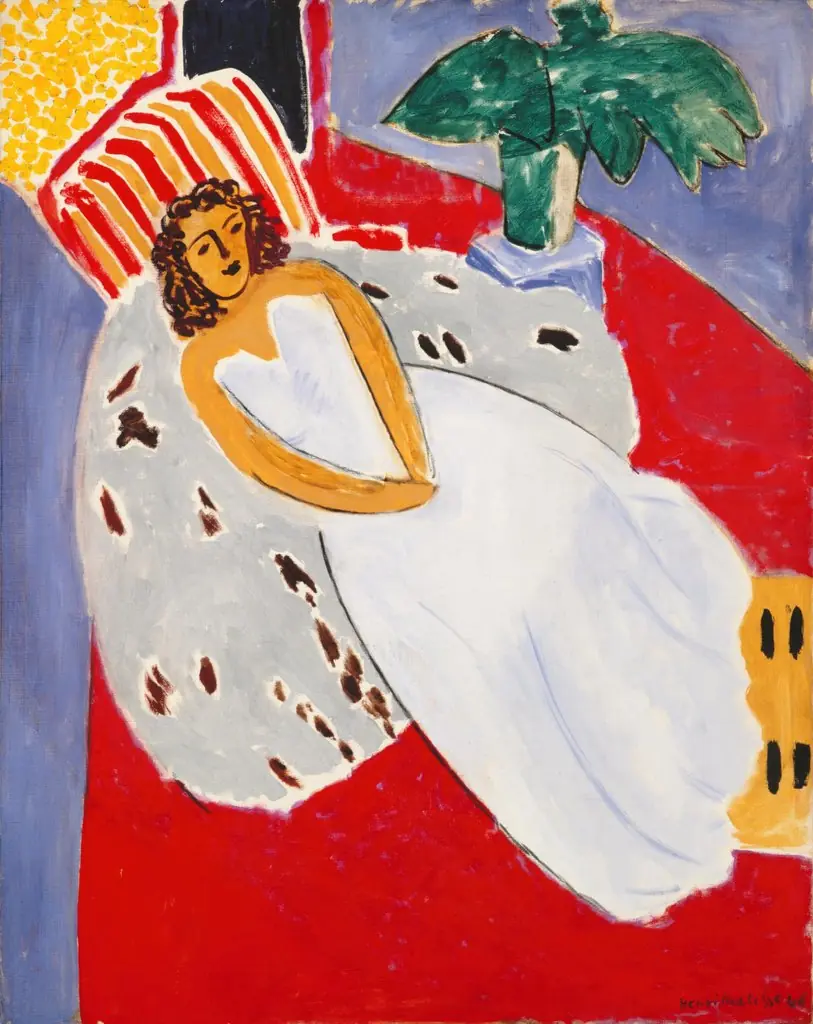
The painting shows a quiet domestic interior: a woman sits upright at a black table laden with plants and fruit, a tapestry hangs behind her, and to her left stands a large orange vase decorated with floral motifs. The composition centers on the vase, which the title identifies as Etruscan, linking the contemporary room to an ancient ceramic tradition. By placing this historic vessel amid everyday objects, Matisse suggests a dialogue between past and present, evoking timelessness and the enduring presence of cultural heritage within the modern home.
Technique & Style
Executed in oil on canvas in early 1940 in Nice, the work employs a fluid handling of oil paint to build broad, unmodulated color fields and crisp linear contours. The composition is organized through flat, decorative patterning, with the seated figure and table rendered in simplified silhouette-like forms against a schematic interior. A large orange Etruscan-style vase with floral motifs anchors the left side, its saturated hue contrasting with the muted tones of the surrounding space. The artist’s signature “Henri Matisse 40” appears at lower right.
The painting’s condition has been documented through its post-war restitution history; after wartime confiscation and transfer through the Munich Central Collecting Point, it entered the Cleveland Museum of Art in 1952 via the Paul Rosenberg collection.
History & Provenance
The work was painted in early 1940 in Nice by Henri Matisse, who inscribed and dated it "Henri Matisse 40" in the lower right corner.
It was owned by the Parisian dealer Paul Rosenberg until 1941, when it was confiscated by Nazi forces. The painting entered the collection of Hermann Göring before being restituted after the war to Rosenberg. In 1952, Rosenberg donated it to the Cleveland Museum of Art, where it remains.
Henri Matisse's Interior with an Etruscan Vase is held by the Cleveland Museum of Art in Cleveland, United States, where it has been part of the collection since a donation in 1952. The work carries the museum's accession number 1952.153. Prior to its arrival in Cleveland, the painting was recovered by the Munich Central Collecting Point after being confiscated by the Nazis in 1941 from gallery owner Paul Rosenberg and briefly held in the collection of Hermann Göring.
In terms of exhibition history, the painting was featured in the 2023 show Matisse. Cahiers d'art – Le tournant des années 1930 at the Musée de l'Orangerie in Paris, where it was listed as number 152 in the catalogue.
Context
Interior with an Etruscan Vase (1940) is situated within Matisse’s late Nice interiors, a period marked by flattened spatial arrangements and bold color contrasts that distill observed motifs into decorative rhythms. The painting’s composition, structured around a seated female figure, a central still-life, and a hanging tapestry, reflects the artist’s sustained engagement with interior space as a vehicle for chromatic orchestration rather than narrative. Its inclusion in the 2023 exhibition Matisse.
Cahiers d’art – Le tournant des années 1930 at the Musée de l’Orangerie underscores its significance within the arc of Matisse’s career during the 1930s, a phase that anticipated the intensified abstraction of his later cut-outs.
The work’s provenance intersects with the disruptions of World War II: confiscated from Paul Rosenberg’s collection in 1941, it passed through Hermann Göring’s holdings before being restituted and entering the Cleveland Museum of Art in 1952. This trajectory situates the painting within broader discussions of Nazi spoliation and postwar restitution, complicating its reception as a purely aesthetic object.
Legacy
The painting's reputation is significantly shaped by its turbulent provenance during the Second World War. Confiscated by the Nazis in 1941 while in the possession of dealer Paul Rosenberg, the work entered the collection of Hermann Göring before being restituted to Rosenberg after the war. This history of looting and recovery underscores its importance within the context of art restitution and Matisse's wartime output.
The work's legacy is further cemented by its permanent residence at the Cleveland Museum of Art, where it has been held since a donation in 1952. Its continued relevance is demonstrated by its inclusion in major scholarly exhibitions, such as the 2023 show at the Musée de l'Orangerie in Paris, which examined the pivotal shift in Matisse's style during the 1930s.
Overview
Henri Matisse completed the oil painting Interior with an Etruscan Vase in 1940. The work presents a domestic scene in which a woman seated at a table reads a book while an Etruscan vase occupies a central visual position. The composition balances interior furnishings with a view through a window that includes foliage and the vase itself.
Artist & collection
Artist
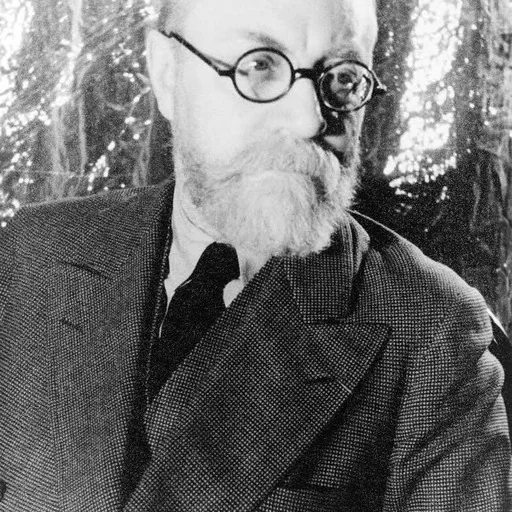
Henri Émile Benoît Matisse (French:; 31 December 1869 – 3 November 1954) was a French visual artist, known for both his use of colour and his fluid and original draughtsmanship.