Artwork
Odalisque with Raised Arms
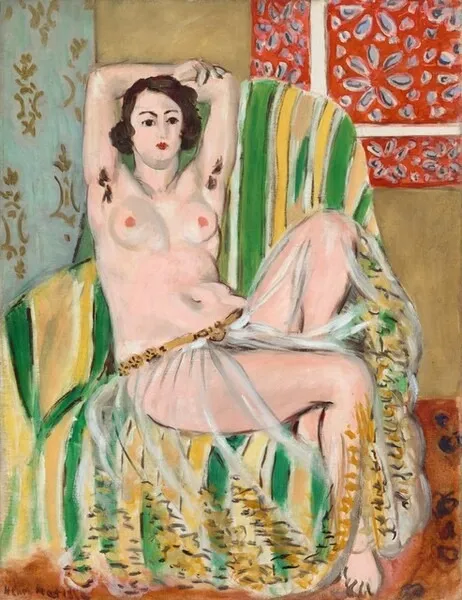
Odalisque with Raised Arms is an oil painting by the Post-Impressionist artist Henri Matisse. It dates from 1923 and is held in the collection of the National Gallery of Art.
About this work
Subject & Meaning
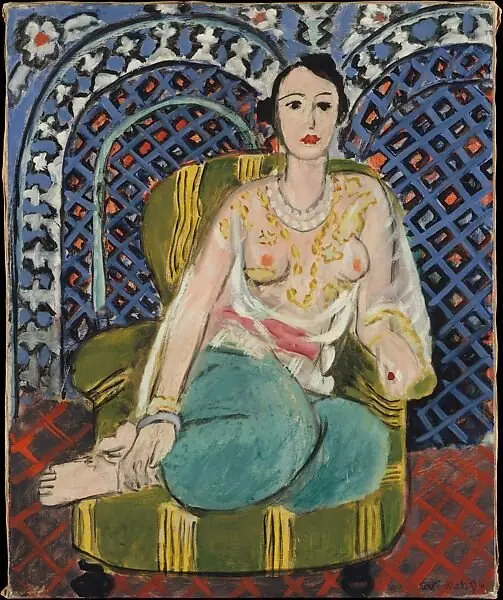
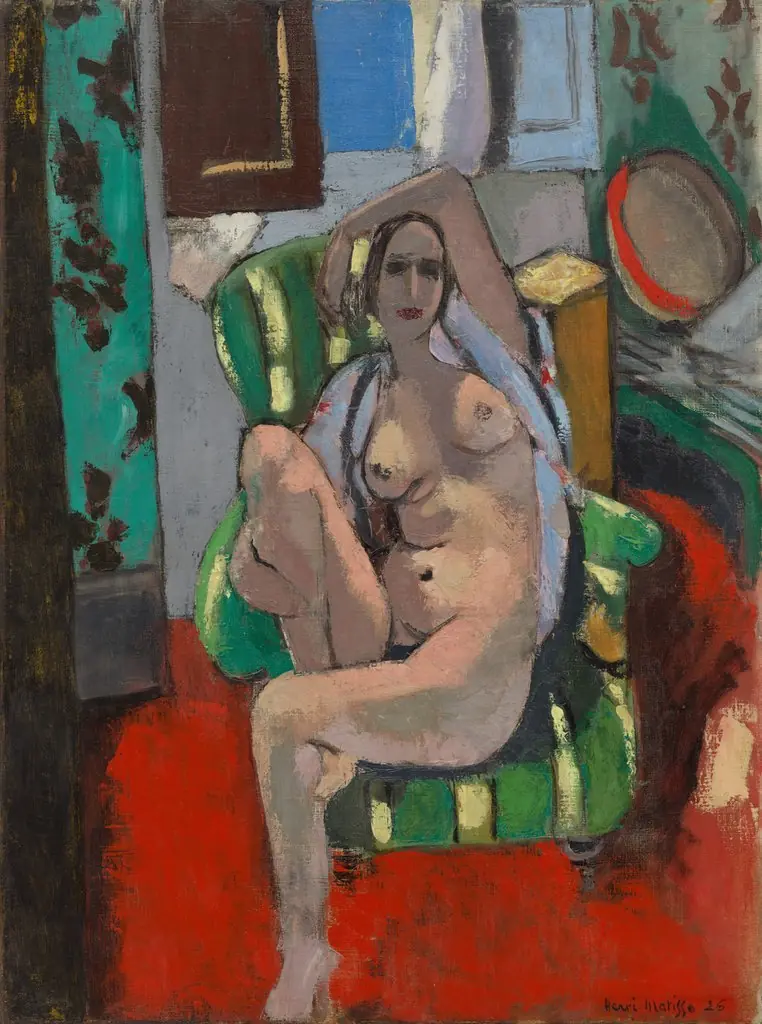
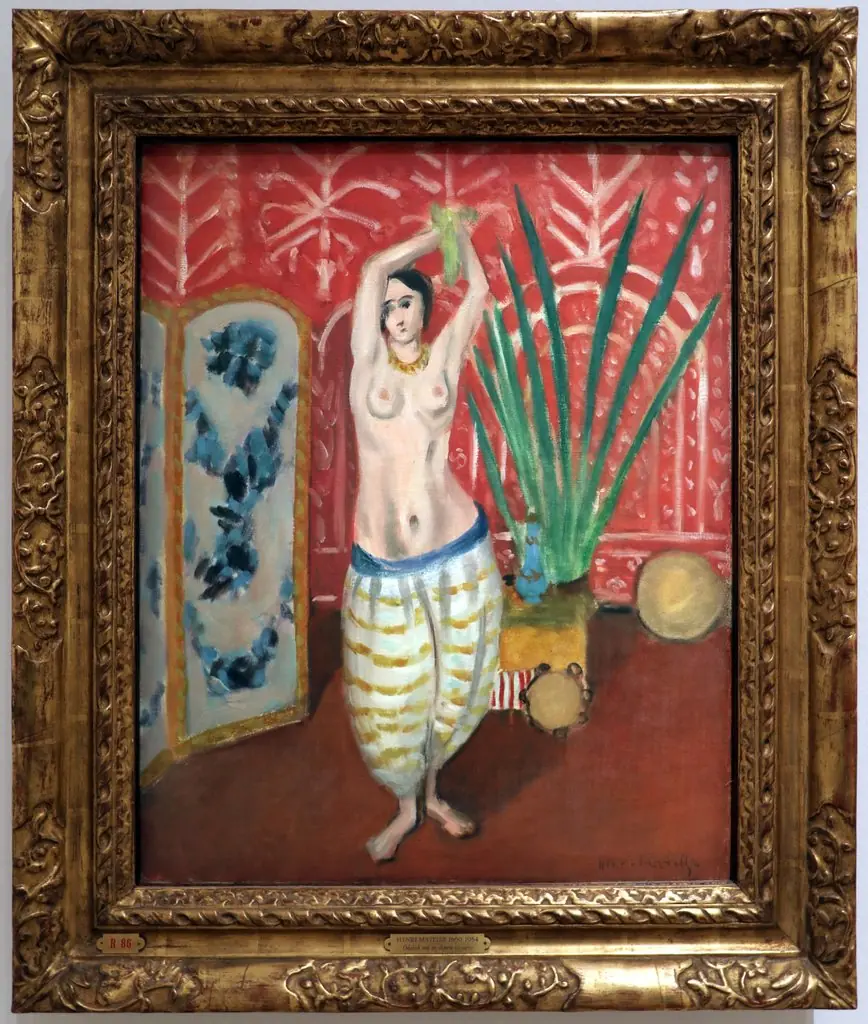
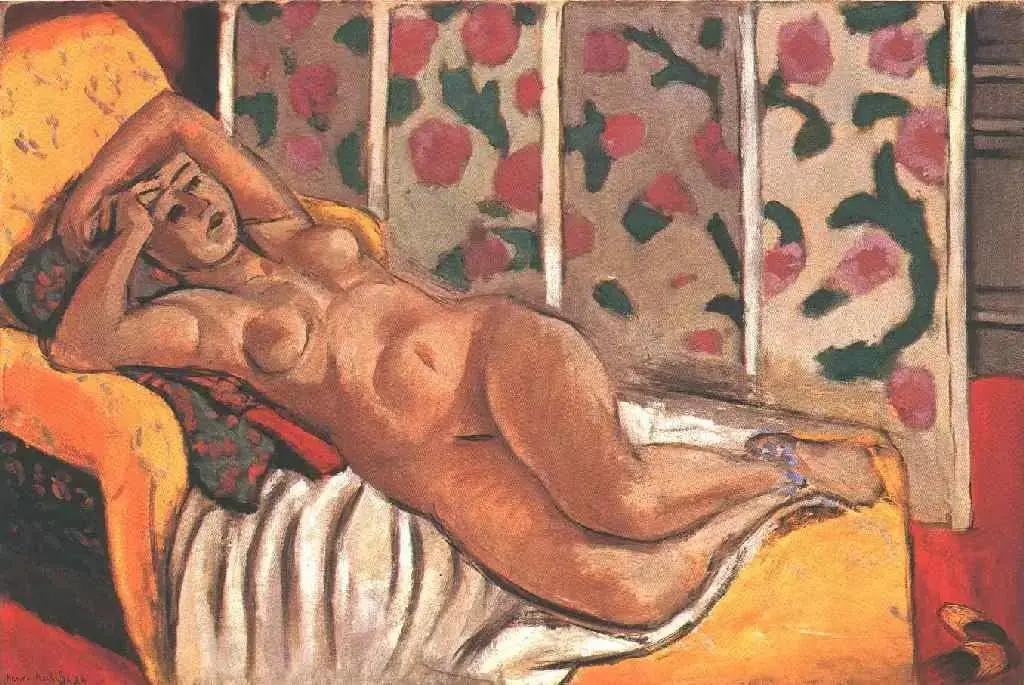
Odalisque with Raised Arms depicts a seated female nude in a striped armchair, her arms lifted to reveal her body while wearing sheer, gold-trimmed harem pants.
Odalisque with Raised Arms depicts a seated female nude in a striped armchair, her arms lifted to reveal her body while wearing sheer, gold-trimmed harem pants. The composition centers the figure and chair, minimizing spatial depth so the viewer confronts the subject directly. Matisse's loose, gestural brushwork and flat patterned backgrounds heighten the contrast between the rounded, idealized curves of the body and the flattened decorative planes behind her.
The title and attire reference the tradition of the odalisque, a chambermaid or concubine in a harem, derived from the Turkish word odalık. Matisse invoked this motif after his 1912 trip to Morocco, where he claimed to have seen such figures and justified the subject as a way to render the nude without artificiality. The reclining nude tradition is evoked yet subtly disrupted by the subject's semi-reclined posture, open eyes, and guarded presence, which recalls Manet's Olympia in complicating the viewer's gaze.
History & Provenance
Henri Matisse completed this oil on canvas painting in 1923 as part of his series of odalisques, a subject matter inspired by his 1912 trip to Morocco. The work features Henriette Darricarrère, who served as the artist's primary model between 1920 and 1927. Following its creation, the painting passed through the Galerie Bernheim-Jeune in Paris.
In 1963, the work was bequeathed to the National Gallery of Art in Washington, D.C., where it remains in the collection.
Context
Created in 1923, Odalisque with Raised Arms belongs to Henri Matisse's odalisque series, a body of work inspired by his 1912 trip to Morocco. During this period, Matisse continued to explore the female nude through a lens loosely associated with Fauvism, utilizing loose brushwork and non-naturalistic color. The painting engages with the historical tradition of the reclining nude while subverting academic conventions; the subject's open eyes and guarded posture create a challenging dynamic reminiscent of Édouard Manet's Olympia.
Many figures in this series were modeled by Henriette Darricarrère, who sat for the artist between 1920 and 1927. Matisse justified the genre by asserting the existence of the subjects he encountered in Morocco, using the odalisque as a legitimate vehicle for nude studies rather than mere fantasy. The work is currently held in the National Gallery of Art in Washington, D.C.
Overview
Henri Matisse completed Odalisque with Raised Arms in 1923, an oil on canvas painting measuring 23 by 26 inches. This work is part of his extensive series depicting female nudes, often inspired by his travels. The painting is currently housed in the National Gallery of Art in Washington D.C., representing a significant period in Matisse's evolving artistic practice.
Technique & Style
Executed in oil paint, Odalisque with Raised Arms exemplifies Matisse's distinctive approach to color and form during the 1920s. The artist employs a palette of soft, pale tones for the figure's skin, contrasting with the bold, saturated hues of the background and furnishings. This period saw Matisse experimenting with decorative elements and flattened perspectives, contributing to the evolving visual language of his extensive oeuvre.
Artist & collection
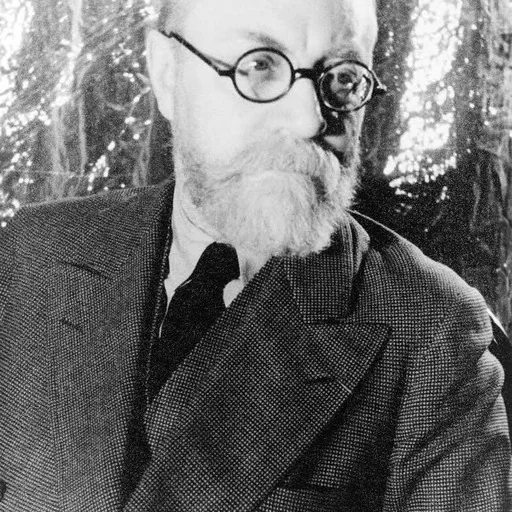
Artist
Henri Émile Benoît Matisse (French:; 31 December 1869 – 3 November 1954) was a French visual artist, known for both his use of colour and his fluid and original draughtsmanship.