Artwork
Portrait of the Artist's Wife
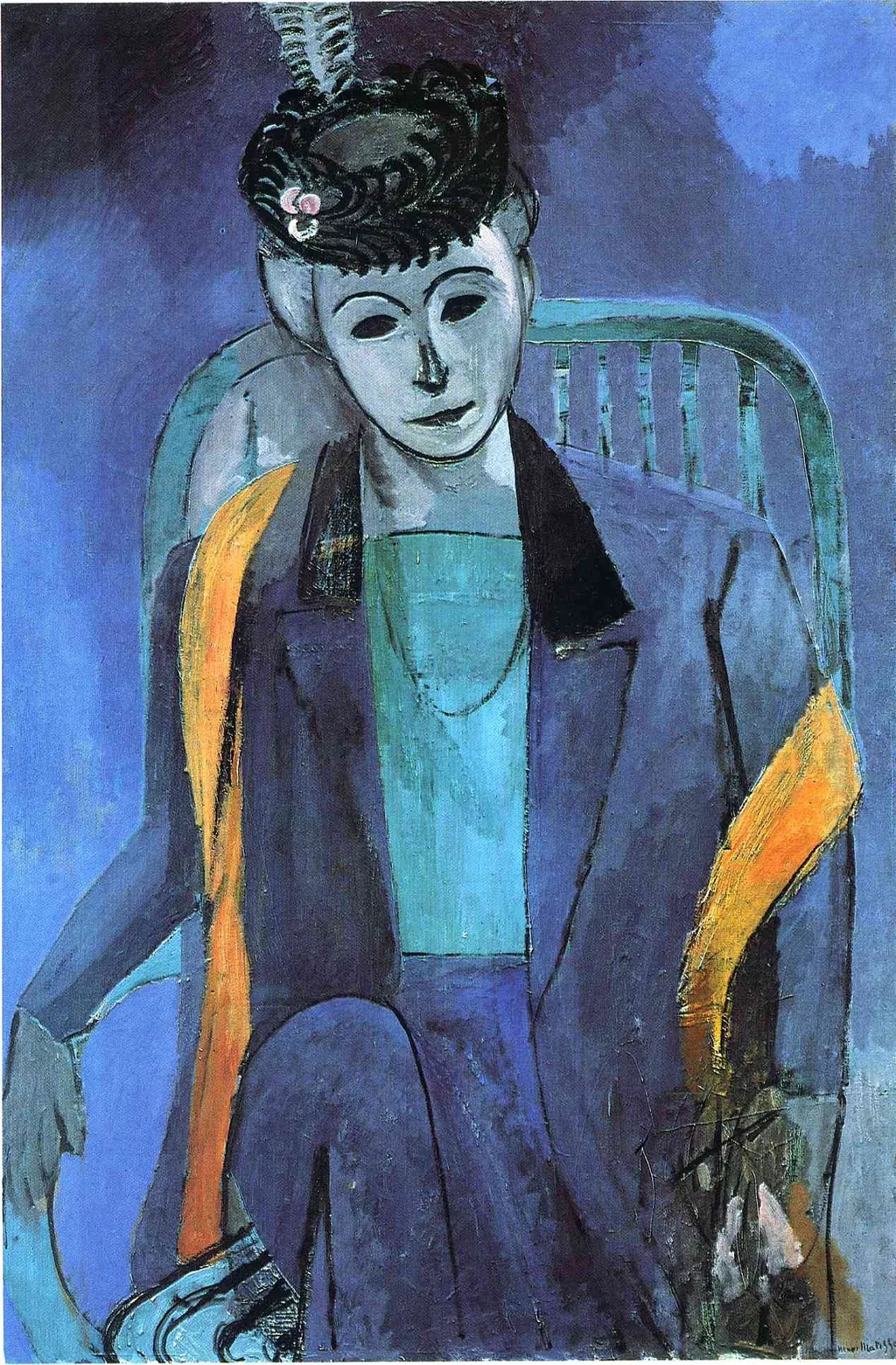
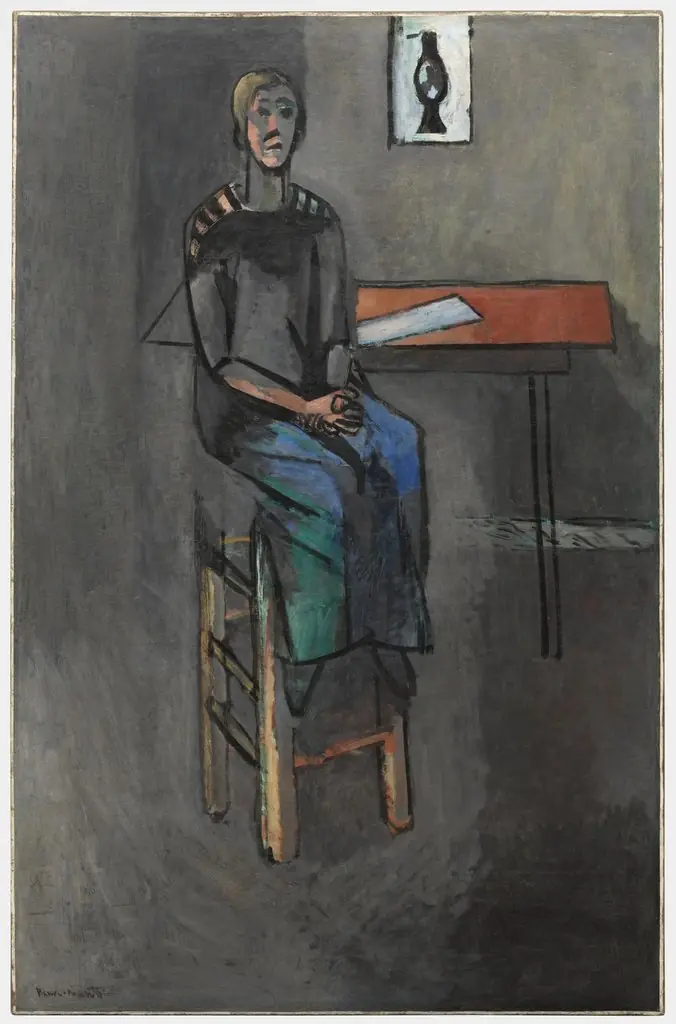
Portrait of the Artist's Wife is an oil painting by the Fauvist artist Henri Matisse. It dates from 1913 and is held in the collection of the Hermitage Museum.
About this work
Overview
Portrait of the Artist's Wife is an oil on canvas painting by the French artist Henri Matisse, completed in 1913.
Portrait of the Artist's Wife is an oil on canvas painting by the French artist Henri Matisse, completed in 1913. Measuring 146 by 97.7 centimetres, the work depicts Matisse's wife, Amélie Parayre, seated against a flat blue background. The painting is held in the collection of the Hermitage Museum in Saint Petersburg, Russia, where it remains as a significant example of Matisse's mature portraiture from a pivotal period in modern art.
Subject & Meaning
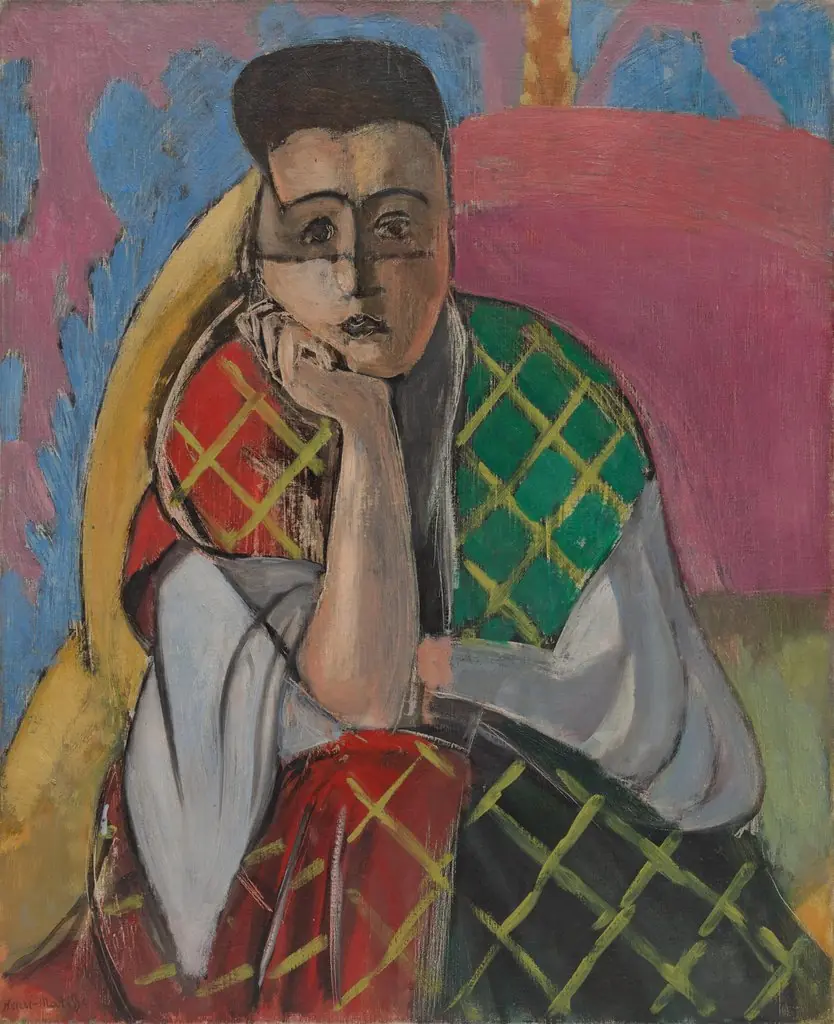
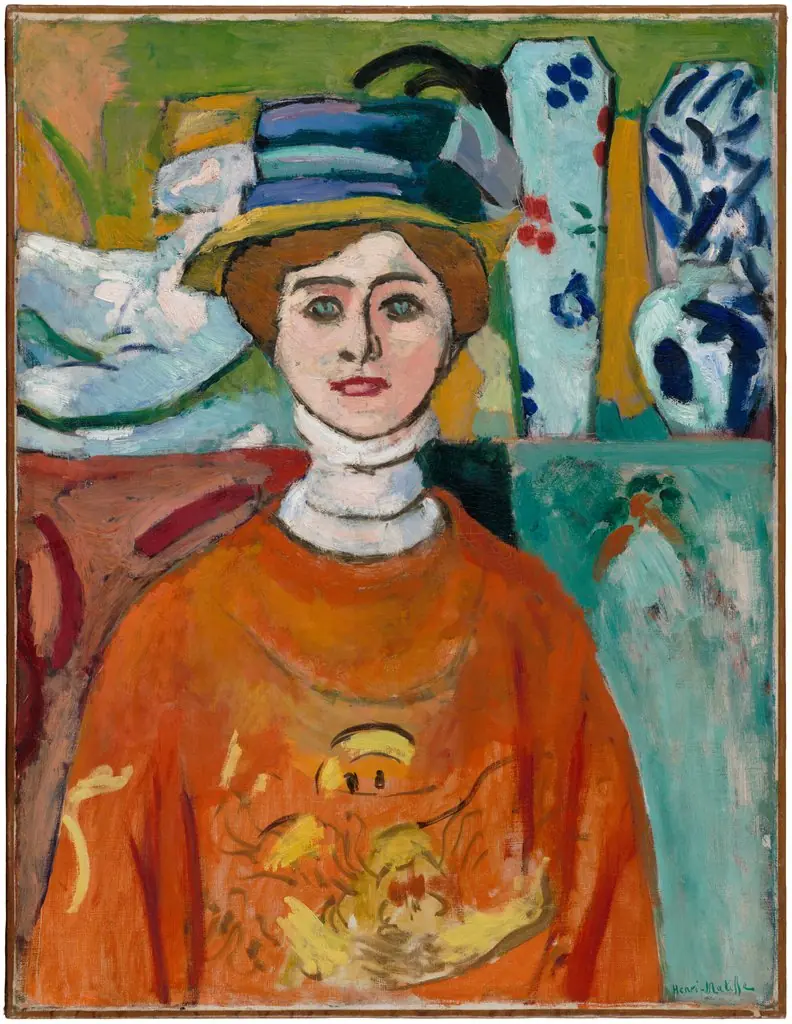
The painting portrays Amélie Parayre, Matisse's wife and frequent model, seated in a pose of composed stillness. She wears a dark hat decorated with a feather and small pink flowers, a teal undergarment, and a purple coat with bright orange fur trim. One hand holds a pair of gloves in her lap. The iconography centres on the domestic intimacy of the artist-muse relationship, yet the treatment resists conventional sentimentality. The face is simplified with dark outlined eyes and reduced facial detail, shifting emphasis away from psychological realism toward formal and chromatic concerns. The orange fur trim against cool blues and purples creates a deliberate chromatic tension, while the minimal modelling and flattened space suggest Matisse's interest in moving beyond naturalistic representation toward an art of essential forms.
Technique & Style
Matisse executed the work in oil on canvas with visible, somewhat loose brushwork that varies between smoother passages and more textured, sketchy areas, particularly in the clothing and background. The palette is dominated by cool blues, purples, and teals, contrasted with warm orange accents. Shadows are minimal, with little concern for naturalistic light sources; instead, flat areas of colour define the composition. The handling shows Matisse's characteristic simplification of form, with reduced concern for volumetric modelling or traditional chiaroscuro. The paint surface displays deliberate variation in finish, from more worked passages to brisk, economical strokes. This approach reflects the artist's mature synthesis of Fauvist colour experiments with a more restrained, architectonic structure.
History & Provenance
The painting was created in France in 1913, a year of significant artistic production for Matisse. It was acquired by Sergei Shchukin, the Russian textile merchant and pioneering collector of modern French art, whose purchases helped sustain Matisse during this period. Following the Russian Revolution, Shchukin's collection was nationalised and eventually formed part of the holdings of the Hermitage Museum in Saint Petersburg, where the painting remains today. The work's provenance through Shchukin places it within one of the most important early collections of modern art in Europe.
Context
The 1913 date places this portrait during a transitional moment for Matisse, following the explosive Fauvist period of 1905-1908 and preceding the more radical experiments of his later career. While sources incorrectly associate this work with the 1905 'Green Stripe' portrait or misdate it to the Fauvist autumn, the 1913 canvas represents a distinct phase in which Matisse refined his colour theories into a more measured but equally bold practice. The painting exemplifies the broader European avant-garde's rejection of academic naturalism in favour of expressive, non-illusionistic colour. Shchukin's patronage was crucial to this context; his Moscow residence functioned as an unofficial museum of modernism, allowing Russian audiences unprecedented access to Matisse's innovations.
Legacy
As part of the Hermitage's collection, Portrait of the Artist's Wife remains accessible to scholars and the public within one of the world's major repositories of Matisse's work. Its continued display contributes to understanding of Matisse's sustained engagement with the portrait genre across decades of stylistic evolution. The painting's presence in Russia, via Shchukin's prescient collecting, illustrates the complex international circulation of modern art in the early twentieth century and the role of private patronage in preserving works that might otherwise have been lost or dispersed. The work maintains its place in Matisse's oeuvre as a document of his personal and artistic partnership with Amélie Parayre, as well as a testament to the collector-shaping networks that sustained avant-garde practice before the First World War.
Artist & collection
Artist
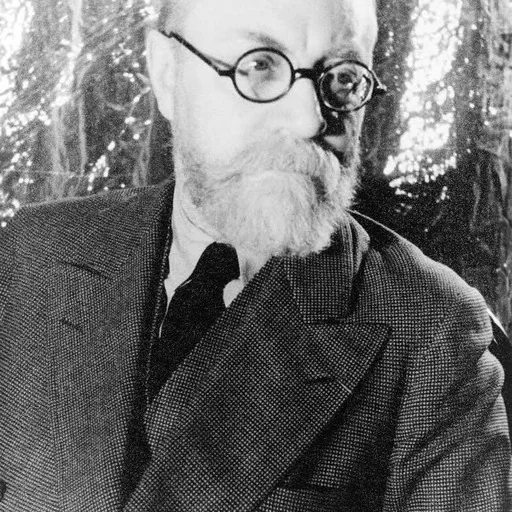
Henri Émile Benoît Matisse (French:; 31 December 1869 – 3 November 1954) was a French visual artist, known for both his use of colour and his fluid and original draughtsmanship.