Artwork
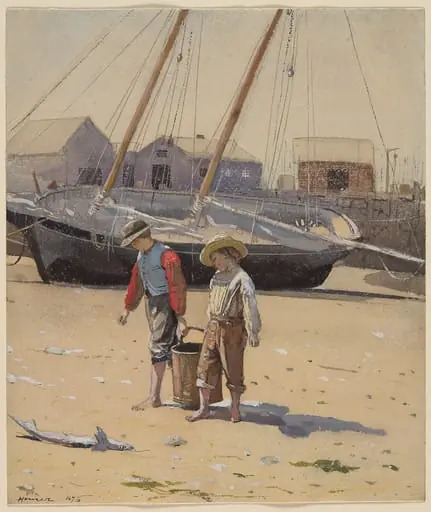
Boys Wading
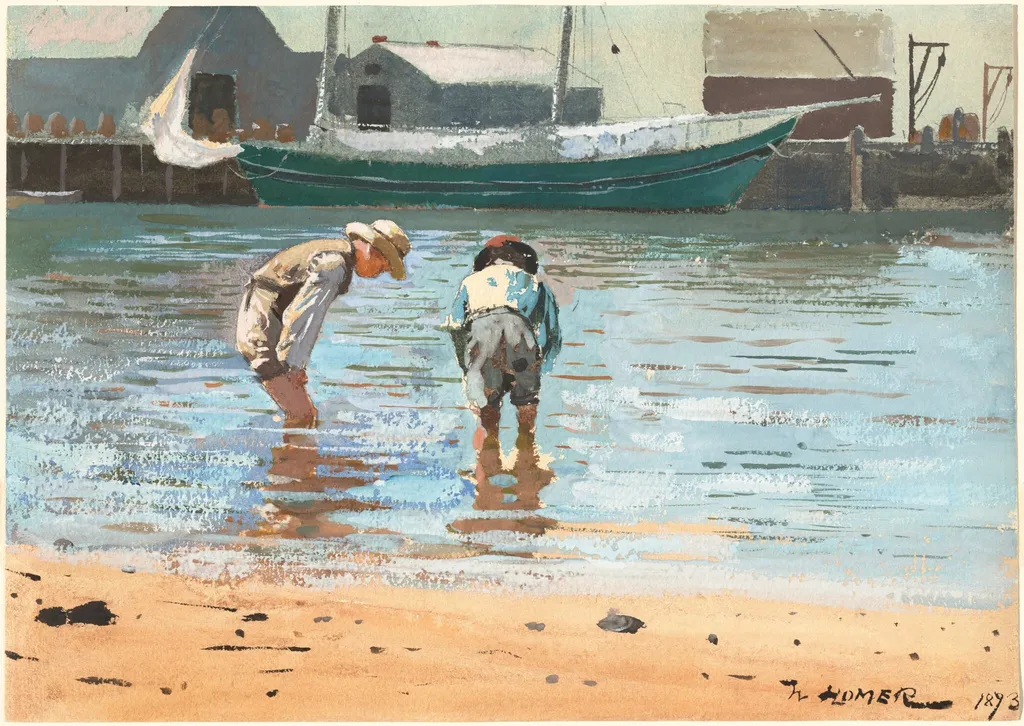
Boys Wading is a gouache drawing by the Impressionist artist Winslow Homer. It dates from 1873 and is held in the collection of the National Gallery of Art.
- Inscription
- Inscribed:in watercolor, lower right: W HOMER 1873
About this work
Overview
Boys Wading (1873) by Winslow Homer is a watercolor and gouache work on wove paper that captures a fleeting moment of childhood leisure on the American coast.
Boys Wading (1873) by Winslow Homer is a watercolor and gouache work on wove paper that captures a fleeting moment of childhood leisure on the American coast. The composition features two young boys standing in shallow surf with their backs turned to the viewer, creating an intimate, observational perspective. One figure bends forward, seemingly engaged in examining the water or retrieving an object, while the other stands upright, observing.
A green boat rests on the sand in the middle ground, anchoring the scene, while architectural forms recede into a hazy distance. Executed with loose, rapid brushstrokes, the painting prioritizes the immediate sensation of light and movement over precise detail. This work exemplifies Homer's pivotal shift during the early 1870s toward watercolor, a medium he adopted to capture the spontaneity of outdoor scenes.
The piece reflects his growing interest in the relationship between humans and the natural environment, moving away from narrative illustration toward a more direct, atmospheric study of light and water. It stands as a significant example of his mature style in watercolor, demonstrating his ability to convey the transient effects of the coastal atmosphere with economy and clarity.
Subject & Meaning
The scene shows two young boys positioned with their backs to the viewer, standing in shallow water near a beach. One child leans forward, perhaps reaching for an object on the sand, while the other watches. A green boat lies beached nearby, and distant structures recede into the background, suggesting a modest coastal setting.
Technique & Style
Homer employs loose, rapid brushwork that conveys the translucency of water and the immediacy of the moment. The combination of watercolor’s transparent washes with gouache’s opacity allows for subtle tonal shifts, while the graphite underdrawing provides structural guidance. The overall effect is sketch‑like, emphasizing movement and light on the wet surface.
History & Provenance
Created in 1873, the piece belongs to the period when Homer was developing his reputation as a watercolorist after returning from Europe. The work is documented as part of his early American oeuvre, reflecting his interest in everyday rural and coastal life.
Own this work as a print
Artist & collection
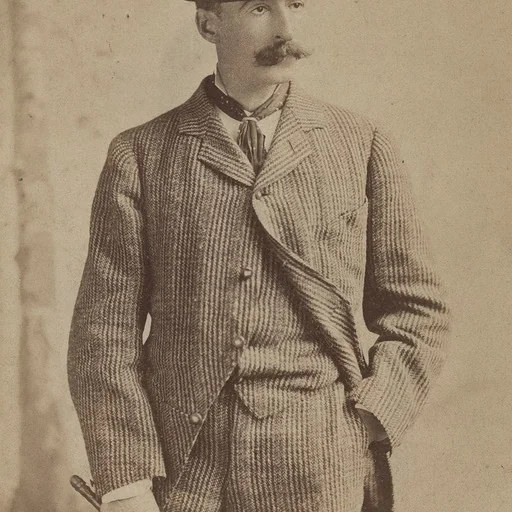
Artist
Winslow Homer (February 24, 1836 – September 29, 1910) was an American landscape painter and illustrator, best known for his marine subjects.