Artwork
Henry IV Rides to the Château d'Anet
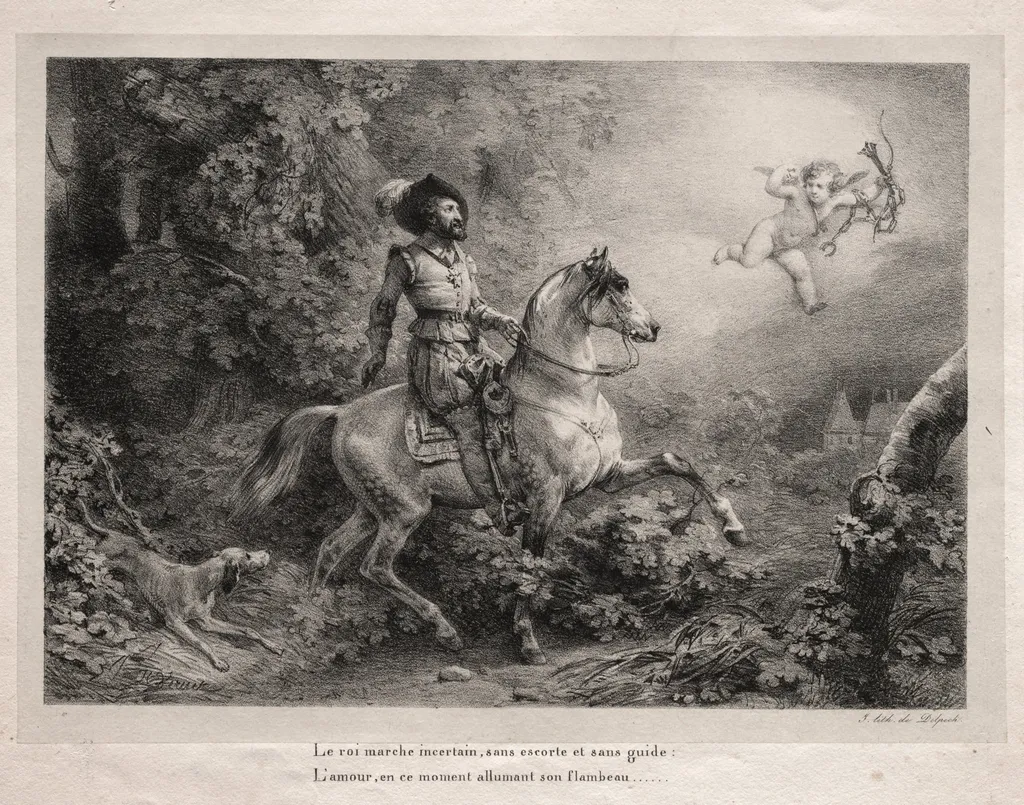
Henry IV Rides to the Château d'Anet is a print by the Romanticist artist Horace Vernet. It dates from 1825 and is held in the collection of the Cleveland Museum of Art.
- Accession no.
- 1941.254
About this work
Overview
Created in 1825 by French artist Émile Jean-Horace Vernet, this etching portrays King Henry IV of France on horseback en route to the Château d'Anet.
Created in 1825 by French artist Émile Jean-Horace Vernet, this etching portrays King Henry IV of France on horseback en route to the Château d'Anet. Rendered with fine linear detail, the scene blends historical narrative with symbolic elements. The work is part of the collection at The Cleveland Museum of Art and reflects Vernet’s interest in dramatic historical subjects, though executed here in a smaller, intimate format rather than his usual large-scale canvases.
Subject & Meaning
The image captures Henry IV in a moment of solitary travel, not as a military leader but as a man moved by personal emotion. A hovering cherub holds a flaming torch, suggesting divine or romantic inspiration. The accompanying poetic inscription implies the king’s journey is guided by love rather than political necessity.
The lone dog at the horse’s feet and the distant castle reinforce themes of solitude, anticipation, and destination.
Technique & Style
Vernet employed etching to achieve delicate tonal contrasts and precise linework, emphasizing texture in the landscape and the king’s attire. The composition uses atmospheric perspective to recede the castle into the hills, while the cherub introduces a supernatural element. The loose reins and relaxed posture of the rider contrast with the formal grandeur of his clothing, creating a tension between human vulnerability and royal presence.
History & Provenance
The print was produced during Vernet’s early career, when he was refining his approach to historical subjects beyond battlefield scenes. It entered the collection of The Cleveland Museum of Art in the 20th century, likely through a broader acquisition of 19th-century French graphic works. Its provenance reflects growing interest in Romantic-era prints that blended narrative poetry with visual symbolism.
Context
Created during the rise of Romanticism in France, the work aligns with contemporary artistic trends that favored emotional depth over classical restraint. Artists of the period often infused historical subjects with personal or mystical overtones. Vernet’s use of a cherub and poetic text echoes literary influences, positioning the king not as a statesman but as a figure touched by inner conviction and feeling.
Legacy
Though less known than Vernet’s monumental paintings, this etching exemplifies his ability to convey psychological nuance in smaller formats. It contributes to the broader understanding of how 19th-century French artists reimagined historical figures through intimate, emotionally charged scenes. The work remains a quiet but significant example of Romantic printmaking’s capacity to merge poetry, history, and visual metaphor.
Own this work as a print
Artist & collection
Artist
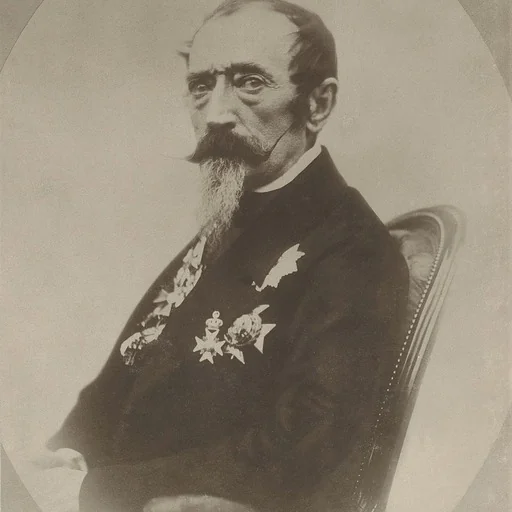
Émile Jean-Horace Vernet (French pronunciation:; 30 June 1789 – 17 January 1863), better known as Horace Vernet, was a French painter of battles, portraits, and Orientalist subjects.

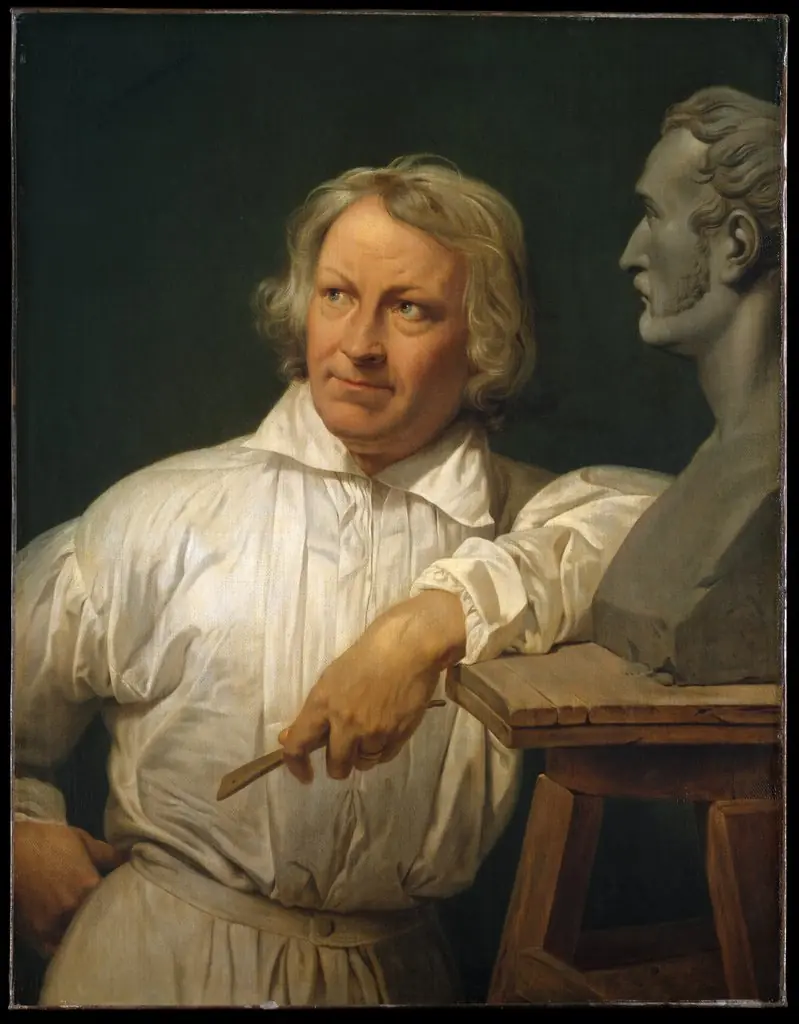 Bertel Thorvaldsen (1768–1844) with the Bust of Horace Vernet
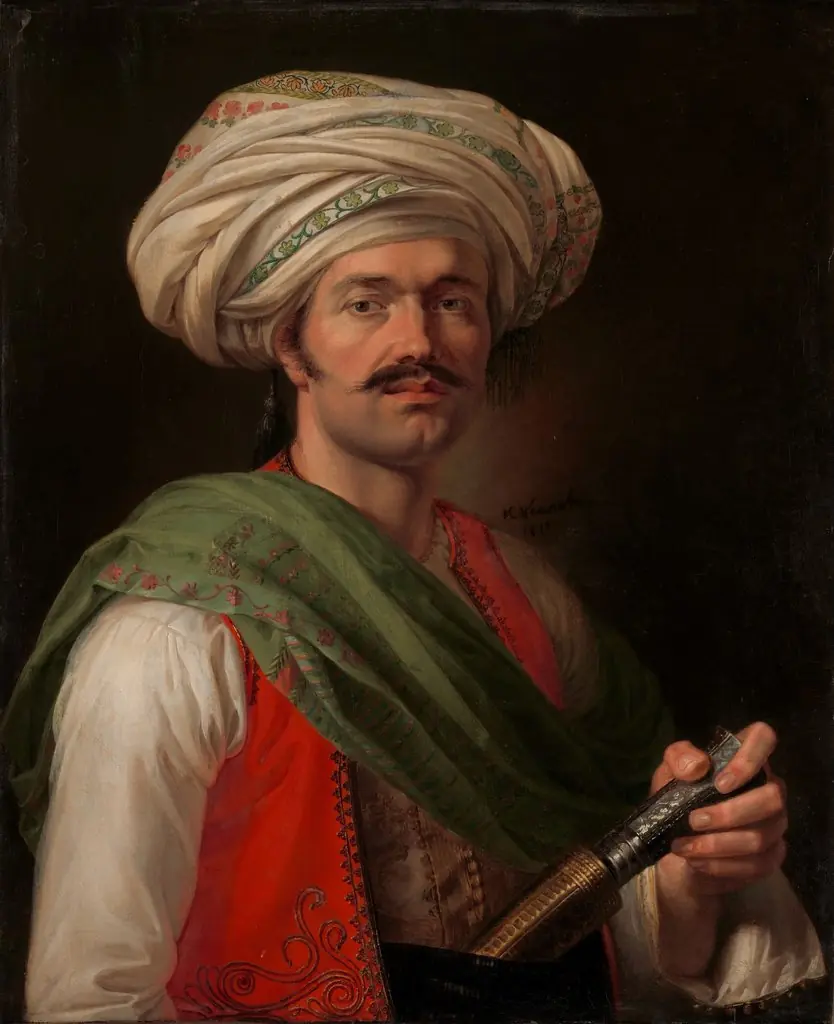 Portrait of a Mameluke, said to be Roustam Raza
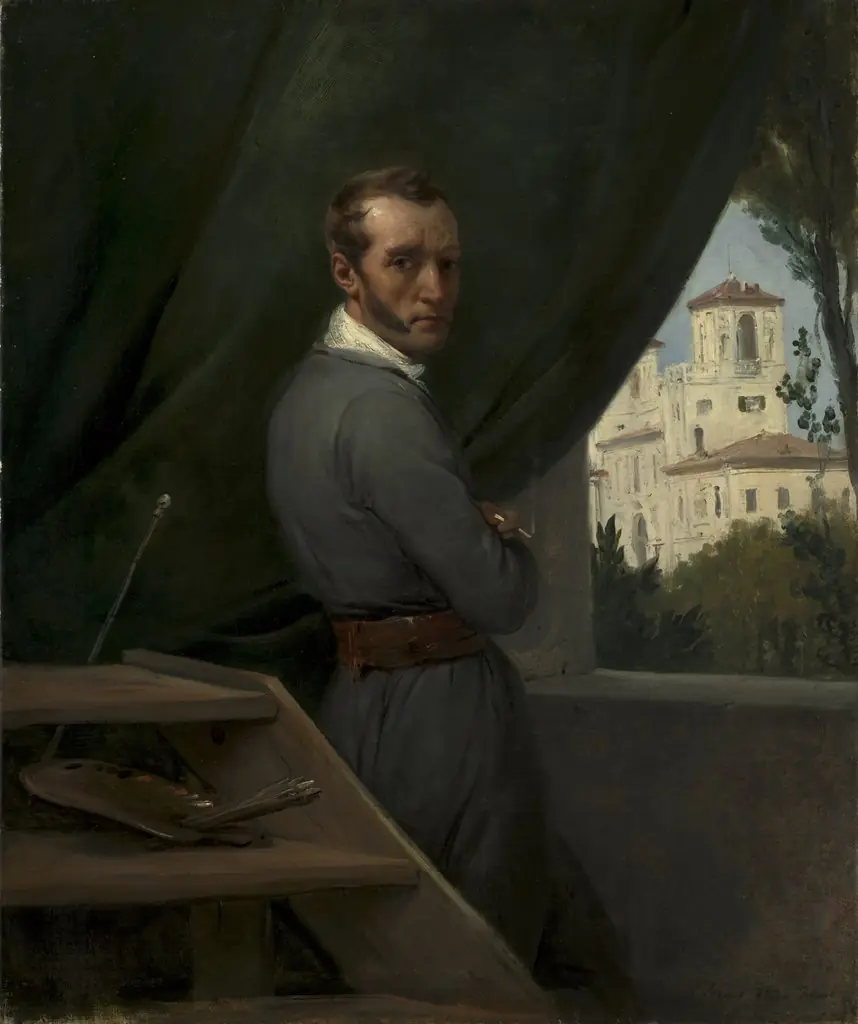 Self-Portrait in Rome
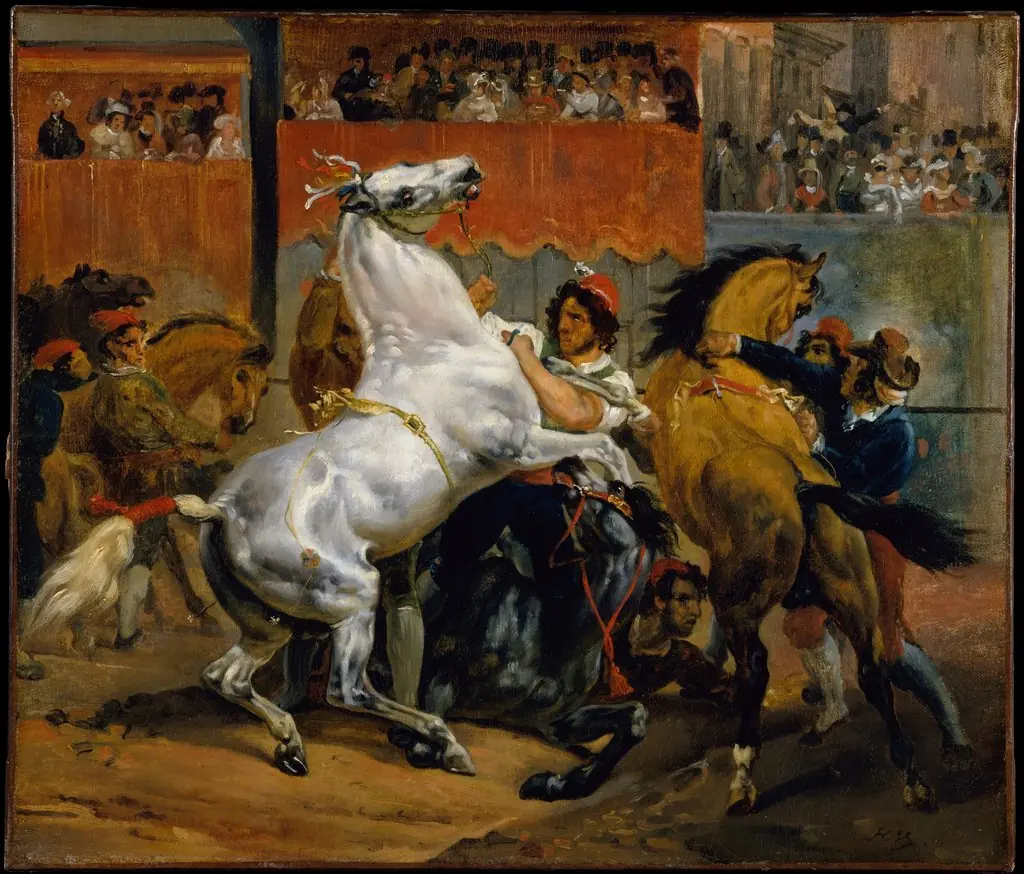 The Start of the Race of the Riderless Horses
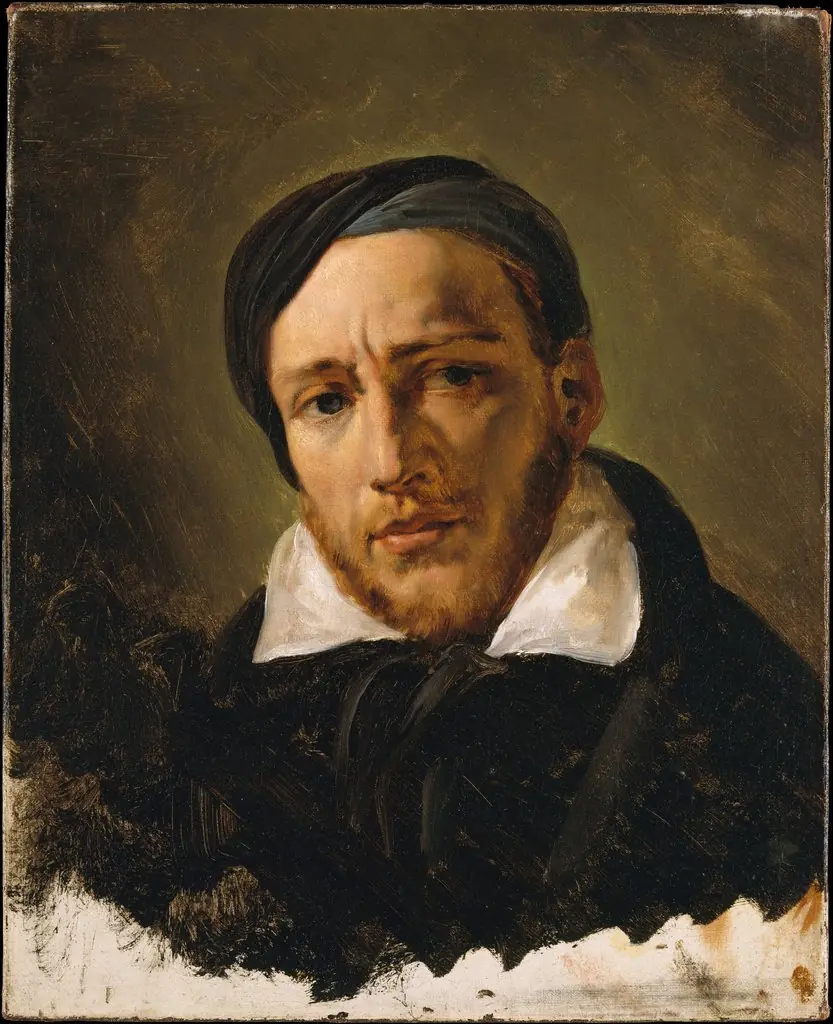 Jean-Louis-André-Théodore Gericault (1791–1824)
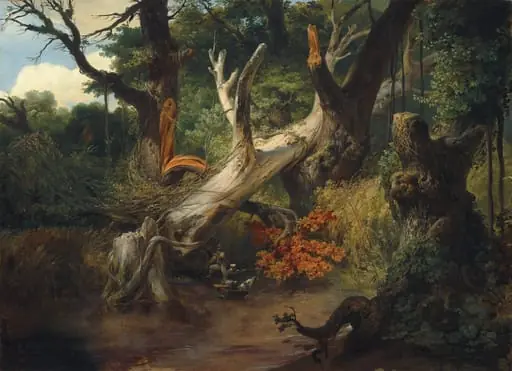 Hunting in the Pontine Marshes
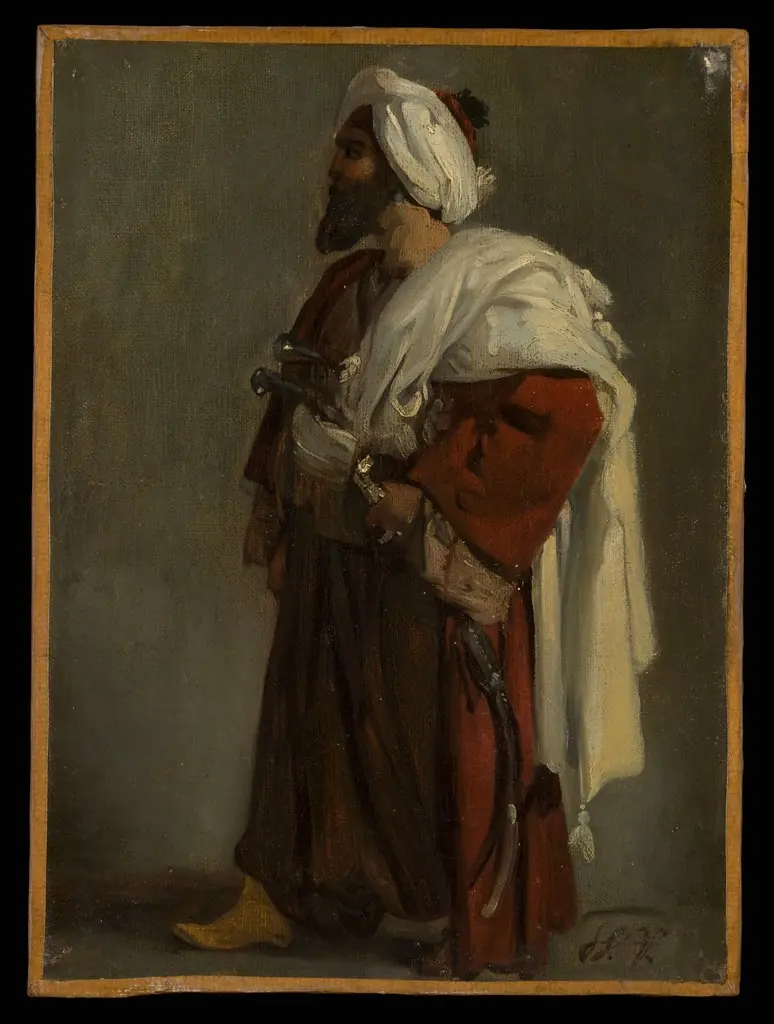 Arab Warrior
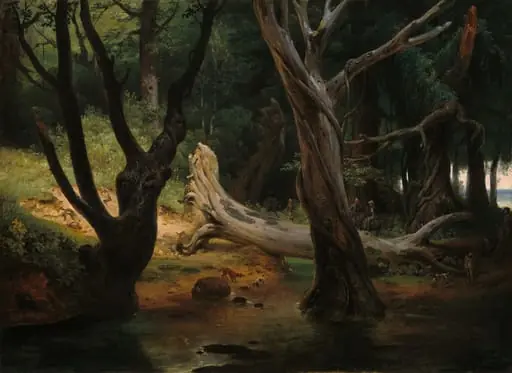 Departure for the Hunt in the Pontine Marshes
- William Tell at Küssnacht
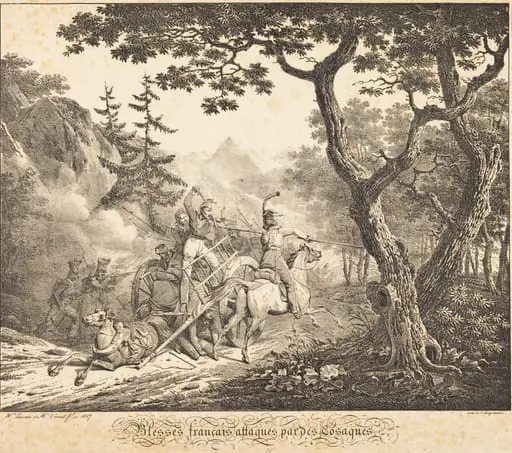 Wounded French Attacked by a Cosack
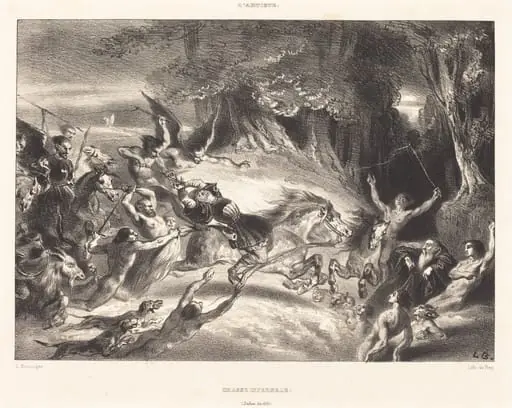 Chasse Infernale
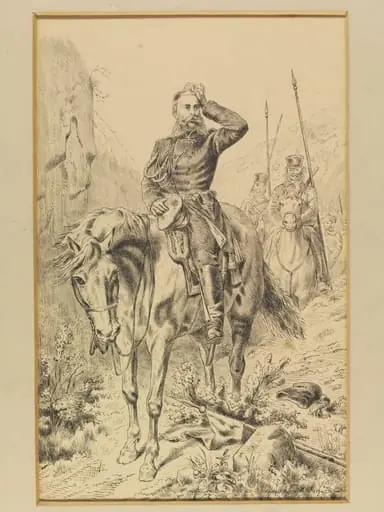 Portrait of General Mikhail Dmitrievich Skobelev
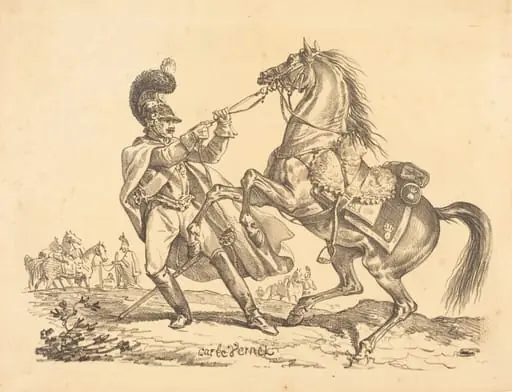 Cuirassier retenant son cheval qui se cabre
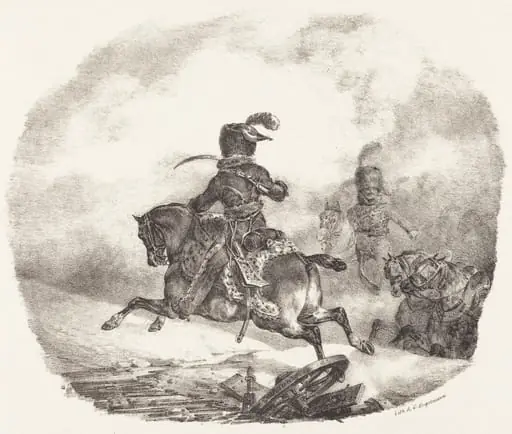 Light Artillery Officer of the Imperial Guard (Officier d'artillerie legerie de la garde imperiale)
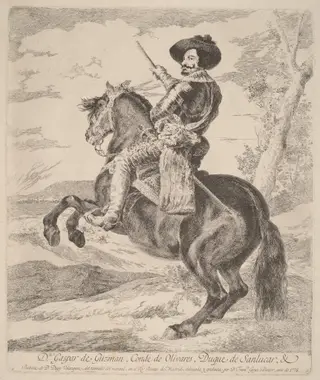 Gaspar de Guzman, Conde Duque de Olivares
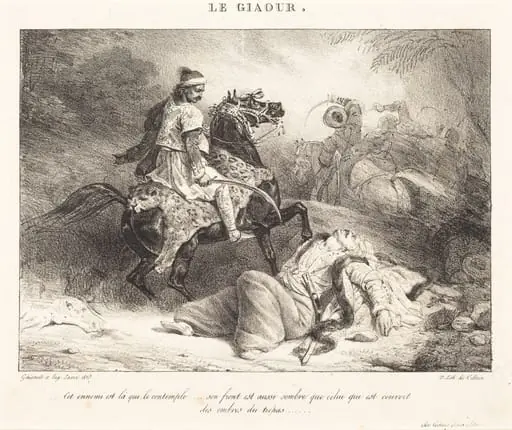 Le Giaour (The Infidel)
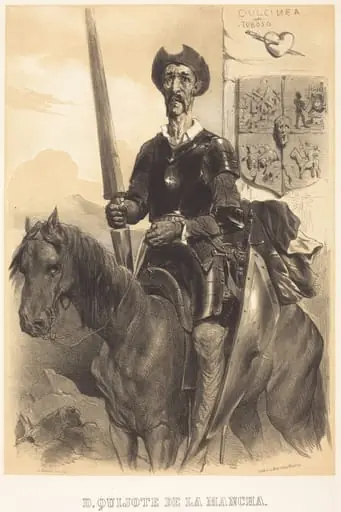 Don Quixote de la Mancha
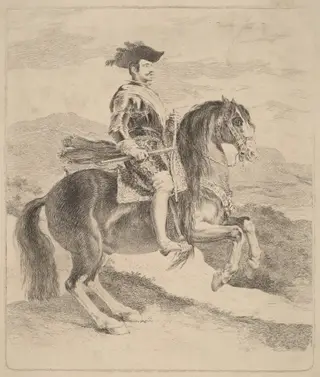 Felipe IV
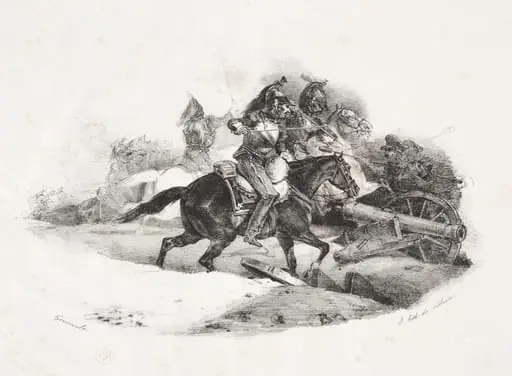 Cuirassiers Charging an Artillery Battery
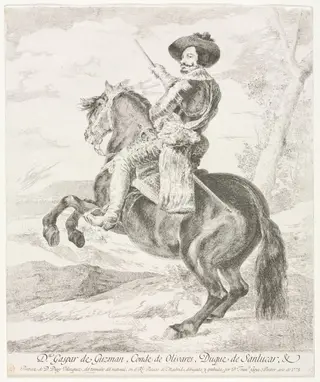 Gaspar de Guzman