Artwork
Mountain and Calligraphy
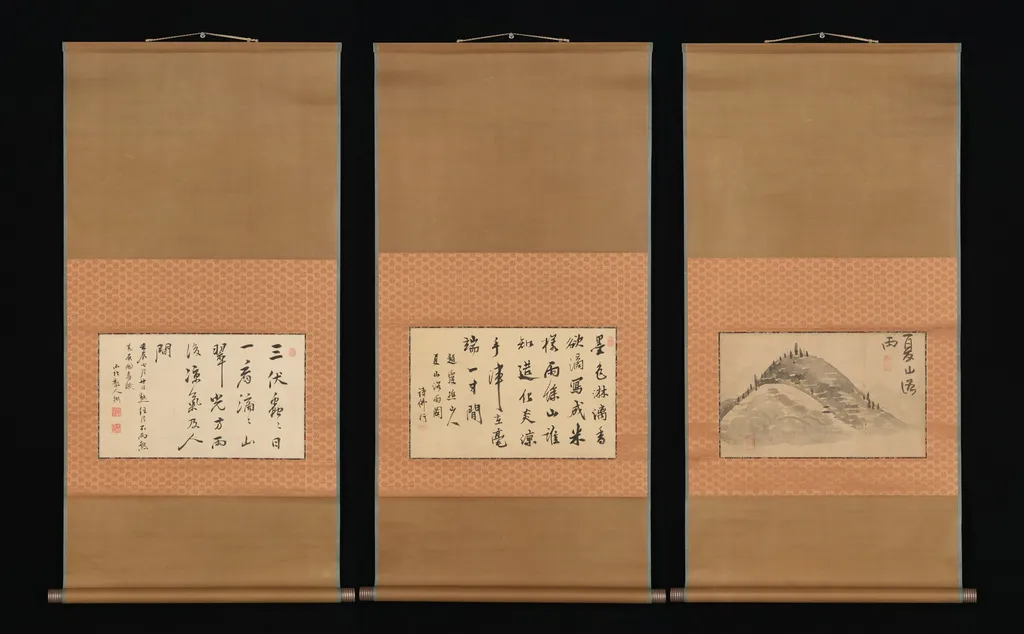
Mountain and Calligraphy is an unspecified painting by the Nihonga artist Ike Taiga. It is held in the collection of the Metropolitan Museum of Art.
About this work
History & Provenance
The painting Mountain and Calligraphy was created by the Japanese artist Ike no Taiga in 1794.
The painting Mountain and Calligraphy was created by the Japanese artist Ike no Taiga in 1794. Classified as a painting depicting a mountain alongside calligraphic elements, the work originated in Japan in the late eighteenth century and is held in the collection of the Metropolitan Museum of Art in New York. The available sources do not detail the commissioning patron, the original ownership chain, or the provenance history prior to its arrival at the museum, and no specific inventory or accession number or exhibition history is documented.
Overview
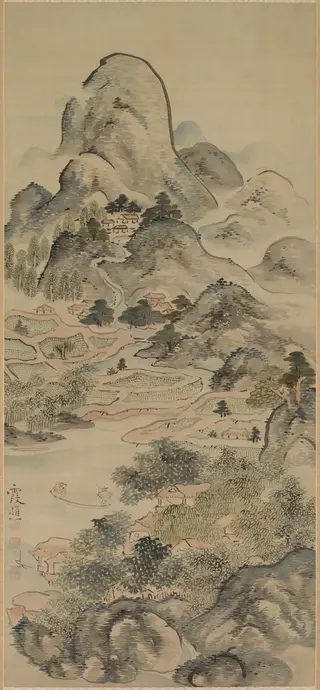
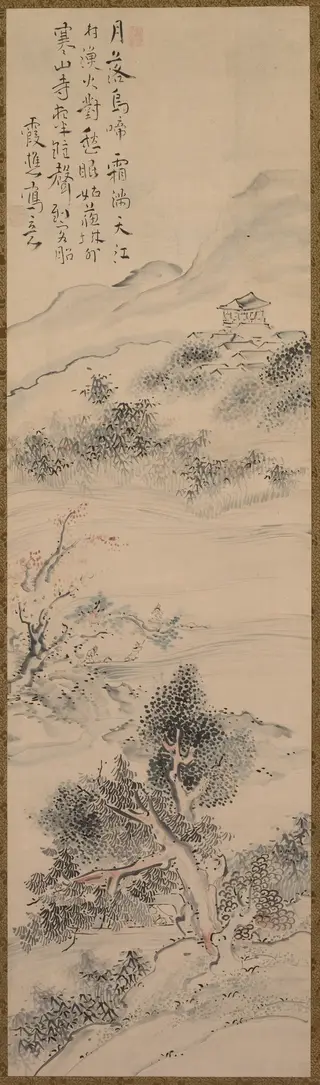
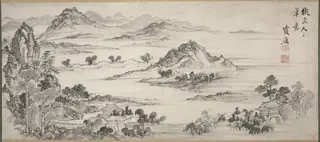
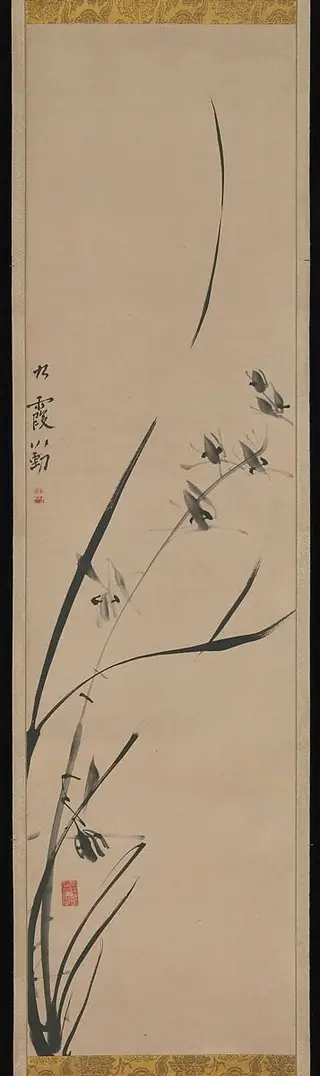
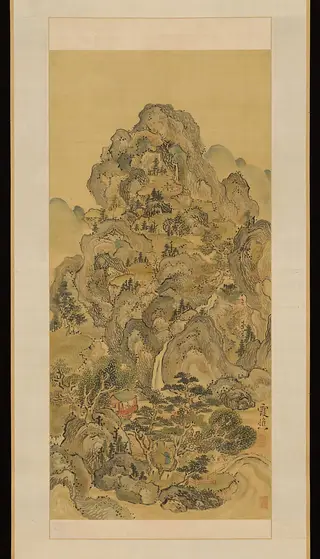
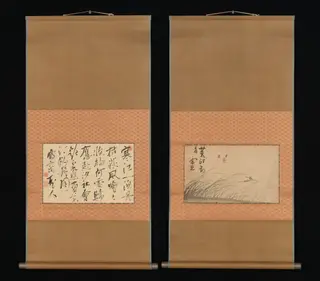
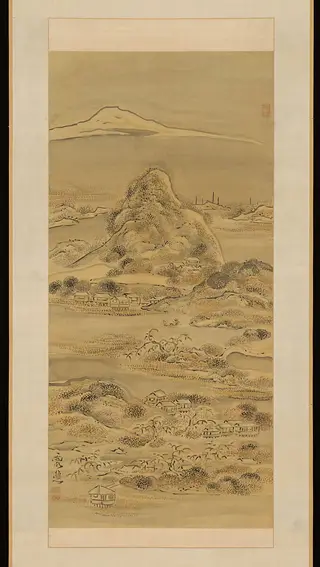
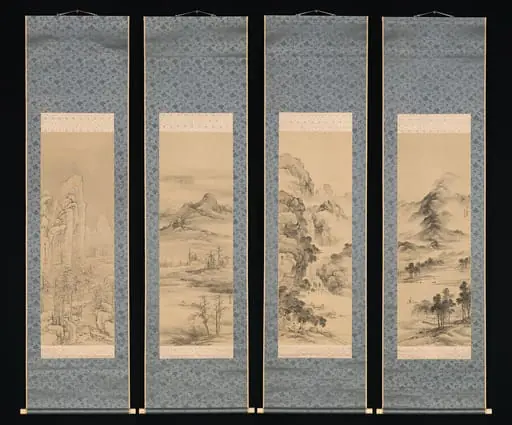
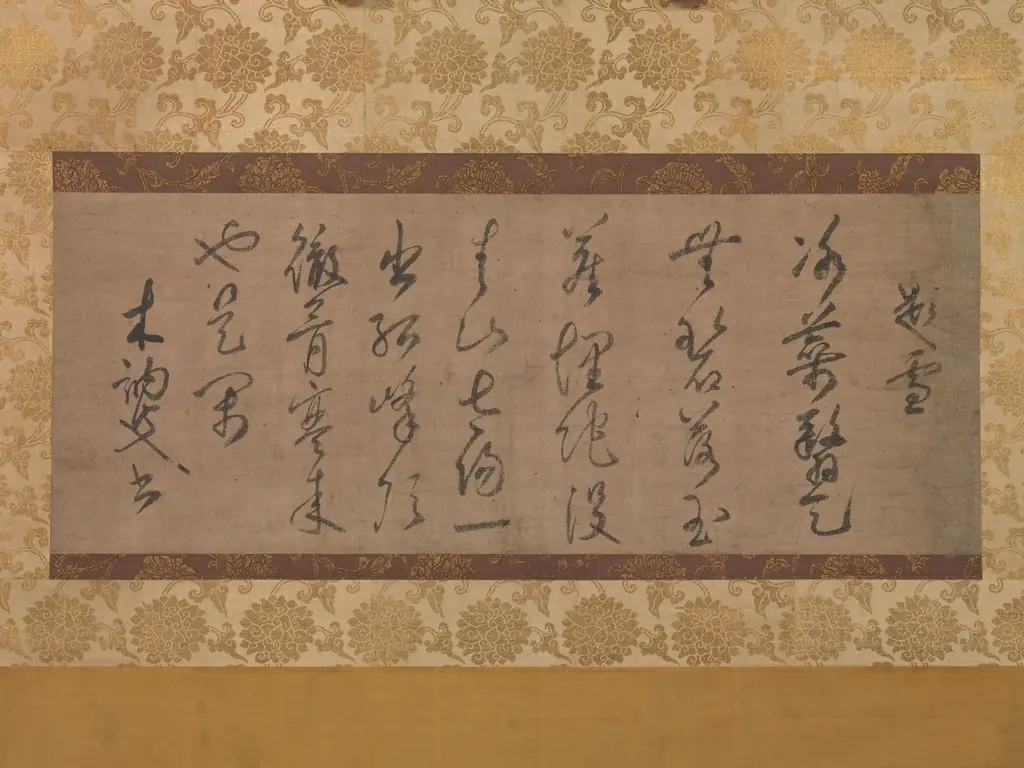
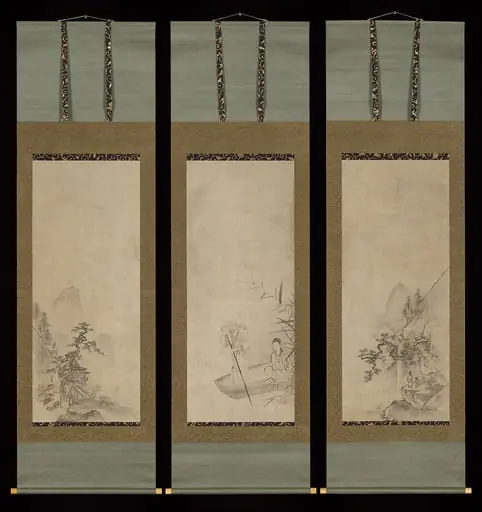
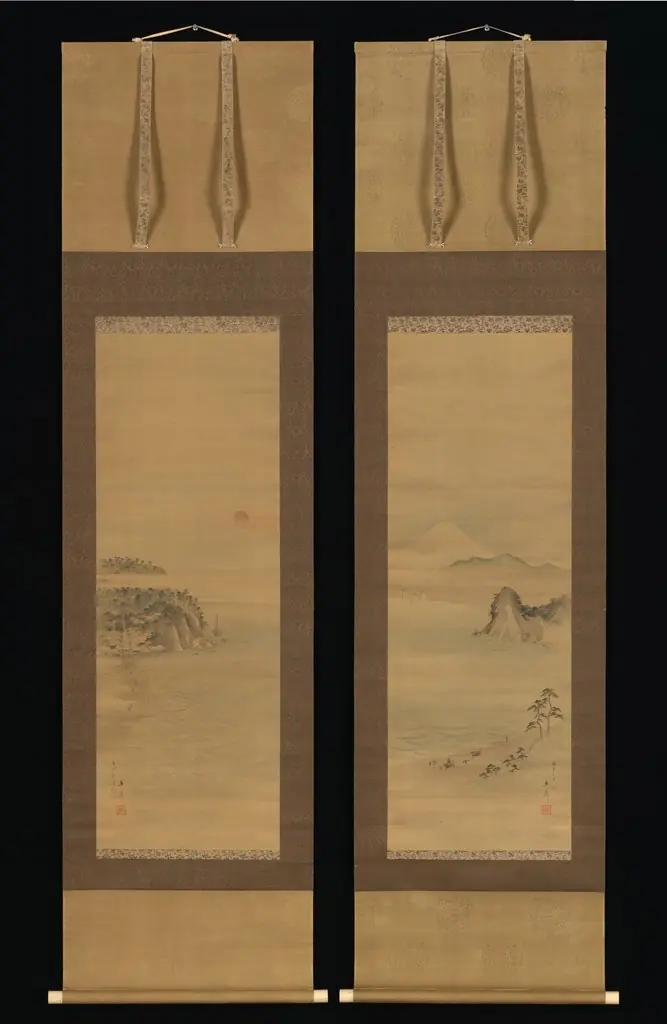
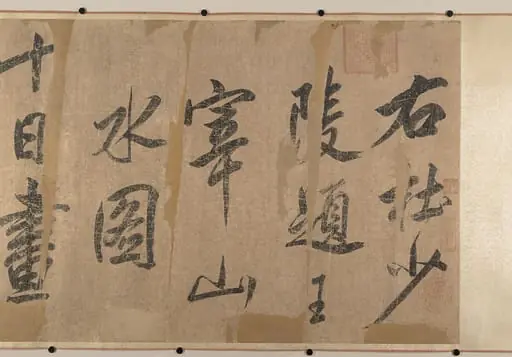
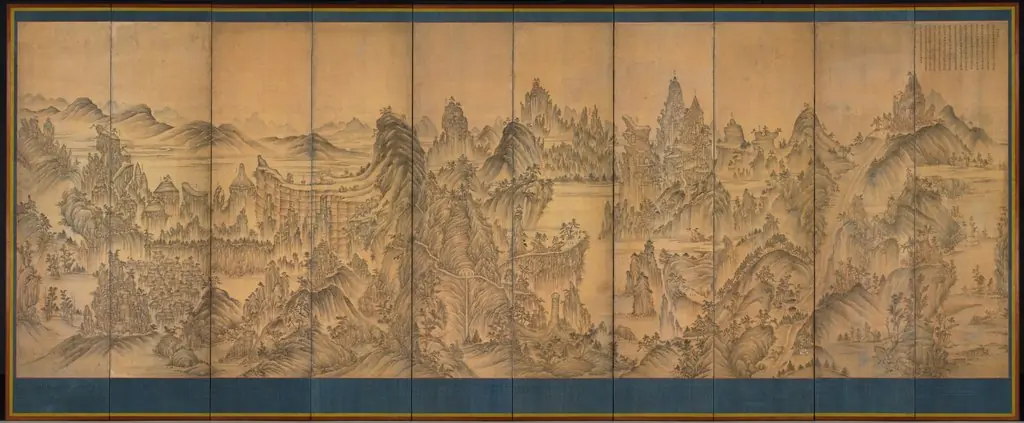
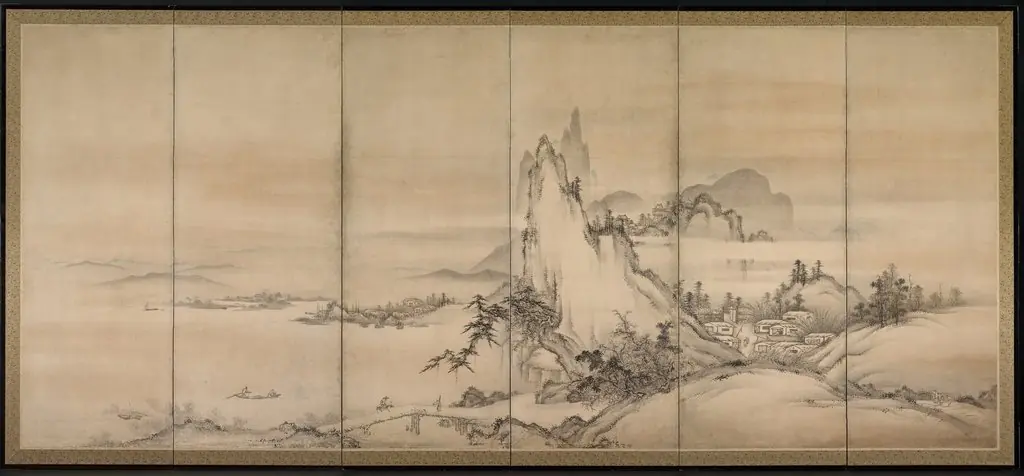
Created in 1794 by the Edo‑period artist and calligrapher Ike no Taiga, Mountain and Calligraphy consists of three vertical scrolls. The work merges inked verses on a peach‑toned paper with a modest landscape of a craggy peak, a winding path and sparse trees. It belongs to the Japanese nihonga tradition and is presently owned by the Metropolitan Museum of Art.
Subject & Meaning
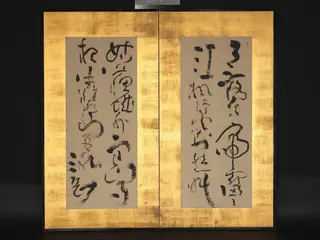
The composition juxtaposes Chinese‑influenced poetry, rendered in bold black brushwork, against a serene mountain scene. The calligraphic text, often lyrical, complements the natural imagery, reflecting the East Asian aesthetic that pairs literary expression with depictions of the landscape to evoke contemplation and the harmony between humanity and nature.
Technique & Style
Taiga employs monochrome ink for the verses, allowing the peach‑colored background to provide a subtle contrast, while the landscape is executed with delicate shading and fine brushstrokes that suggest depth without excessive detail. The border pattern unifies the three scrolls, and the overall approach aligns with the bunjinga (nanga) style that values spontaneity and scholarly refinement.
Context
The work reflects the Edo period’s fascination with Chinese cultural motifs, particularly the integration of poetry, calligraphy, and landscape painting. Taiga’s practice of blending literary and visual elements mirrors the broader intellectual pursuits of the literati class, who sought to embody the ideals of cultured refinement through art.
Own this work as a print
Artist & collection