Artwork
Bamboo and Rocks in Clearing Skies
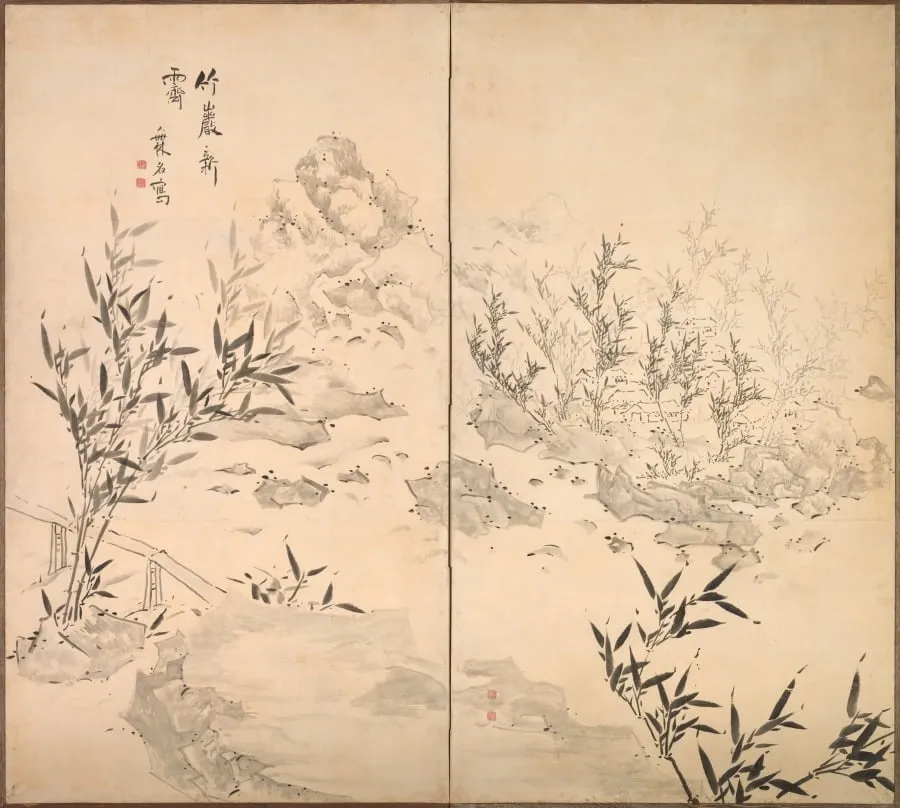
Bamboo and Rocks in Clearing Skies is an unspecified painting by the Baroque artist Ike Taiga. It dates from 1704 and is held in the collection of the Cleveland Museum of Art.
- Accession no.
- 1958.337
- Credit line
- Purchase from the J. H. Wade Fund
About this work
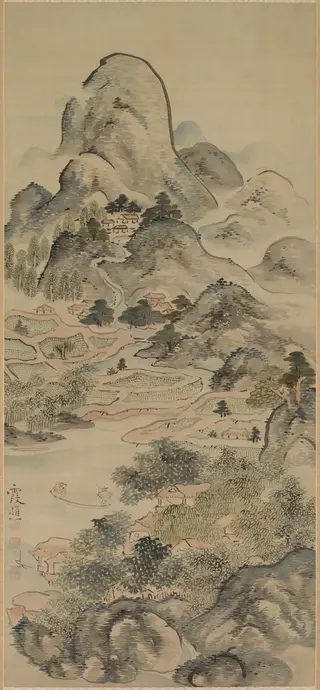
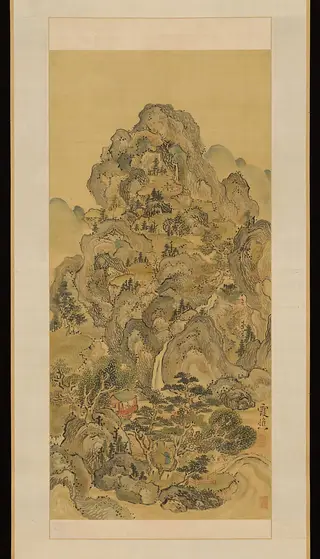
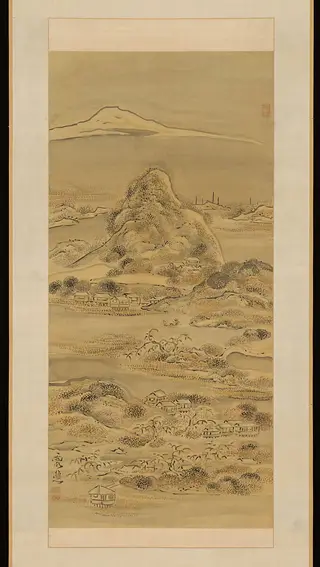
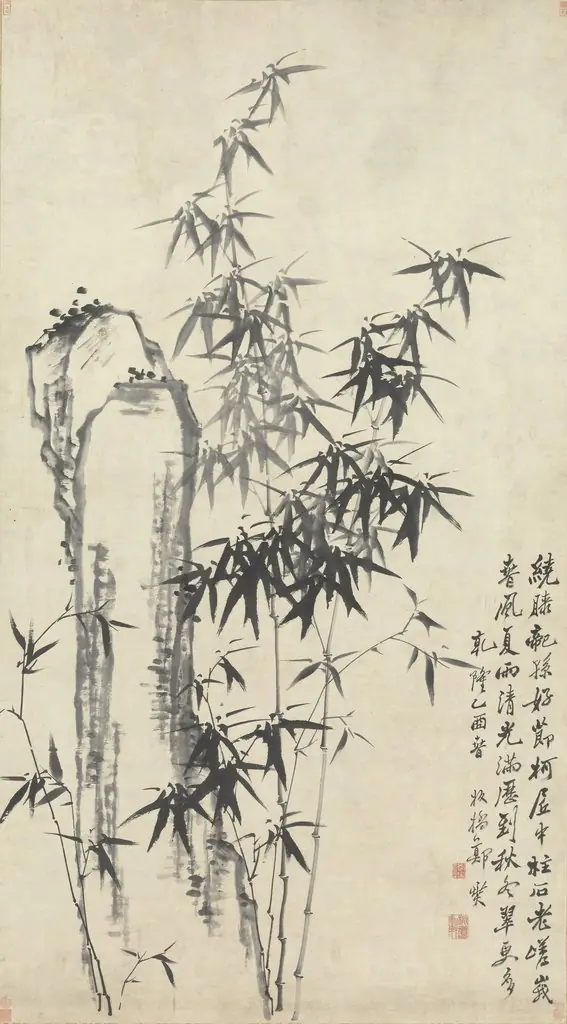
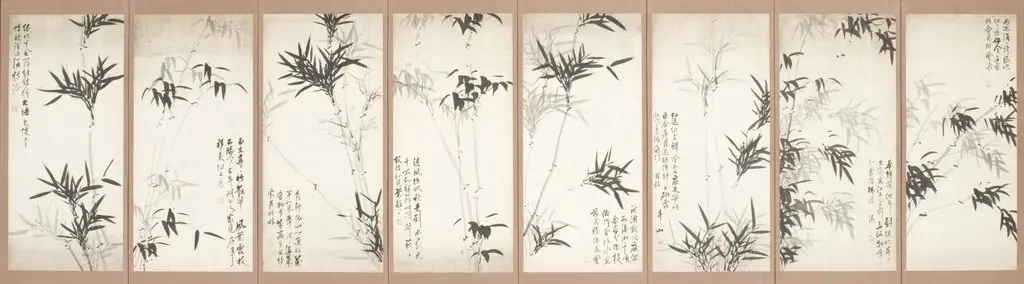
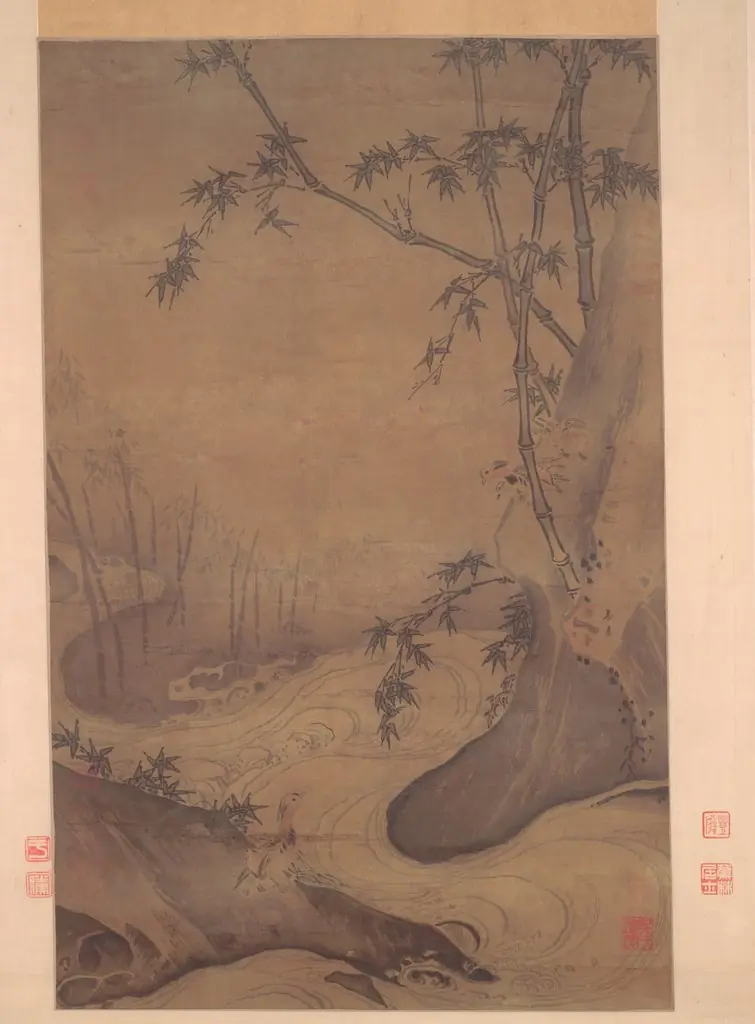
You see a tall screen with bamboo bending over a rushing stream, rocks jutting out, and a tiny village tucked in the misty hills.
You see a tall screen with bamboo bending over a rushing stream, rocks jutting out, and a tiny village tucked in the misty hills.
Ike Taiga painted this in the mid-1700s, when artists in Japan mixed Chinese brushwork with their own quiet scenes. The wet ink makes the bamboo look almost alive, as if you could hear the leaves rustle. A flat rock in the front feels like a step you could take right into the painting.
If you like this, look up Japan, Edo period (1615–1868).
Overview
Bamboo and Rocks in Clearing Skies is a mid-18th-century Japanese painting on a tall screen, attributed to Ike Taiga. The work depicts a serene natural scene, blending traditional Chinese brushwork techniques with distinctly Japanese quietude.
Subject & Meaning
The painting conveys a sense of refreshed scenery and spirit, symbolizing the invigorating effect of precipitation. A rain-swollen stream flows from mountains to river, with a distant village nestled among giant bamboo, evoking tranquility and harmony between nature and human presence.
Technique & Style
Executed with wet ink, the brushwork imbues the bamboo with a lifelike quality. The incorporation of a foreground rock, suggestive of a stepping stone, engages the viewer by creating an inviting, immersive threshold into the depicted landscape.
History & Provenance
Painted during the Edo period (1615–1868), this work reflects the era's artistic fusion of Chinese influences with Japanese aesthetics. The title matches a design outlined in Taiga’s Brush Methods (大雅堂画法), highlighting its roots in established artistic guidelines.
Context
Created amidst the Edo period's cultural flourishing, the painting exemplifies the period's emphasis on natural themes and the blending of artistic traditions. It shares similarities with other works from the time that sought to capture the essence of the Japanese landscape.
Legacy
As a representative piece of Edo period art, Bamboo and Rocks in Clearing Skies contributes to the understanding of Japan's artistic evolution during this time, particularly in how Chinese techniques were adapted to convey quintessentially Japanese scenes of serenity.
Artist & collection