Artwork
Johannes der Täufer
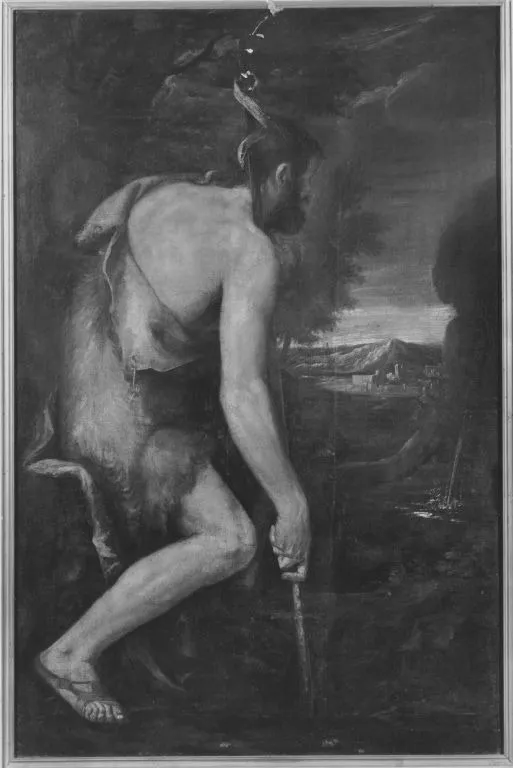
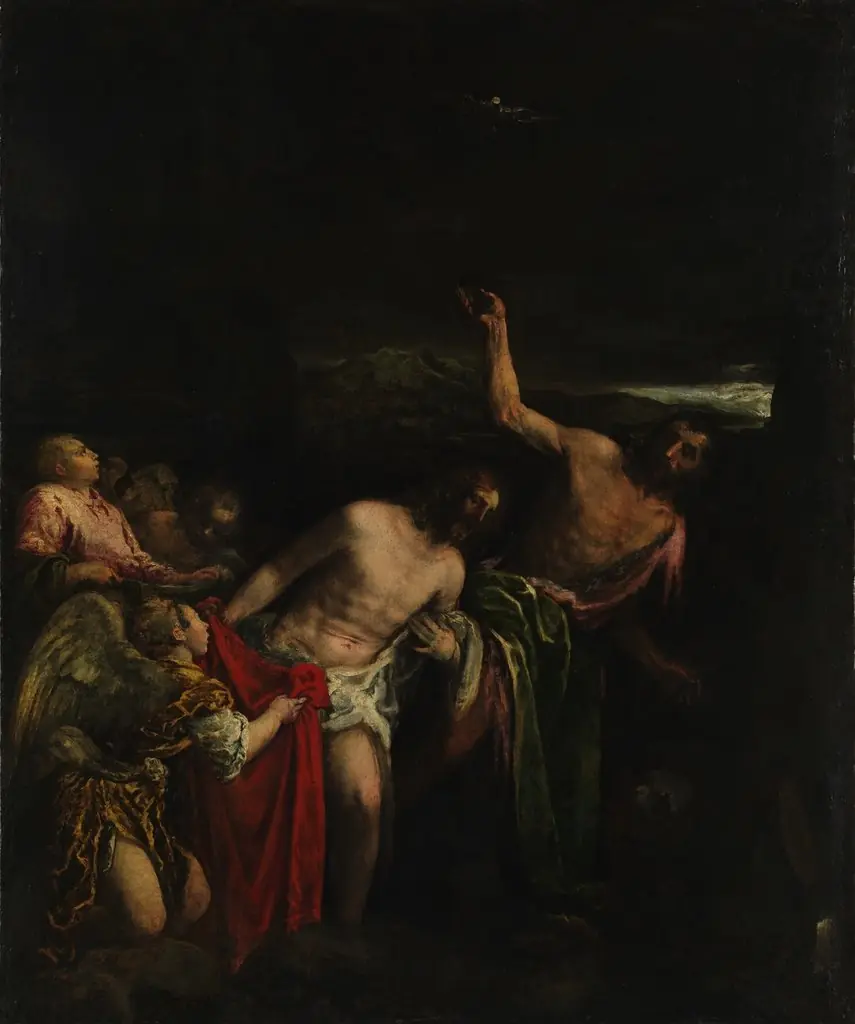
Johannes der Täufer is an unspecified painting by the Early Baroque Italian artist Jacopo Bassano. It dates from 1553 and is held in the collection of the Bavarian State Painting Collections.
About this work
Subject & Meaning
Jacopo Bassano's 1553 work belongs to the genre of religious art, situating the figure within this devotional context.
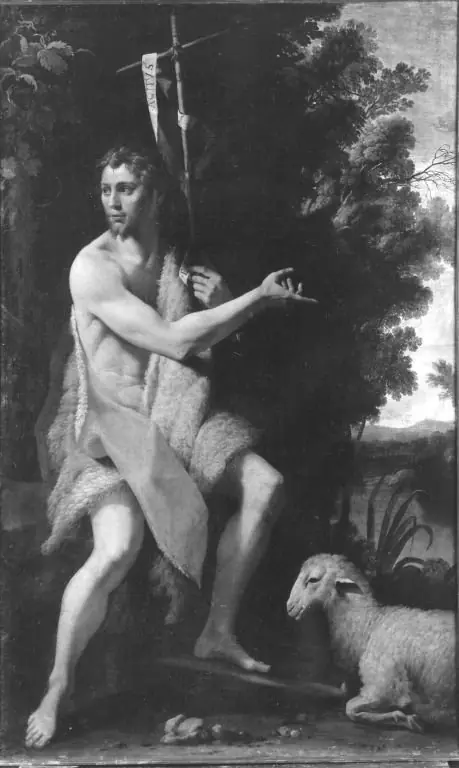
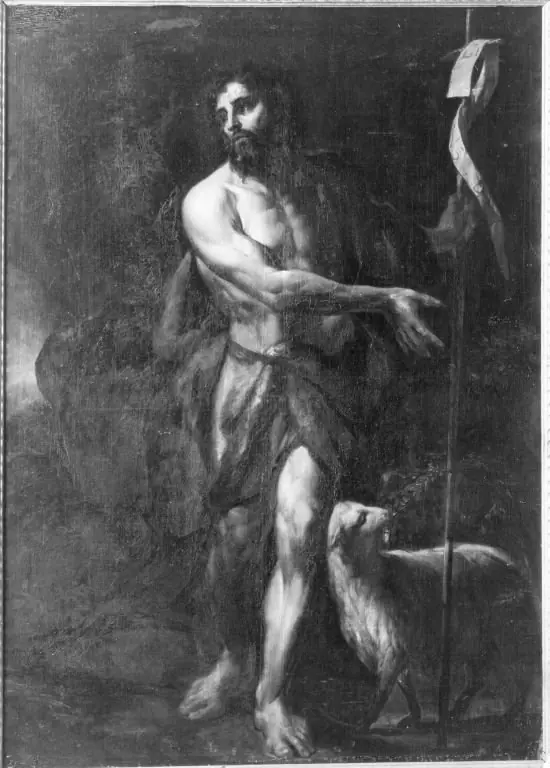
The painting depicts John the Baptist, the biblical forerunner of Christ, as its principal subject. In Christian tradition, John the Baptist is recognized as the prophet who proclaimed the coming of the Messiah, baptized Jesus in the River Jordan, and called for repentance. Jacopo Bassano's 1553 work belongs to the genre of religious art, situating the figure within this devotional context.
As a depiction of John the Baptist, the painting engages with the standard iconography associated with the saint: he is typically shown as an ascetic wilderness preacher, sometimes accompanied by attributes such as a camel-hair garment, a reed cross, or a scroll bearing his characteristic proclamation. The work, held in the Bavarian State Painting Collections at the Alte Pinakothek, reflects the Counter-Reformation-era Italian interest in renewing the visual presence of foundational biblical figures, presenting John the Baptist as both a model of penitence and a herald of salvation.
History & Provenance
Johannes der Täufer was painted by Jacopo Bassano in 1553, as indicated by the work’s date and attribution. The sources do not record any specific commission or earlier owners; the painting’s known provenance begins with its entry into the Bavarian State Painting Collections, where it is now housed at the Alte Pinakothek in Munich.
Context
The painting religious work by Jacopo Bassano depicts John the Baptist and belongs to the religious genre. It is housed in the Bavarian State Painting Collections at the Alte Pinakothek, where it remains on display. Scholarship situates Bassano within the Venetian school, noting his influence on genre painting and his use of chiaroscuro to heighten emotional intensity, though his work was often overshadowed by contemporaries in the 16th century.
The 1553 dating places it firmly in the late Renaissance period, reflecting Counter-Reformation themes of spiritual contemplation. Its composition and treatment of the figure have been analyzed for their psychological depth, contributing to discussions of artistic innovation in Venetian Renaissance art. The work continues to be studied for its blend of naturalism and symbolic meaning in depictions of John the Baptist.
Legacy
The painting has shaped religious art discourse through its stark realism and emotional intensity. Its depiction of John the Baptist influenced Counter-Reformation visual strategies in German-speaking regions. The work remains on display at the Alte Pinakothek where it continues to inform scholarly study of Bassano's late period.
Overview
Jacopo Bassano painted this image of John the Baptist in 1553. The work now resides in the Alte Pinakothek in Munich, where it forms part of the museum's collection of Venetian Renaissance painting.
Technique & Style
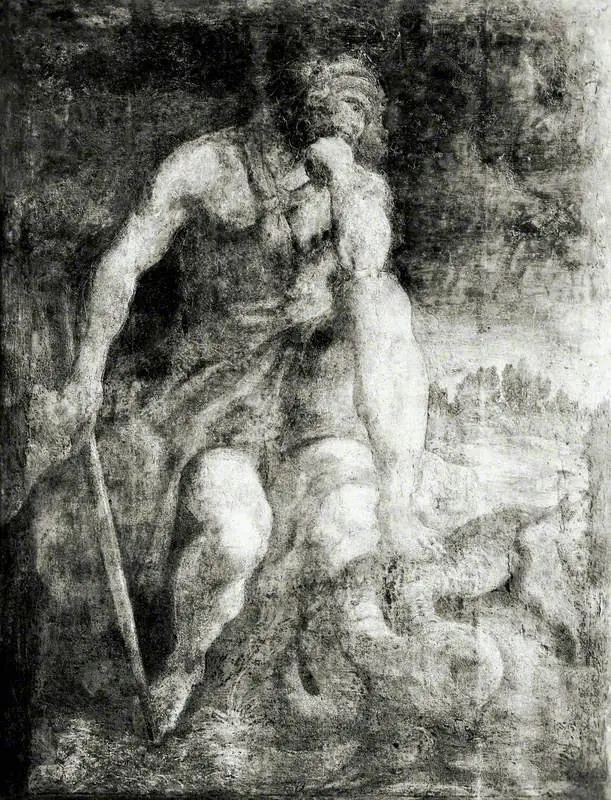
Bassano deploys strong chiaroscuro: concentrated light strikes the face and shoulders, isolating them against an almost impenetrable darkness. The paint application is notably thick and tactile, with heavy impasto building the wild hair and the rough texture of the fur garment. These vigorous strokes animate the surface and intensify the figure's physical immediacy.
Artist & collection

Artist
Jacopo Bassano was an Italian Renaissance painter of the Venetian school. He was born and died in Bassano del Grappa, and took the village as his surname. Having trained in the workshop of his father, Francesco the…