Artwork
Christ and the Centurion
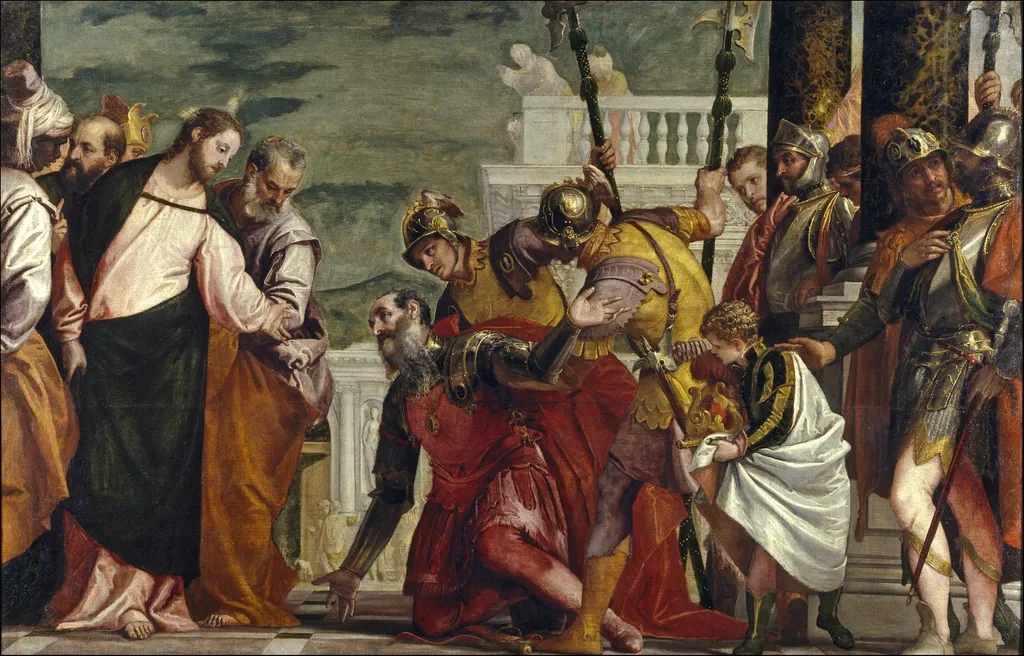
Christ and the Centurion is an oil painting by the Mannerist artist Paolo Veronese. It dates from 1571 and is held in the collection of the Museo del Prado.
About this work
Subject & Meaning
The composition highlights the interaction between divine authority and earthly power, symbolizing spiritual humility overcoming worldly rank.
The painting portrays the biblical moment of Christ healing the servant of a Roman centurion, a scene drawn from the Gospel narrative emphasizing faith and compassion. Veronese renders the centurion as a dignified figure, underscoring the universality of Christ’s healing power beyond Jewish boundaries. The composition highlights the interaction between divine authority and earthly power, symbolizing spiritual humility overcoming worldly rank.
Technique & Style
Christ and the Centurion is an oil painting on canvas executed by Paolo Veronese in 1571. The work measures 192 cm in height by 297 cm in width, a broad horizontal format suited to its multi-figure religious composition. Stylistically, it belongs to the Venetian school, consistent with Veronese's mature handling of color, light, and architectural staging typical of his late religious canvases.
The painting is held in the Museo del Prado's collection, installed in hall 026 of the Royal Palace of Madrid, and was historically owned by Ferdinand VII of Spain. It depicts the biblical episode of the Healing of the centurion's servant, with Jesus Christ as the central sacred figure.
History & Provenance
The work was painted in 1571 by Paolo Veronese, as indicated by the artist’s dated inscription on the canvas.
By 1819 it entered the Museo del Prado in Madrid, where it has remained in the royal collection; it is currently displayed in Room 026 of the Prado’s Royal Palace of Madrid galleries. The painting’s early provenance connects it to Ferdinand VII of Spain, who acquired it for the royal holdings, from which it passed directly into the Prado’s custody after the museum’s foundation.
The painting Christ and the Centurion by Paolo Veronese is held in the collection of the Museo del Prado in Madrid. Within the museum, the work is located in hall 026 of the Royal Palace of Madrid. Historical records indicate that the piece was once owned by Ferdinand VII of Spain.
While the work dates to 1571 and depicts the healing of the centurion's servant, the provided sources do not contain specific inventory numbers or a list of exhibitions for this artwork.
Legacy
The painting's reputation evolved from 19th-century neglect to 20th-century scholarly reassessment, influencing interpretations of Veronese's treatment of biblical narratives and serving as a reference point for studies on Counter-Reformation visual strategies. Its long-term presence in the Museo del Prado collection ensured sustained academic attention, particularly regarding its compositional innovations within the Venetian school and its role in shaping Spanish royal collecting practices through Ferdinand VII's acquisition.
Overview
Paolo Veronese’s oil on canvas, dated 1571, portrays the biblical episode in which Christ restores the health of a centurion’s servant. Executed in the Mannerist idiom, the work is part of the Museo del Prado’s holdings and exemplifies the Venetian painter’s penchant for elaborate narrative scenes.
Context
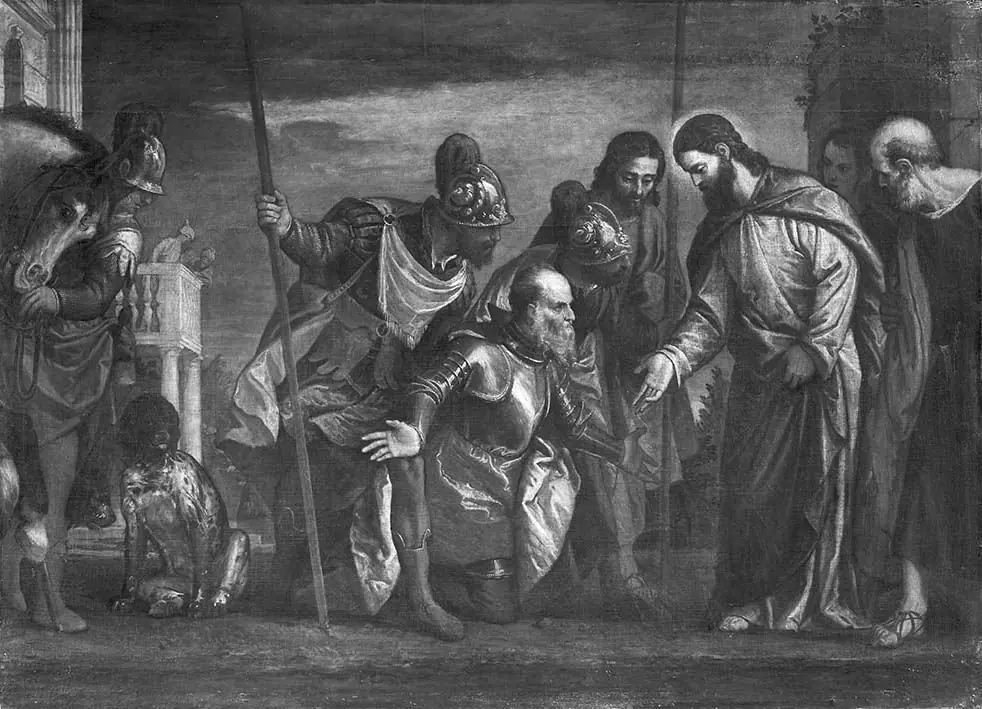
The work belongs to a broader visual tradition that interprets the Gospel of Matthew’s account of the centurion’s faith. Veronese’s rendition aligns with contemporary depictions by Titian and Tintoretto, yet distinguishes itself through a more elaborate architectural setting and a heightened emphasis on coloristic splendor.
Own this work as a print
Artist & collection
Artist
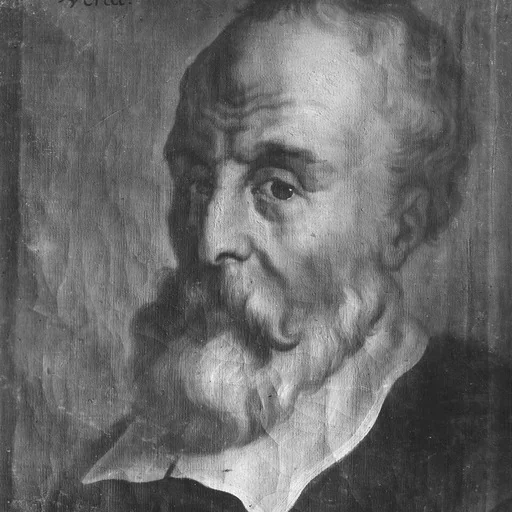
Paolo Caliari (1528 – 19 April 1588), known as Paolo Veronese ( VERR-ə-NAY-zay, -zee, US also -see; Italian: ), was an Italian Renaissance painter based in Venice, known for extremely large history paintings of…


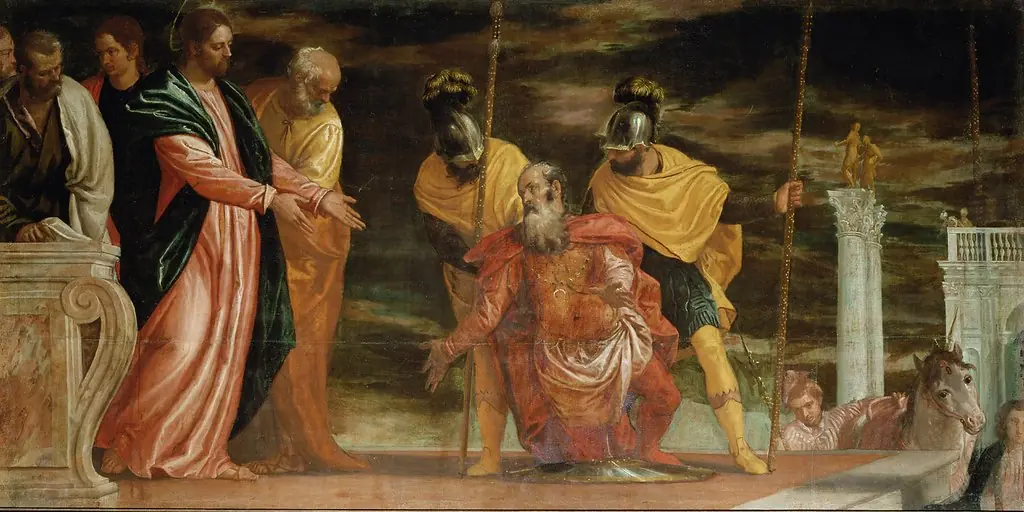 Christus und der Hauptmann von Kafarnaum
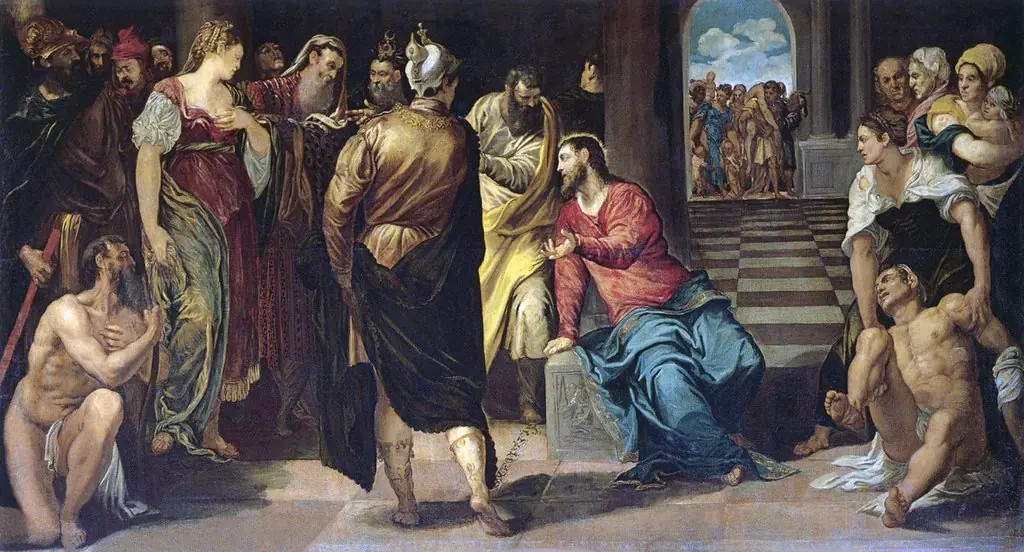 Christ and the Adulteress
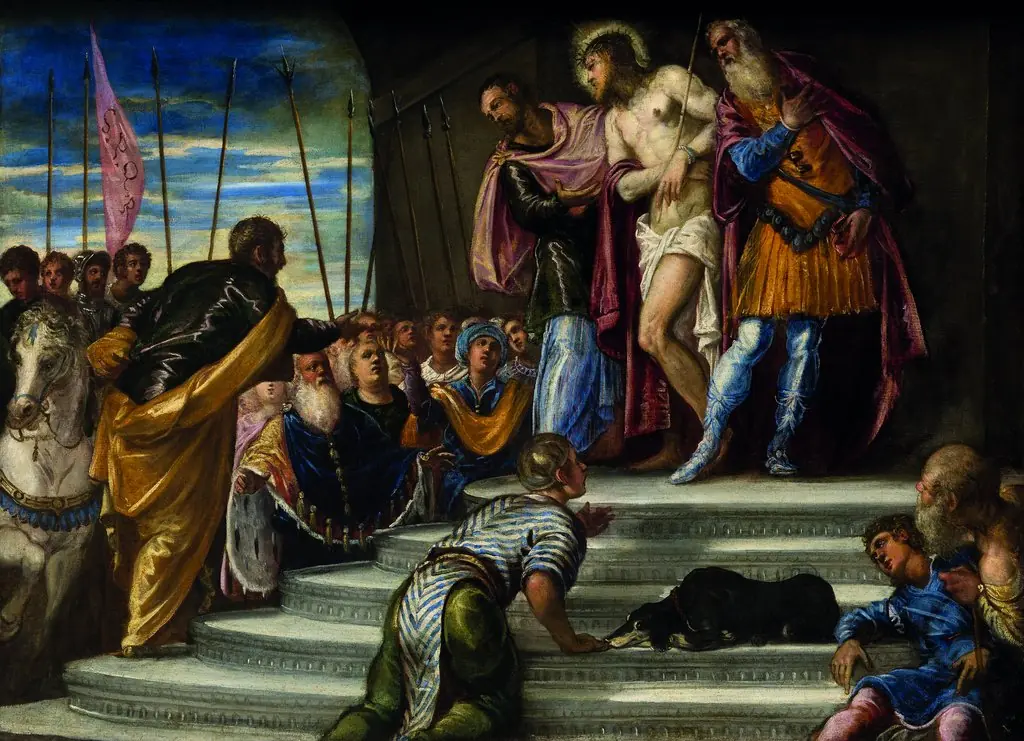 Ecce Homo
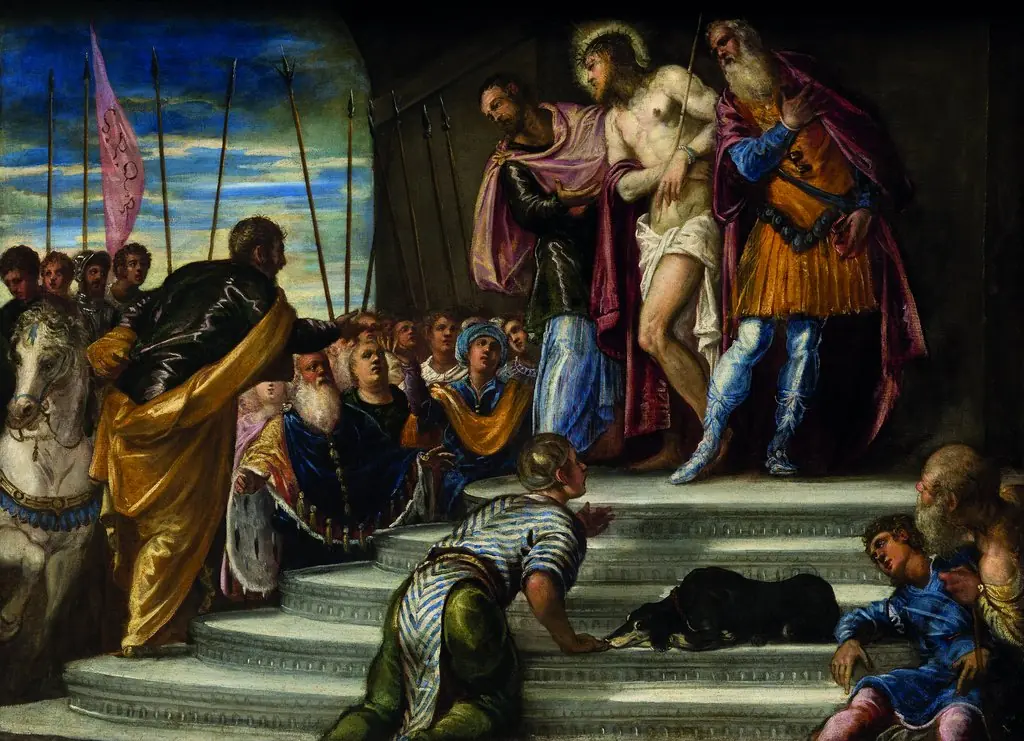 Ecce Homo or Pontius Pilate Presenting Christ to the Crowd
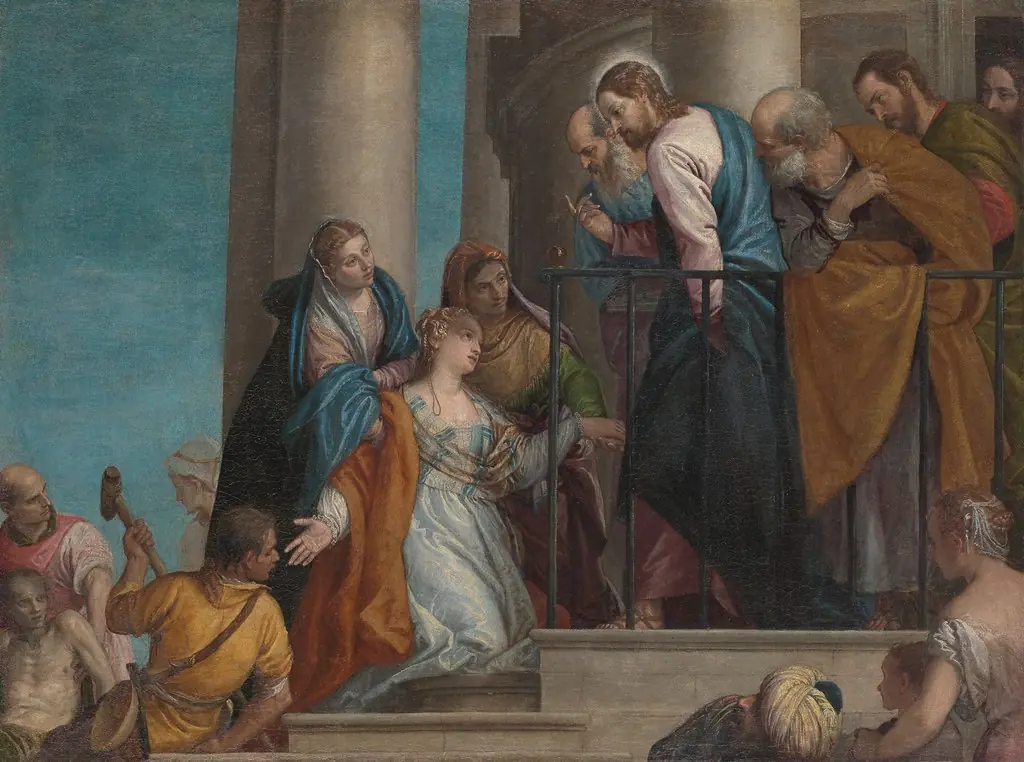 Raising the Young Man of Nain
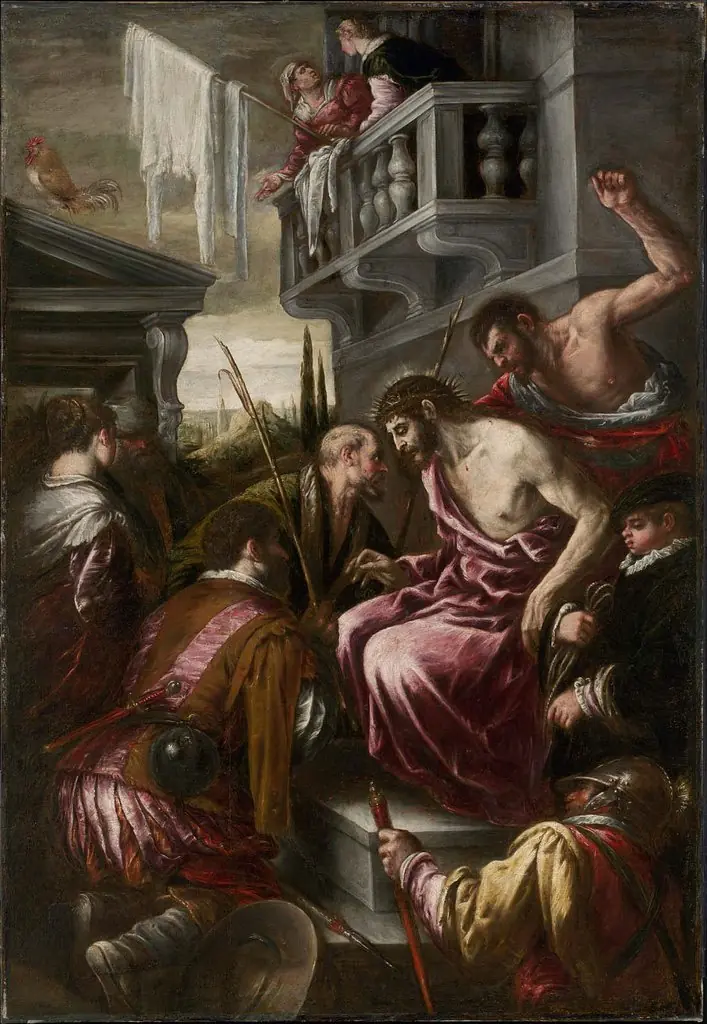 The Mocking of Christ
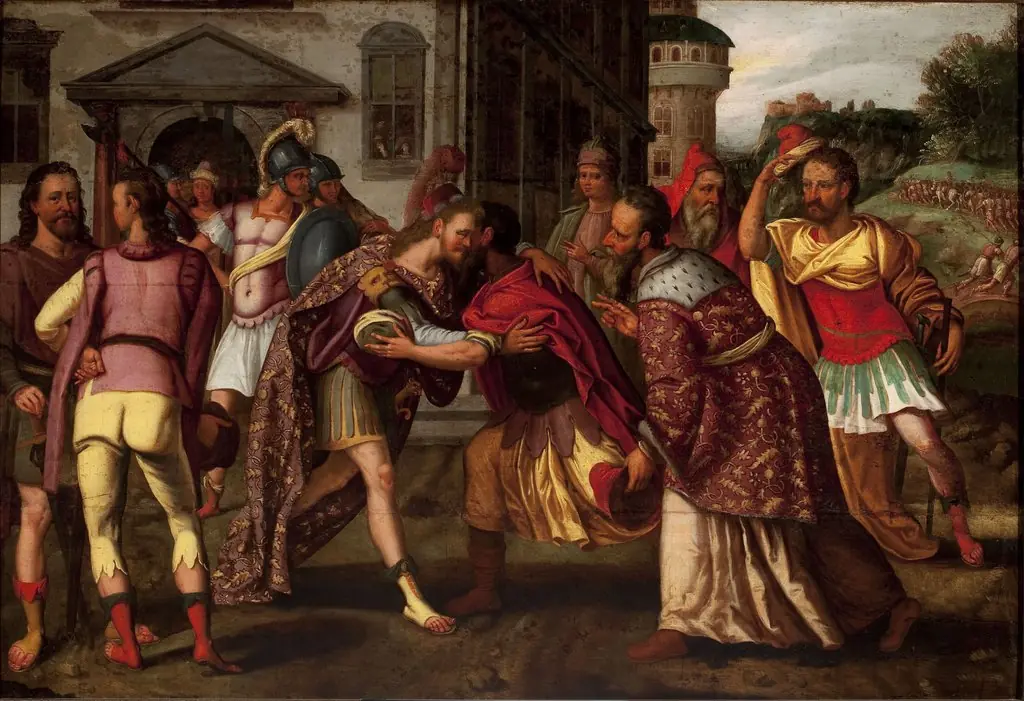 Absalom propitiating friends (2 Samuel 15:2-5)
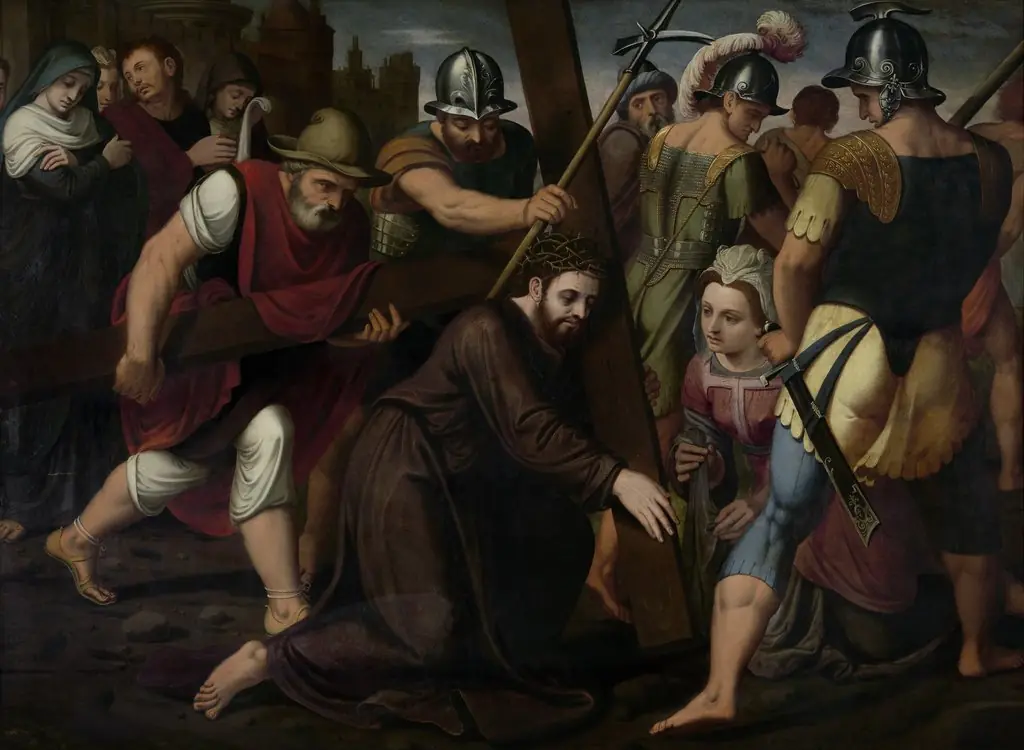 The Bearing of the Cross
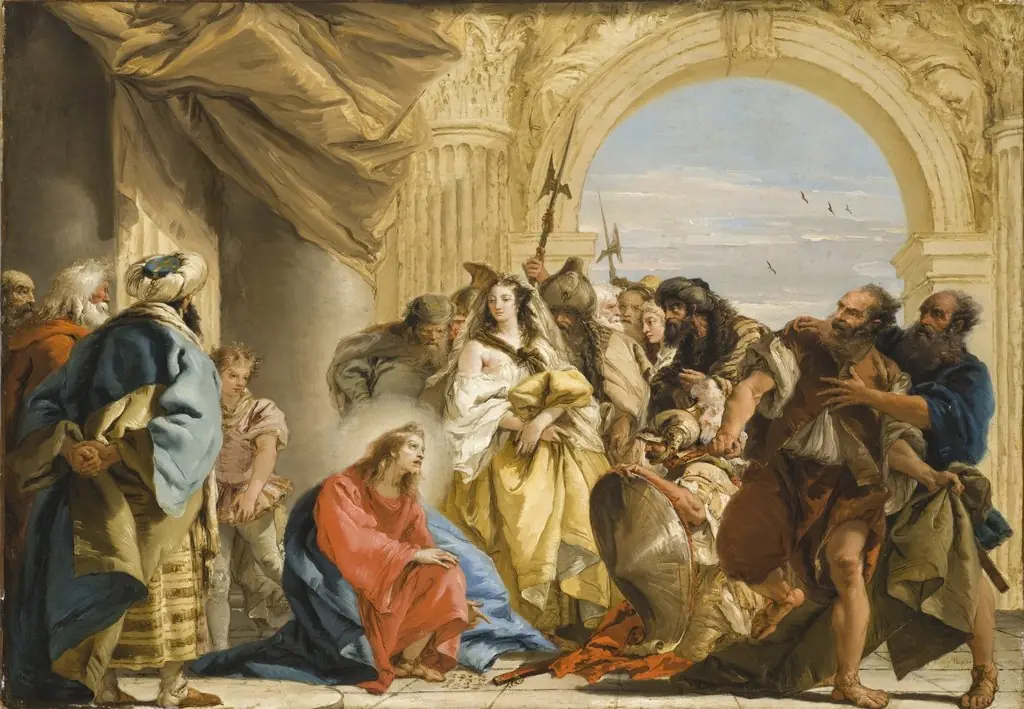 Christ and the Woman Taken in Adultery
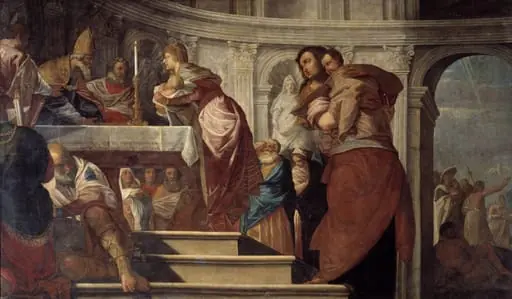 The Presentation of Christ in the Temple, and the Baptism of Christ