Artwork
Mary with the Child, Venerated by St. Marc and St. Luke
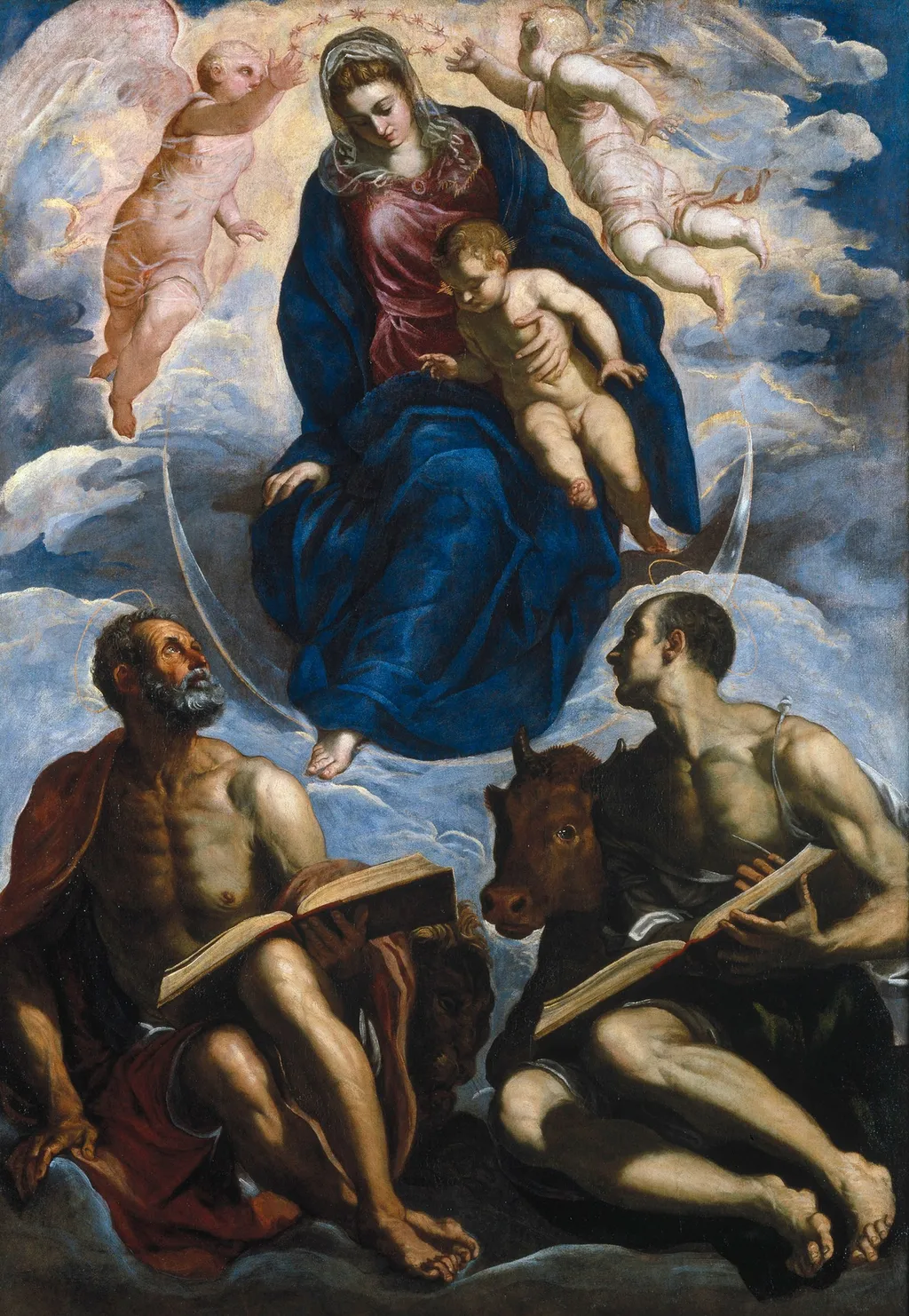
Mary with the Child, Venerated by St. Marc and St. Luke is a paint painting by the Mannerist artist Jacopo Tintoretto. It dates from 1565 and is held in the collection of the Gemäldegalerie Berlin.
About this work
Subject & Meaning
The choice to pair only these two evangelists is highly unconventional; the only comparable Venetian example is Domenico Campagnola's 1537 altarpiece in Padua.
The painting depicts the Virgin Mary enthroned upon clouds, holding the nude Christ Child on her lap, while two winged putti hover beside her. Below, Saint Mark and Saint Luke occupy the lower half of the composition, each seated and holding open books, their gazes directed upward toward the heavenly vision. The evangelists are accompanied by their traditional symbols, a lion for Mark and an ox for Luke, which emerge beside them. The iconography incorporates several uncommon elements for Venetian painting of this period. Mary appears as the Woman of the Apocalypse, crowned with stars by the attendant angels and standing upon a crescent moon, an attribute of her purity that would become inseparable from the Immaculate Conception only in the following century. The crescent's outer edge continues as a thin, almost invisible line that encircles the Madonna like a concealed mandorla, evoking the "woman clothed with the sun" from the Book of Revelation. The Christ Child turns in a blessing gesture toward Saint Mark, whose placement on the right, the position of honor, alludes to Venice's patron saint. The choice to pair only these two evangelists is highly unconventional; the only comparable Venetian example is Domenico Campagnola's 1537 altarpiece in Padua. The presence of Luke, traditionally considered the author of the first icon of the Virgin, may signal an assertion of the authenticity of her image, while the medieval and Byzantine resonances of the iconography suggest a deliberate archaism within a late Renaissance context.
Technique & Style
The painting is executed in oil on canvas, a support that allowed Tintoretto the flexibility to work on a substantial scale. The composition is organized vertically in three distinct levels, with strong directional lighting falling from above to model the figures with pronounced shadows and highlight their rounded forms. The palette is dominated by saturated blues, warm crimsons, and earthy flesh tones, set against a turbulent sky of white and gray clouds with deep blue passages. Tintoretto's brushwork varies from smooth blending in the flesh to broader, more textured strokes in the drapery and clouds. Thin golden lines suggesting halos encircle the heads of the holy figures. The work demonstrates Tintoretto's characteristic engagement with Venetian colorism, using color not merely to depict form but as a structural element to create movement across the canvas. The figures seem to emerge from the pictorial space, creating a sense of depth that challenges more static conventions of religious depiction. This approach aligns with what sources describe as the unprecedented boldness of his brushwork and his dramatic use of perspective, hallmarks of the Mannerist style that earned him the nickname Il Furioso.
History & Provenance
The precise circumstances of the painting's commission remain unknown. An archival note suggests it may have come from a church in Verona, though this cannot be confirmed. The work was purchased in Venice in 1841 by an antiquarian and entered the collection of the Gemäldegalerie, Berlin, where it remains today. Its absence from historical Venetian guidebooks has led scholars to suppose that it may have originated from Napoleonic spoliations, though from an institution in another city of the Venetian dominion rather than from Venice itself. The painting is not recorded in the standard historical guides of the city, which complicates any reconstruction of its early history. The Gemäldegalerie accession represents its first documented appearance in the modern provenance chain. No exhibition history is recorded in the provided sources.
Legacy
The painting's afterlife has been shaped primarily by its residence in the Gemäldegalerie, one of Europe's major collections of Old Master paintings, which has ensured its continued visibility to scholars and the public. As with many of Tintoretto's works, its influence can be traced in the broader dissemination of his stylistic innovations, particularly the dramatic use of light and color and the dynamic placement of figures within celestial spaces. The artist's impact extended to later painters, with reflections of his manner detectable in the Greek painter El Greco, who likely encountered Tintoretto's works during his stay in Venice. In the contemporary period, the painting has become the subject of ongoing reinterpretation, with curatorial attention focusing on how its color and composition disrupt traditional norms of religious representation. The work has also entered the commercial reproduction market, with licensed prints available through various vendors, a common fate for canonical paintings in major museums that extends their reach beyond the original object. Its presence in digital databases and online platforms continues to make it accessible for study and appreciation, even as questions about its original purpose and patron remain unresolved.
Own this work as a print
Artist & collection
Artist
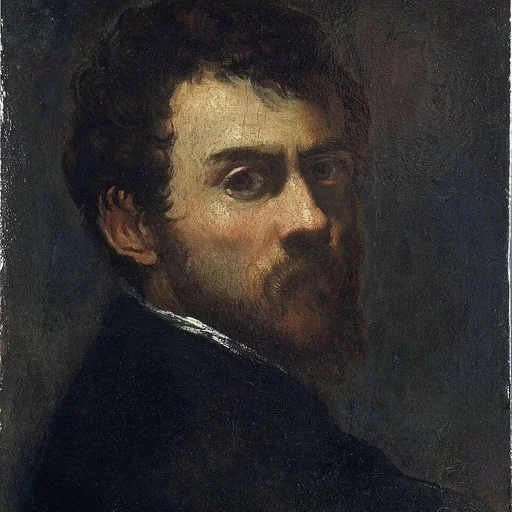
Jacopo Robusti (late September or early October 1518 – 31 May 1594), best known as Tintoretto ( TIN-tə-RET-oh; Italian:; Venetian: ), was an Italian Renaissance painter of the Venetian school.

- Madonna and Child with Souls in Purgatory
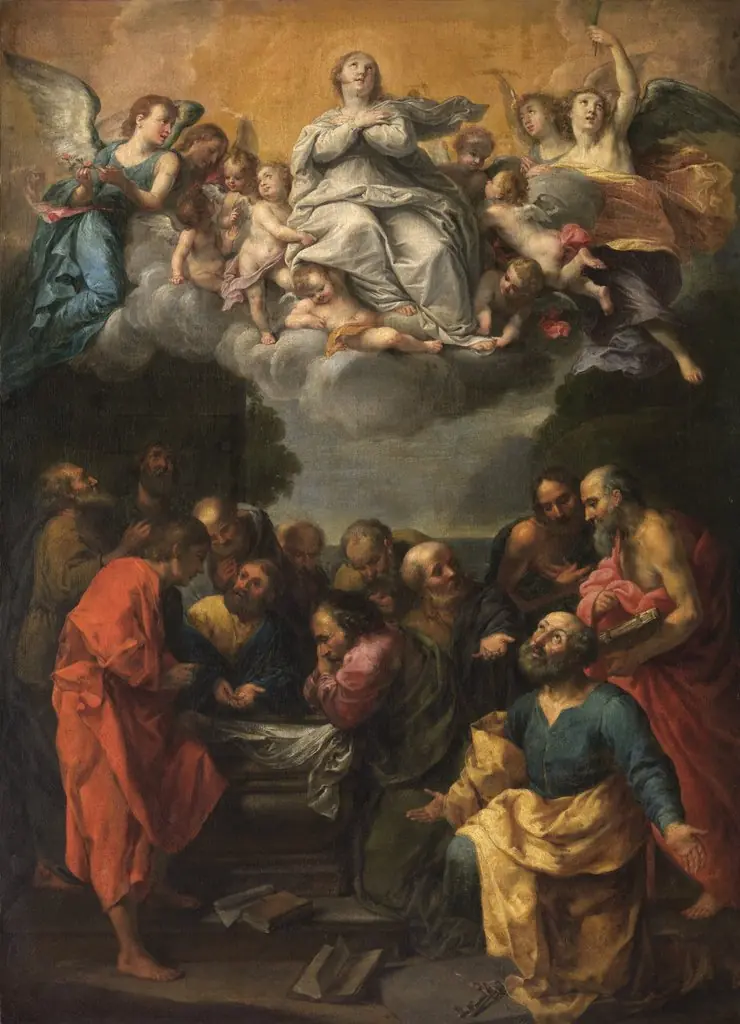 The Assumption of Mary
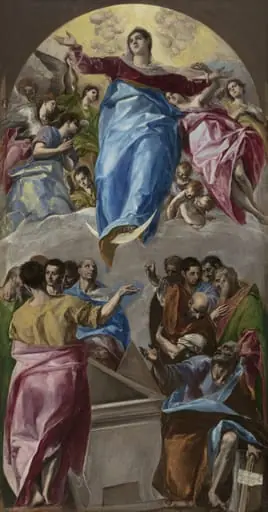 The Assumption of the Virgin
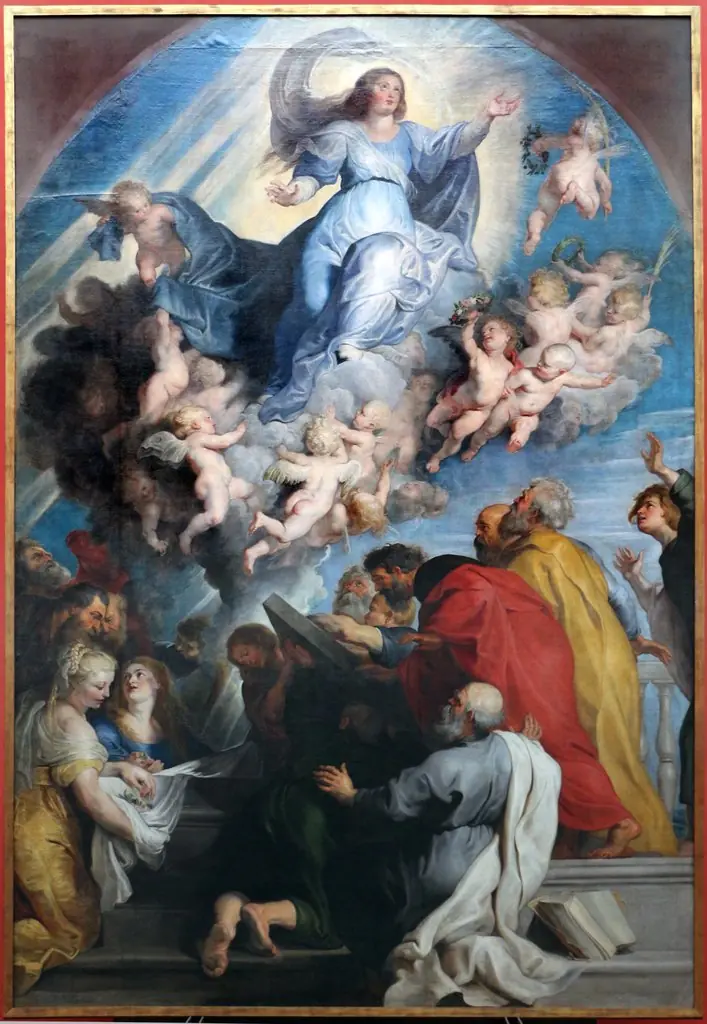 The assumption of the Virgin
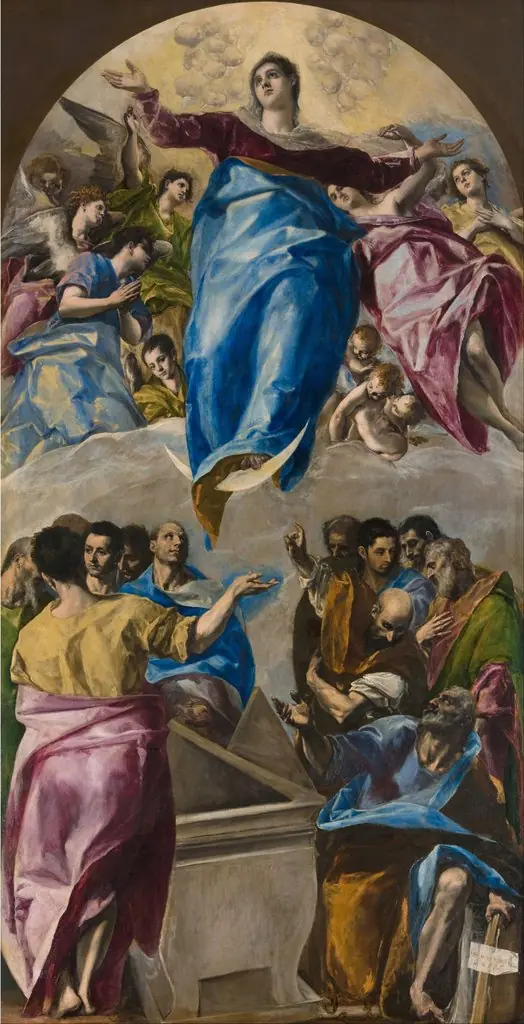 The Assumption of the Virgin
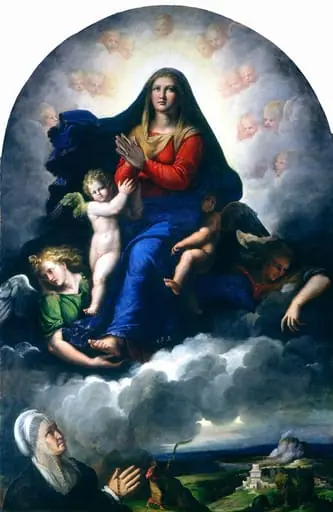 The Apparition of the Virgin
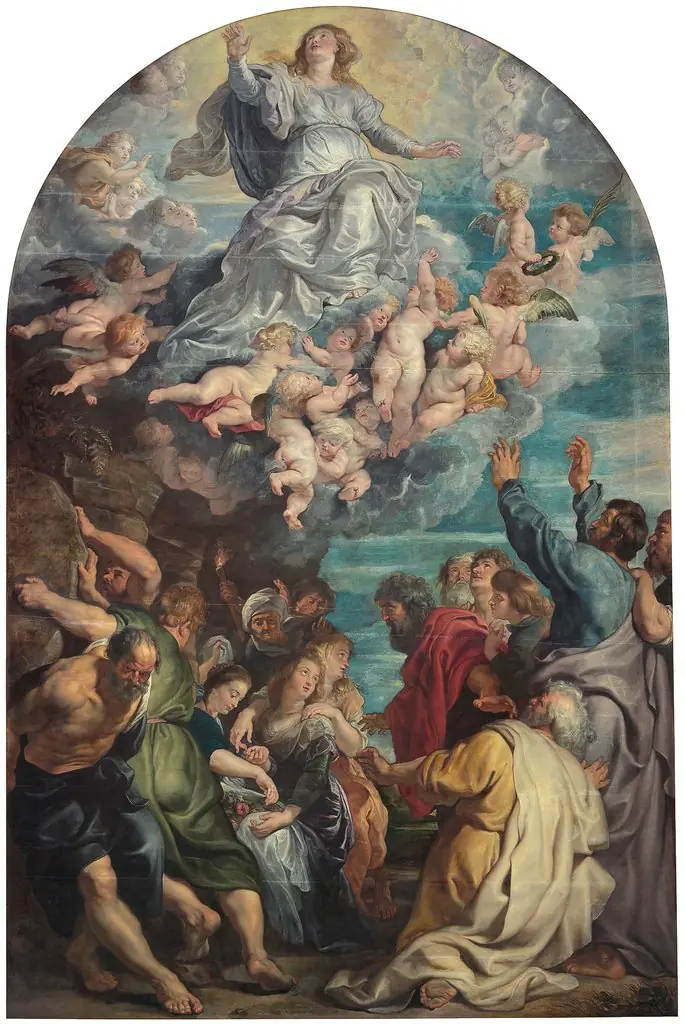 Assumption of Mary
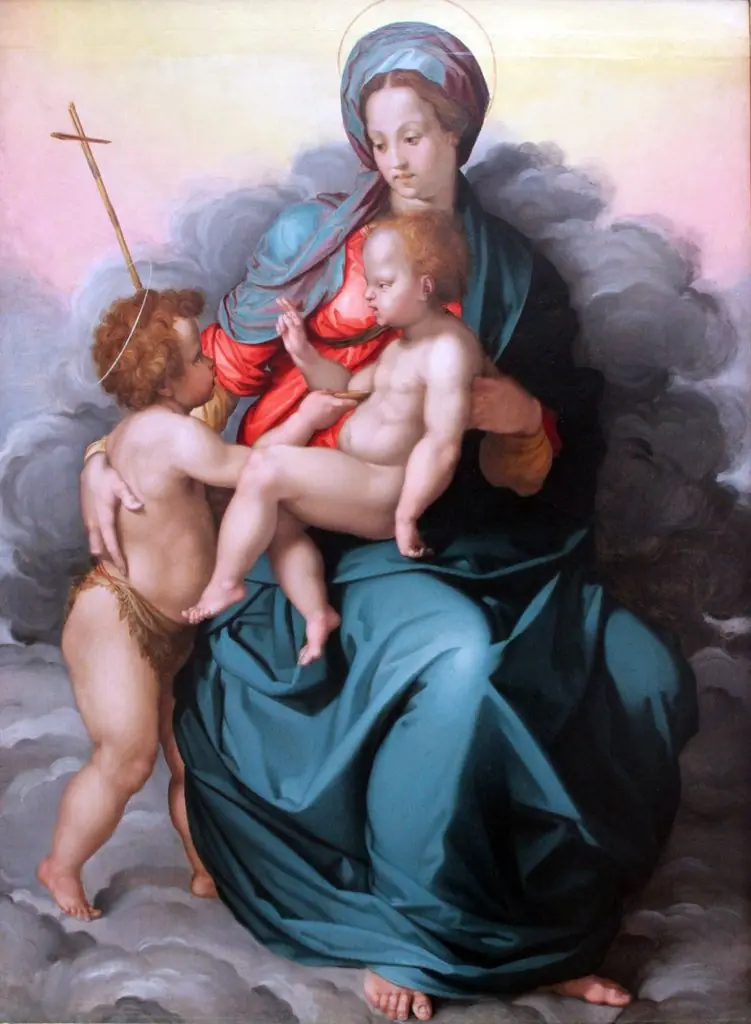 Madonna with Child and Saint John the Baptist on clouds
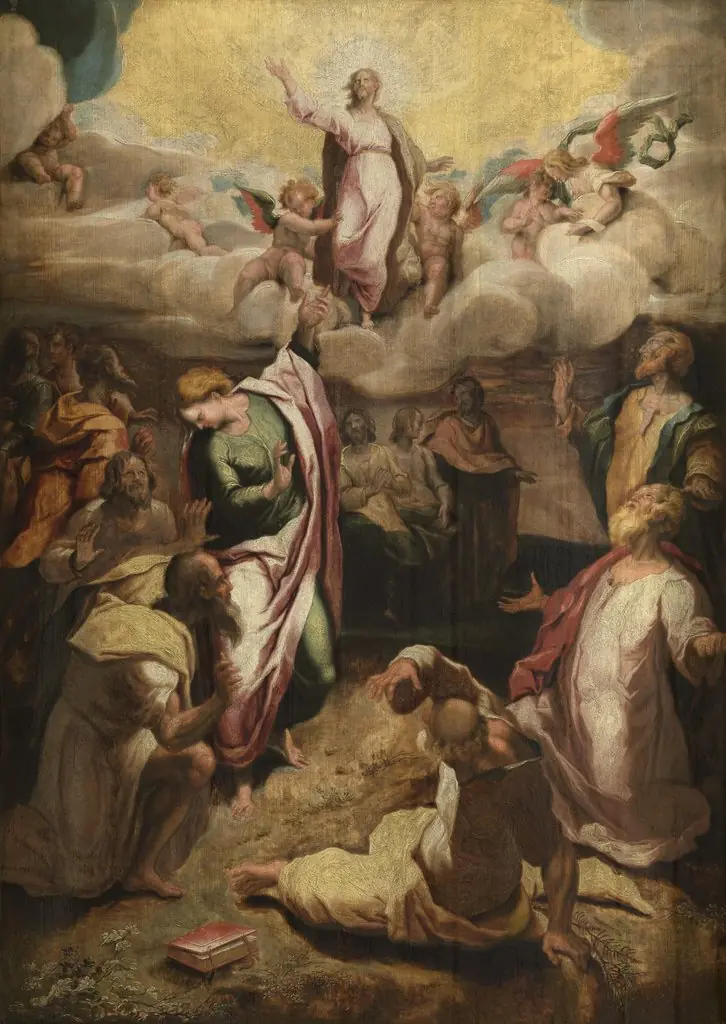 Resurrection of Christ
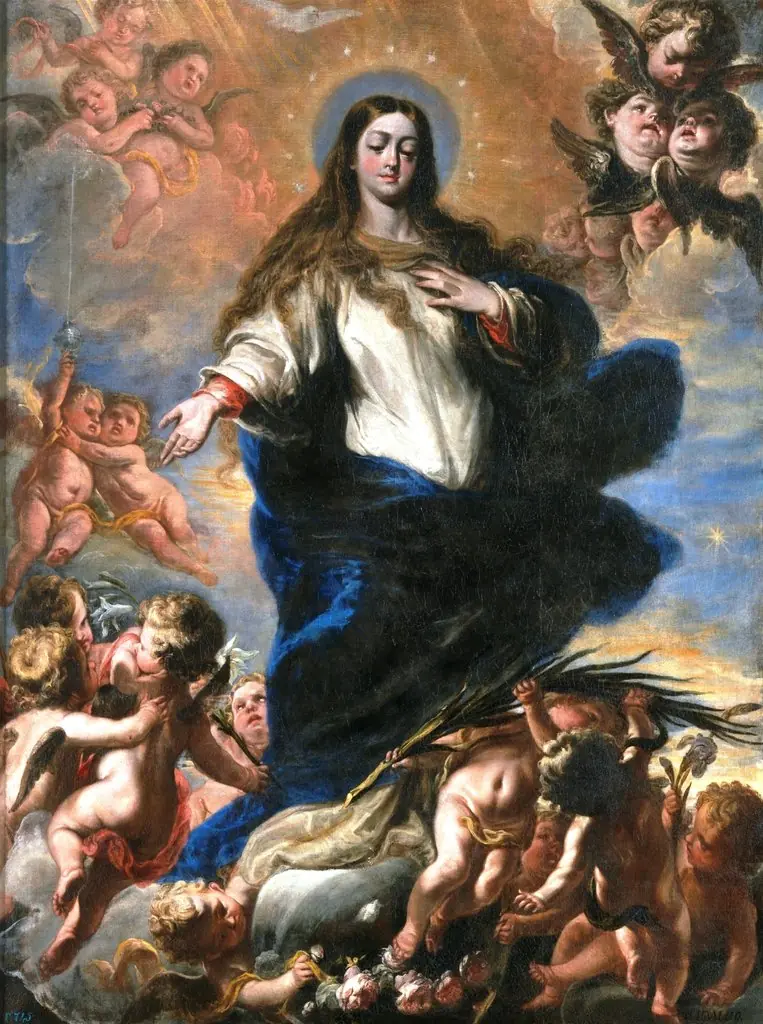 The Immaculate Conception
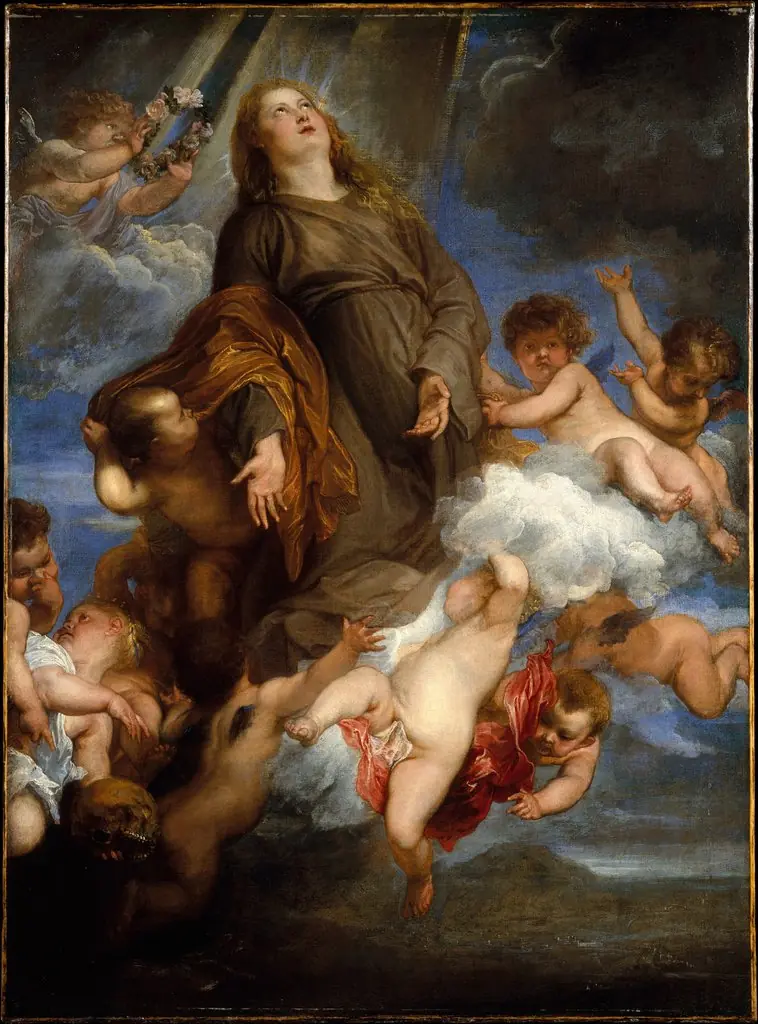 Saint Rosalie Interceding for the Plague-stricken of Palermo
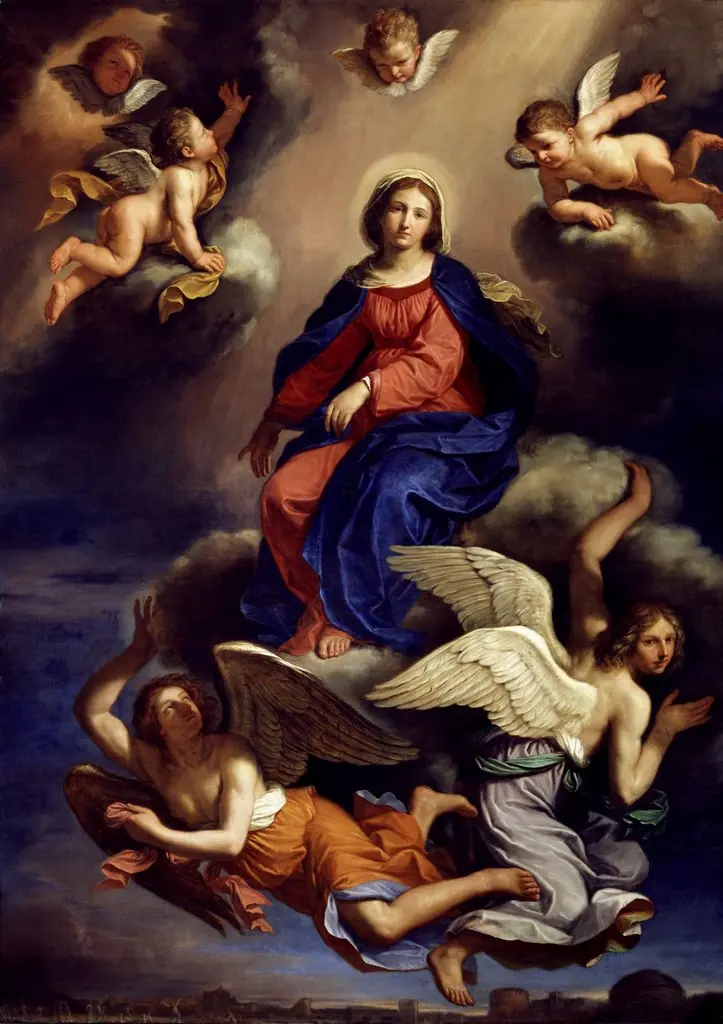 Assumption of the Virgin