Artwork
Italian Landscape
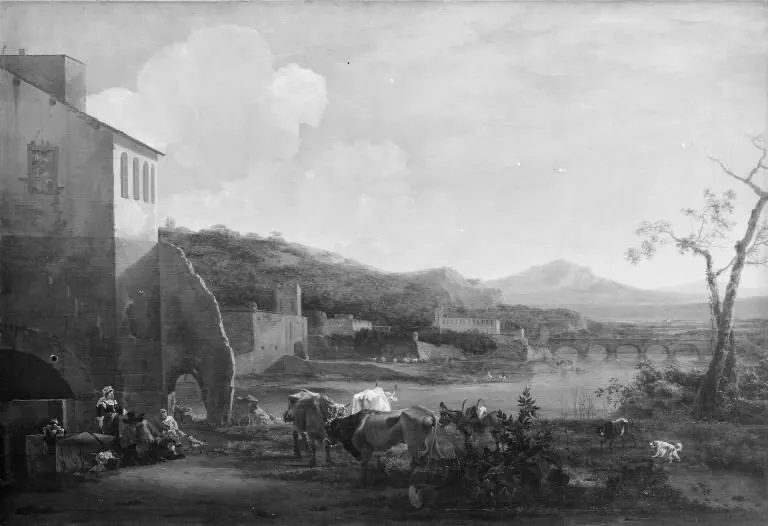
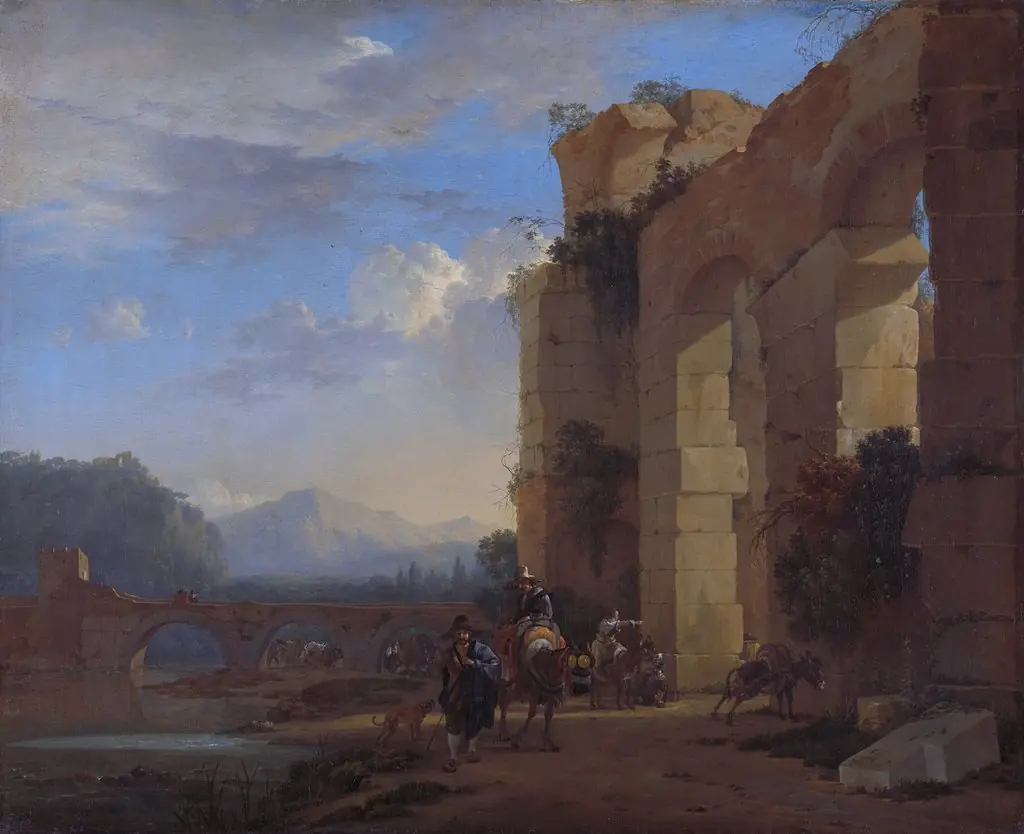
Italian Landscape is an oil painting by the Dutch Golden Age artist Jan Asselijn. It dates from 1638 and is held in the collection of the Statens Museum for Kunst.
About this work
Overview
Measuring 115 by 169 centimetres, this horizontal landscape exemplifies the Dutch Italianate tradition that Asselijn helped establish in the Netherlands.
Italian Landscape is an oil on canvas painting by the Dutch Golden Age artist Jan Asselijn, dated 1638 and now held in the Statens Museum for Kunst in Copenhagen. Measuring 115 by 169 centimetres, this horizontal landscape exemplifies the Dutch Italianate tradition that Asselijn helped establish in the Netherlands. The work occupies a significant place in Asselijn's oeuvre as one of his earliest dated paintings following his arrival in Italy, marking his transition from the darker, chiaroscuro-driven compositions of his early career toward the luminous, panoramic views of the Roman Campagna for which he became renowned. Its presence in a major national collection underscores the importance of Italianate landscape painting within the broader canon of seventeenth-century Dutch art.
Subject & Meaning
The painting presents a river valley scene constructed with layered spatial depth. In the foreground, a substantial stone building with arched openings and a niche containing a sculptural relief anchors the left side, where several figures gather, some seated and others standing, engaged in rest or conversation. Cattle and goats occupy the middle ground, tended by a figure in light clothing, while a dog appears near the right edge. A river stretches across the composition, spanned by a multi-arched bridge, with distant hills, scattered buildings, and a fortified structure rising against a cloud-filled sky. A leafless tree with thin branches stands at the far right, balancing the composition. The scene belongs to the category of the Italianate landscape, depicting motifs of the Roman Campagna, ruins, and picturesque architecture that dominate Asselijn's settings. The gathering of figures, animals, and architectural elements carries genre-like qualities reminiscent of the procession of mules, riders, and figures on bridges found in comparable works by the artist. The ruins, integrated into the landscape rather than treated with Baroque pathos, unfurl a melancholy beauty that recalls the transience of earthly life in an aesthetic manner characteristic of Dutch, rather than Italian, sensibilities.
Technique & Style
The painting is executed in oil on canvas, a support typical for Asselijn's larger compositions. Light enters from the left, casting shadows against the building and illuminating the central animals, creating a play of raking light and shadow that accentuates the monumentality of the architecture. The brushwork shows a smooth finish in the sky and more detailed handling in the architecture and figures. The palette appears restrained, with earth tones and atmospheric blues, though the specific tonal qualities of this work must be understood in light of broader practices in Asselijn's Italianate paintings. Asselijn's style owes less to real landscapes than to painterly tradition, bathing his scenes in atmospherically romantic golden hues influenced by Claude Lorrain's handling of light, while adopting picturesque motifs in the manner of Salvator Rosa. Yet these Italianate qualities remain identifiable as the work of a Dutch artist, lacking the pathos formula of the Baroque and integrating ruins into the landscape like elements in a still-life. The composition demonstrates the sweeping scale and panoramic breadth that constituted Asselijn's most innovative contribution to Dutch landscape painting, with theatrical gestures of figures and animals drawing the viewer into the scene.
History & Provenance
The painting is dated 1638, placing it during Asselijn's sojourn in Italy, where he resided from approximately 1635 to 1644. During this period he was active in Rome as a member of the Bentvueghels, the society of northern artists. The work entered the collection of the Statens Museum for Kunst in Copenhagen, where it remains today. Its acquisition by a major Danish national museum reflects the international appreciation for Dutch Italianate landscape painting that developed in the centuries following its creation. The painting's provenance before its museum acquisition is not documented in the available sources, though comparable works by Asselijn have been traced through collections such as that of Willem Lormier in the eighteenth century and subsequent auction sales. The work has not been identified in specific exhibition histories within the provided sources.
Context
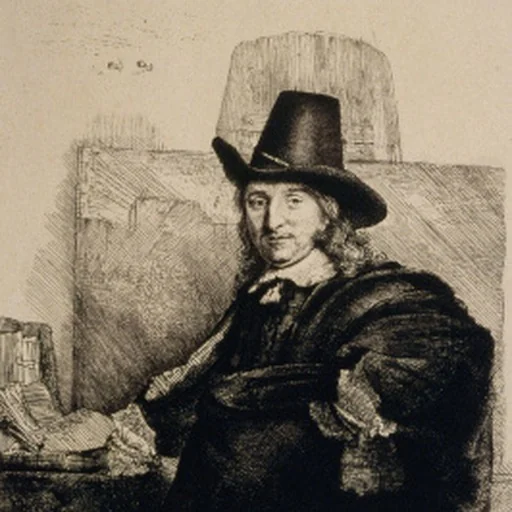
Jan Asselijn was born around 1610 in Dieppe, France, into a Huguenot family, and moved to Amsterdam in 1621. He trained with Jan Martszen the Younger and possibly Esaias van de Velde before traveling to Italy around 1635. In Rome, he joined the Bentvueghels, receiving the nickname Crabbetje due to his deformed left hand. His Italian sojourn proved formative, as he absorbed the light-infused landscapes of the Roman Campagna and the influence of fellow artists such as Pieter van Laer and Claude Lorrain. Upon his return to Amsterdam by 1647, he became one of the foremost representatives of Dutch Italianate painting, a strand of art that had initially been dismissed by early scholars such as Cornelis Hofstede de Groot as insufficiently Dutch. The rehabilitation of Italianate painting came through efforts such as Albert Blankert's pioneering 1965 exhibition in Utrecht, which secured these artists a place in the canon. Asselijn's work influenced numerous successors, including Nicolaes Berchem, Karel Dujardin, Adam Pynacker, and Thomas Wijck. Critical reception of his work emphasized his bright palette suffused with silvery tones and rich peach and azure hues, his precise execution, and his masterful illumination. Contemporary writers including Joachim von Sandrart and Filippo Baldinucci praised his landscapes, small scenes, and animals, while later scholars have noted his role in bridging classical Italian inspirations with Northern realism.
Legacy
Italian Landscape stands as a significant early document of Asselijn's transformation into a leading Italianate painter, demonstrating the shift from the chiaroscuro effects of his earliest works toward the overwhelming brightness of the Roman Campagna. This evolution influenced a generation of Dutch artists who adopted his luminous, panoramic approach to landscape. The painting's residence in the Statens Museum for Kunst ensures its continued visibility and scholarly attention within the context of both Dutch and European landscape traditions. Asselijn's broader legacy rests on his role in establishing the Dutch Italianate style, his integration of Claude Lorrain's golden light with Dutch observational sensibilities, and his influence on the prolific Italianate painters who followed him. His most famous work, The Threatened Swan, became a symbol of Dutch national resistance, but his landscapes constitute his most sustained contribution to the visual culture of the Dutch Golden Age. The rehabilitation of Italianate painting in twentieth-century scholarship has secured his position in the canon, though the genre itself has never achieved the popularity of native Dutch landscape traditions. The work's afterlife in the museum context continues to inform understanding of how Dutch artists imagined and constructed Italy as a site of artistic aspiration and painterly tradition.
Artist & collection

- Italian Landscape
 Fantasielandschaft
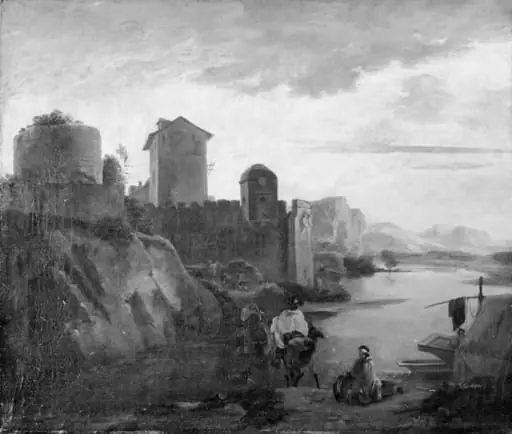 Landscape with Travellers
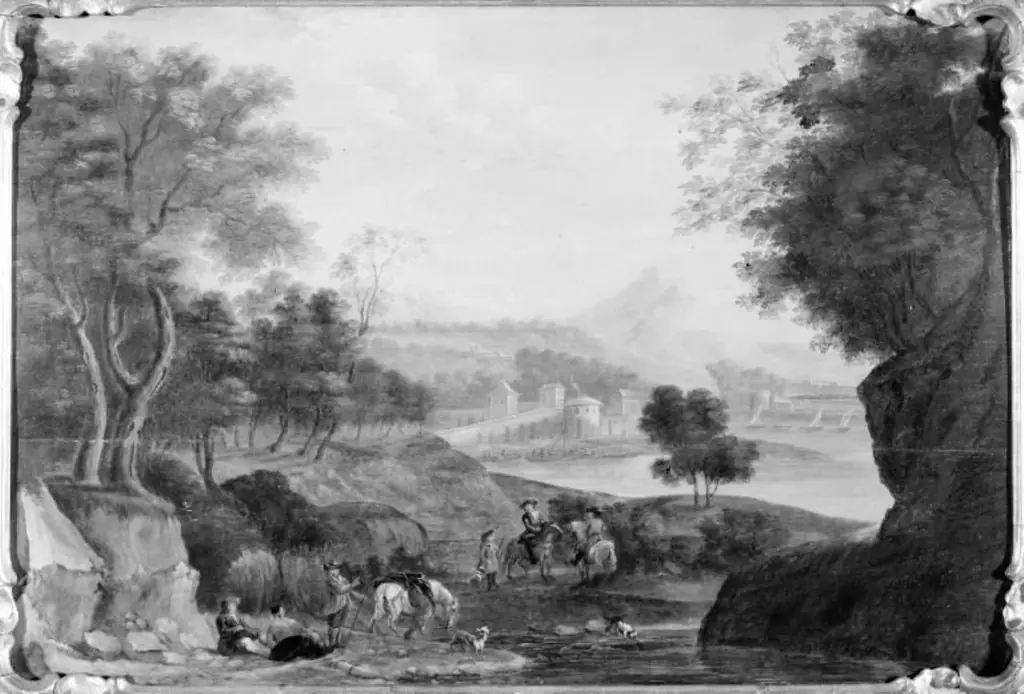 Landskab
 Landskab
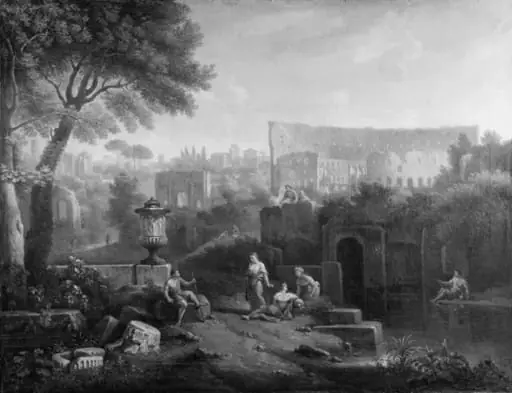 Landscape with the Colosseum and the Arch of Constantine
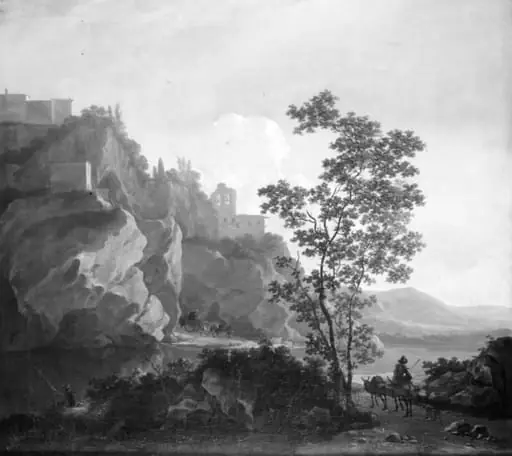 Southern Landscape with Angler
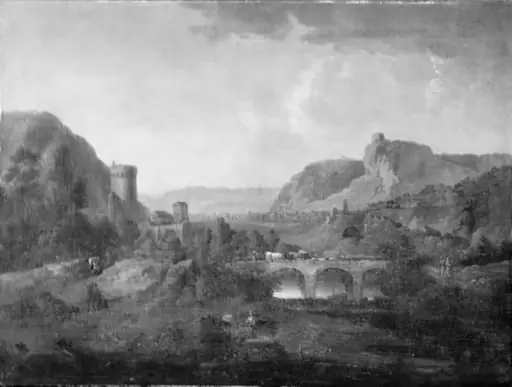 Mountain Scenery with a River and a Bridge
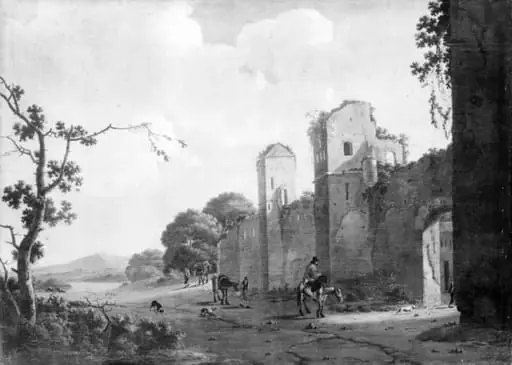 Landscape with Ruins
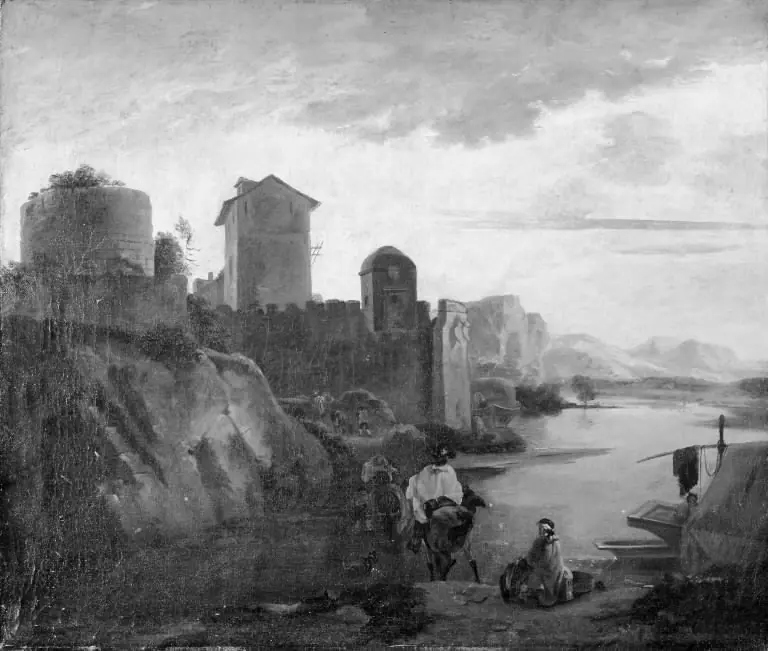 Landscape with Travellers
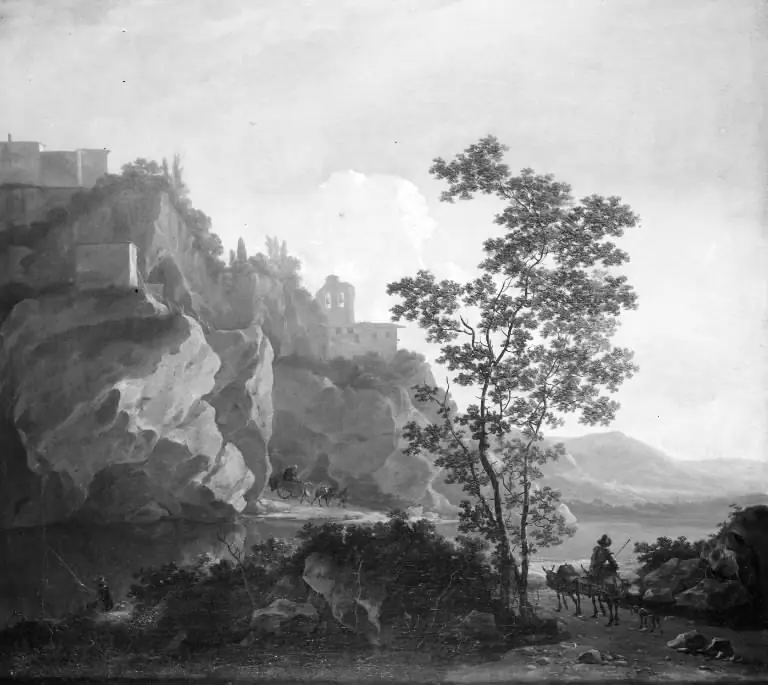 Southern Landscape with Angler
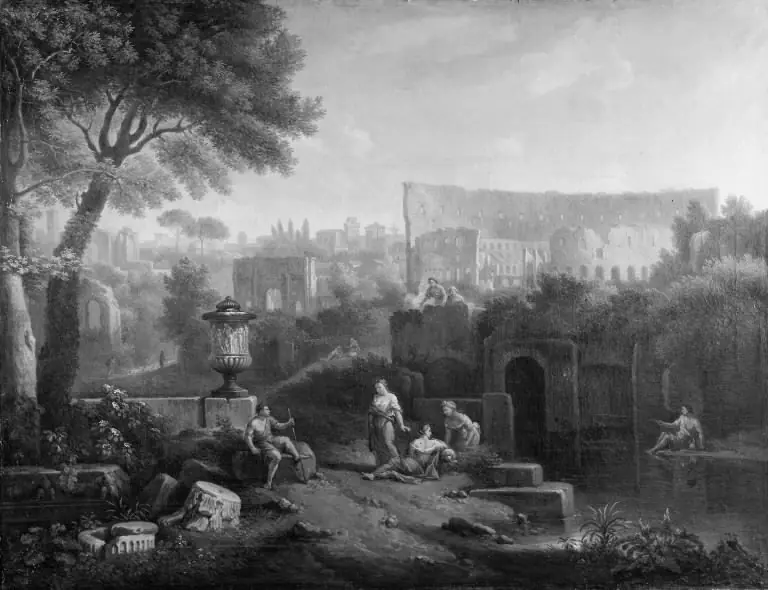 Landscape with the Colosseum and the Arch of Constantine