Artwork
Still Life with a Roemer
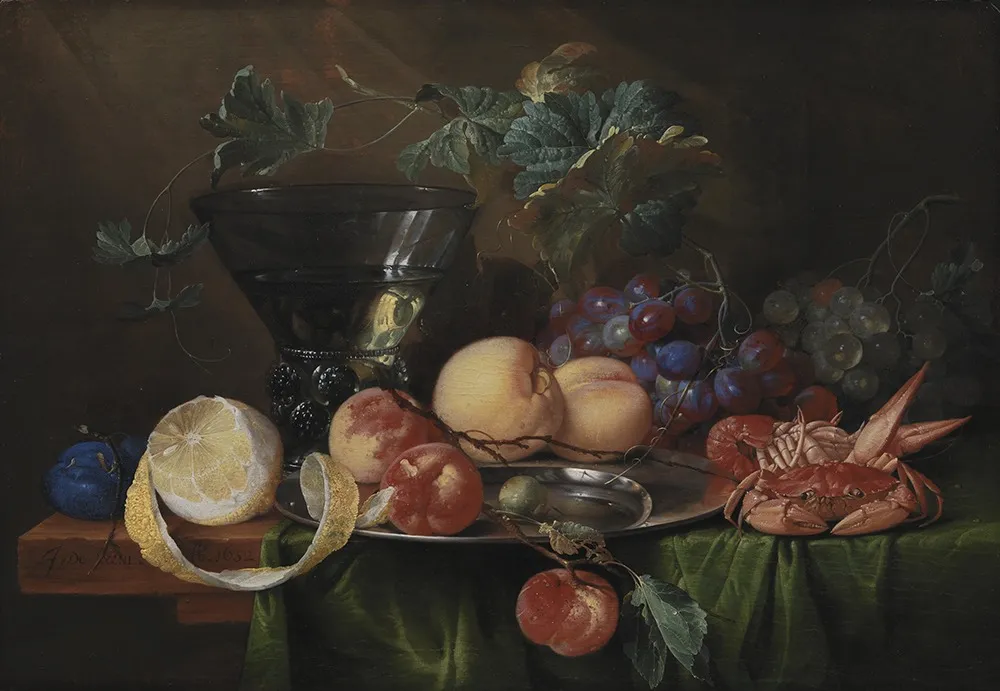
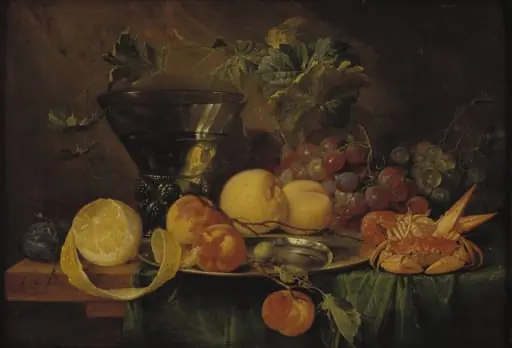
Still Life with a Roemer is an unspecified painting by the Dutch Golden Age artist Jan Davidsz. de Heem. It dates from 1652 and is held in the collection of the Statens Museum for Kunst. Created in 1652, this work exemplifies the Dutch Golden Age’s fascination with meticulously rendered still‑life compositions.
About this work
Overview
1 centimetres, the work is held in the collection of the Statens Museum for Kunst in Copenhagen.
Still Life with a Roemer is an oil painting on canvas executed in 1652 by Jan Davidsz. de Heem (1606-1684), one of the foremost still-life painters of the Dutch Golden Age. Measuring 49.0 by 65.1 centimetres, the work is held in the collection of the Statens Museum for Kunst in Copenhagen. The painting exemplifies de Heem's mature style, combining meticulous observation of natural textures with a carefully orchestrated composition that balances material splendour with underlying moral reflection. Created during the artist's Antwerp period, when he had already established his reputation for sumptuous pronkstilleven, the work demonstrates the refined technique and chromatic brilliance that made de Heem the most sought-after and highly valued still-life painter of his generation.
Subject & Meaning
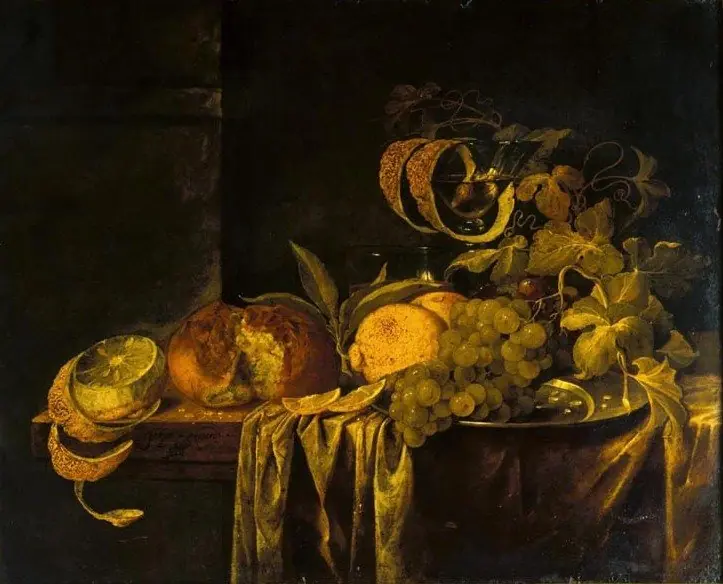
The composition presents an array of luxury objects arranged upon a wooden table draped with dark green fabric. At the left rear stands a tall roemer, a wide-bowled drinking glass with prunted decoration and a reflective surface. Before it rests a peeled lemon with curling rind beside a whole blue plum. A silver plate holds peaches with attached stems and leaves alongside a small green fruit, while purple and green grapes cluster behind, entwined with leafy vines. To the right, a crab with pinkish-orange shell and extended claws sits near the table edge, and a single peach hangs over the green cloth in the foreground. The subject matter participates in the vanitas tradition, where displays of worldly abundance serve as reminders of life's transience. The peeled lemon, its protective rind removed and discarded, functions as a conventional memento mori, while the crab and other perishable delicacies underscore the ephemerality of sensory pleasure. The roemer itself, a vessel associated with convivial drinking, introduces an ambivalent note: it celebrates the prosperity of Dutch merchant culture while potentially alluding to the moral dangers of excess. The diagonal arrangement creates visual dynamism that guides the eye across the temporal and moral registers of the composition.
Technique & Style
De Heem executed the painting in oil on canvas, employing the layered glazing technique that characterises his finest works. Light enters from the upper left, illuminating textures of fruit skin, glass reflections, and fabric folds with remarkable naturalism. The brushwork demonstrates smooth, refined surfaces on the fruit and glass, contrasting with looser handling in the background and foliage. This differential treatment focuses attention upon the tangible presence of the objects while allowing secondary elements to recede. The palette features deep greens, warm browns, yellows, and muted reds, harmonised through controlled tonal transitions. Technical examination of de Heem's practice has revealed his characteristic working method: an oval-shaped underpainting establishing the composition, followed by superposition of multiple paint layers to build luminosity and depth. The prunted decoration of the roemer and its reflective surface showcase de Heem's exceptional skill in rendering different materials, from the brittle transparency of glass to the yielding flesh of ripe fruit. A small inscription appears on the table edge near the lemon, consistent with the artist's habit of signing his best works. The overall effect approaches trompe l'oeil, creating an almost tactile illusion that invites both visual and haptic engagement.
History & Provenance
The painting is dated 1652, placing it in de Heem's mature Antwerp period when he had fully developed the pronkstilleven style that would define his international reputation. The work entered the collection of the Statens Museum for Kunst, where it remains today. Its acquisition history and earlier provenance are not detailed in the available sources. The painting has not been documented in the exhibition histories consulted, though de Heem's works have featured in major exhibitions including the 1991 retrospective at the Centraal Museum and Herzog Anton Ulrich Museum, and more recently in the 2024 exhibition Picturing Excess: Jan Davidsz de Heem at the Fitzwilliam Museum in Cambridge, which united four of his most significant pronkstilleven for the first time since the seventeenth century.
Context
De Heem was born in Utrecht in 1606 and trained under his father David de Heem the Elder and subsequently Balthasar van der Ast. His move to Antwerp in 1635 or 1636 proved decisive: in this Counter-Reformation stronghold, he encountered the full force of Flemish Baroque, particularly the work of Peter Paul Rubens, and his compositions expanded dramatically in scale and opulence. By 1652, de Heem was at the height of his powers, commanding premium prices and working with a studio that included his sons David Janszoon de Heem, Cornelis de Heem, and Jan de Heem. The pronkstilleven he developed flaunted the worldly riches of their owners while testifying to the Dutch Republic's emergence as Europe's dominant mercantile power. Critical reception has increasingly examined the colonial entanglements of such imagery: the luxury goods depicted, from Venetian glass to exotic fruit, arrived through networks of trade and exploitation, while the pigments themselves, such as ultramarine and cochineal, were costly imports. Recent scholarship employing MA-XRF scanning and cross-section analysis has illuminated de Heem's complex technical procedures, revealing his use of expensive materials and sophisticated layering techniques that linked his practice to contemporary recipe books and art theoretical literature.
Legacy
Still Life with a Roemer occupies a significant position within de Heem's oeuvre as a concentrated example of his ability to translate the monumental pronkstilleven into more intimate dimensions. While he never again achieved the scale of his four great banquet pieces of 1640-1643, de Heem reprised the theme of luxurious abundance in smaller formats throughout his career, often at the behest of influential clients. The work's enduring reputation rests upon its demonstration that moral complexity and sensory delight need not be mutually exclusive: the same precision that renders the roemer's prunts and the peach's bloom with such immediacy also encodes the vanitas message of transience. De Heem's influence extended through his sons and pupils, including Cornelis de Heem who became a notable still-life painter in his own right, and through followers such as Andries Benedetti and Andries de Coninck who perpetuated the pronkstilleven tradition. In contemporary museological discourse, the painting participates in broader reevaluations of Dutch Golden Age art, as institutions increasingly foreground the colonial economies and extractive practices that enabled such displays of abundance. The work thus continues to generate meaning not as a static monument but as an object that reframes its own historical conditions with each generation of viewers.
Artist & collection
Artist
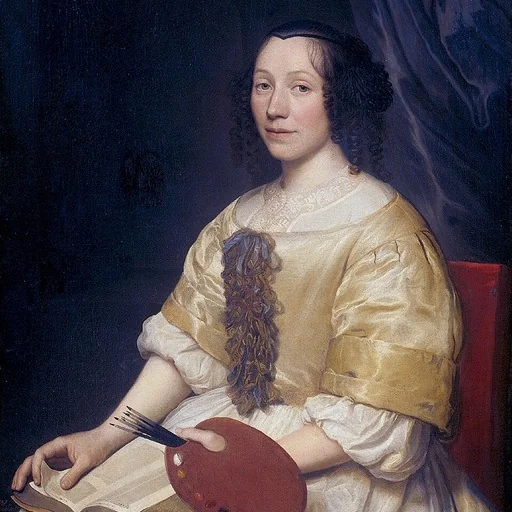
Maria van Oosterwijck (1630–1693), also spelled Oosterwyck, was a Dutch Golden Age painter, specialising in richly detailed flower paintings and other still lifes.

- Still Life
 Still Life with a Roemer
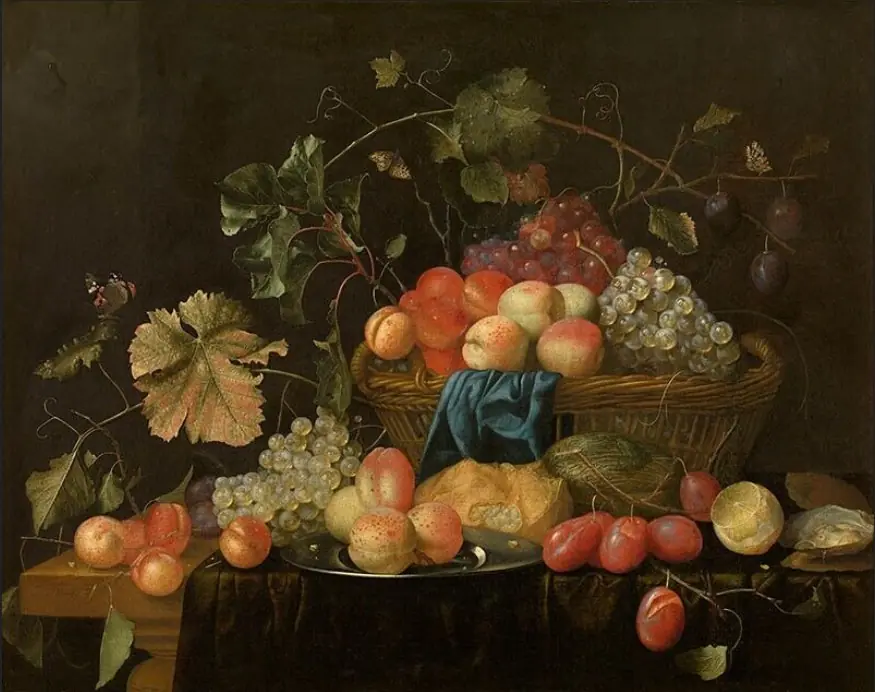 Fruit
Fruit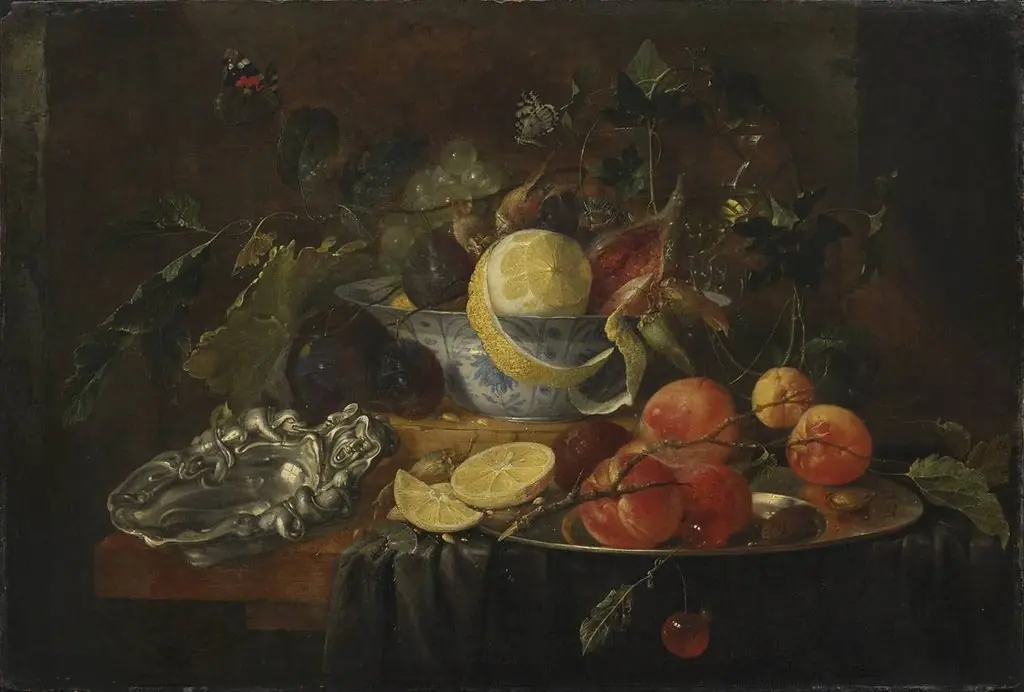 Stillleben mit Früchten und Silberschale
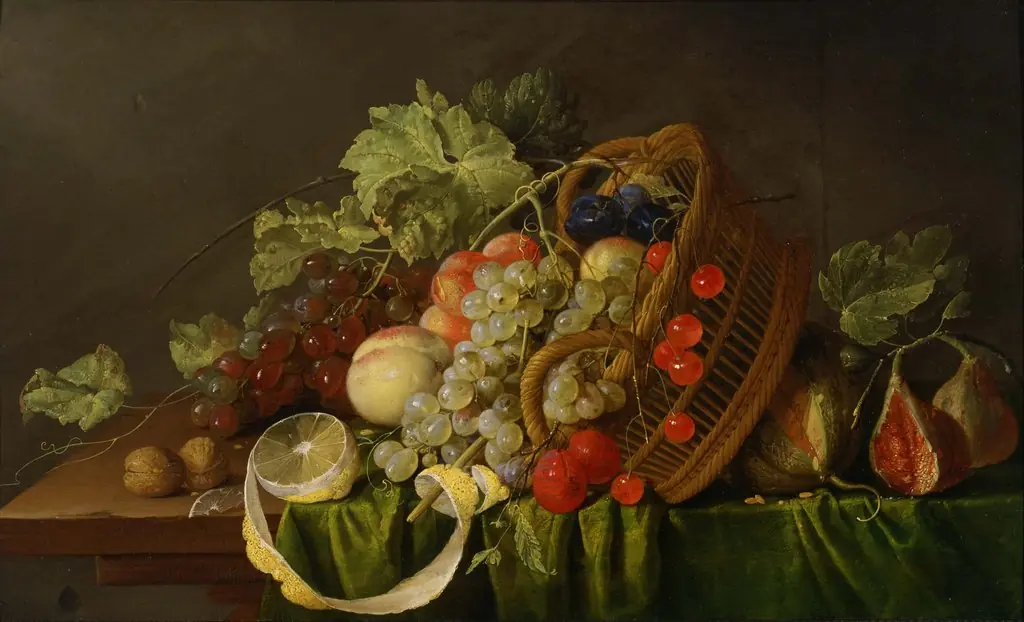 Still Life with a Basket of Fruit
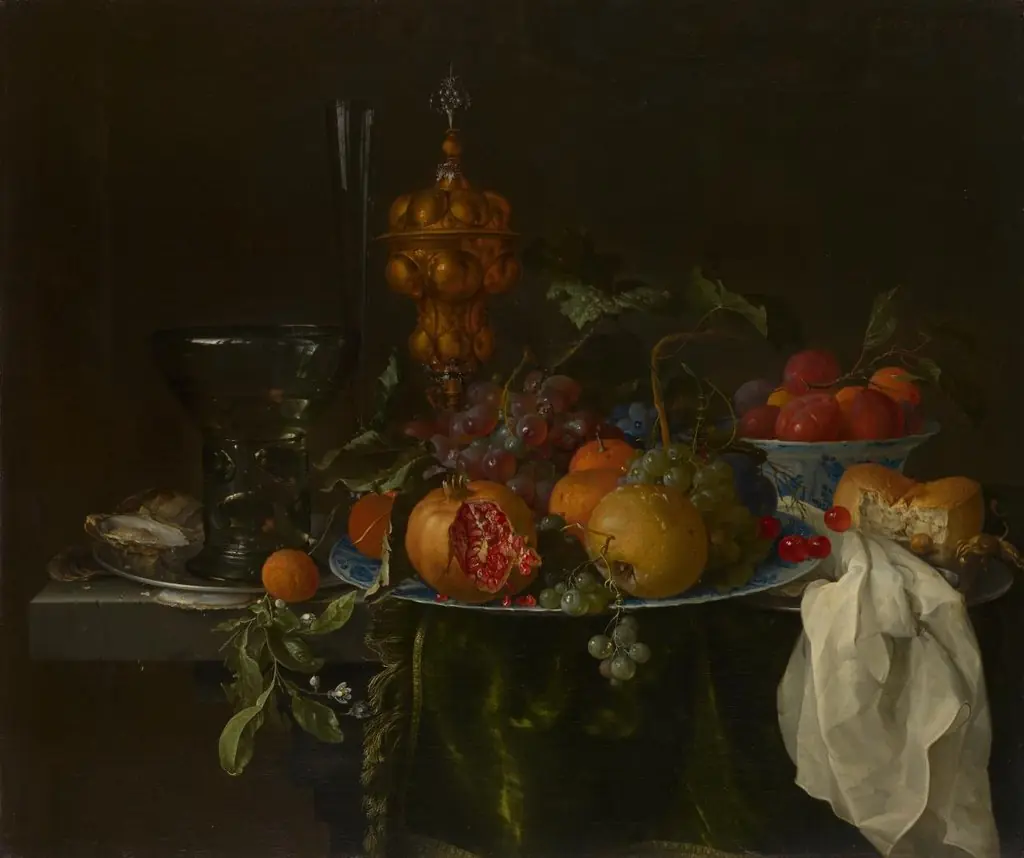 Still life with fruit
 Still Life
 Still Life: Bowl with Fruit and Wine Glass
 Still Life of Fruit
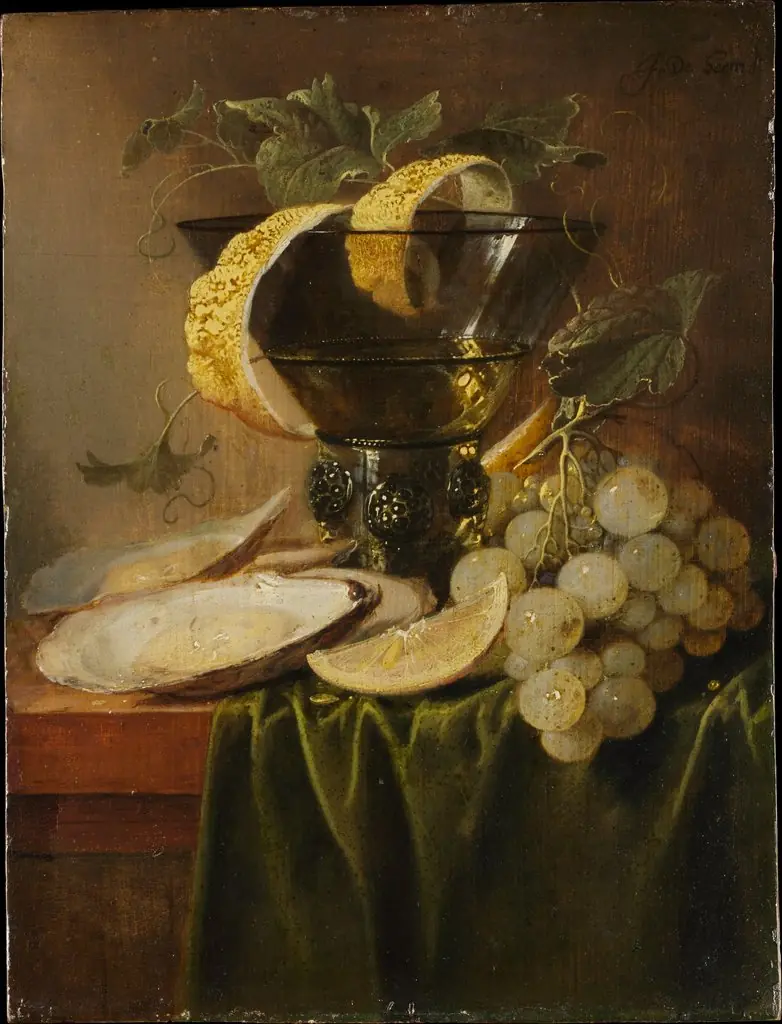
 Still Life with Oysters and Grapes
 Still life with fruit, bread, and glassware
 Fruit Still Life with Oysters