Artwork
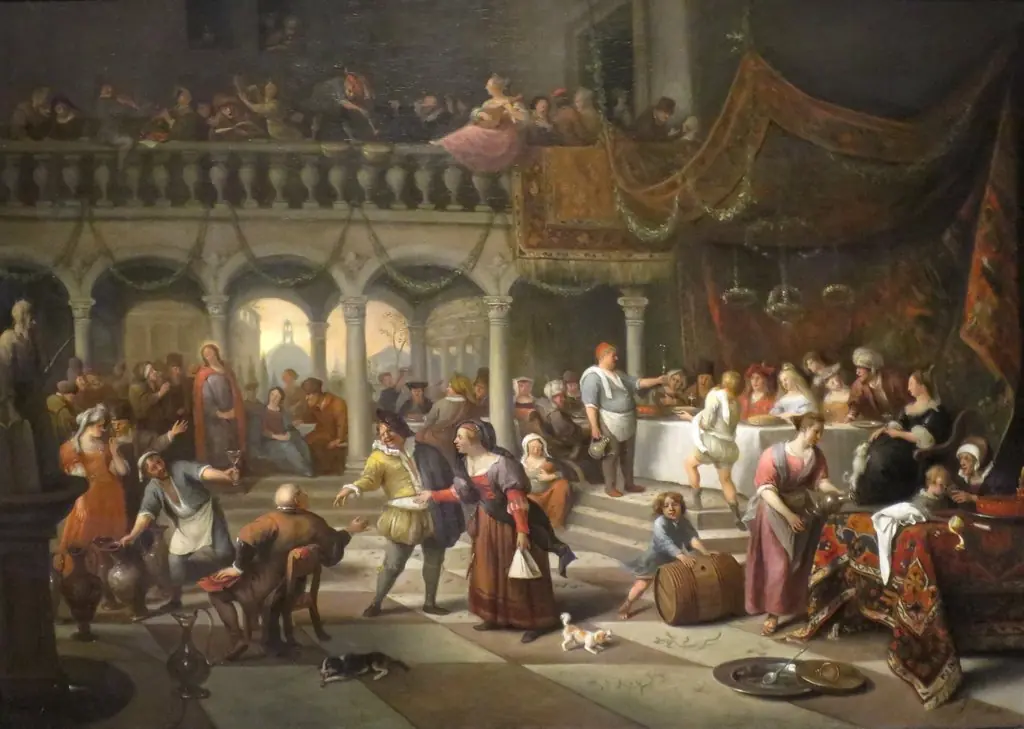
Marriage at Cana
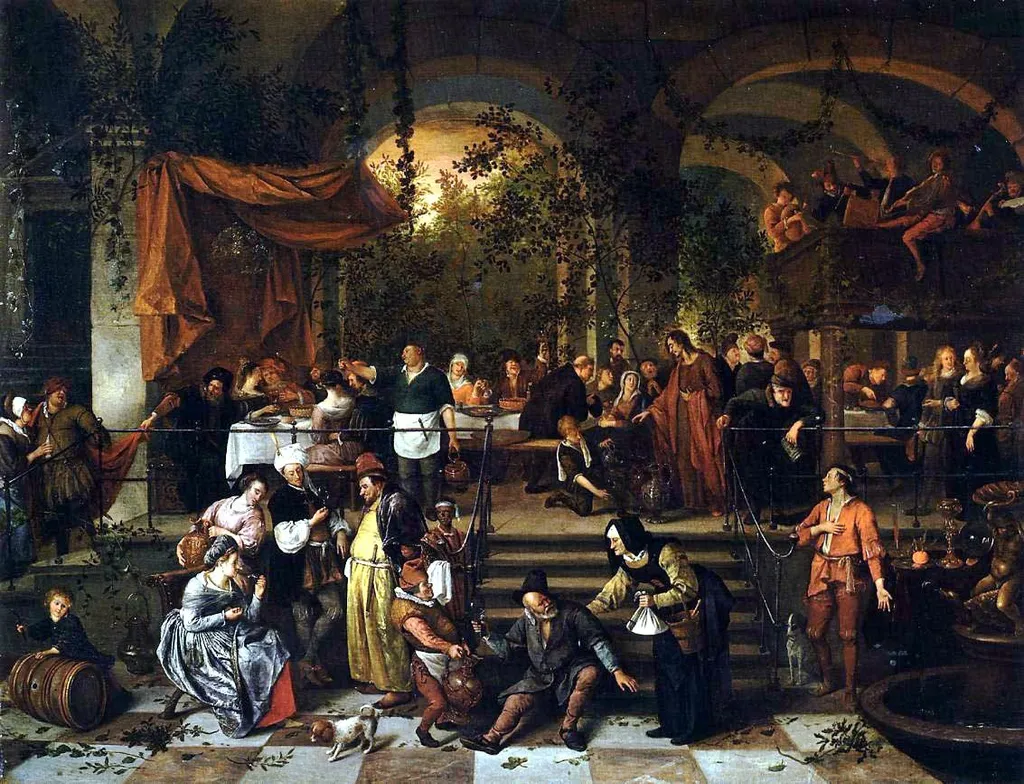
Marriage at Cana is an oil painting by the Dutch Golden Age artist Jan Steen. It dates from 1668 and is held in the collection of the National Gallery of Ireland.
About this work
Subject & Meaning
The composition includes a central figure of Jesus, attendees, and a bustling crowd, emphasizing communal joy and sacred intervention.
The painting depicts the biblical wedding at Cana where Jesus performs his first miracle, turning water into wine. This scene symbolizes divine revelation and the transformation of ordinary elements into spiritual abundance, reflecting themes of faith and celebration within a religious context. The composition includes a central figure of Jesus, attendees, and a bustling crowd, emphasizing communal joy and sacred intervention.
Technique & Style
Jan Steen's Marriage at Cana is executed in oil paint on a support measuring 63.5 cm in height by 82.5 cm in width. Classified as a painting, the work belongs to the religious genre, with Steen treating the biblical wedding feast as a lively genre scene populated by figures including a woman, Jesus Christ, and wedding guests. The relatively modest dimensions and oil medium are consistent with Steen's cabinet-scale productions of the period, allowing for the detailed handling of figures and crowd typical of his narrative compositions.
History & Provenance
The Marriage at Cana by Jan Steen is dated 1668 and has remained in the collection of the National Gallery of Ireland, Dublin, since its acquisition.
The painting was created in 1668 as a depiction of the biblical Wedding at Cana, a scene traditionally associated with the first miracle of Jesus. It is catalogued as a religious genre work by Steen, executed in oil on canvas with dimensions of 63.5 cm in height and 82.5 cm in width.
The painting Marriage at Cana by Jan Steen is held in the collection of the National Gallery of Ireland, where it is cataloged under an accession number recorded in the institution’s records. Its exhibition history includes displays within the gallery’s permanent collection and select thematic exhibitions focused on Dutch Golden Age works.
Legacy
Jan Steen's 1668 oil painting Marriage at Cana, housed in the National Gallery of Ireland, has been recognized for its vibrant composition and narrative depth, influencing later Dutch genre painters who emulated its lively domestic scenes. The work's depiction of biblical celebration continues to inform scholarship on Baroque religious art and its adaptation in 17th-century visual culture.
Overview
Jan Steen’s oil painting ‘Marriage at Cana’, executed in 1668, presents a bustling wedding banquet. The canvas captures a moment of communal celebration, with guests gathered around tables, a richly draped interior, and a prominent jug held by a kneeling figure. The work resides in the collection of the National Gallery of Ireland.
Context
Although best known for domestic genre scenes, Steen applied his observational skill to biblical narratives, merging sacred content with everyday realism. The painting aligns with the Dutch Golden Age’s interest in moralizing stories presented through familiar, convivial settings, inviting viewers to contemplate the miracle within a relatable social framework.
Artist & collection
Artist
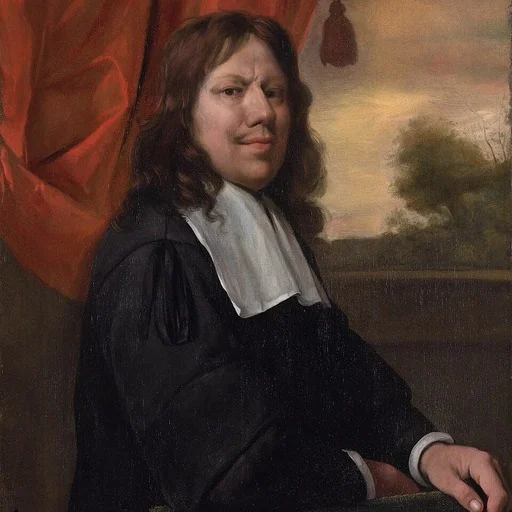
Jan Havickszoon Steen was a Dutch Golden Age painter, one of the leading genre painters of the 17th century.

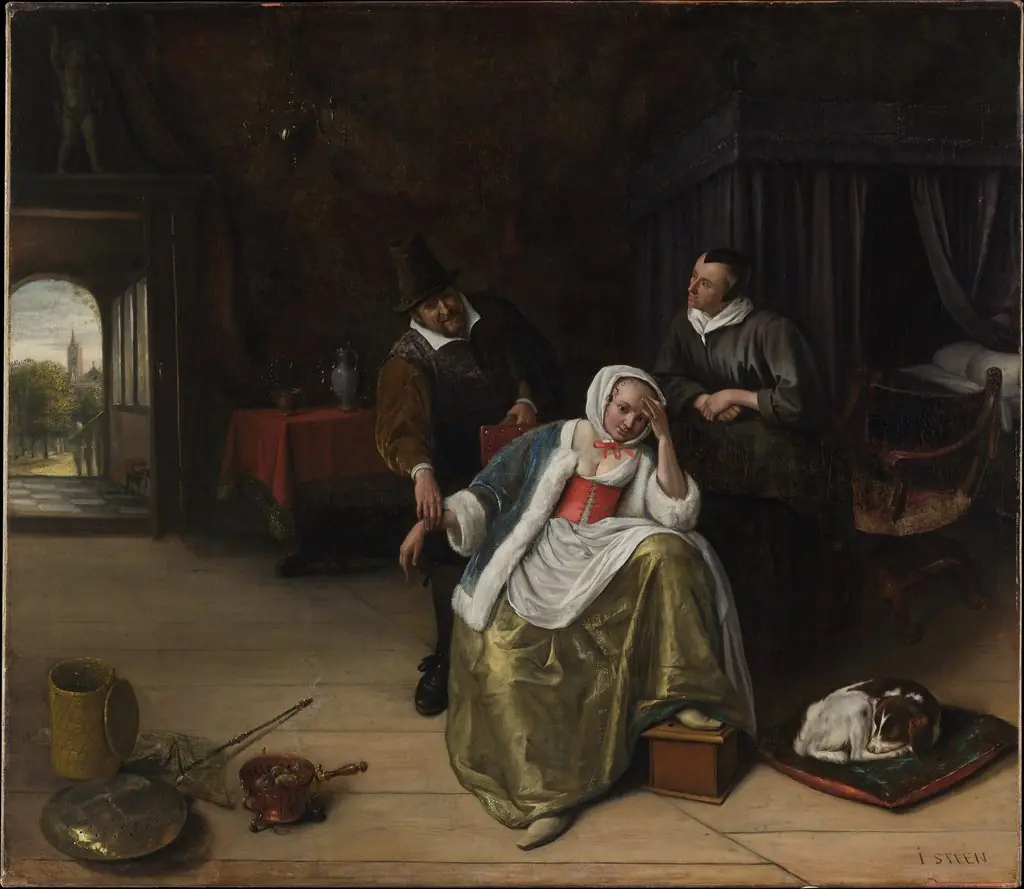 Paintings of physicians by Jan Steen
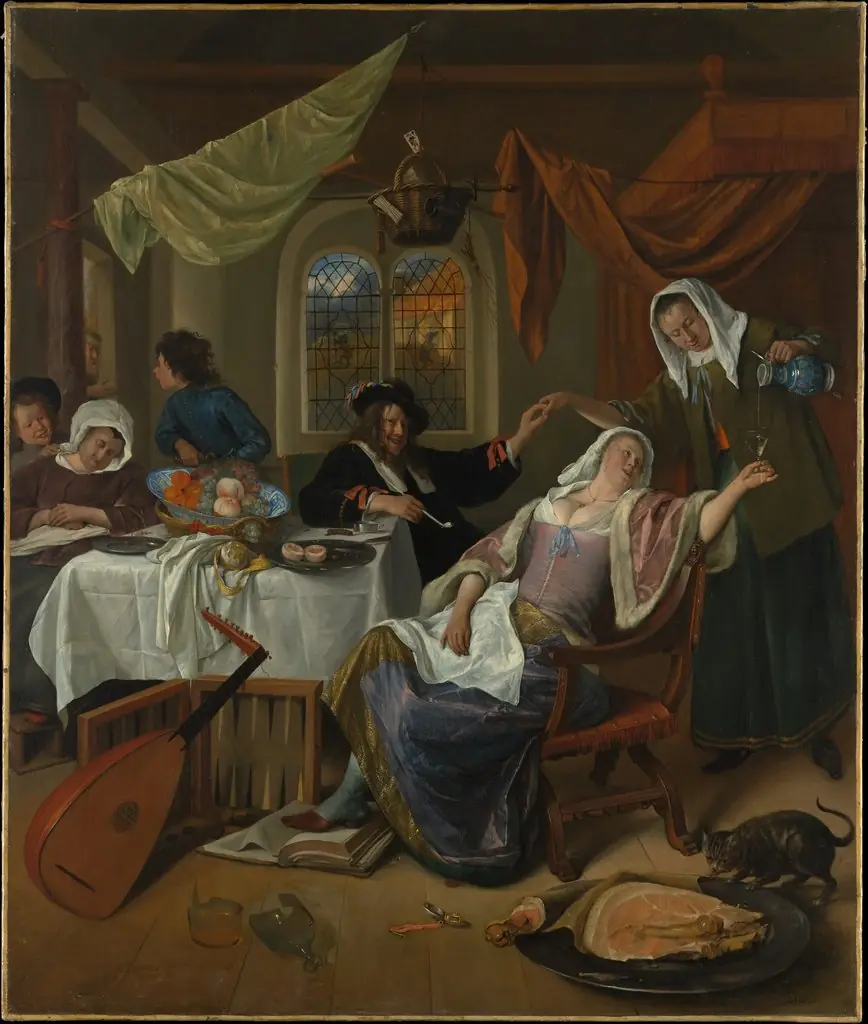 The Dissolute Household
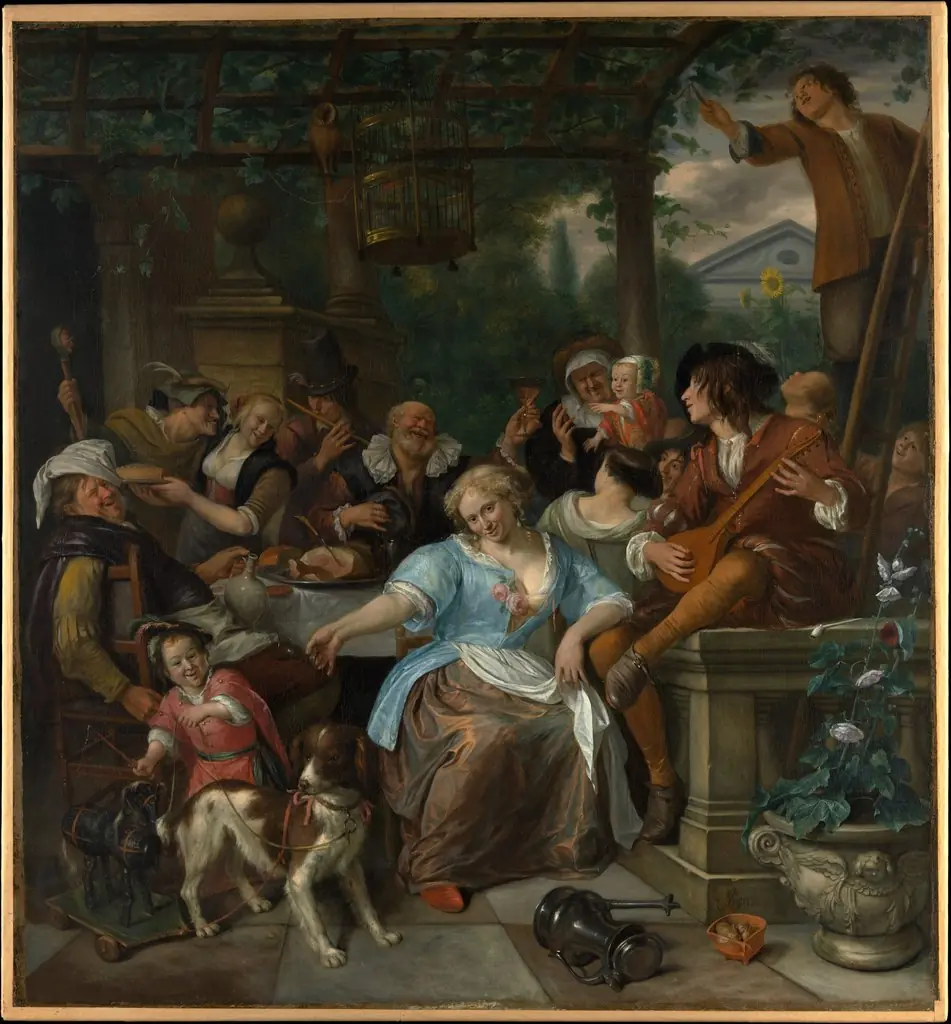 Merry Company on a Terrace
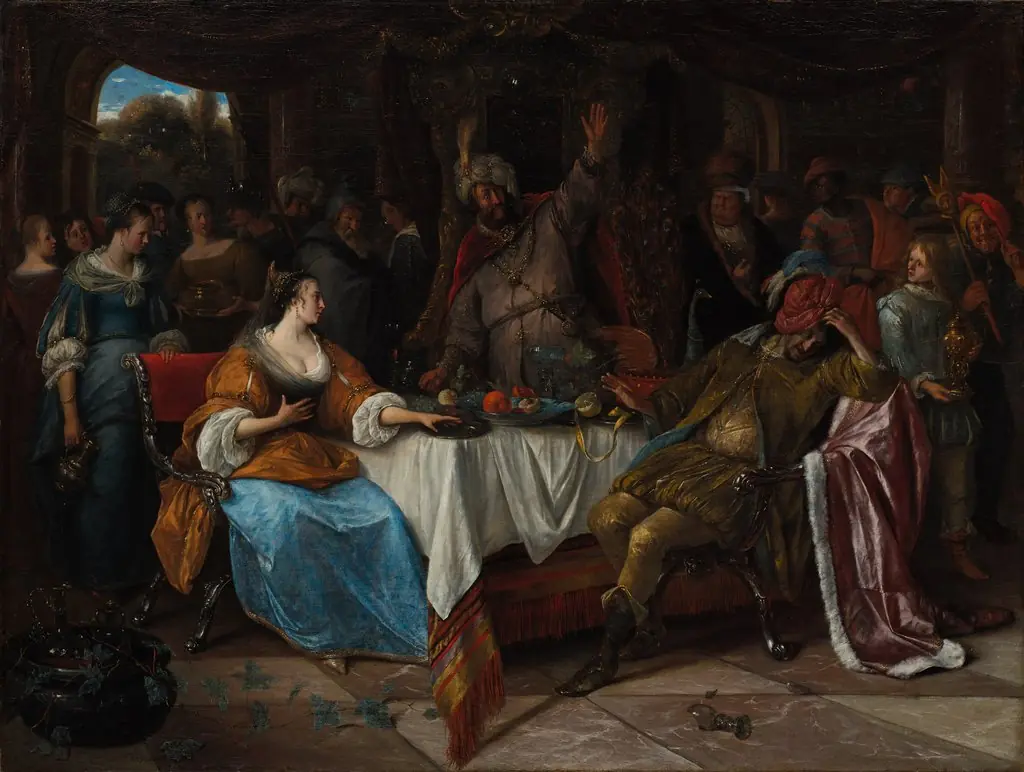 Esther, Ahasuerus, and Haman
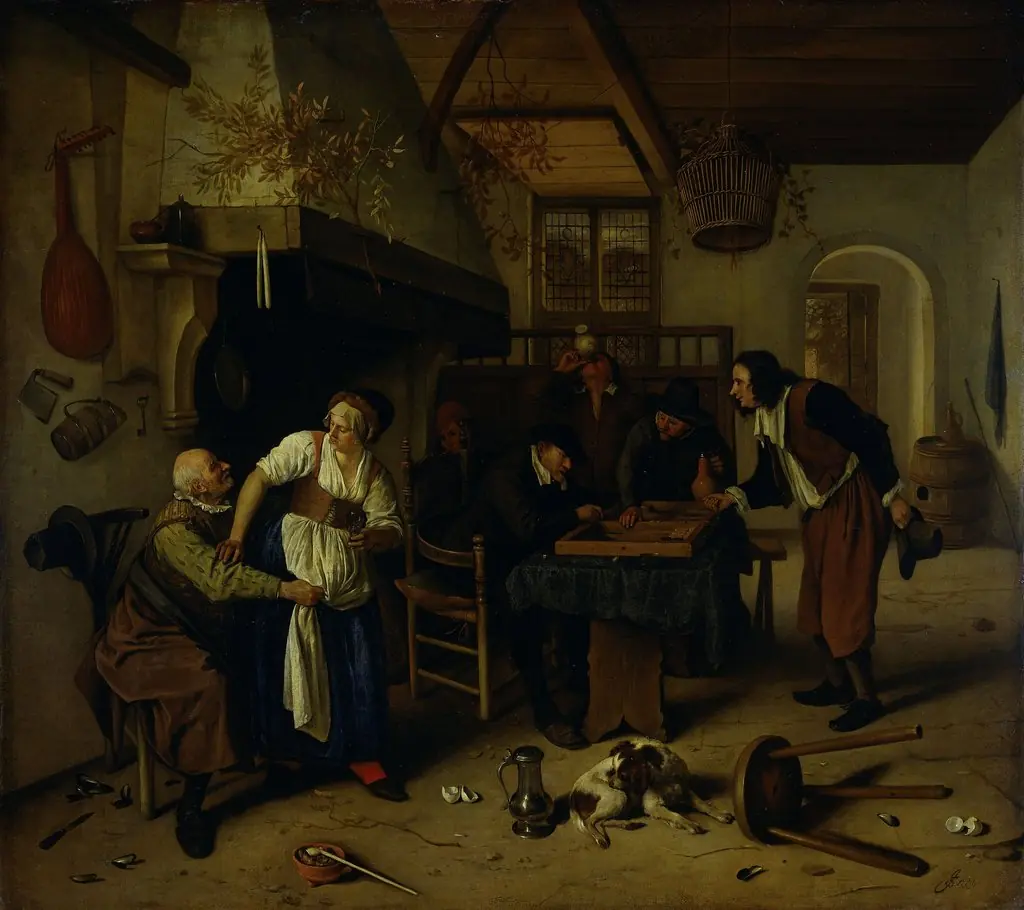 Interior of an inn with an old man amusing himself with the landlady and two men playing backgammon, known as 'Two kinds of games'
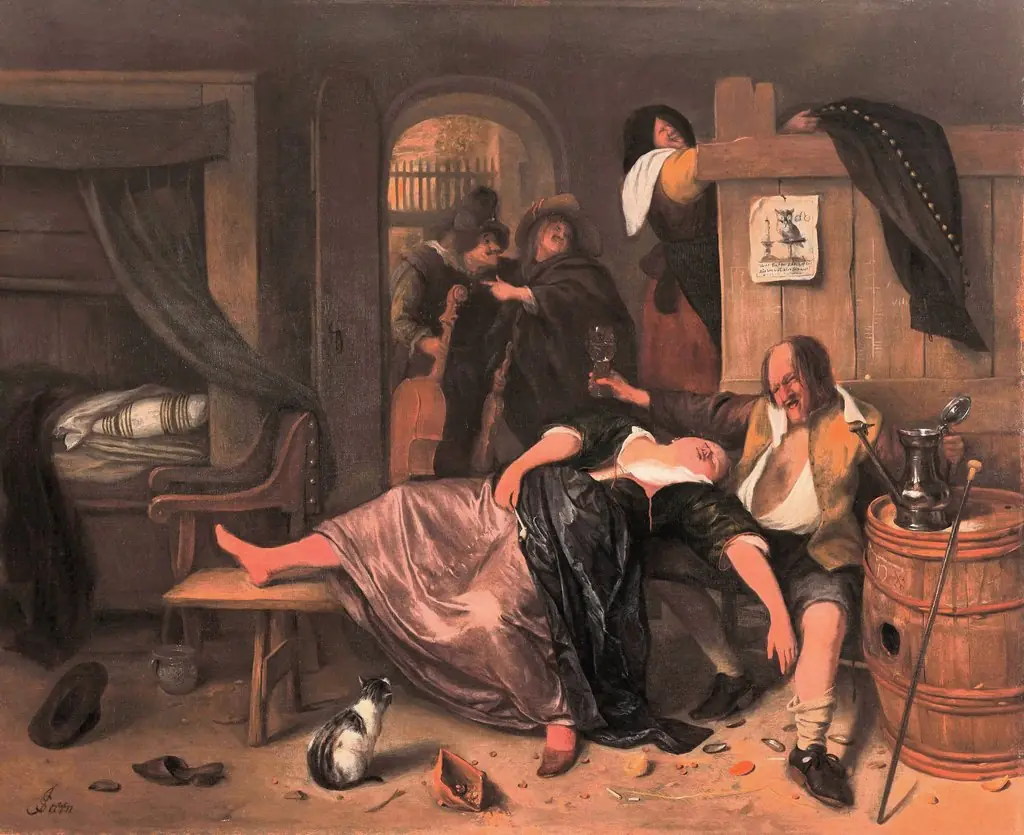 The Drunken Couple
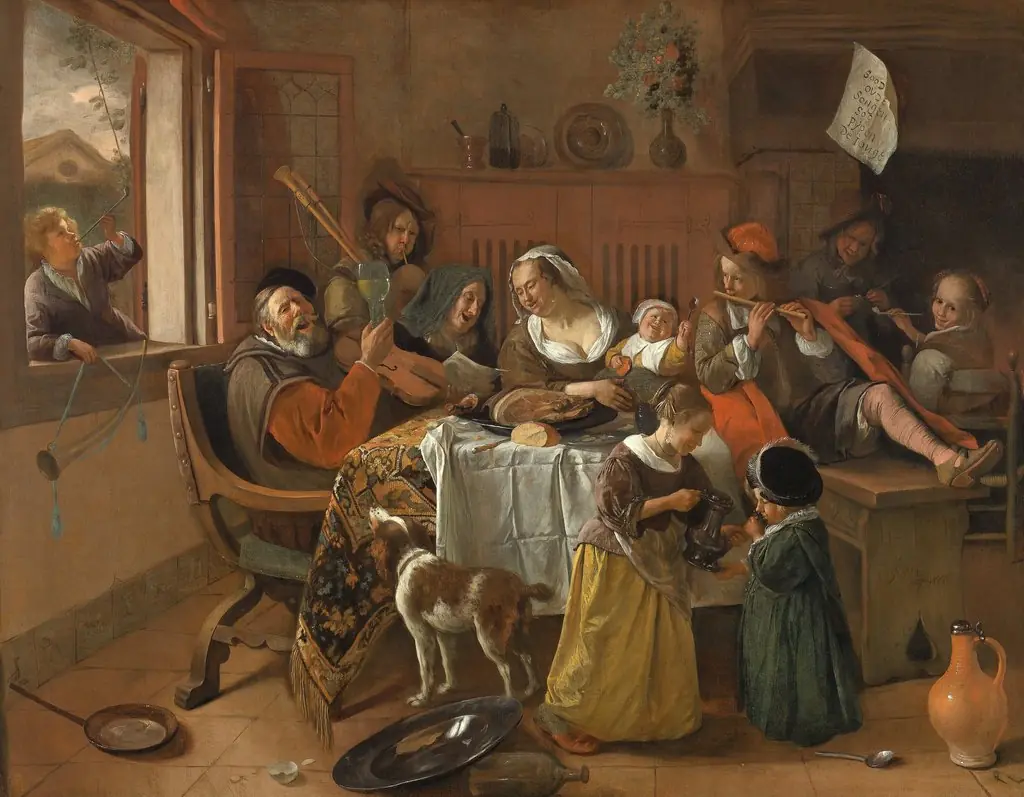 The Happy Family
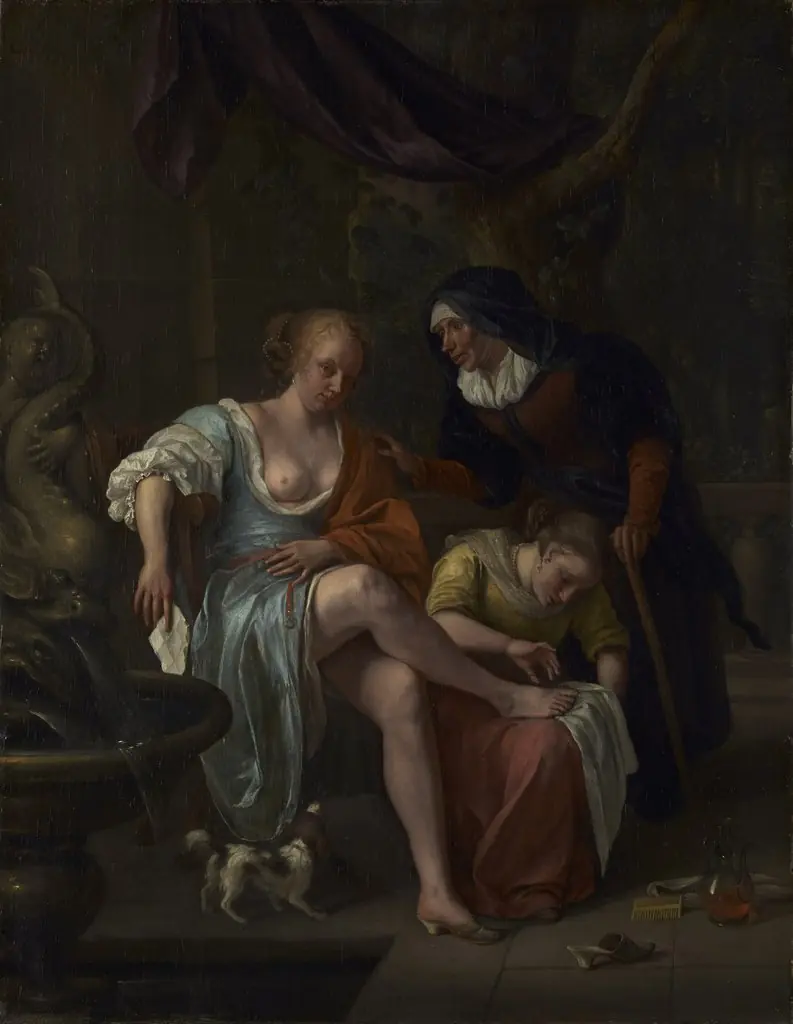 Bathsheba after the Bath
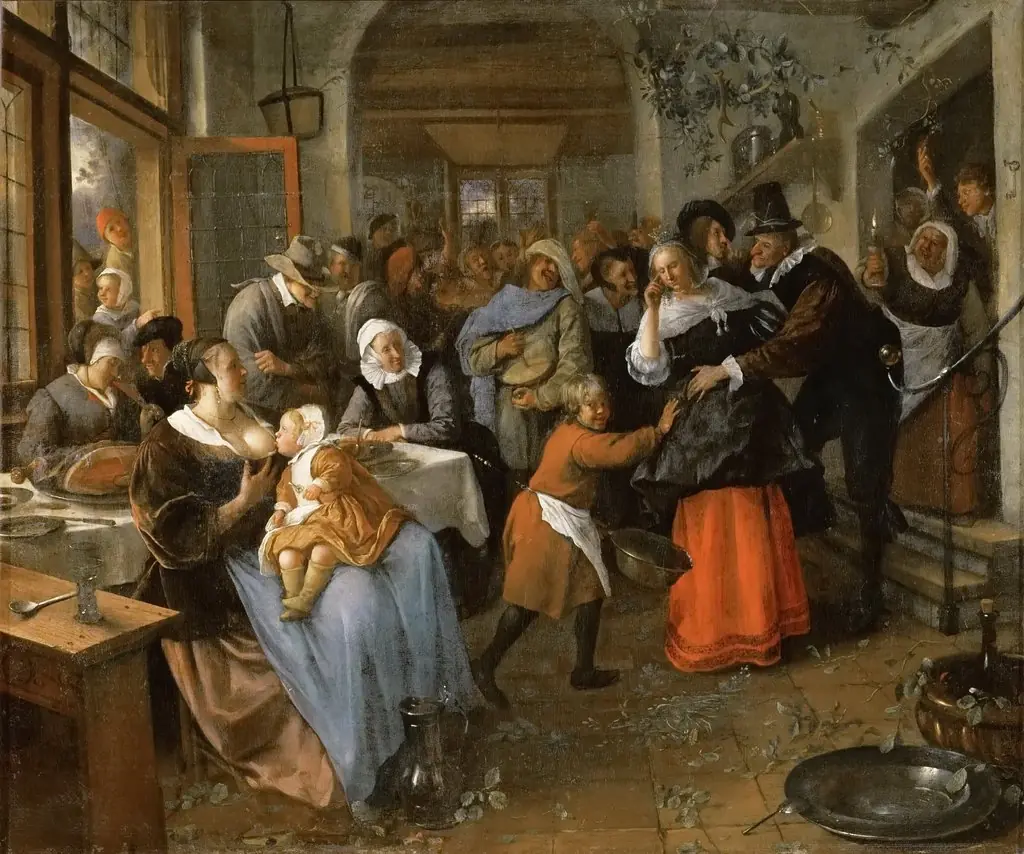 A Village Wedding
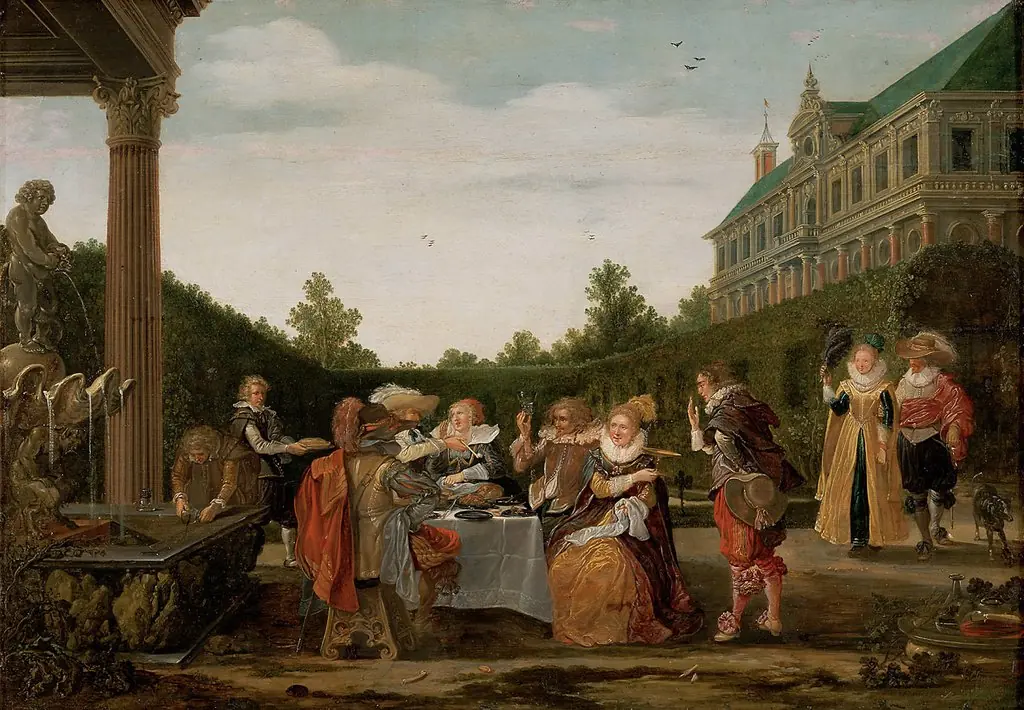 Banquet in a palatial garden, with an elegant company drinking and in conversation
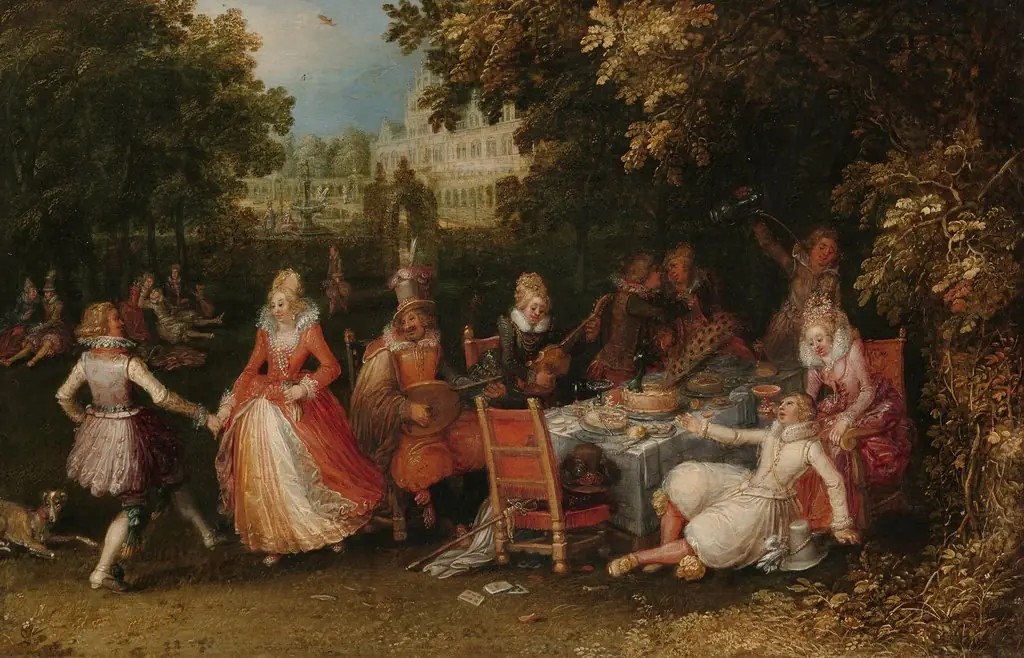 The fête champêtre
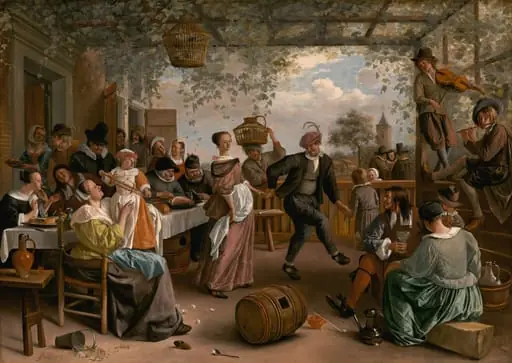 The Dancing Couple
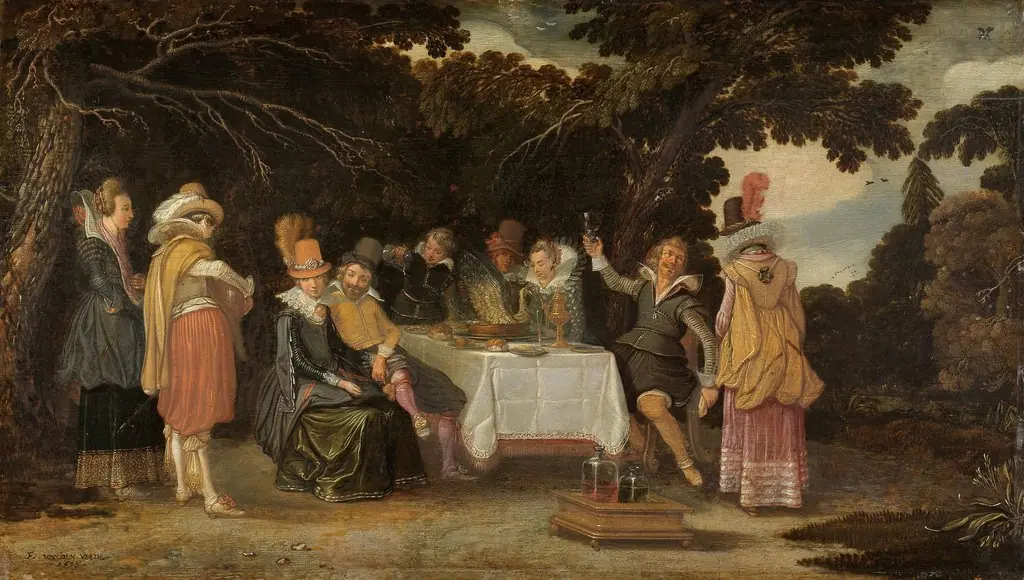 Elegant company dining in the open air
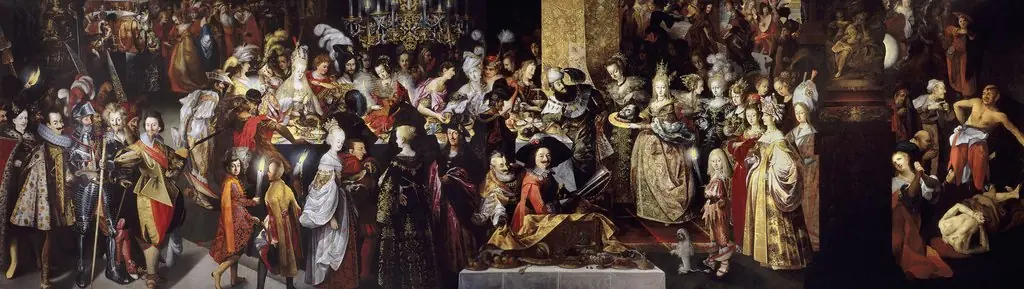 Feast of Herod with the Beheading of St John the Baptist
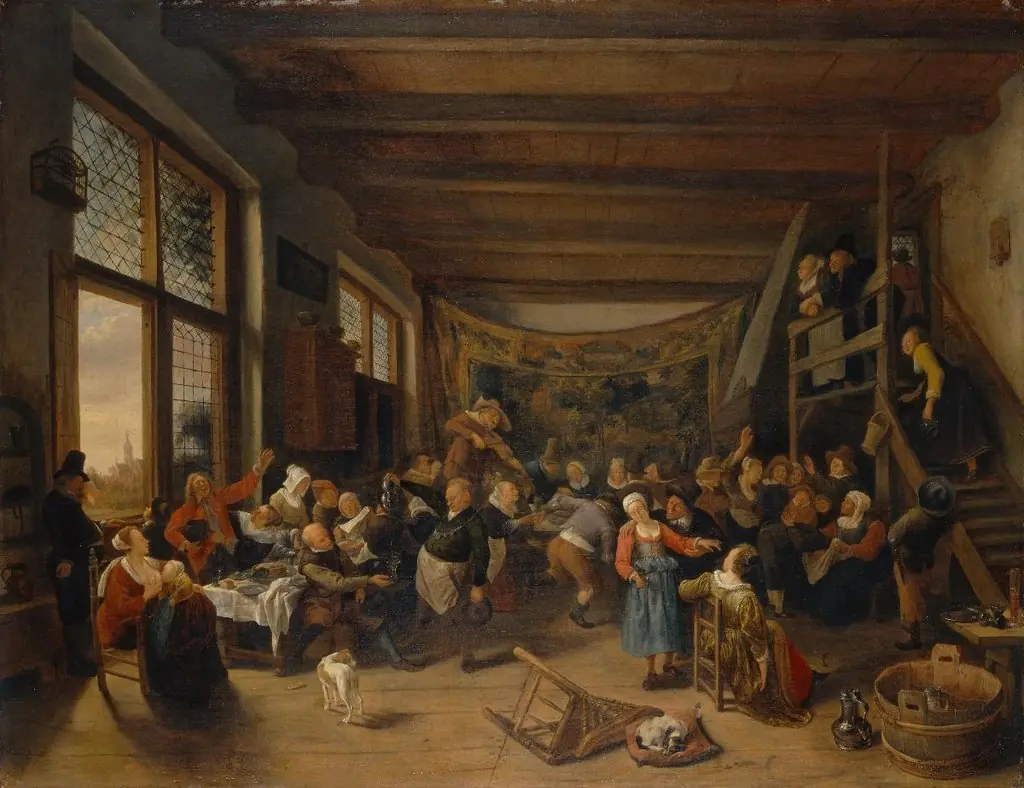 Hochzeitsfest in einer Bauernschenke
 Christ Healing at the Pool of Bethesda
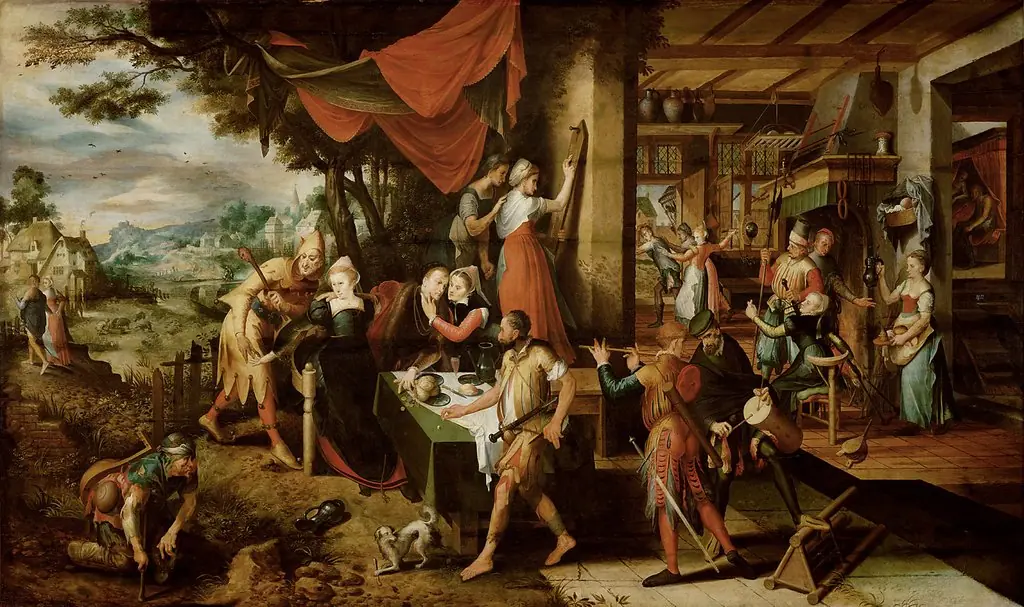 Return of the Prodigal Son