Artwork
Woman Playing the Sistrum
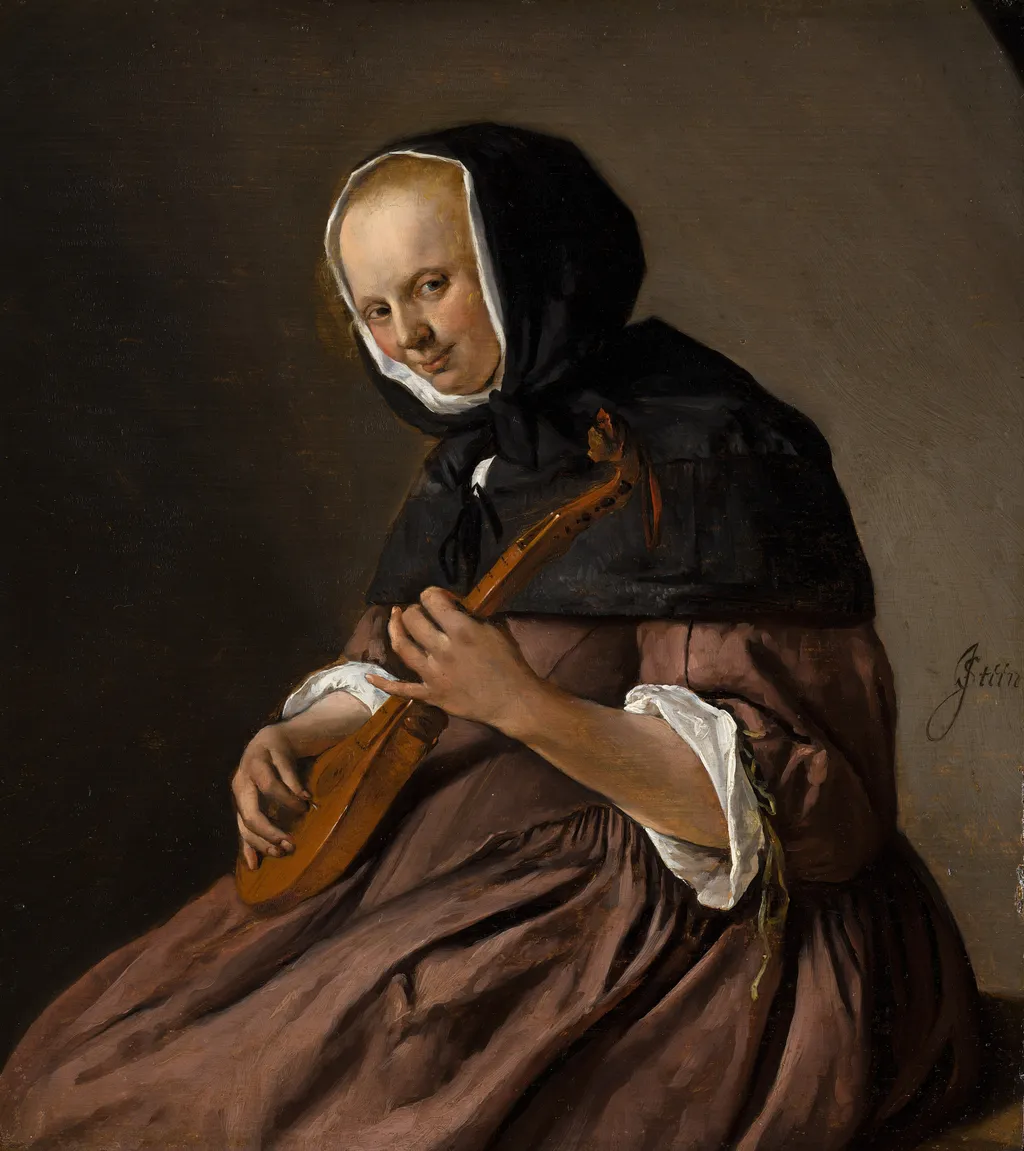
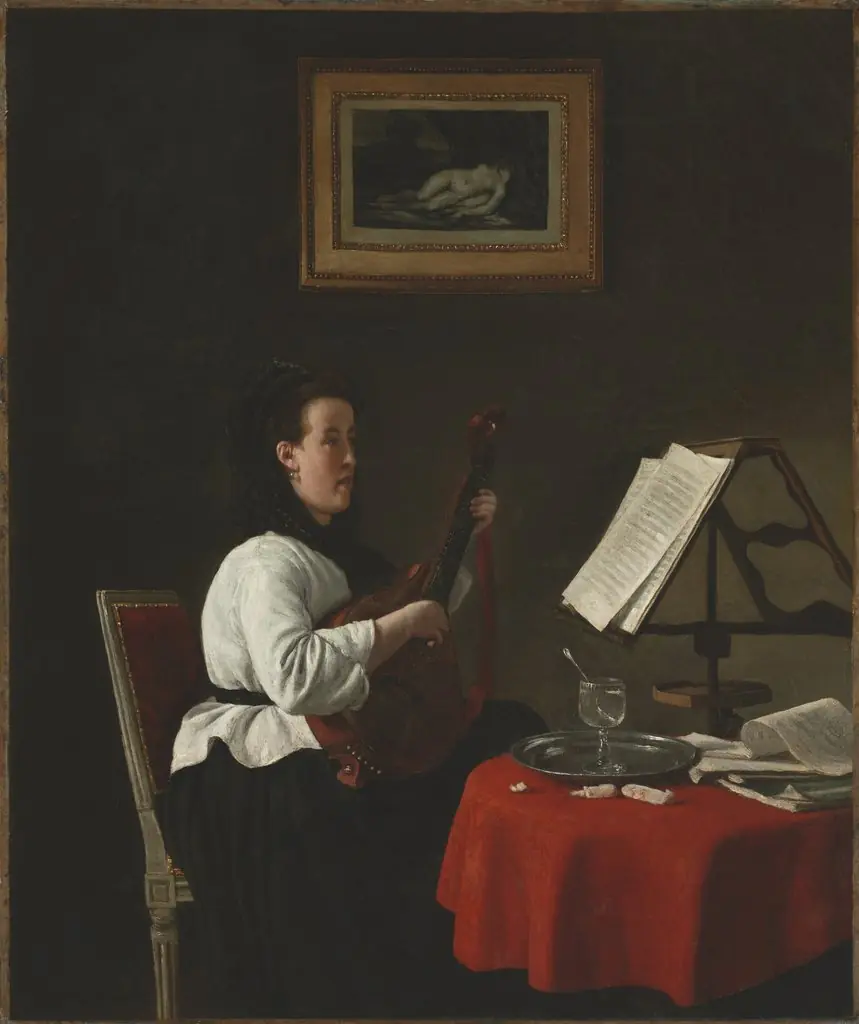
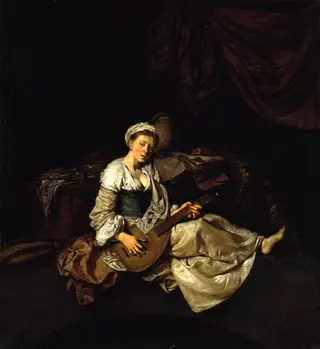
Woman Playing the Sistrum is an oil painting by the Dutch Golden Age artist Jan Steen. It dates from 1662 and is held in the collection of the Mauritshuis.
About this work
History & Provenance
Woman Playing the Sistrum is held at the Mauritshuis in The Hague, where it is accessioned under inventory number 1880-001.
Jan Steen created the oil-on-panel painting Woman Playing the Sistrum in 1662. The work is a genre scene from the Dutch Golden Age, depicting a seated woman with blond hair holding a sistrum. It is currently held in the collection of the Mauritshuis. The painting measures 31 cm in height and 27.5 cm in width.
Woman Playing the Sistrum is held at the Mauritshuis in The Hague, where it is accessioned under inventory number 1880-001. The painting was displayed in the museum’s 2019 exhibition "Dutch Golden Age: Intimacy and Music" and previously featured in the 2005 traveling show "Masterpieces of Dutch Painting" organized by the Rijksmuseum.
Context
The painting Woman Playing the Sistrum by Jan Steen was created in 1662 during the Dutch Golden Age, reflecting the era's focus on everyday scenes and domestic music-making. It depicts a woman playing a sistrum, a musical instrument associated with festive or religious contexts, within a domestic interior. The work is part of the Mauritshuis collection in The Hague and exemplifies Steen's genre scenes, which often captured candid moments of 17th-century life with psychological nuance and subtle humor.
Legacy
The painting's depiction of music and domestic leisure influenced later genre scenes that explored similar themes of quiet domesticity and auditory culture, though no direct documentary evidence links Steen's work to subsequent artists' adoption of the sistrum motif. Its presence in the Mauritshuis collection has contributed to scholarly discussions of Dutch Golden Age representations of female agency through musical participation, reinforcing its reputation as a subtle commentary on household performance. The work's technical execution in oil on panel remains a reference point for conservation studies of 17th-century panel painting practices.
The sistrum held by the woman functions as both a symbolic attribute and a visual cue to contemporary audiences familiar with its ritual associations, embedding layered meanings about sound, order, and feminine expression within the domestic sphere.
Overview
Jan Steen’s 1662 oil painting, titled Woman Playing the Sistrum, presents a single figure in a modest interior. The work belongs to the Dutch Golden Age’s genre tradition, focusing on everyday moments rather than grand historical narratives. It is part of the collection at the Mauritshuis in The Hague, where it is displayed among other 17th‑century Dutch works.
Subject & Meaning
The composition features a young woman seated before a dark backdrop, holding a small wooden sistrum, a ritual percussion instrument. She wears a dark cap, a brown dress, and a white veil draped over her shoulder, her blond hair partially visible. Her relaxed smile and direct gaze invite the viewer into a moment of private music-making, suggesting a gentle, domestic intimacy.
Technique & Style
Steen employs a restrained palette and careful modeling of light to emphasize the figure’s face and hands. Subtle chiaroscuro creates a contrast between the illuminated skin tones and the surrounding gloom, highlighting the texture of the fabric and the delicate details of the instrument. The brushwork remains smooth, typical of genre paintings that aim for realism without overt dramatization.
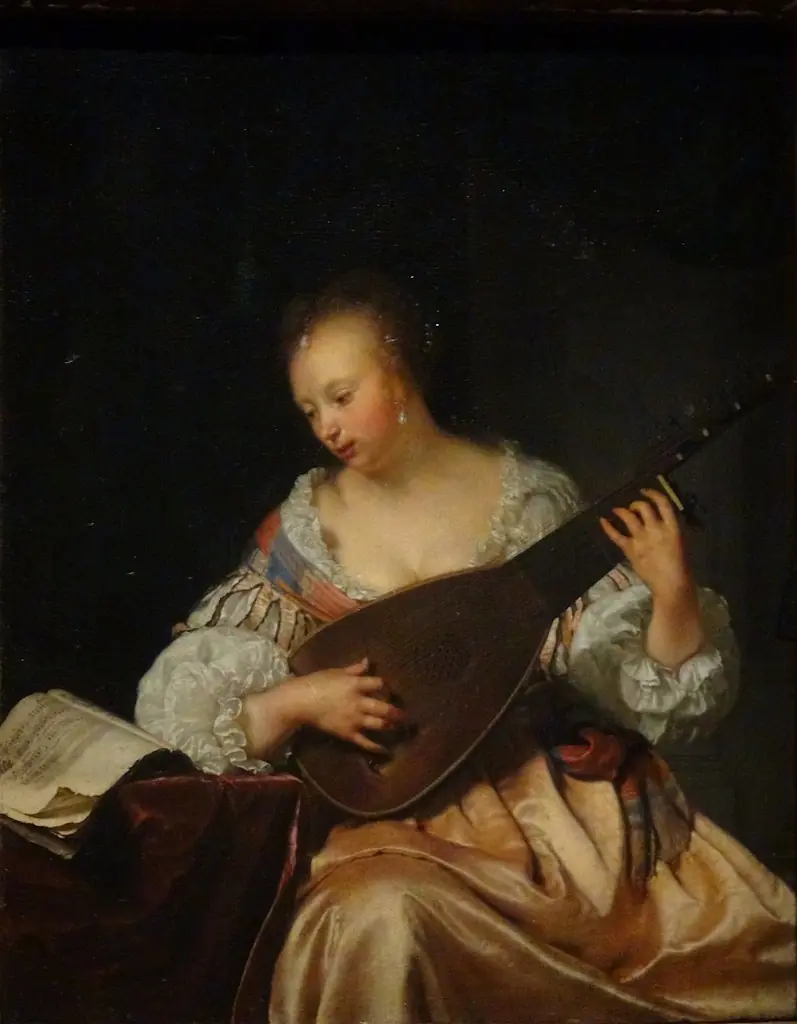
Own this work as a print
Artist & collection
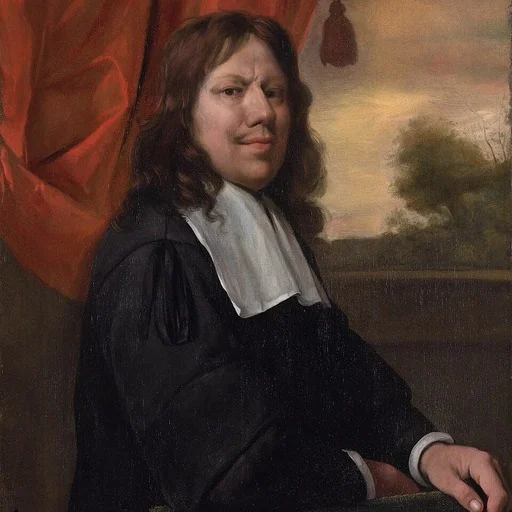
Artist
Jan Havickszoon Steen was a Dutch Golden Age painter, one of the leading genre painters of the 17th century.

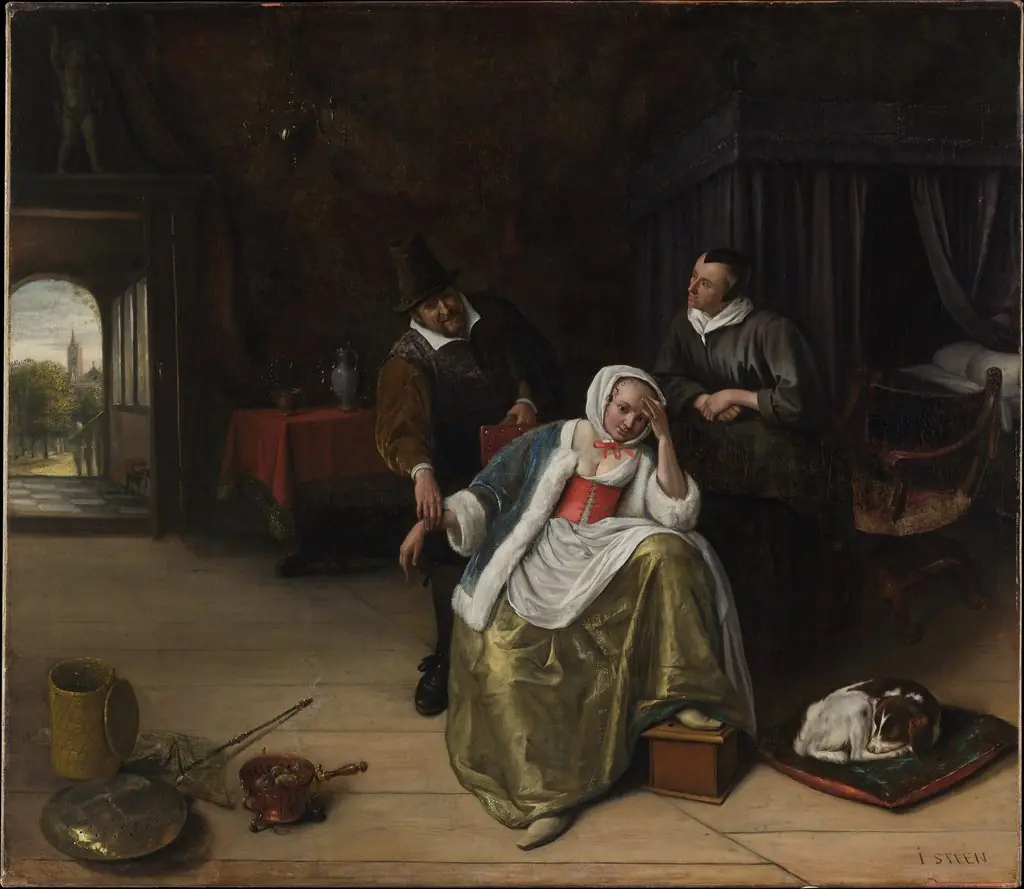 Paintings of physicians by Jan Steen
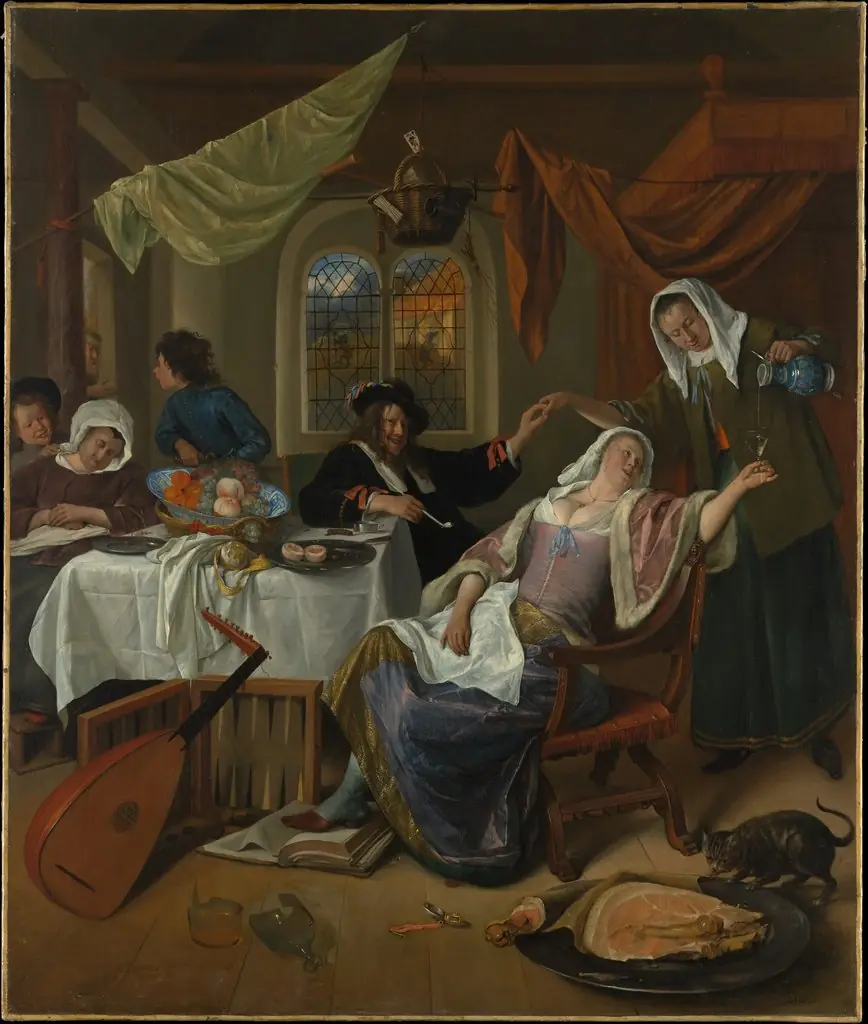 The Dissolute Household
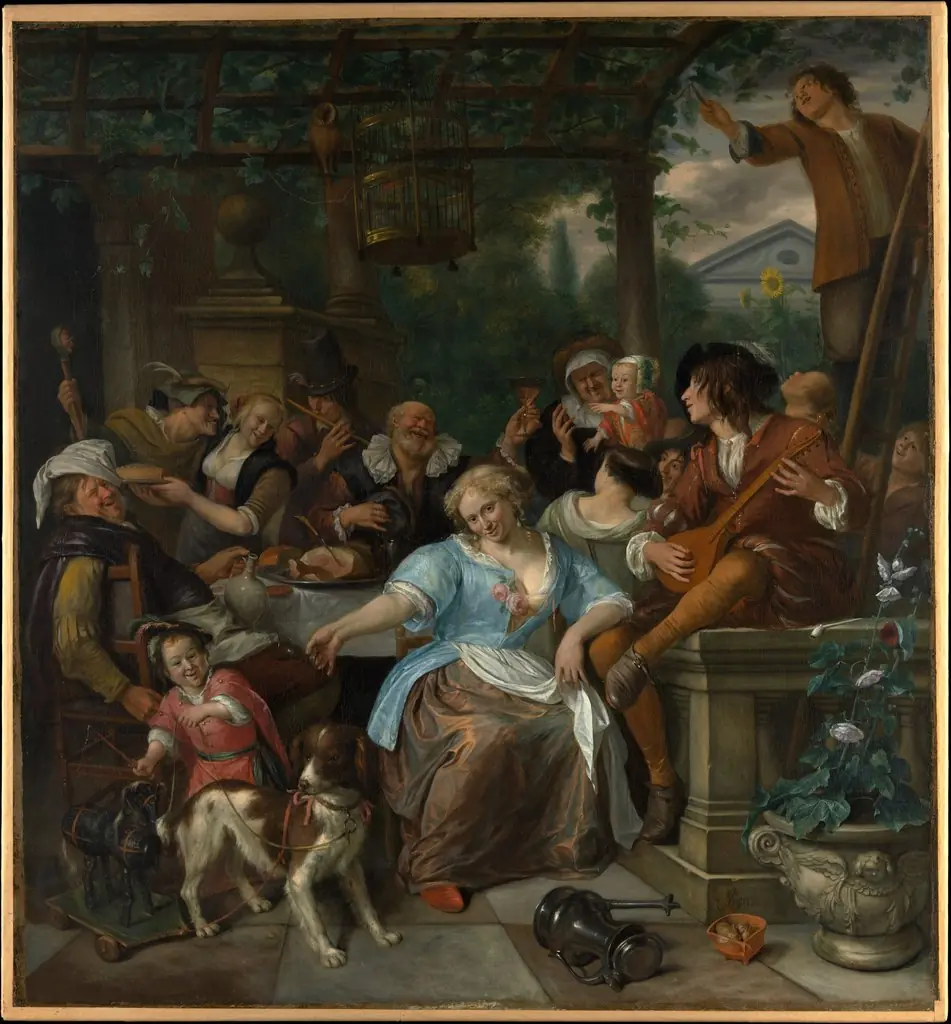 Merry Company on a Terrace
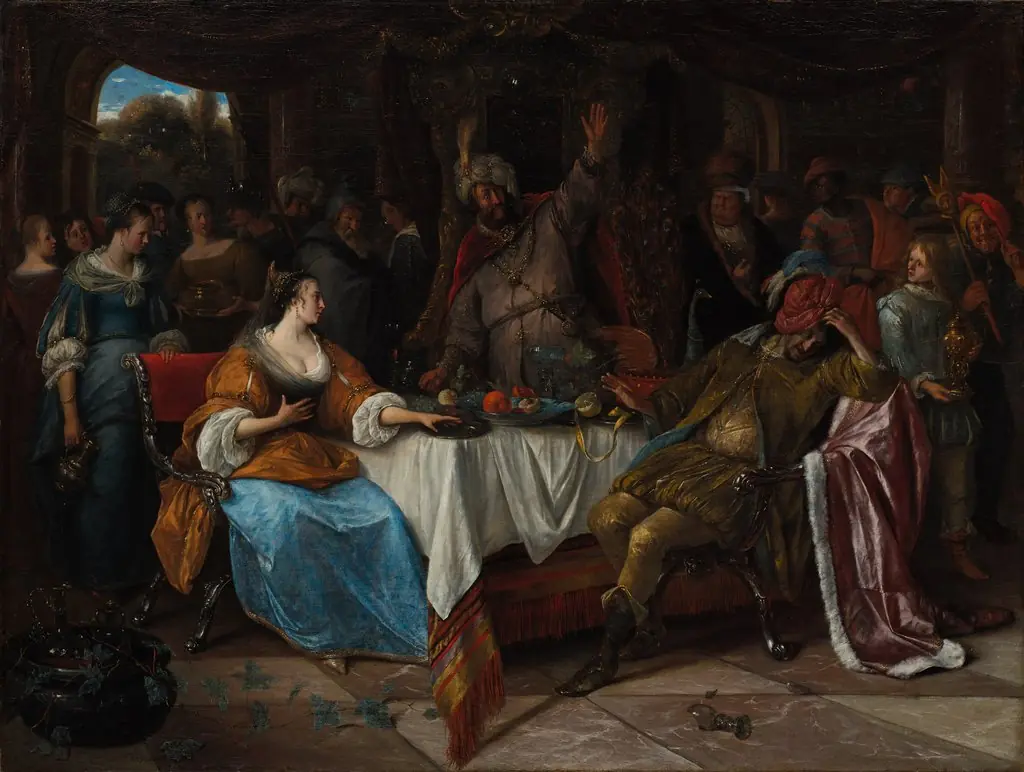 Esther, Ahasuerus, and Haman
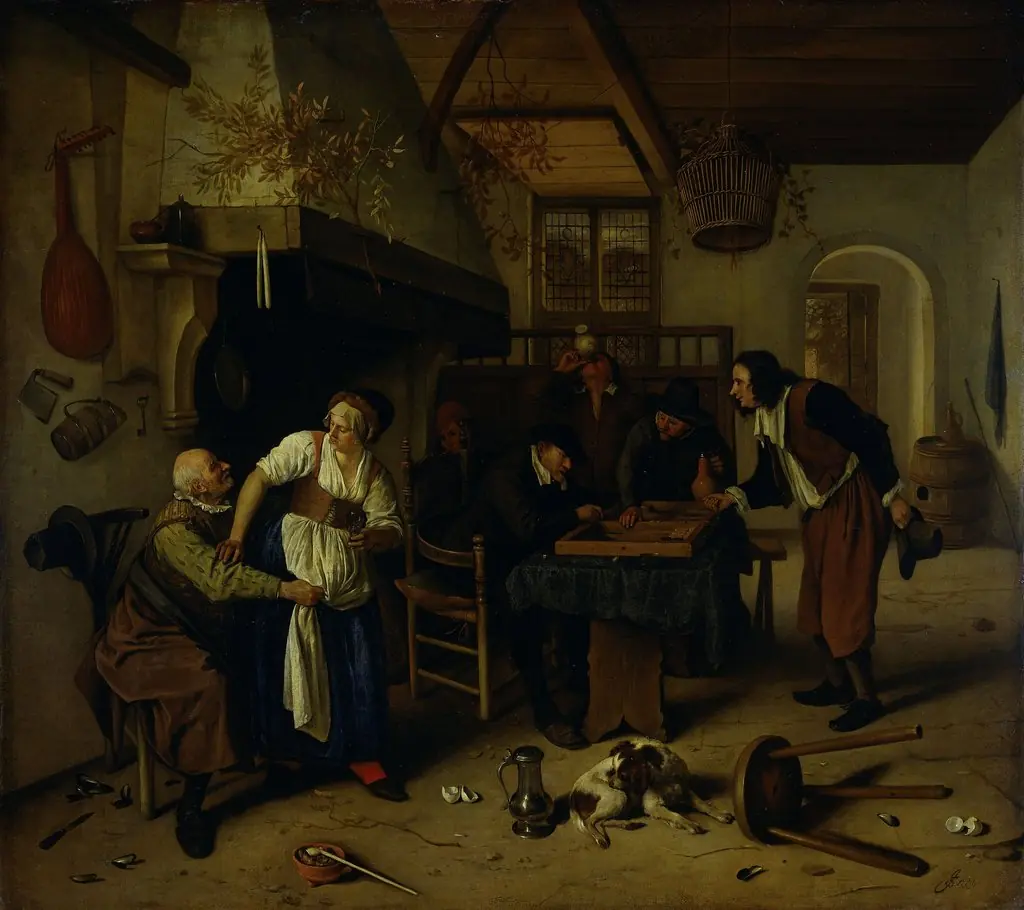 Interior of an inn with an old man amusing himself with the landlady and two men playing backgammon, known as 'Two kinds of games'
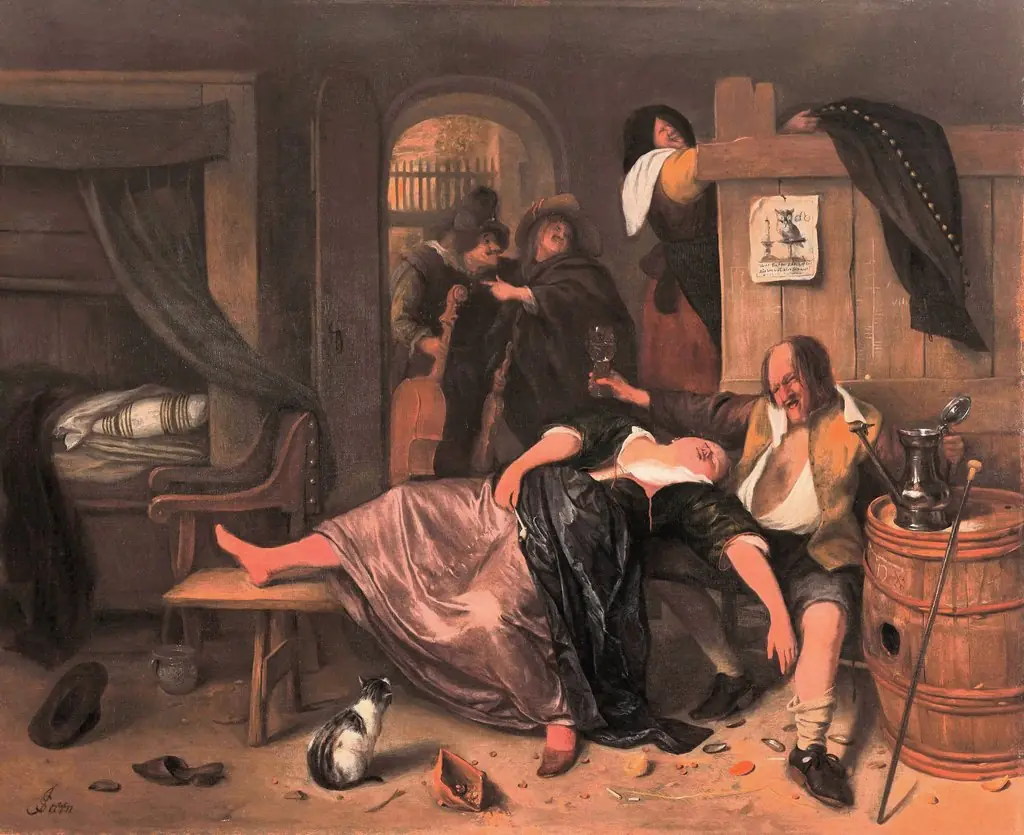 The Drunken Couple
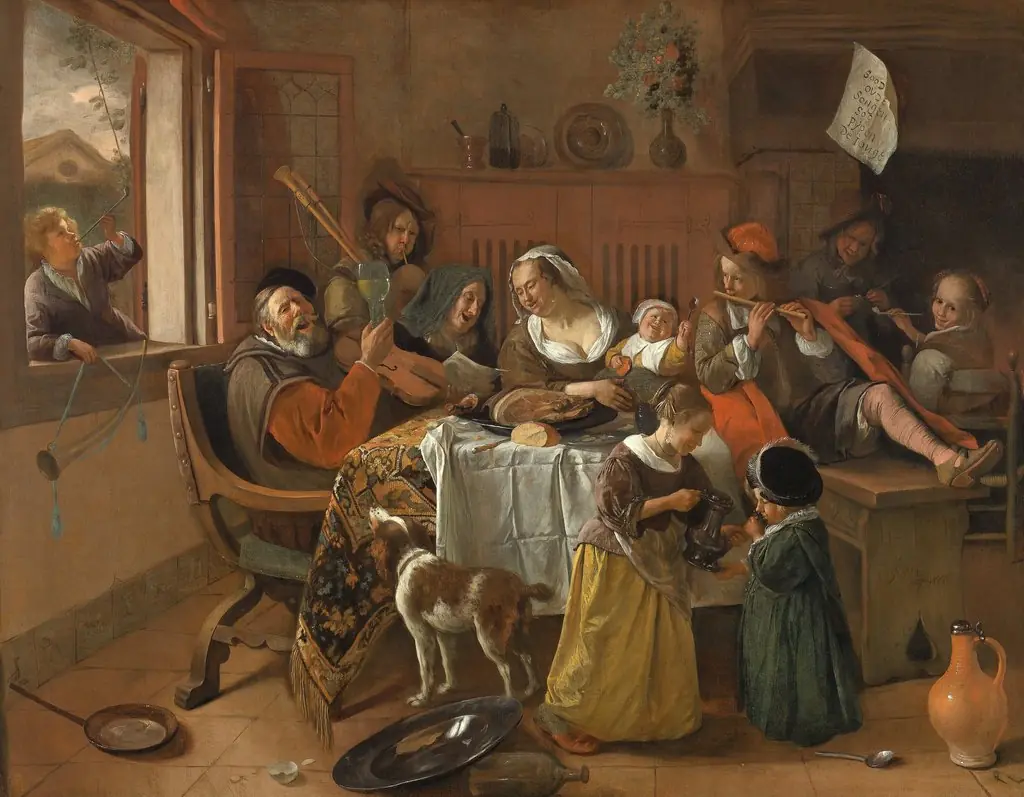 The Happy Family
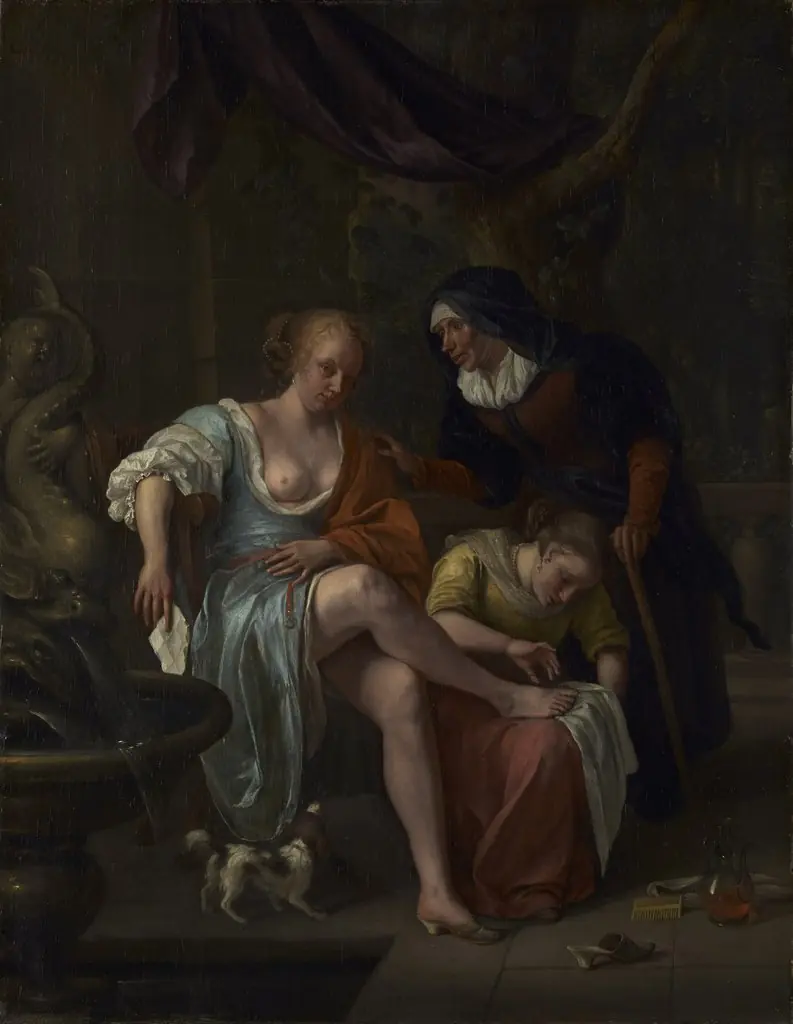 Bathsheba after the Bath