Artwork
Dresden Triptych
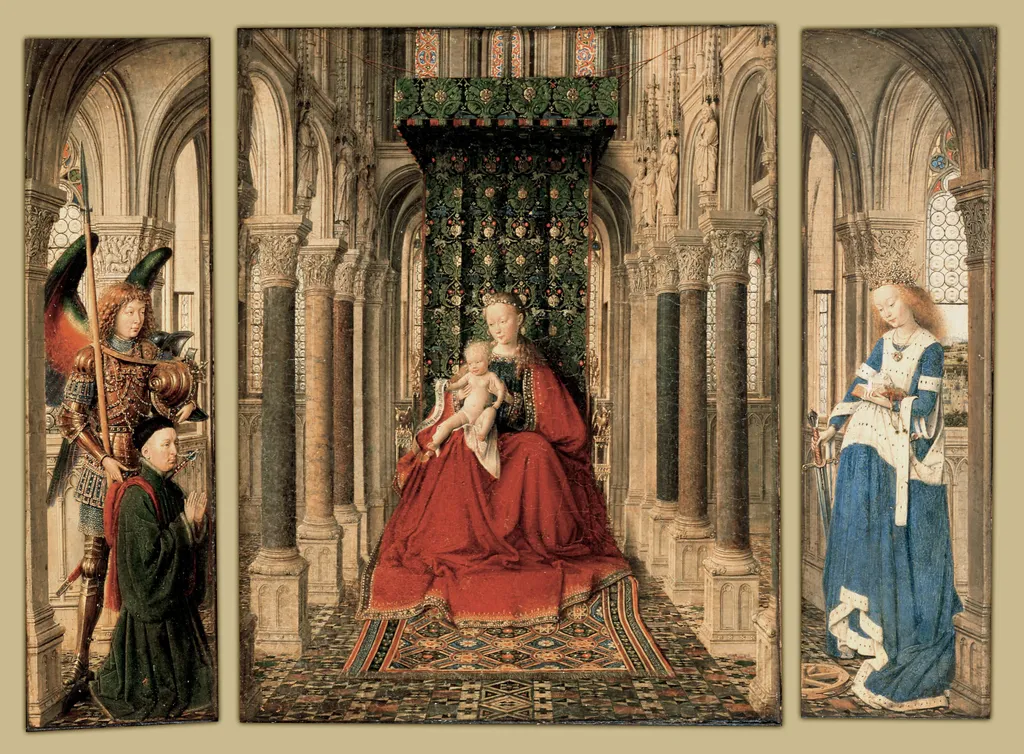
Dresden Triptych is an oil painting by the Northern Renaissance artist Jan van Eyck. It dates from 1437 and is held in the collection of the Staatliche Kunstsammlungen Dresden.
About this work
The work is signed and dated, making it the only surviving triptych attributed to van Eyck and the only non‑portrait bearing his personal motto.
The Dresden Triptych is a very small hinged‑triptych altarpiece painted in oil by Jan van Eyck in 1437. It has five panels – a central inner panel and two double‑sided wings – and stays in its original frame. The work is signed and dated, making it the only surviving triptych attributed to van Eyck and the only non‑portrait bearing his personal motto.
It sits at the midpoint of his known output, echoing motifs from earlier paintings while showing a new skill in handling depth of space. Check out the Gemäldegalerie Alte Meister.
Subject & Meaning
The Dresden Triptych presents a sacra conversazione within a three-aisled ecclesiastical interior. The central panel features the Virgin Mary enthroned under a canopy, holding the Christ Child, who displays a scroll quoting Matthew 11:28 regarding meekness. Flanking this scene, the left wing shows Archangel Michael presenting a kneeling donor, while the right wing depicts Saint Catherine of Alexandria with her traditional attributes: a broken wheel, a sword, and a prayer book. The frames bear Latin inscriptions drawn from biblical texts praising the Virgin and liturgical prayers dedicated to the accompanying saints.
When closed, the outer wings reveal an Annunciation scene executed in grisaille. These monochrome figures of the Virgin and Archangel Gabriel are rendered to resemble sculpted statues standing in stone niches, complete with cast shadows. This illusionistic technique likely served a devotional function during periods of fasting. The work's iconography establishes Marian portraiture elements that influenced later fifteenth-century art, combining intimate private devotion with complex theological symbolism.
Technique & Style
The Dresden Triptych is executed in oil paint on an oak panel and measures 33 by 27.5 centimetres including the original frames. Its small scale suggests a portable devotional function, likely used as an altare portabile by educated elites for private or travel devotion. The work comprises five panels: a central inner panel depicting the Virgin Mary seated with the Christ Child within an ecclesiastical interior, flanked by outer wings showing St Michael presenting a kneeling donor and Saint Catherine reading a prayer book. When closed, the outer surfaces display a grisaille Annunciation scene rendered in monochrome tones that simulate sculpted figures. The painted bronze frames are richly inscribed with Latin texts drawn from biblical passages and prayers to Saints Michael and Catherine. The donor’s identity is inferred from damaged heraldic motifs linked to the Genoese Giustiniani family, reflecting the high literacy and cultural status of the patron. The painting’s technique demonstrates Jan van Eyck’s mastery of spatial depth, perspective, and naturalistic detail, particularly in the rendering of textiles, architectural elements, and the illusionistic treatment of the grisaille panels.
History & Provenance
The Dresden Triptych, also known as the Dresden Marienaltar, was created by Jan van Eyck in 1437 as a small devotional altarpiece intended for private use, likely as a portable altarpiece for a cleric or donor. It was probably owned by the Giustiniani family in the mid- to late-15th century and later entered the collection of Vincenzo Gonzaga, Duke of Mantua, before being sold to Charles I of England in 1627. After passing through the hands of Eberhard Jabach and the Elector of Saxony, it appeared in the 1754 Dresden Collection inventory, where it was mistakenly attributed to Albrecht Dürer. The work was correctly identified as a Jan van Eyck piece by Aloys Hirt in 1830, though earlier attributions to Hubert van Eyck and then Jan van Eyck followed in the 19th century. The central panel bears van Eyck's signature and motto 'ALC IXH XAN' and the date 1437, discovered during a 1959 restoration when the frame was removed and the original inscription was revealed.
The Dresden Triptych is held in the Gemäldegalerie Alte Meister in Dresden, with inventory number Gal.-Nr. 799. It was probably owned by the Giustiniani family in the mid- to late-15th century, mentioned in a May 10, 1597 record of a purchase by Vincenzo Gonzaga, Duke of Mantua, and later sold with the Gonzaga Collection to Charles I of England in 1627. After Charles I's execution, it passed to Paris and was owned by Eberhard Jabach, then to the Elector of Saxony, and appears in a 1754 inventory of the Dresden Collection, initially attributed to Albrecht Dürer and later to Jan van Eyck after Aloys Hirt's 1830 attribution. The work was probably intended for private devotion as a portable altarpiece for a migrant cleric, indicated by its small size and richly decorated frames with Latin inscriptions. It is the only extant triptych attributed to Jan van Eyck and the only non-portrait signed with his motto ALC IXH XAN ('I Do as I Can')
Context
The Dresden Triptych occupies a central position within Jan van Eyck's surviving oeuvre. It is his only extant triptych and the sole non-portrait he signed with his personal motto ALC IXH XAN, and scholars place it at the midpoint of his known works, where it both echoes motifs from earlier panels and demonstrates an advance in his handling of spatial depth (Source 3). Elisabeth Dhanens has called it "the most charming, delicate and appealing work by Jan van Eyck that has survived" (Source 3). Because the panels are securely dated and attributed, they are routinely used as a touchstone for dating other works in the Early Netherlandish canon (Source 3). The central Madonna has often been compared with the Lucca Madonna of c. 1436, sharing the dark green canopy, the figuration of Mary, the orange and brown floor pigments, the geometric carpet, and the wooden carvings (Source 3). Scholarship on the altarpiece includes Antje Maria Neuner's monograph on the early Netherlandish triptych and her iconographic study of the work in the Jahrbuch der Staatlichen Kunstsammlungen Dresden, as well as Otto Pächt's study of van Eyck (Sources 4 and 5).
Legacy
The Dresden Triptych is the only extant triptych attributed to Jan van Eyck and the only non-portrait signed with his personal motto ALC IXH XAN, giving it a singular standing in his oeuvre. Art historians place it at the midpoint of his known works, noting that it echoes motifs from his earlier paintings while advancing his handling of spatial depth.
The panels are frequently used as a touchstone for dating van Eyck's other works, since stylistic features such as the stained-glass windows, arcade mouldings, and perspectival construction can be compared against undated or unsigned pieces. The central panel has often been juxtaposed with the Lucca Madonna of c. 1436, which shares its dark green canopy, figuration of Mary, floor pigments, geometric carpet, and wooden carvings. Elisabeth Dhanens described the triptych as "the most charming, delicate and appealing work by Jan van Eyck that has survived," underscoring its enduring critical reputation.
Own this work as a print
Artist & collection

Artist
Jan van Eyck ( van EYEK; Dutch: ; c. before 1390 – 9 July 1441) was an early Netherlandish painter active in Bruges who was one of the early innovators of what became known as Early Netherlandish painting, and one of…

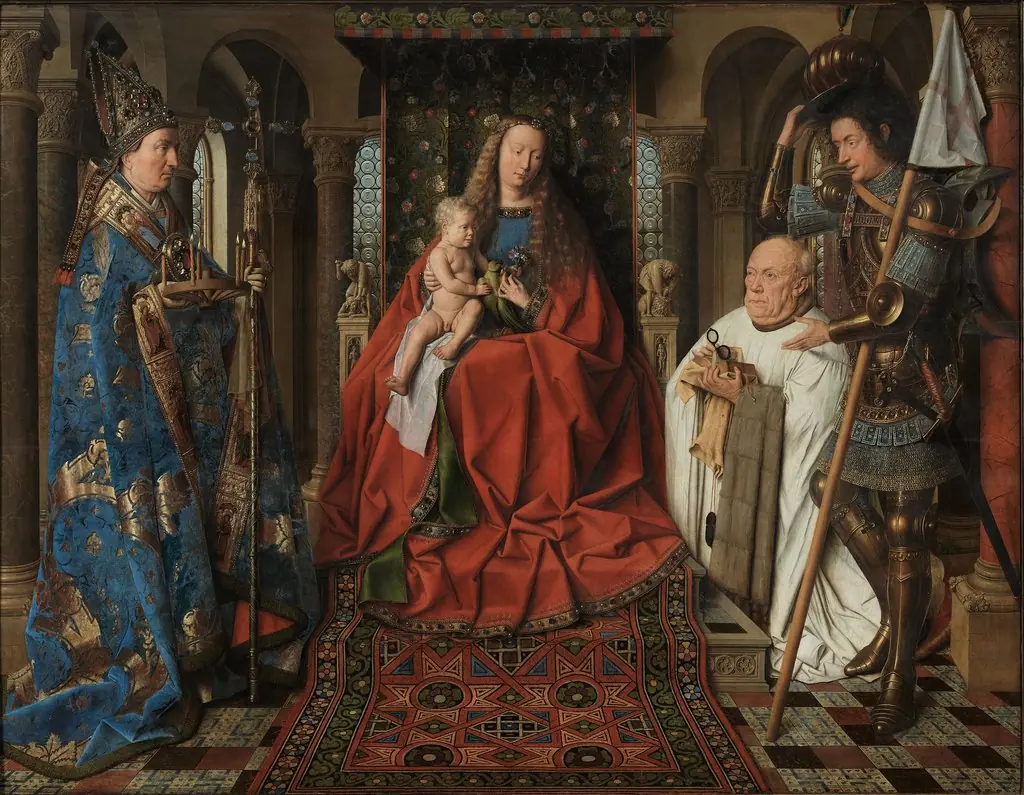
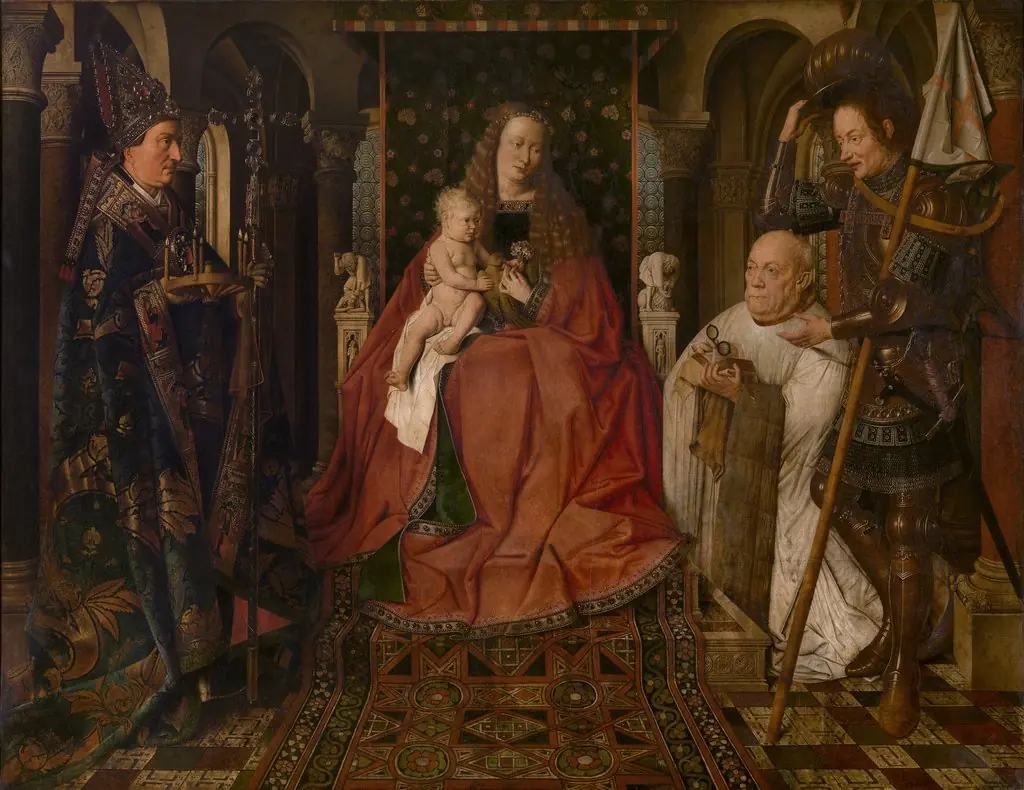 Madonna surrounded by Saint George, Saint Donatianus of Reims and the Donor Canon Van der Paele
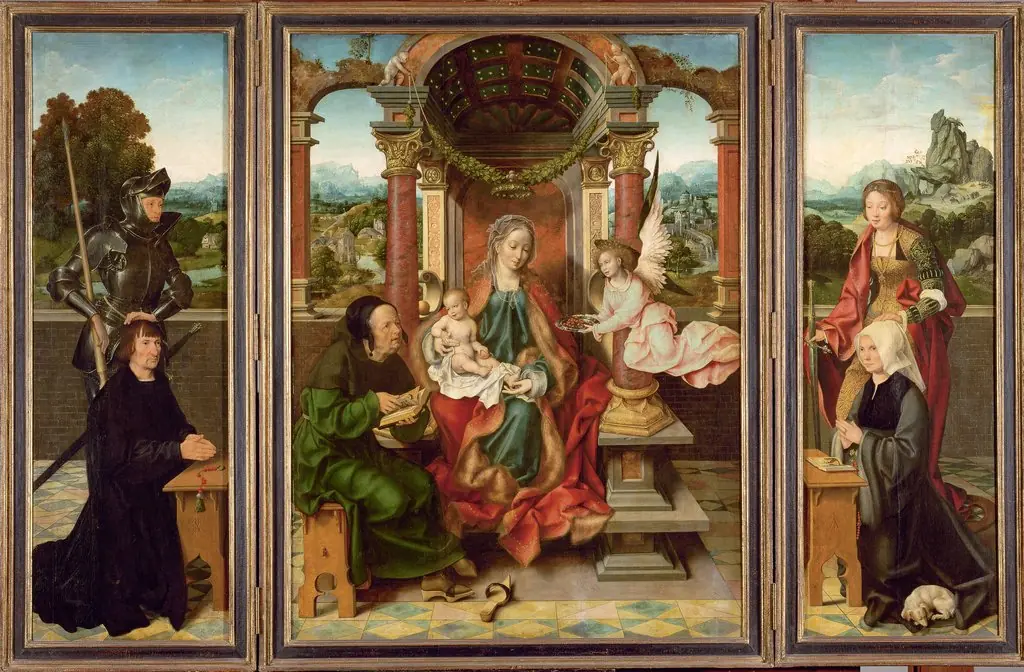 Winged Altar
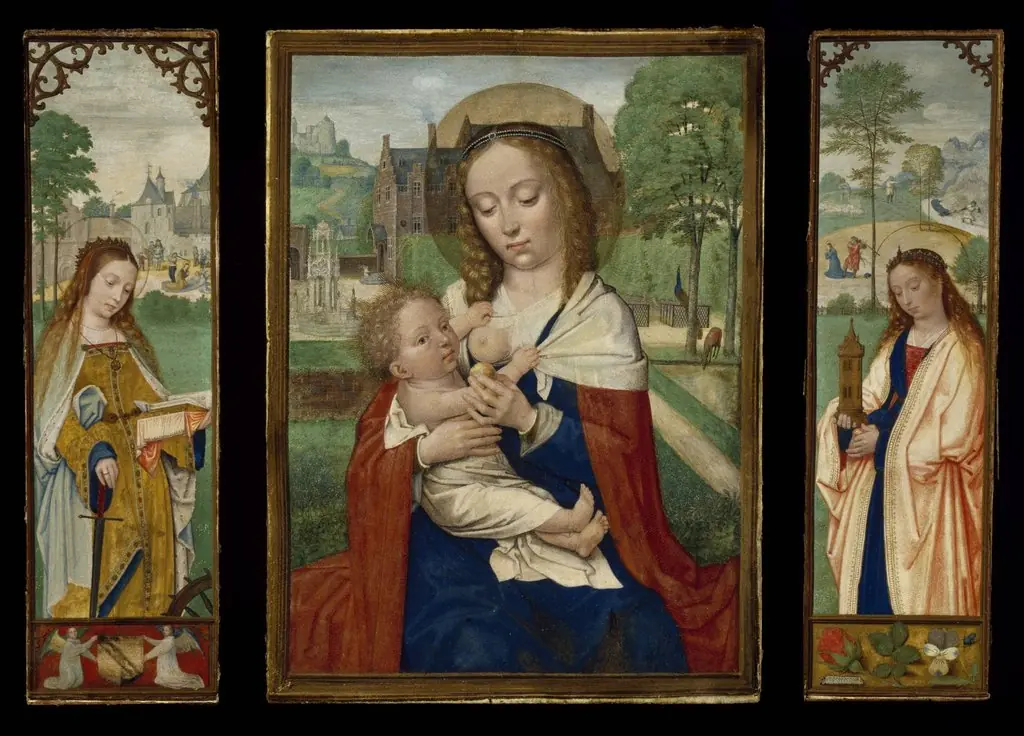 Triptych of Virgin and Child; Saints Catherine and Barbara
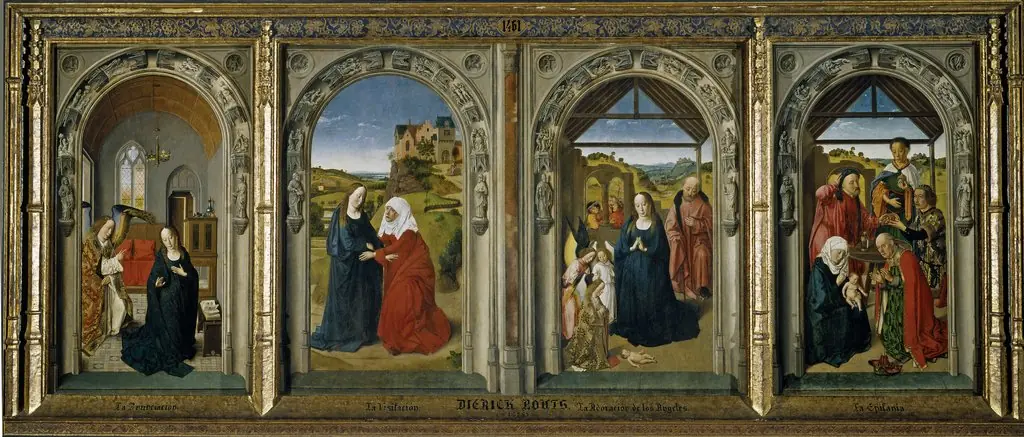 Triptych with Scenes from the Life of the Virgin
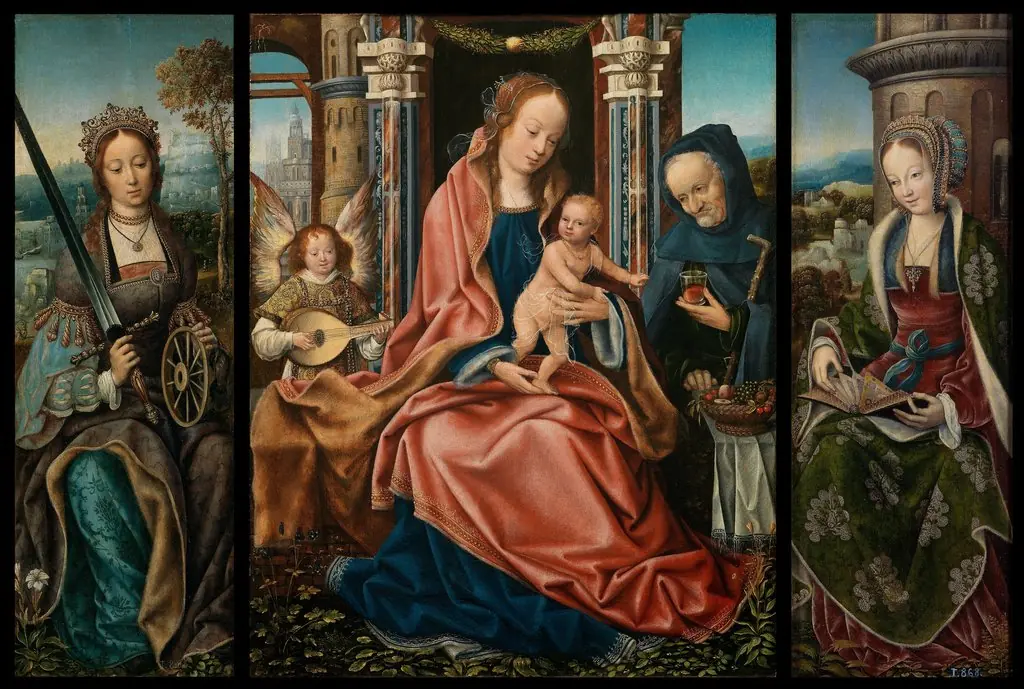 The Holy Family with a Musician Angel Saints Catherine and Barbara
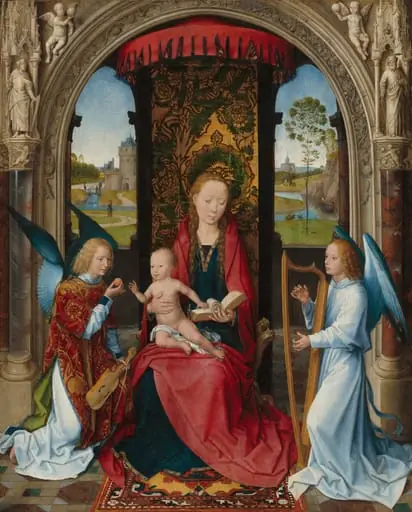 Madonna and Child with Angels
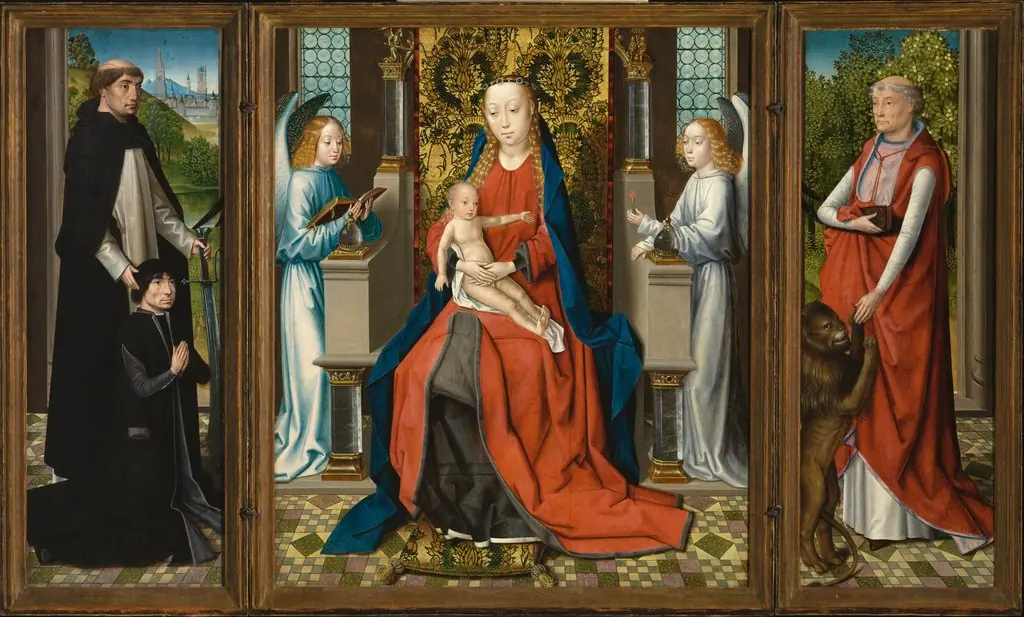 Triptych of Madonna and Child with Angels; Donor and His Patron Saint Peter Martyr; and Saint Jerome and His Lion