Artwork
Peasants Resting before an Inn
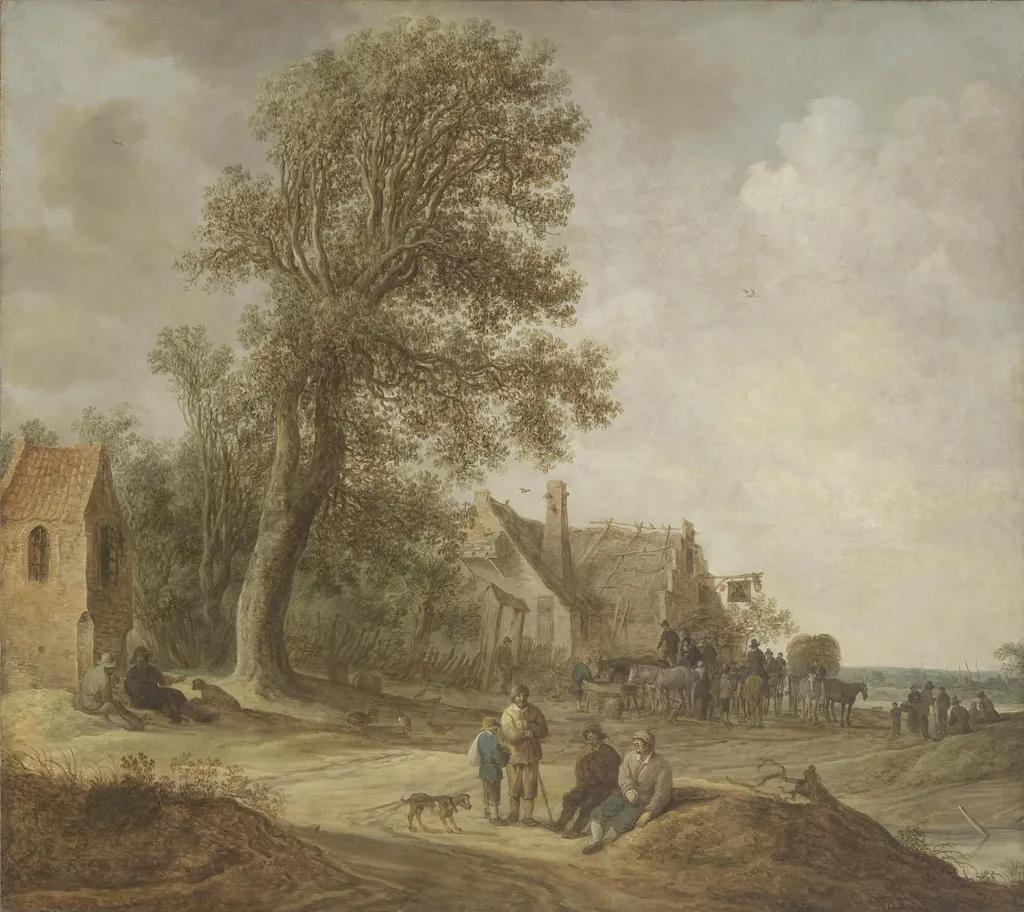
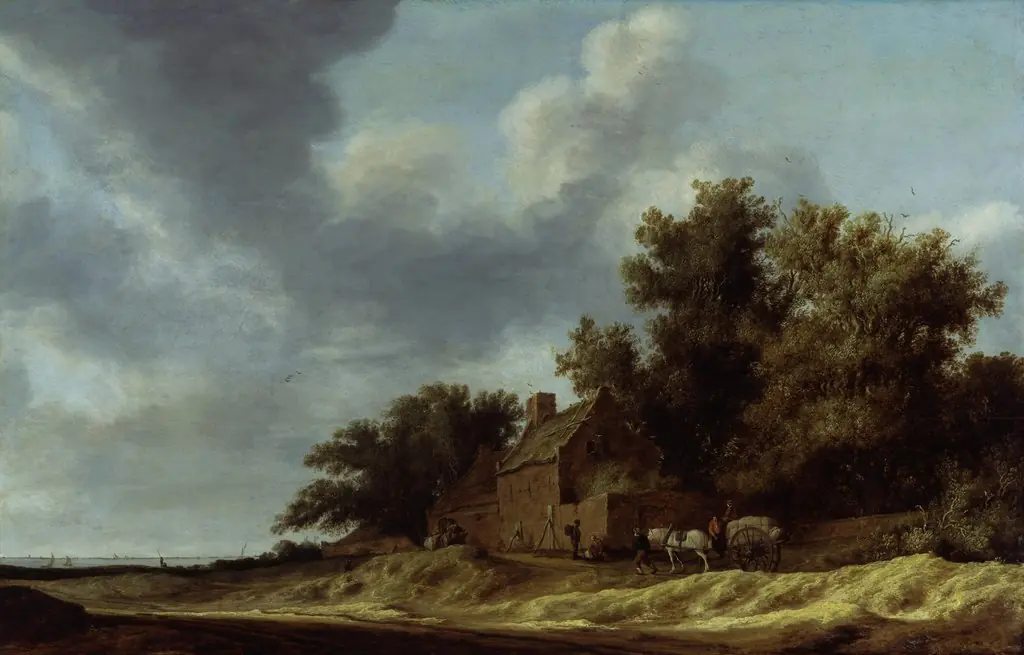
Peasants Resting before an Inn is an oil painting by the Dutch Golden Age artist Jan van Goyen. It dates from 1643 and is held in the collection of the Philadelphia Museum of Art.
About this work
Overview
8 cm, the work is a landscape genre painting that depicts a rural gathering of peasants, travelers, and animals near an inn beneath a large, spreading tree.
Peasants Resting before an Inn is an oil painting on canvas by the Dutch artist Jan van Goyen (1596-1656), dated to 1643. Measuring 122.2 by 136.8 cm, the work is a landscape genre painting that depicts a rural gathering of peasants, travelers, and animals near an inn beneath a large, spreading tree. The painting is held in the collection of the Philadelphia Museum of Art, where it entered through the William L. Elkins Collection in 1924 after passing through the hands of notable collectors including Charles Sedelmeyer. As a mature work by one of the leading Dutch landscape painters of the seventeenth century, the painting exemplifies Van Goyen's ability to merge naturalistic observation with atmospheric effect, securing his place in the canon of Dutch Golden Age art.
Subject & Meaning
The scene presents a moment of rural sociability and rest. At the composition's center, a massive tree with a full canopy dominates the left side, beneath which four men and a boy gather near a dirt path, accompanied by a standing dog. To the left, two figures sit beside a stone building with a red-tiled roof, while to the right a larger group clusters before a thatched-roof inn marked by a hanging sign. Horses and a hay cart populate this area, suggesting the inn functions as a waypoint for travelers and laborers alike. A small body of water appears in the lower right corner, and the background opens onto a flat horizon with scattered clouds. The iconography of peasants at leisure before an inn belongs to a tradition of Dutch genre-inflected landscape that celebrates ordinary life without overt moralizing. The gathering suggests communal respite rather than narrative drama, the inn serving as a liminal space between labor and rest, travel and arrival.
Technique & Style
Van Goyen executed the work in oil on canvas, employing a muted palette of browns, grays, dull greens, and soft ochres that captures the diffused light of an overcast day. The brushwork demonstrates careful attention to the textural details of the tree and architecture, while the sky and distant areas receive looser, more atmospheric handling. Gentle shadows cast across the ground enhance the sense of natural light filtering through cloud cover. The composition is structured around the large tree as a central anchor, with pathways and groupings of figures leading the eye across the canvas. This approach reflects Van Goyen's characteristic method of organizing complex rural scenes through tonal harmony and controlled value relationships rather than through coloristic brilliance. The painting's surface and condition have been preserved well enough to retain these nuanced tonal transitions that define his mature style.
History & Provenance
The painting is firmly dated to 1643, placing it in Van Goyen's mature period when he had fully developed his distinctive approach to landscape. Its provenance includes ownership by the prominent collector Charles Sedelmeyer, followed by William Lukens Elkins, after whose death the work entered the Philadelphia Museum of Art in 1924 as part of the William L. Elkins Collection. The museum's records list the work under its current title and attribute it to Van Goyen without dispute. While specific exhibition history is not documented in the available sources, the painting's presence in major American collections since at least the early twentieth century indicates its sustained recognition among collectors and institutions.
Context
Van Goyen was active in Leiden and The Hague throughout his career, working during the decades when Dutch landscape painting established itself as a major independent genre. The early 1640s saw him at the height of his productivity and influence, producing numerous landscapes that combined naturalistic observation with subtle atmospheric effects. Critical reception of his work has consistently emphasized his tonal approach and his ability to convey mood through limited palettes and careful attention to light. Scholarship has placed Van Goyen within the broader context of Dutch Golden Age painting, noting his influence on subsequent generations of landscape artists and his role in elevating the genre from background element to primary subject. The dating of Peasants Resting before an Inn to 1643 positions it within this period of mature achievement, when Van Goyen had moved beyond the more colorful manner of his early training toward the restrained tonal harmonies that define his best-known works.
Legacy
The painting's afterlife is closely tied to its residence in the Philadelphia Museum of Art, one of the major American repositories of European painting. Its inclusion in the Elkins Collection, formed by one of Philadelphia's prominent industrialists and philanthropists, reflects the broader pattern of Old Master collecting in the United States during the late nineteenth and early twentieth centuries. The work continues to serve as a representative example of Van Goyen's art in museum contexts and has been reproduced in various educational and commercial formats, indicating its persistent visibility in discussions of Dutch landscape painting. Its presence in a major public collection ensures ongoing access for scholars and the general public, sustaining its role in shaping understanding of Van Goyen's contribution to the development of European landscape art.
Own this work as a print
Artist & collection

Artist
Jan Josephszoon van Goyen (Dutch pronunciation: ; 13 January 1596 – 27 April 1656) was a Dutch landscape painter.

- Halt in Front of an Inn
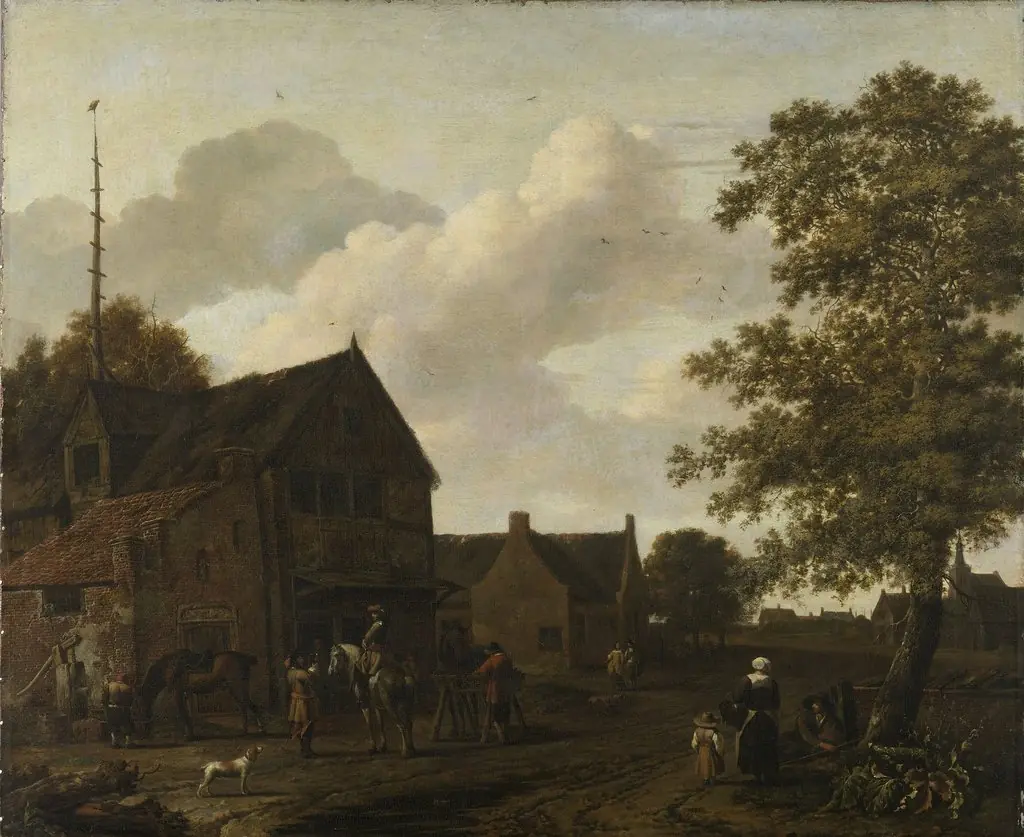 The watering place
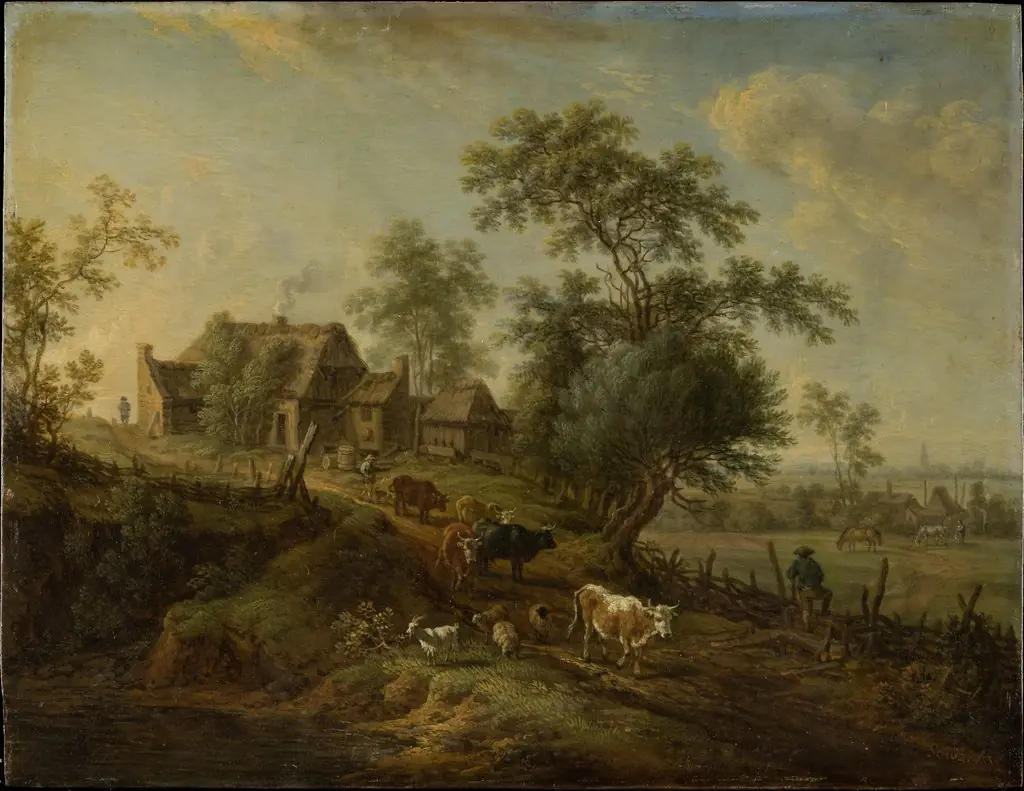 Landscape with Farm Animals on a Road
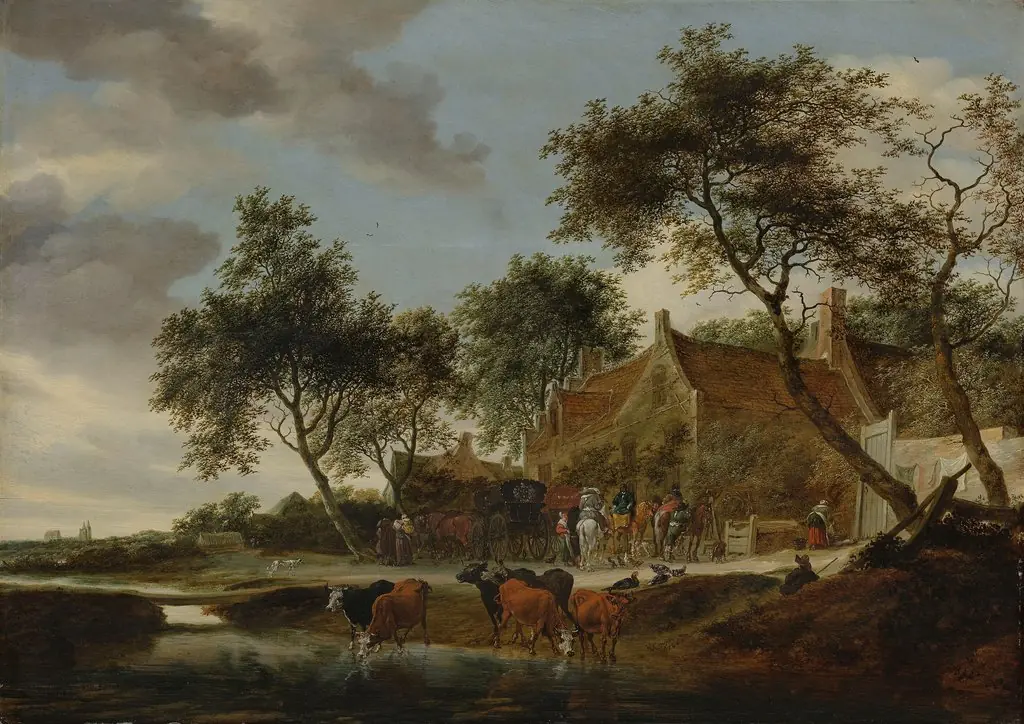 The watering place
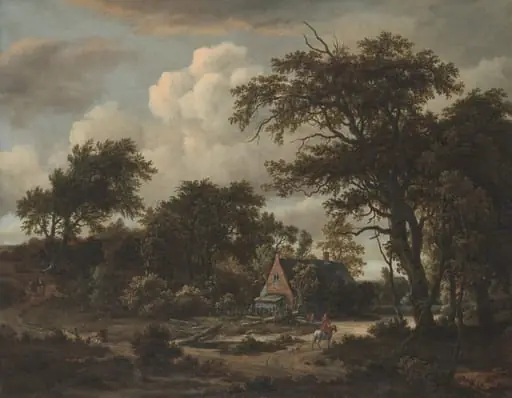 Wooded Landscape with Cottage and Horseman
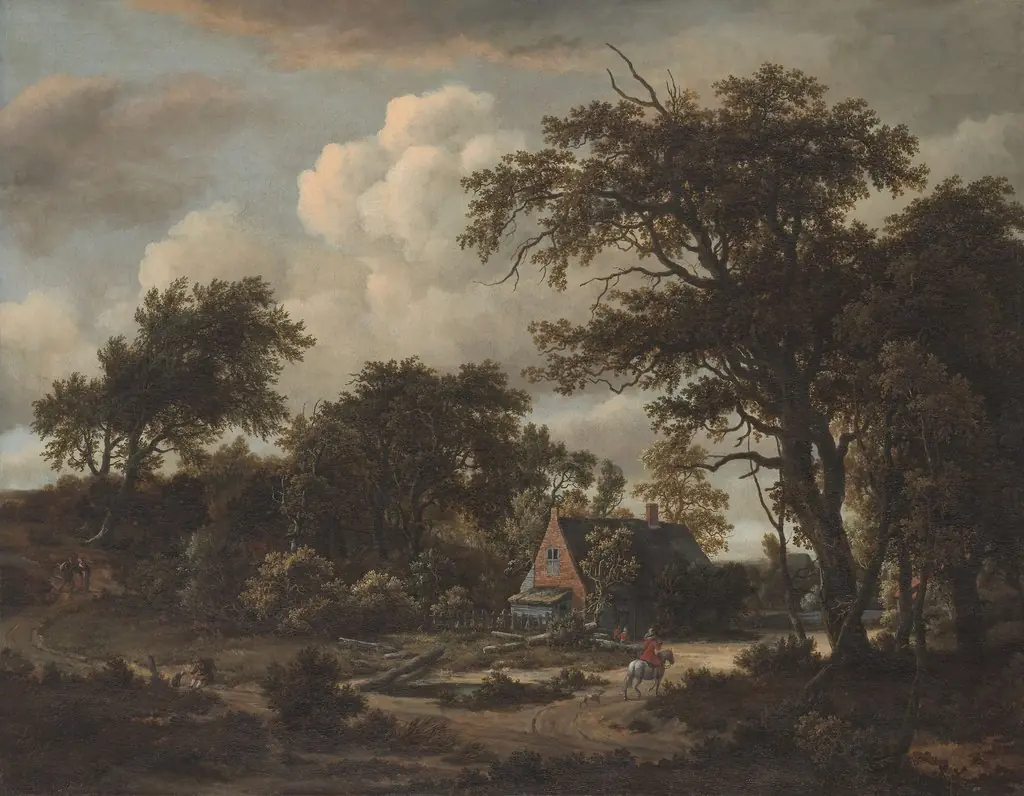 Wooded Landscape with Cottage and Horseman
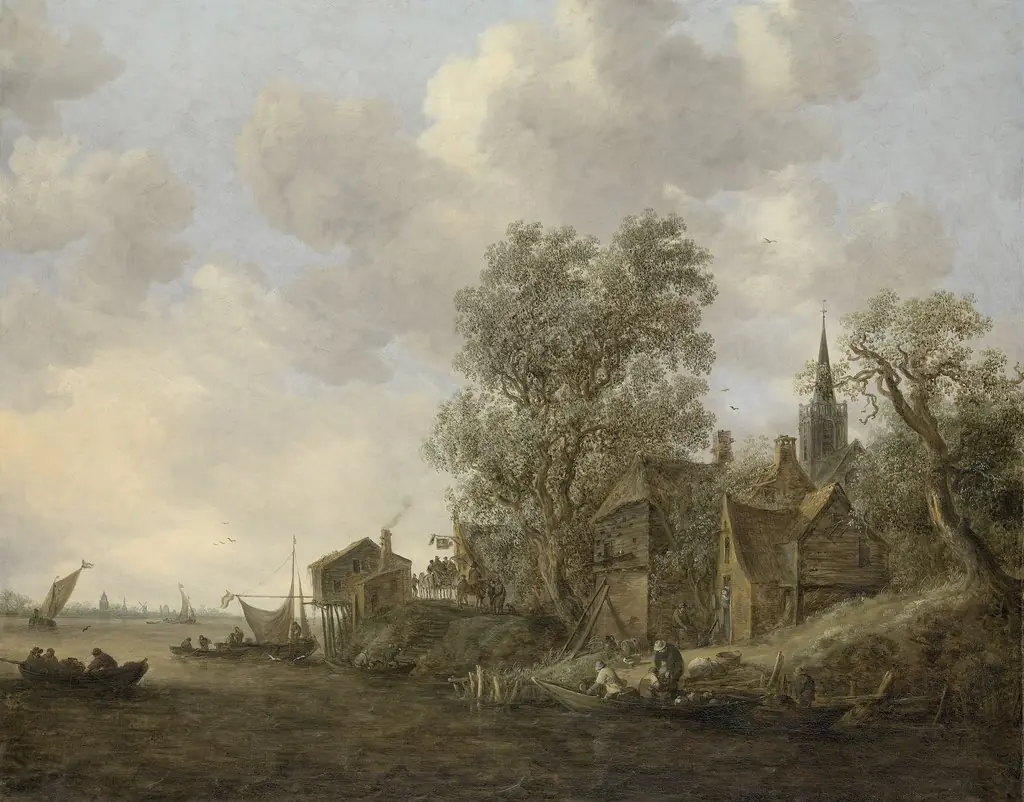 View of a town on a river
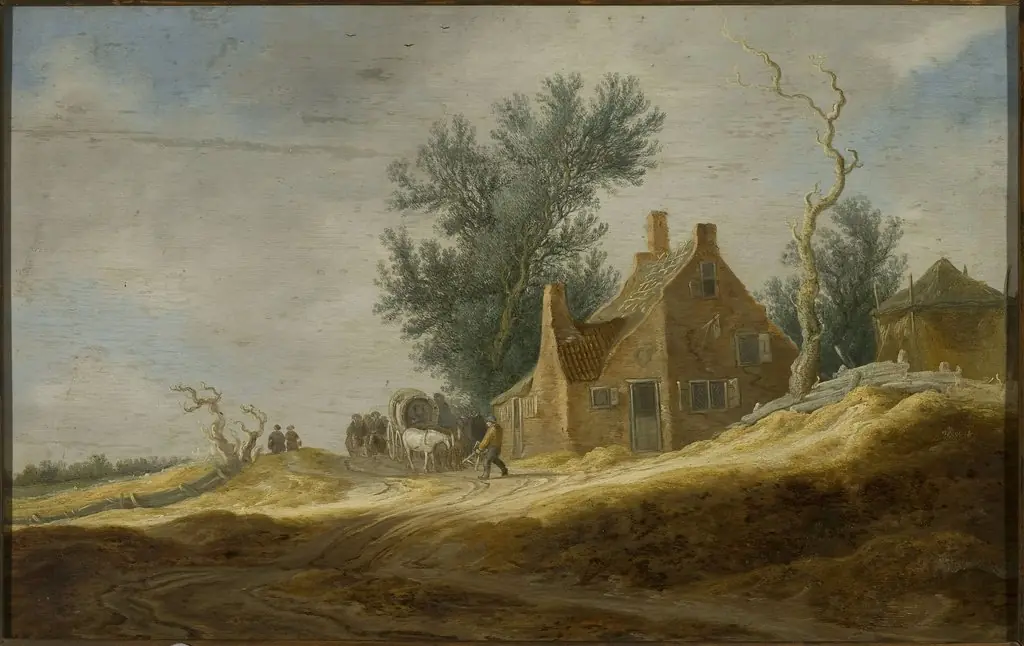 Dutch landscape
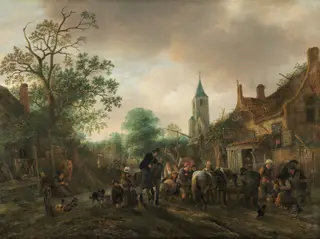 The Halt at the Inn
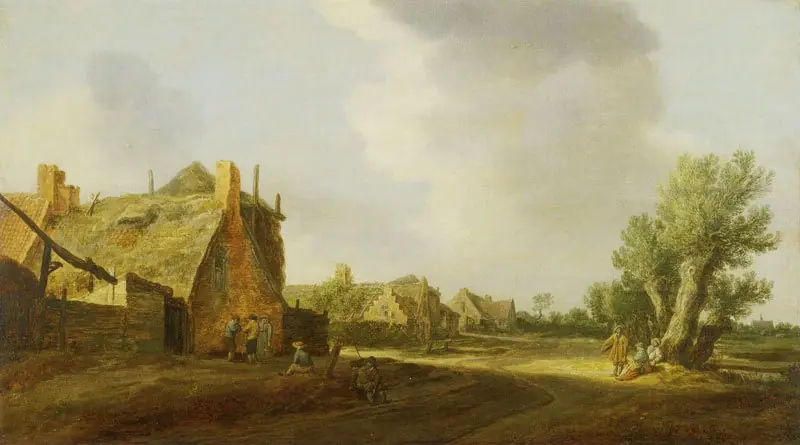 Street in a Village
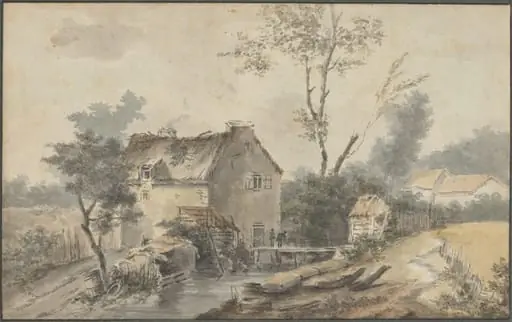 Mill with Bridge and Figures
 A Landscape with a Farmstead