Artwork
Don Miguel de Castro, Emissary of Congo
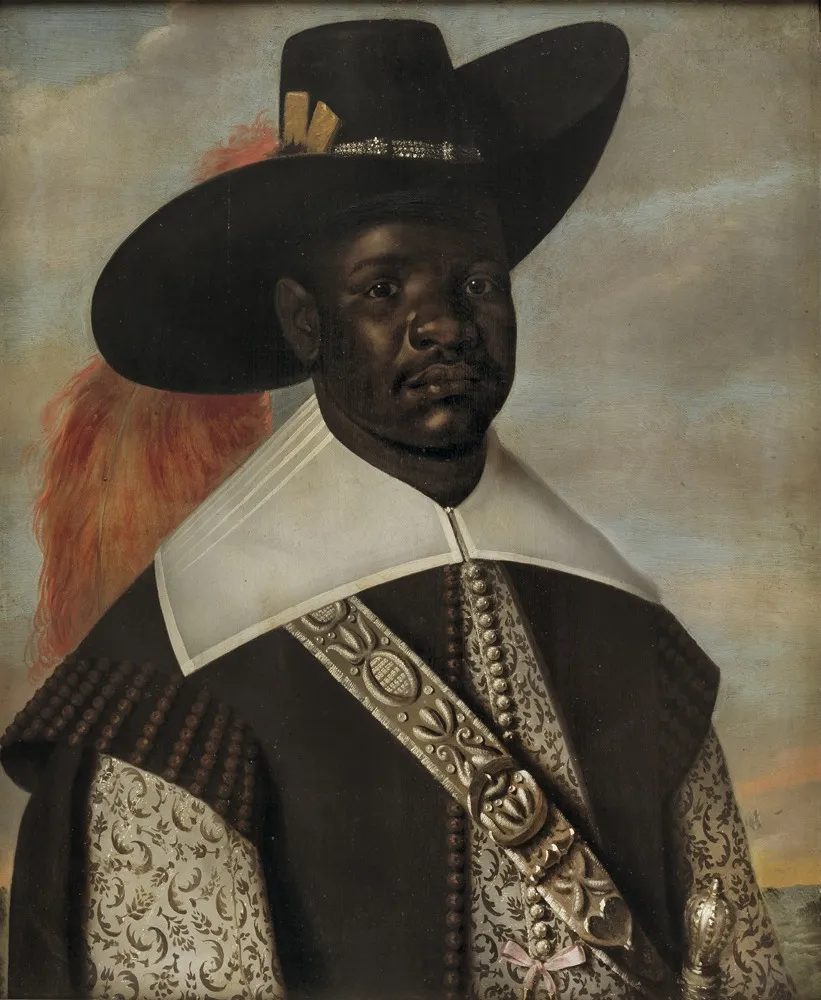
Don Miguel de Castro, Emissary of Congo is an oil painting by the Flemish Baroque painting artist Jaspar Beckx. It dates from 1643 and is held in the collection of the Statens Museum for Kunst.
About this work
Overview
Don Miguel de Castro, Emissary of Congo is a 1643 oil-on-panel portrait by the Dutch Golden Age painter Jaspar Beckx, or possibly his brother Jeronimus Beckx.
Don Miguel de Castro, Emissary of Congo is a 1643 oil-on-panel portrait by the Dutch Golden Age painter Jaspar Beckx, or possibly his brother Jeronimus Beckx. Measuring 72 by 62 centimeters, it depicts a Kongolese nobleman and diplomat who traveled to the Dutch Republic on a diplomatic mission. The painting is now held in the collection of the Statens Museum for Kunst in Copenhagen, where it entered through the Danish royal Kunstkammer. It is the only known seventeenth-century portrait from the Northern Netherlands of a Black man whose identity is documented with certainty, making it a work of exceptional historical and art-historical significance.
Subject & Meaning
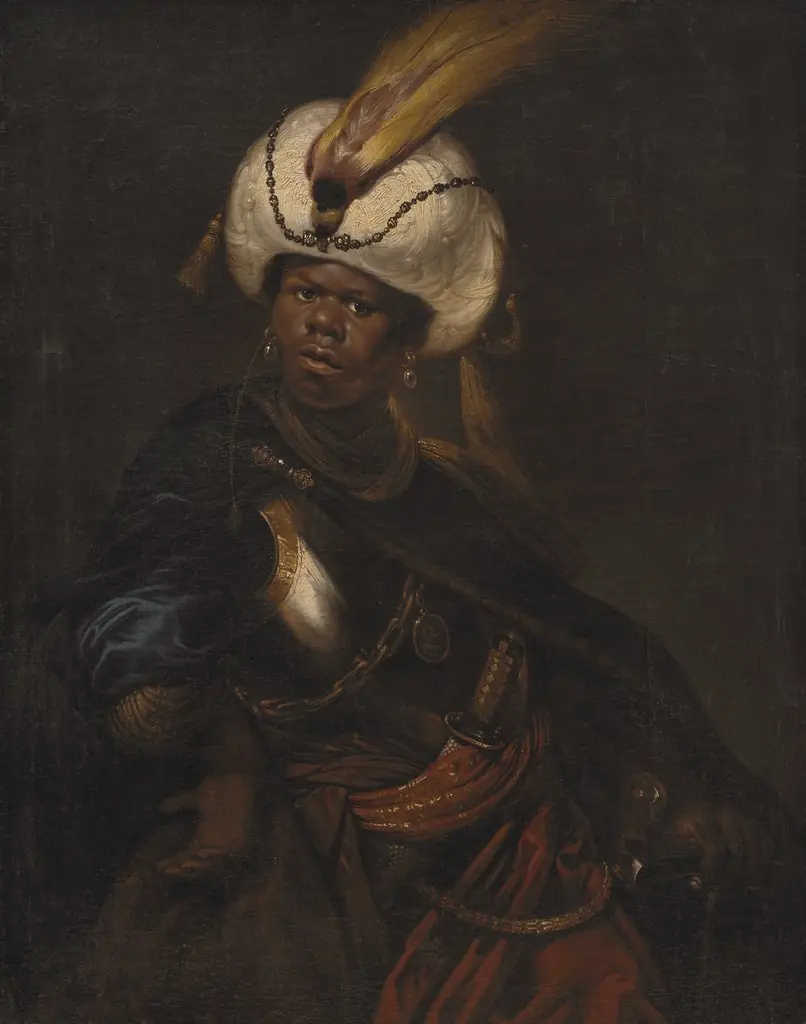
The sitter, Don Miguel de Castro, was a cousin of the Count of Soyo who was dispatched as an envoy to the Dutch Republic to seek mediation in a conflict between the count and King Garcia II of Kongo. The Dutch West India Company had conquered Loango-Angola from the Portuguese in 1641 with substantial aid from the Count of Soyo, making this diplomatic overture strategically important. In the portrait, de Castro wears clothing presented to him by Johan Maurice, Prince of Nassau-Siegen, the governor of Dutch Brazil, through which de Castro had traveled en route to the Netherlands. The wide-brimmed black hat with a gold band and sweeping red-orange feather, the large white flat collar, and the elaborately decorated dark garment with patterned silver sleeves and ornamental sash across the chest all signal his elevated status as a diplomatic representative. The direct, steady gaze and formal presentation assert his authority and dignity within the conventions of European portraiture.
Technique & Style
The painting is executed in oil on oak panel, a support that has proven significant for attribution. The paint surface is smooth with fine detail in the textiles and accessories, while the face is rendered with subtle tonal gradations. Light falls evenly from the left, modeling the hat brim and illuminating the collar and sash. The overall palette is restrained: black, white, silver-gray, with the single vivid accent of the red-orange feather. The composition crops the figure at the chest against a muted gray-blue sky with a hint of warm light near the horizon at the right. This handling aligns with Dutch portraiture of the period, though the specific attribution to either Jaspar or Jeronimus Beckx remains unresolved, as both brothers were active in Middelburg in 1643. The oak panel support was not readily available in Brazil, confirming a European execution and helping to distinguish the work from the Brazilian paintings of Albert Eckhout with which it was once grouped.
History & Provenance
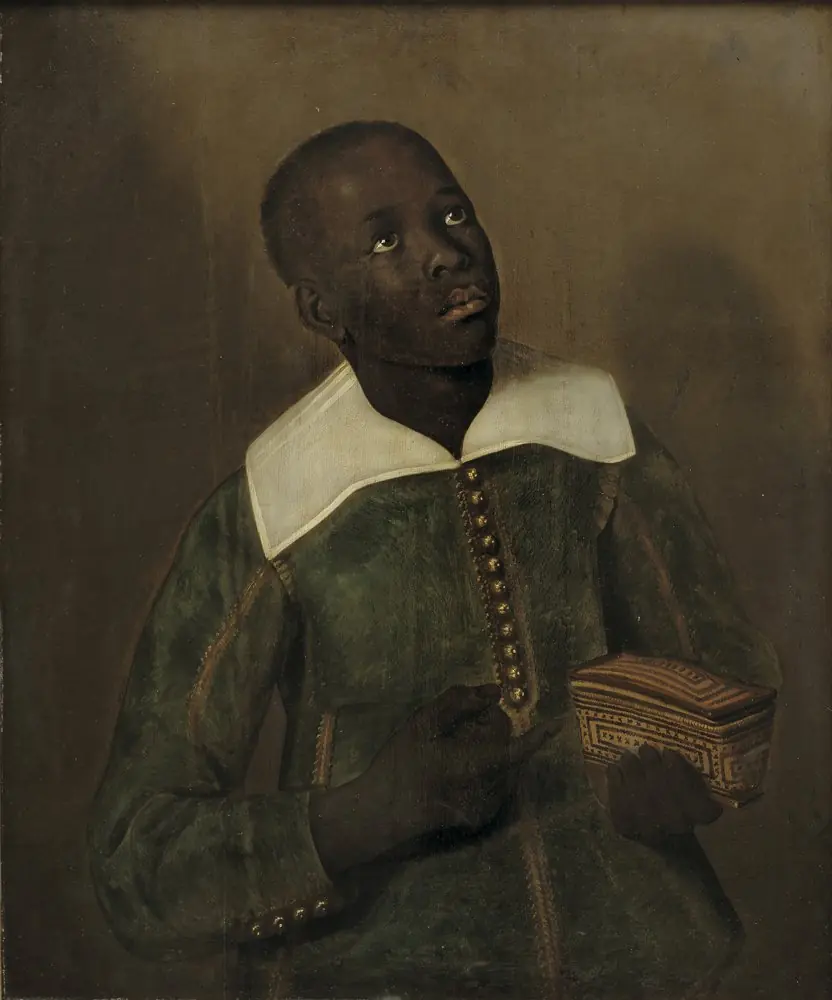
The portrait originated from a commission placed during de Castro's two-week stay in Middelburg in 1643. The directors of the Zealand chamber of the Dutch West India Company ordered six paintings from Jasper or Jeronimus Becx: two portraits of de Castro, one portrait each of his two servants, a painting in Portuguese clothes, and a full-length painting in Congolese dress. De Castro requested to take one of his portraits back to Africa. The paintings were paid for in May 1645. After Johan Maurice resigned his governorship of Dutch Brazil in early 1644, he visited Middelburg in October 1644 and received the portrait of de Castro and those of two servants. He subsequently donated these three portraits, along with twenty Brazilian paintings by Albert Eckhout, to King Frederick III of Denmark. The portraits entered the Danish royal Kunstkammer and later passed to the Statens Museum for Kunst in Copenhagen. The work has been exhibited in shows including Black in Rembrandt's Time.
Context
The portrait emerges from a moment of intense Dutch-Kongolese diplomatic engagement in the Atlantic world. The Dutch West India Company's 1641 conquest of Loango-Angola and its reliance on the Count of Soyo created the conditions for this cross-cultural encounter. The mistaken earlier attribution to Albert Eckhout, whose Brazilian paintings accompanied the portraits to Denmark, persisted until documentary and technical evidence clarified the Beckx authorship. The fact that the sitter's identity is known with certainty distinguishes this work from other seventeenth-century European portraits of African individuals, which often remain anonymous. Scholarship by Katie Heyning, Alisa LaGamma, Mark Meuwese, and Gijs van der Ham has examined the portrait within frameworks of Dutch colonial expansion, African-European diplomatic relations, and the representation of Black subjects in European art.
Legacy
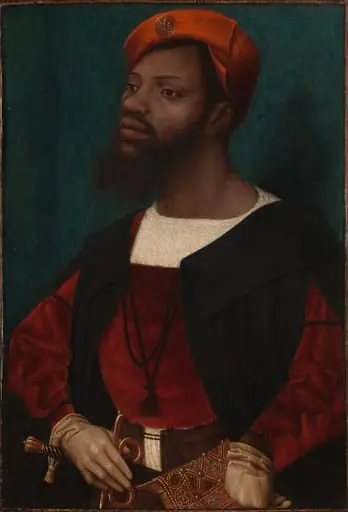
The portrait has acquired renewed cultural resonance in contemporary art and scholarship. Senegalese photographer Omar Victor Diop created a self-portrait in explicit reference to de Castro's image for his 2015 exhibition Diaspora, establishing a direct line of visual dialogue between seventeenth-century European portraiture and contemporary African diasporic identity. In 2008, a painting titled Portrait of a Black Man with a Sword was exhibited in Amsterdam and initially associated with this portrait, though it has since been determined to be by a different hand while remaining from the same period. The work continues to serve as a focal point for discussions about the presence and representation of Africans in early modern Europe, the complexities of diplomatic and colonial visual culture, and the recovery of historically marginalized subjects within European art history.
Artist & collection