Artwork
The Burning of Sodom
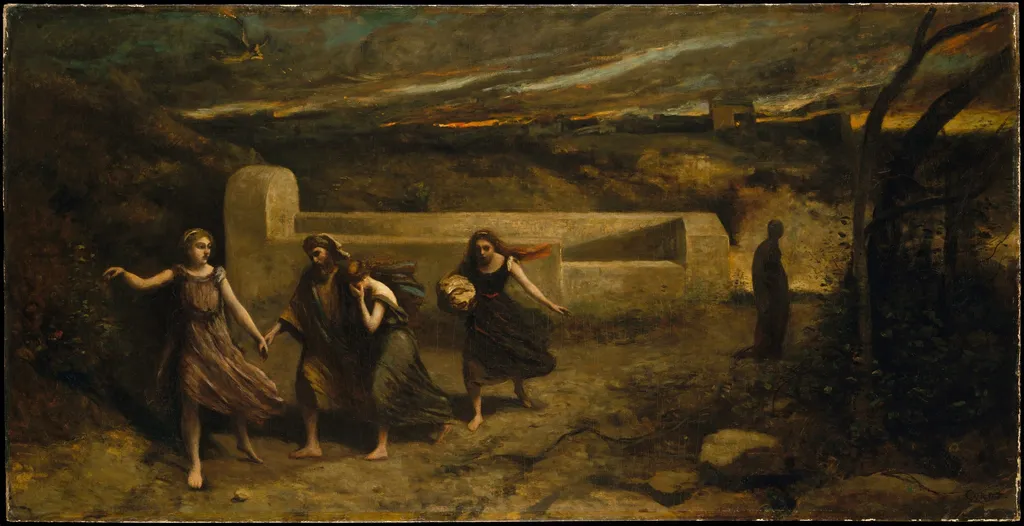
The Burning of Sodom is an oil painting by the Realist artist Jean Baptiste Camille Corot. It dates from 1850 and is held in the collection of the Metropolitan Museum of Art.
About this work
Technique & Style
No specific condition reports are cited in the cited sources.
Executed in oil on canvas in 1850, the work exhibits Corot’s characteristic handling of translucent glazes over a warm imprimatura, with softly blended passages and delicate, luminous highlights. The composition’s broad, atmospheric recession and muted tonalities align with the Barbizon manner, while the flickering flame and sulphurous glow are rendered through thin, scumbled layers that model form through light rather than line. The canvas support measures 92.4 cm in height by 181.3 cm in width. No specific condition reports are cited in the cited sources.
History & Provenance
The work was commissioned in 1850 and first exhibited at the Salon of 1857 under the title Le Déluge. It was painted by Jean-Baptiste Camille Corot during a period of renewed interest in biblical themes and landscape. By 1893, the painting had entered the collection of Louisine Havemeyer, a prominent American patron of French Impressionism.
She later donated it to the Metropolitan Museum of Art, where it has remained since its acquisition by the museum. The painting’s early exhibition history includes the Salon of 1844, indicating an initial public presentation prior to its final placement in Havemeyer’s collection.
The Burning of Sodom, an oil painting by Jean-Baptiste Camille Corot from 1850, is held by the Metropolitan Museum of Art. The work entered the museum's collection through Louisine Havemeyer, who is recorded as a former owner. Its documented exhibition history includes the Salon of 1844, the Salon of 1857, and the retrospective Corot 1796–1875.
Overview
Jean-Baptiste-Camille Corot, a French painter, created The Burning of Sodom in oil around 1850. This painting depicts a dramatic biblical event, showcasing a fiery landscape and several figures. The work reflects Corot's engagement with both historical themes and the evolving artistic styles of his period. It is currently held in the collection of The Metropolitan Museum of Art.
Subject & Meaning
The composition illustrates the biblical account of Sodom's destruction, featuring four figures within a desolate, rocky environment. Three individuals appear to be in motion, fleeing the catastrophe, while one figure stands still in the background, likely alluding to Lot's wife. The distant sky glows intensely with orange and yellow, conveying the devastating inferno consuming the city, emphasizing themes of judgment and escape.
Context
Executed during the mid-19th century, The Burning of Sodom exemplifies Corot's transitional role in art history. Known for bridging Neo-Classical traditions with the direct observation of nature (plein-air painting), Corot was also associated with the Realist movement. This work demonstrates his ability to interpret a classical narrative through a lens that incorporates both dramatic realism and a nascent appreciation for atmospheric effects.
Artist & collection
Artist
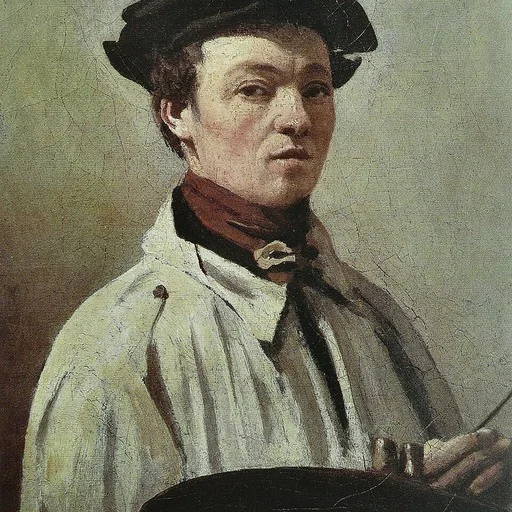
Jean-Baptiste-Camille Corot (UK: KORR-oh, US: kə-ROH, kor-OH; French:; 16 July 1796 – 22 February 1875), or simply Camille Corot, was a French landscape and portrait painter as well as a printmaker in etching.


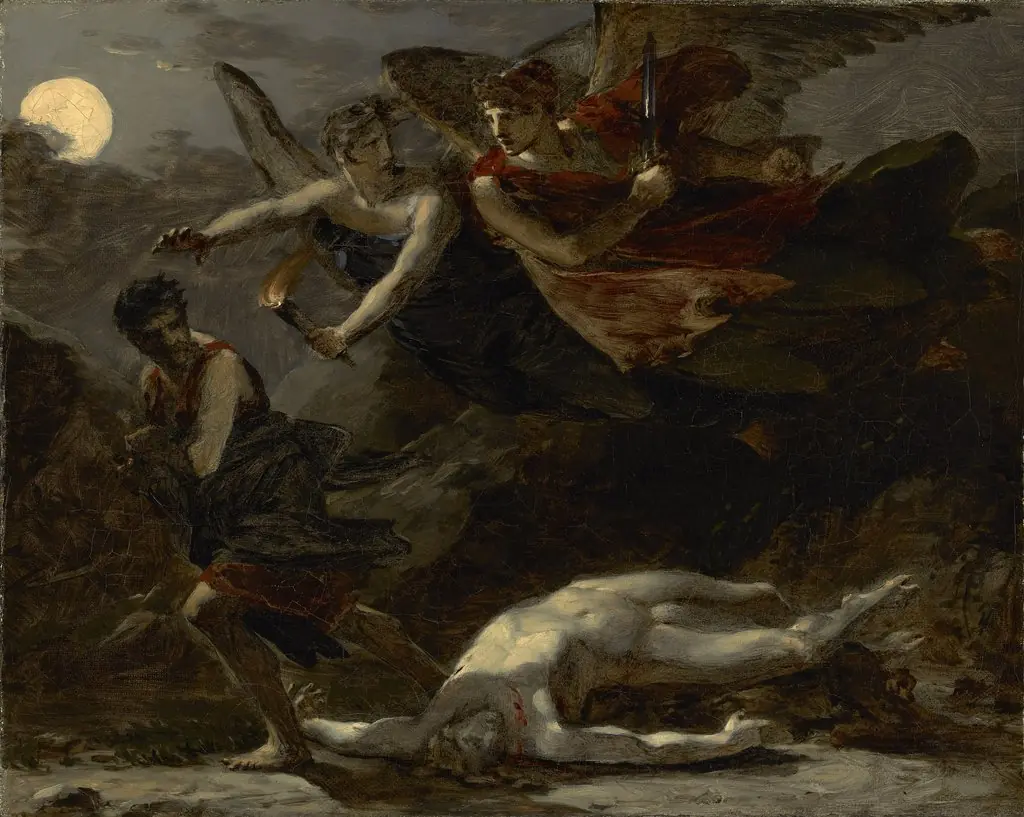 Justice and Divine Vengeance Pursuing Crime
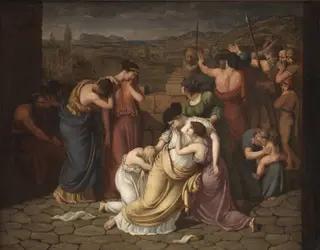 Andromache in Despair at the Sight of Hector's Body
 The daughters of Danaus
 Sleep
Sleep Morning star
 Cassandra in the Temple of Minerva
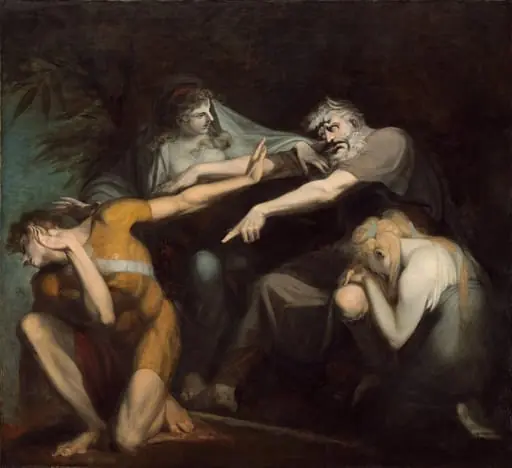 Oedipus Cursing His Son Polynices
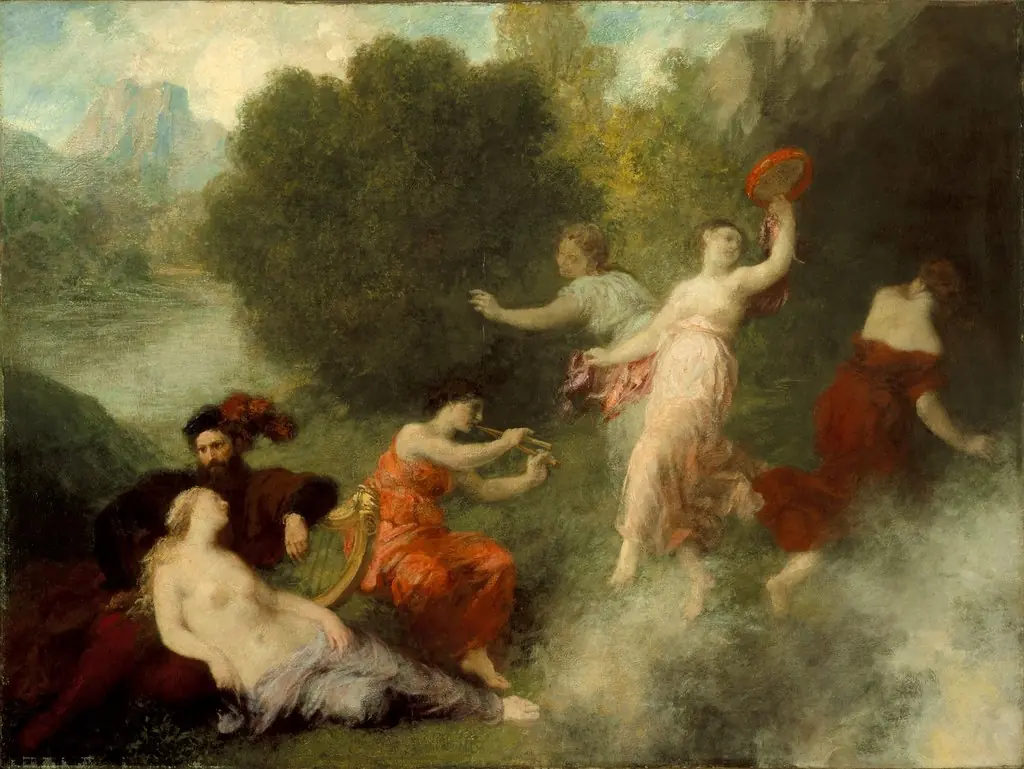 Tannhäuser on the Venusberg
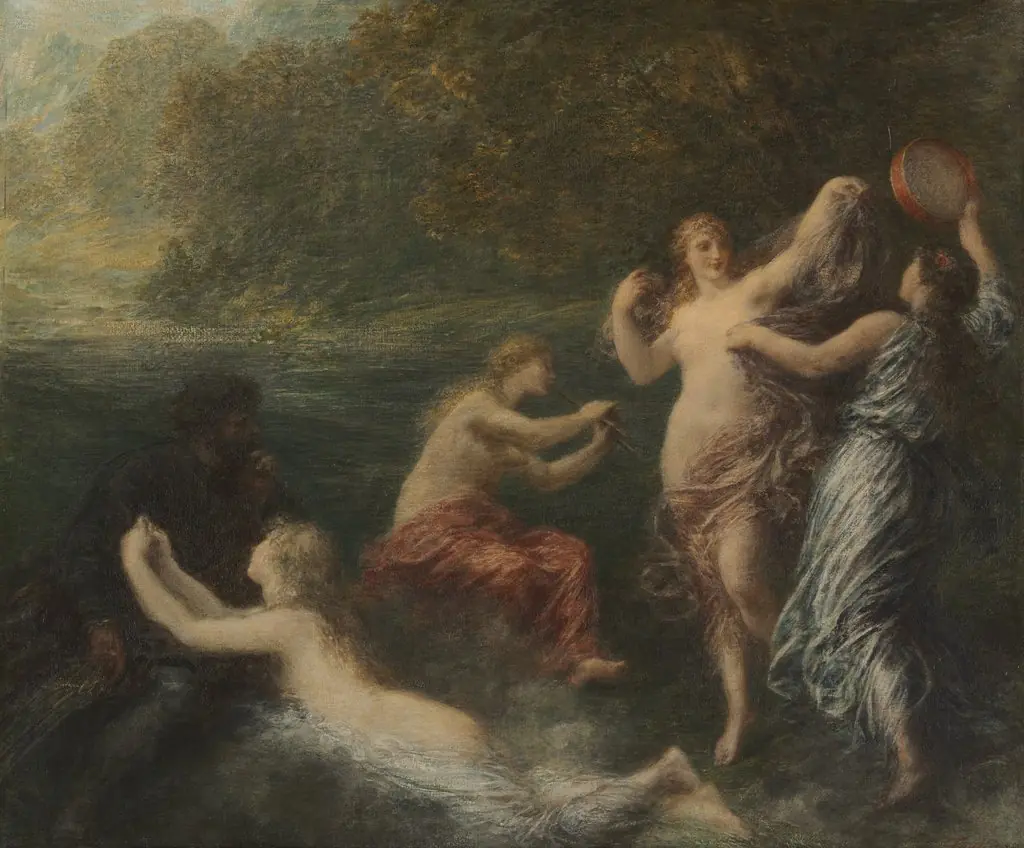 Tannhäuser
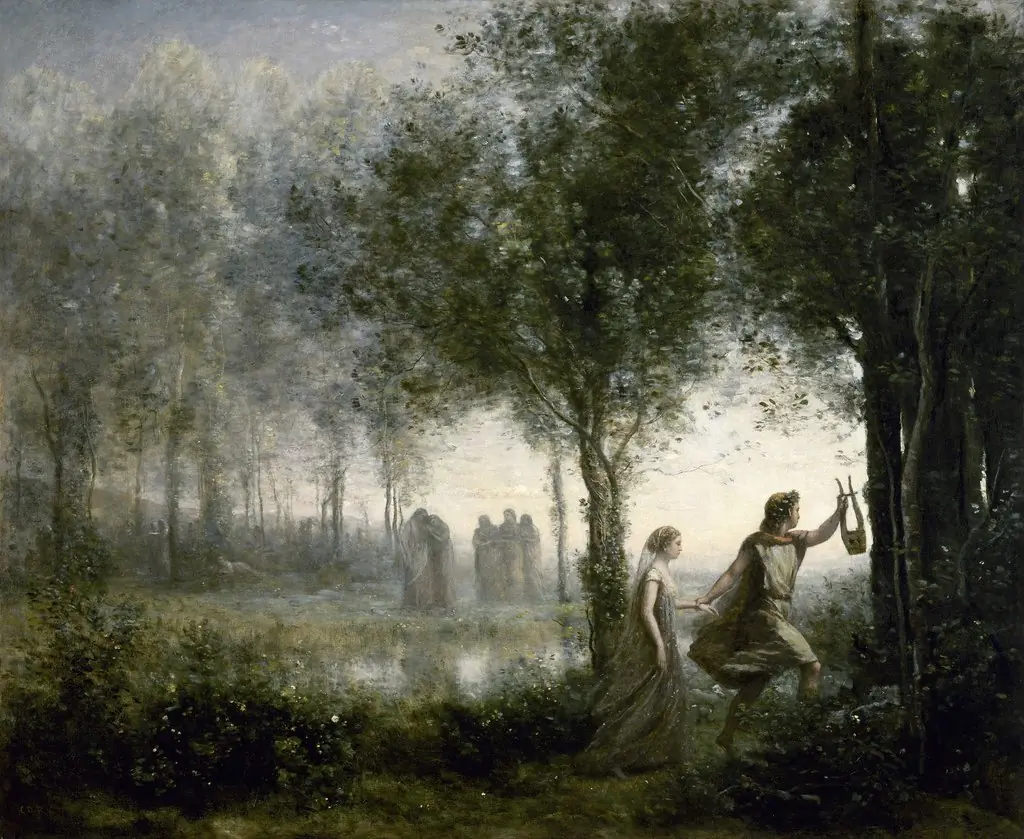 Orpheus Leading Eurydice from the Underworld
 The Dream of Belinda
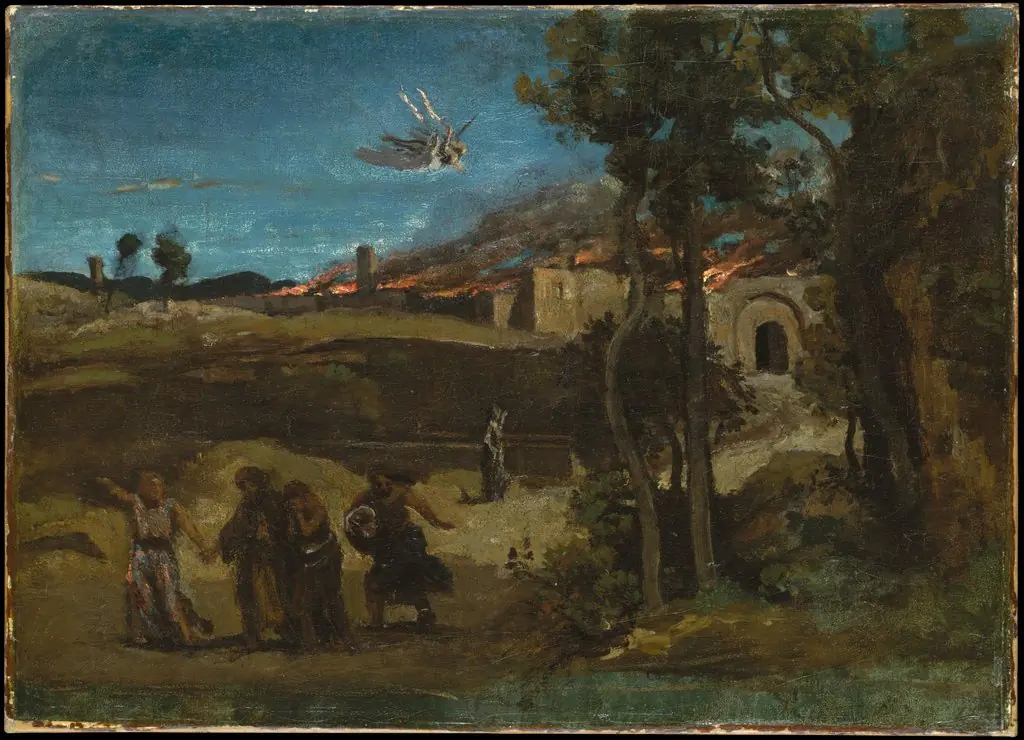
- Study for "The Destruction of Sodom"