Artwork
Guillaume Budé (1467–1540)
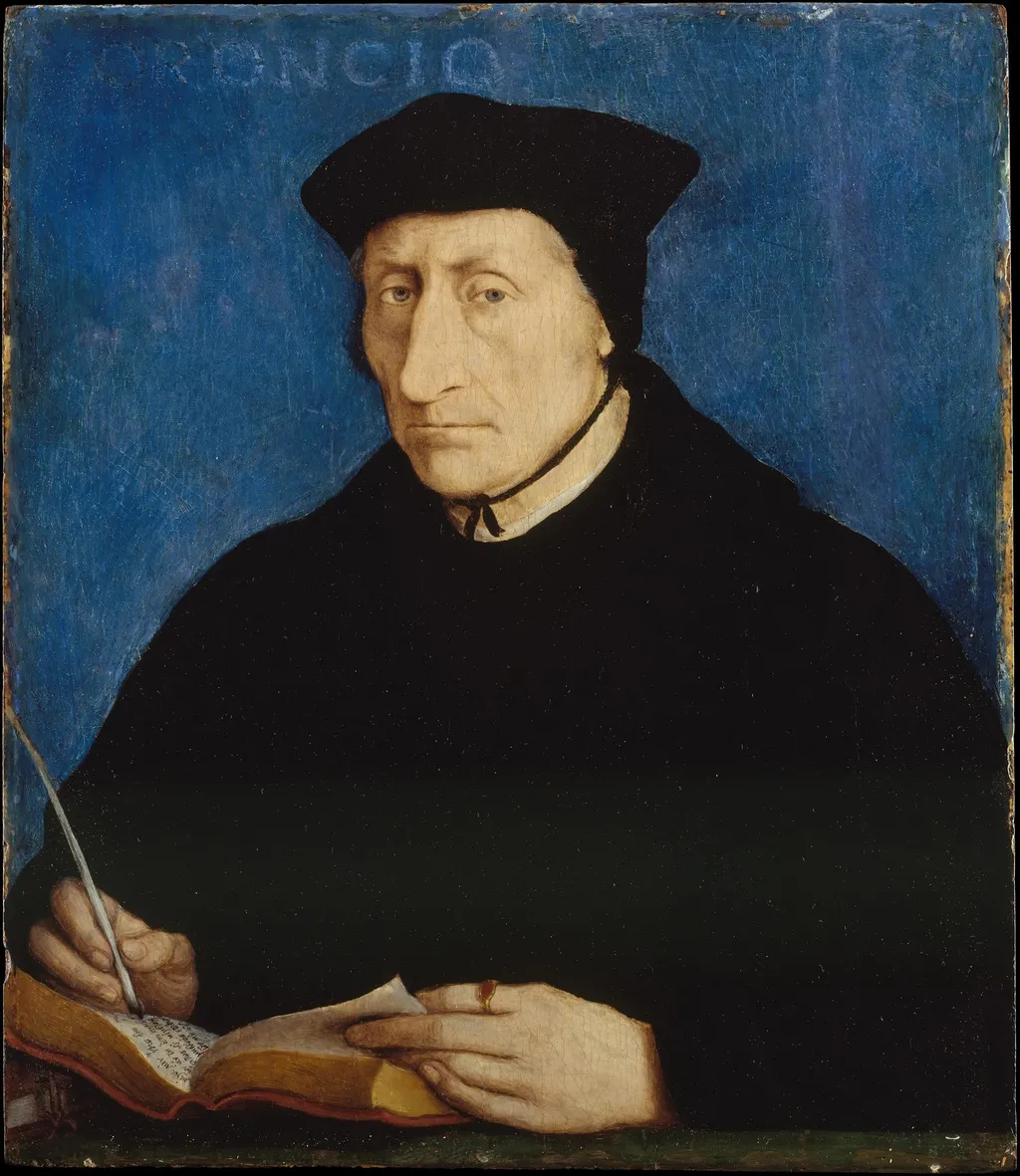
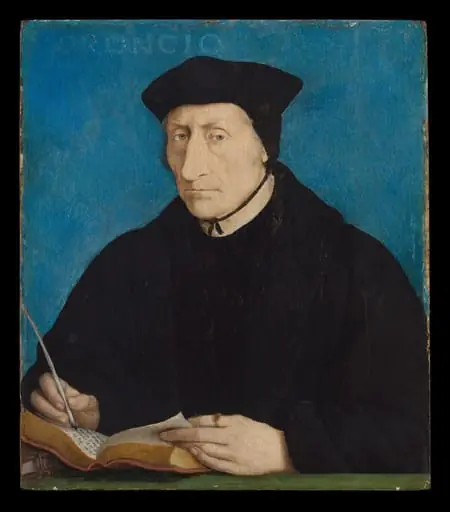
Guillaume Budé (1467–1540) is an oil painting by the French Classical Baroque artist Jean Clouet. It dates from 1536 and is held in the collection of the Metropolitan Museum of Art.
About this work
Subject & Meaning
The painting is a portrait depicting Guillaume Budé (1467–1540), the French Renaissance scholar and royal librarian, rendered by Jean Clouet in 1536.
The painting is a portrait depicting Guillaume Budé (1467–1540), the French Renaissance scholar and royal librarian, rendered by Jean Clouet in 1536. As a portrait, the work functions as a likeness of a named individual sitter rather than an allegorical or narrative composition, with the subject identified as a man. The image belongs to the tradition of humanist portraiture associated with the French court of Francis I, a context reinforced by the work's later inclusion in the exhibition "Francis I and the art of the Netherlands."
Executed in oil on panel at modest scale, the portrait presents Budé as a distinguished intellectual figure of his era, serving as a visual record of one of the leading classical scholars of the French Renaissance.
Technique & Style
The portrait of Guillaume Budé, executed in 1536, is an oil painting on a wooden panel. Clouet employed the conventional portrait technique of his time, building form through layered glazes of oil pigment to achieve subtle modeling of facial features and drapery. The work's panel support contributes to its durability, while the fine brushwork and attention to texture reveal a refined, naturalistic style typical of Northern Renaissance portraiture.
It is housed in the Metropolitan Museum of Art, where it has been exhibited in studies of early French portraiture.
History & Provenance
The portrait of the French humanist Guillaume Budé was executed in 1536 by the court painter Jean Clouet. It was probably commissioned by King Francis I, whose patronage is highlighted by the work's appearance in the exhibition "Francis I and the art of the Netherlands, Loan Exhibition of French Primitives and Objects of Art." The painting, rendered in oil on panel, measures 39.7 × 34.3 cm. It is held in the collection of the Metropolitan Museum of Art, New York, where it is catalogued among the museum's French Renaissance portraiture.
Overview
Painted in 1536 by Jean Clouet, this oil portrait depicts Guillaume Budé, the renowned French humanist scholar and librarian to King Francis I. The composition presents the sitter in a three-quarter view against a flat, deep blue background, a stylistic choice that isolates the figure and emphasizes his intellectual presence. Budé is dressed in a voluminous black robe and a dark cap, attire typical of the learned elite of the French Renaissance. His expression is serious and contemplative, reflecting his scholarly nature.
In his right hand, he holds a quill, poised as if in the midst of writing, while his left hand rests upon an open book, the text of which remains partially legible. These attributes serve as direct iconographic references to his life's work as a philologist and author of the 'De Asse'. The painting exemplifies Clouet's mastery of the French court portrait style, characterized by precise linear definition, restrained color palette, and a psychological depth that captures the sitter's dignity and intellect without idealization.
This work stands as a significant document of the French humanist movement and Clouet's contribution to the visual culture of the early 16th-century French court.
Own this work as a print
Artist & collection

Artist
Jean Clouet was a painter, draughtsman and miniaturist from the Burgundian Netherlands whose known active work period took place in France.

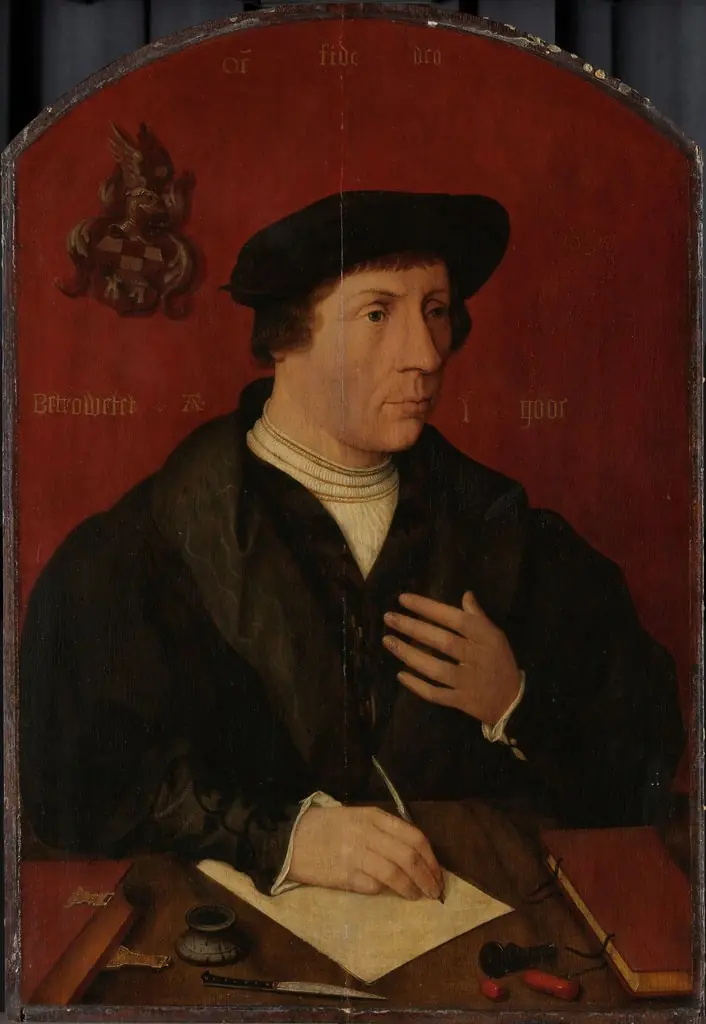 Portrait of a man
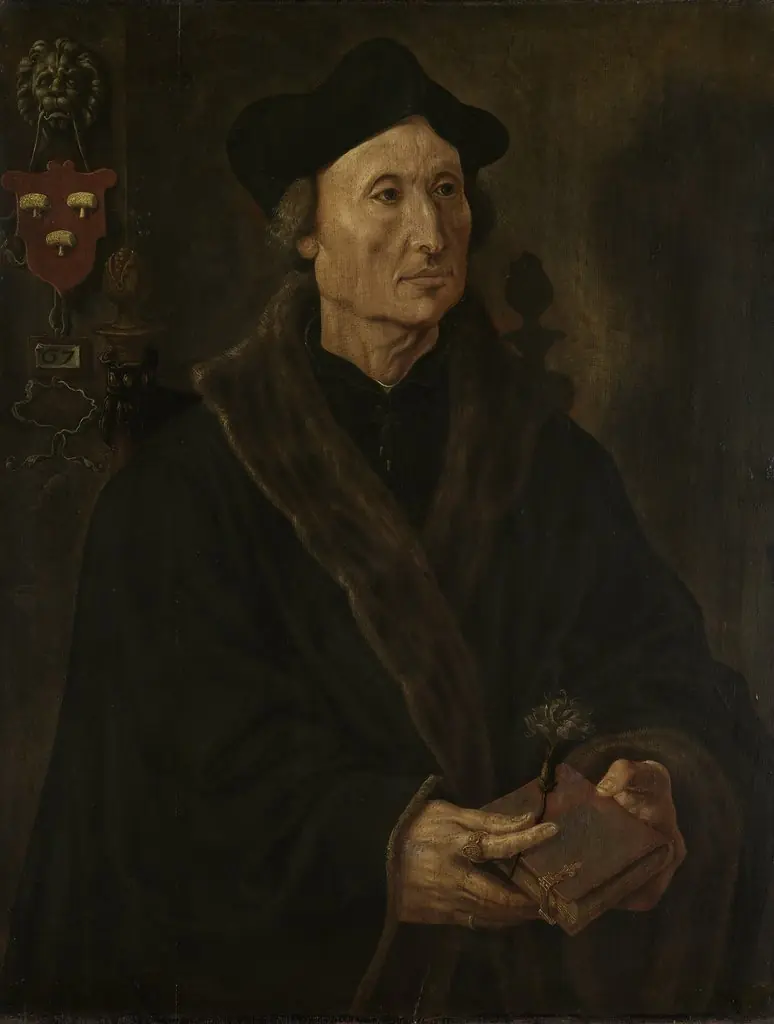 Portrait of Johannes Colmannus (1471-1538)
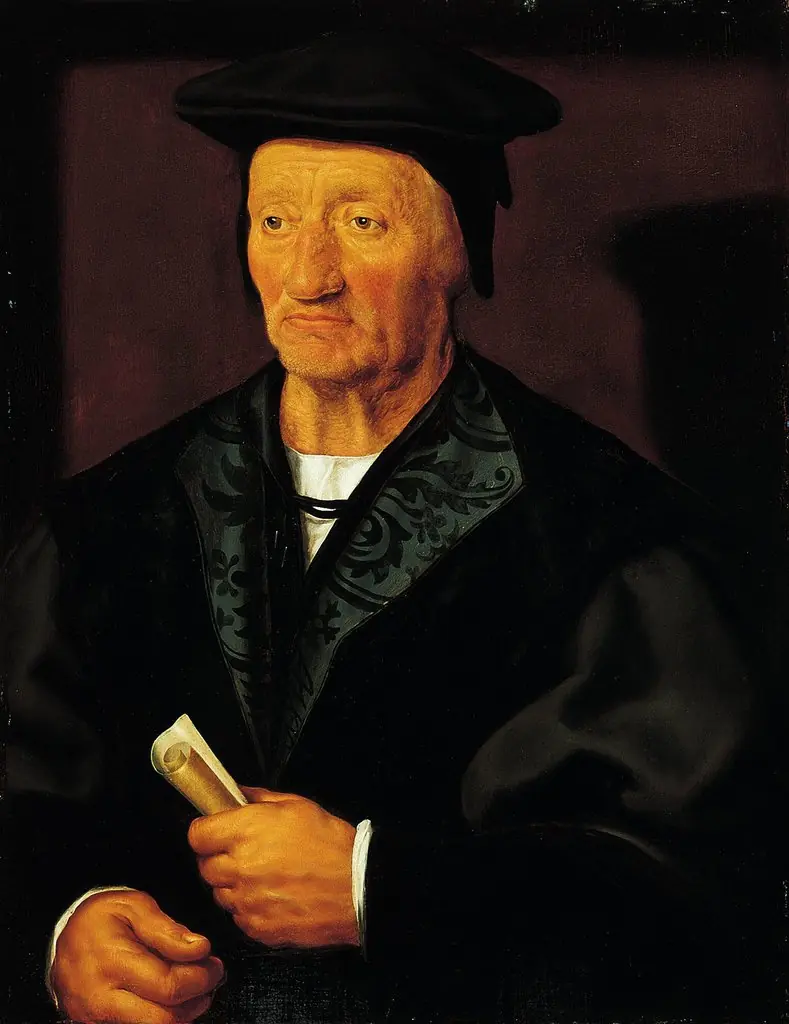 Portrait of Sebastian Münster
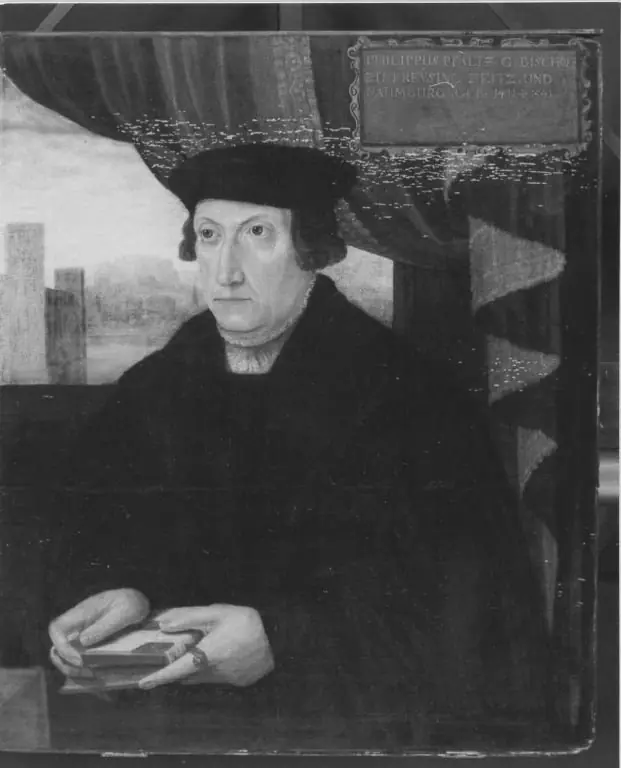 Portrait of Count Palatine Philip, Bishop of Freising
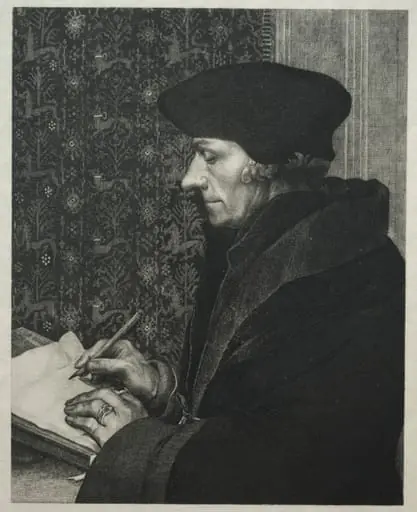 Erasmus, after Holbein
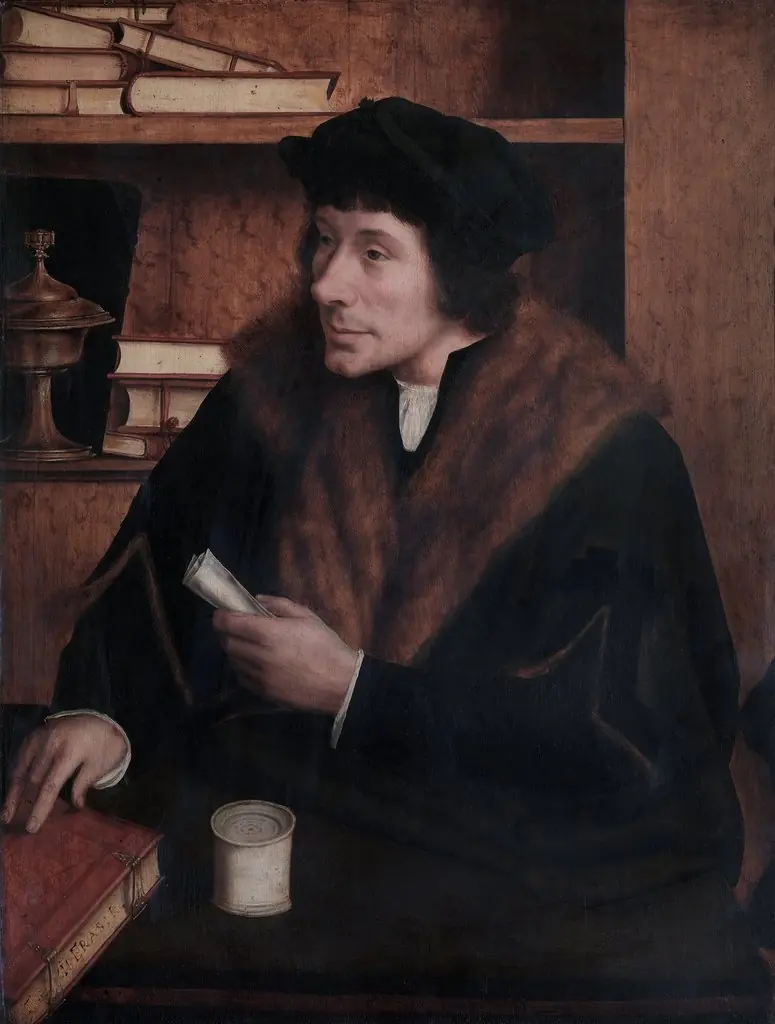 Pieter Gillis
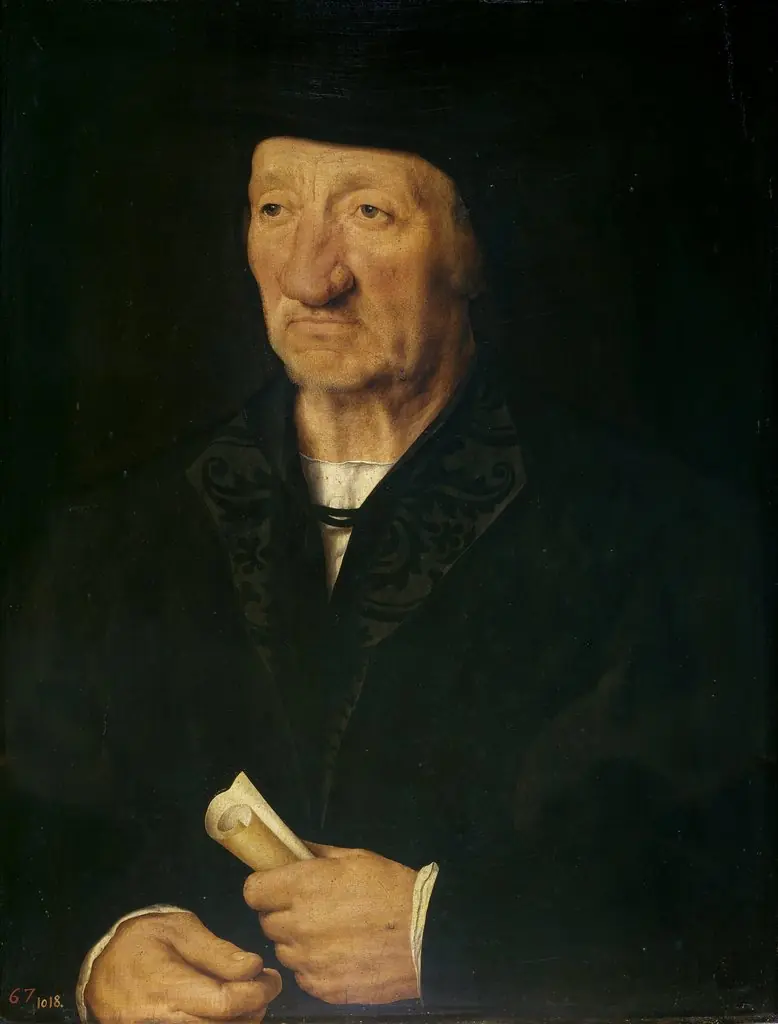 Portrait of an Old Man
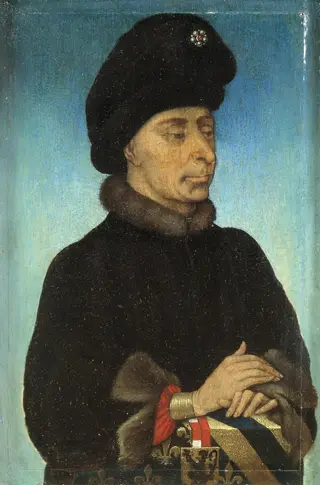 John the Fearless, Duke of Burgundy
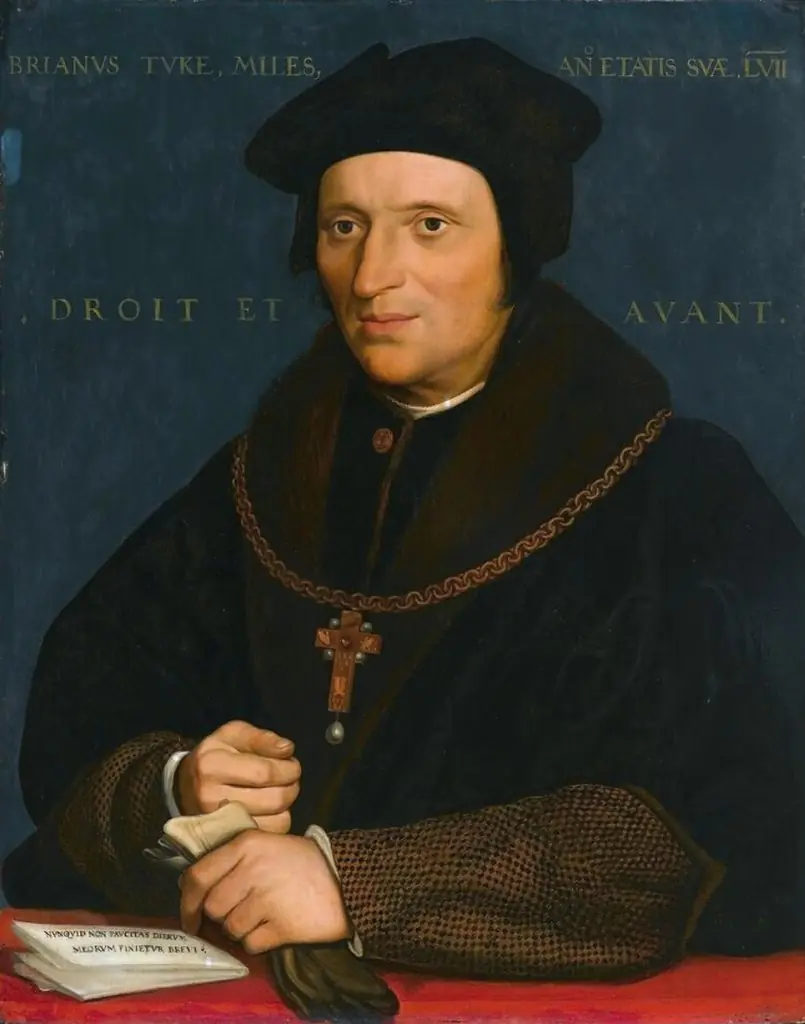 Portrait of Sir Bryan Tuke
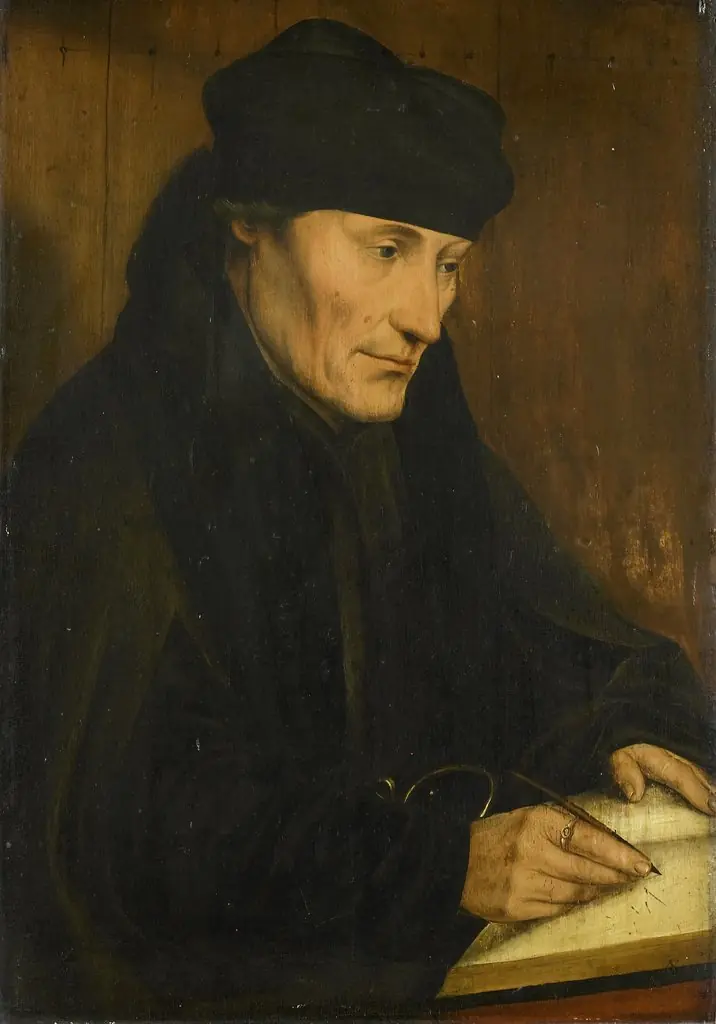 Portrait of Desiderius Erasmus (1469?-1536)
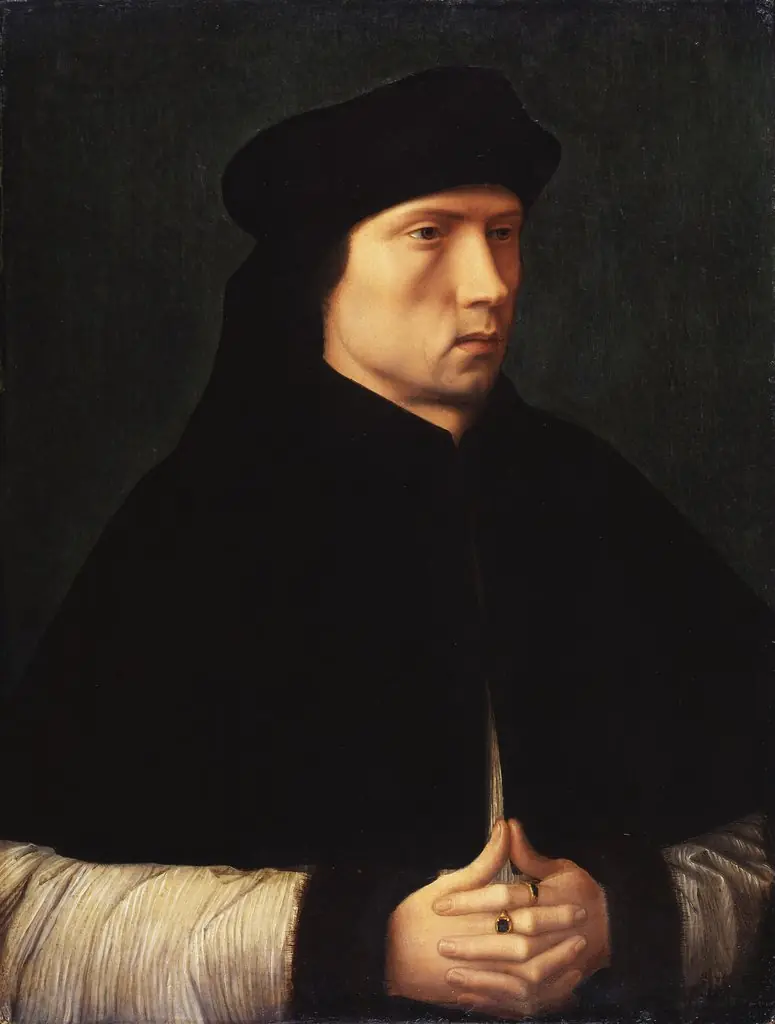 Portrait of a Theologian
- Portrait of Guillaume Budé