Artwork
Golding Constable's House, East Bergholt
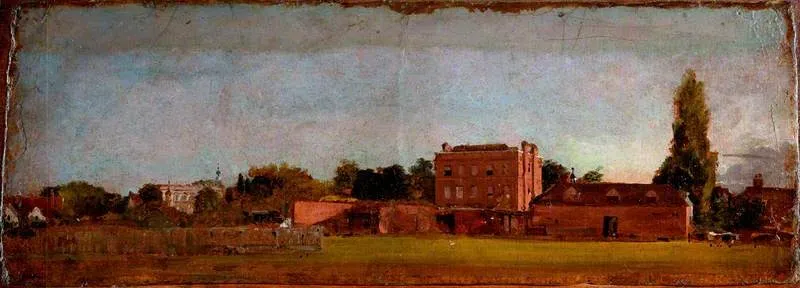
Golding Constable's House, East Bergholt is an unspecified painting by John Constable. It dates from 1811 and is held in the collection of the Victoria and Albert Museum.
About this work
Overview
Painted in 1811, this work by John Constable depicts the family home of his father, Golding Constable, located in East Bergholt, Suffolk.
Painted in 1811, this work by John Constable depicts the family home of his father, Golding Constable, located in East Bergholt, Suffolk. The scene captures a modest rural residence surrounded by the quiet landscape of the English countryside. Rendered with careful observation, the painting reflects Constable’s early commitment to portraying familiar, everyday environments with sincerity and precision.
Subject & Meaning
The house, a solid red-brick structure with a prominent chimney and multiple windows, represents the stable, working-class life of Constable’s family. Flanking it are a tall tree and a secondary building with a white roof, suggesting a working farmstead. The green field in front and the open sky convey a sense of quiet continuity, emphasizing the connection between the family and the land they cultivated.
Technique & Style
Constable employed a naturalistic approach, using layered brushwork to render textures of brick, foliage, and grass. The palette includes earthy reds and browns for the house, contrasted with soft greens and pale blues in the landscape and sky. Details like window frames and roof tiles are rendered with precision, reflecting his dedication to truthful observation over idealized composition.
History & Provenance
The painting remained in the Constable family until it entered the collection of the Victoria and Albert Museum. Its preservation there ensures its accessibility as a key example of the artist’s formative years, before his more famous large-scale landscapes. The work’s provenance underscores its personal significance to Constable and its role in documenting his familial roots.
Context
Created during Constable’s early career, this painting aligns with a broader trend among British artists to value domestic and rural subjects over grand historical or mythological themes. It reflects the growing interest in the English countryside as a legitimate subject for art, rooted in personal experience rather than academic convention.
Legacy
Though less celebrated than his later works, this painting offers insight into Constable’s artistic development and his enduring focus on place and memory. It stands as an early testament to his belief that ordinary landscapes, observed closely, hold intrinsic artistic value, a principle that would shape the course of British landscape painting.
Artist & collection
Artist
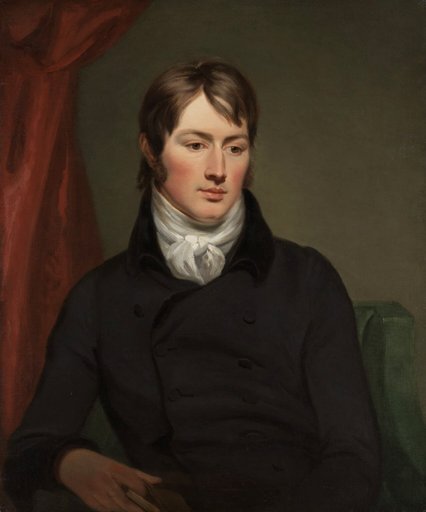
John Constable was an English landscape painter in the Romantic tradition. Born in Suffolk, he is known principally for revolutionising the genre of landscape painting with his pictures of Dedham Vale, the area on the…

 Osmaston Hall, Derby
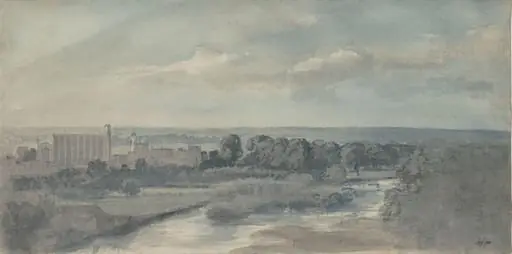 The Thames, with Eton College and chapel
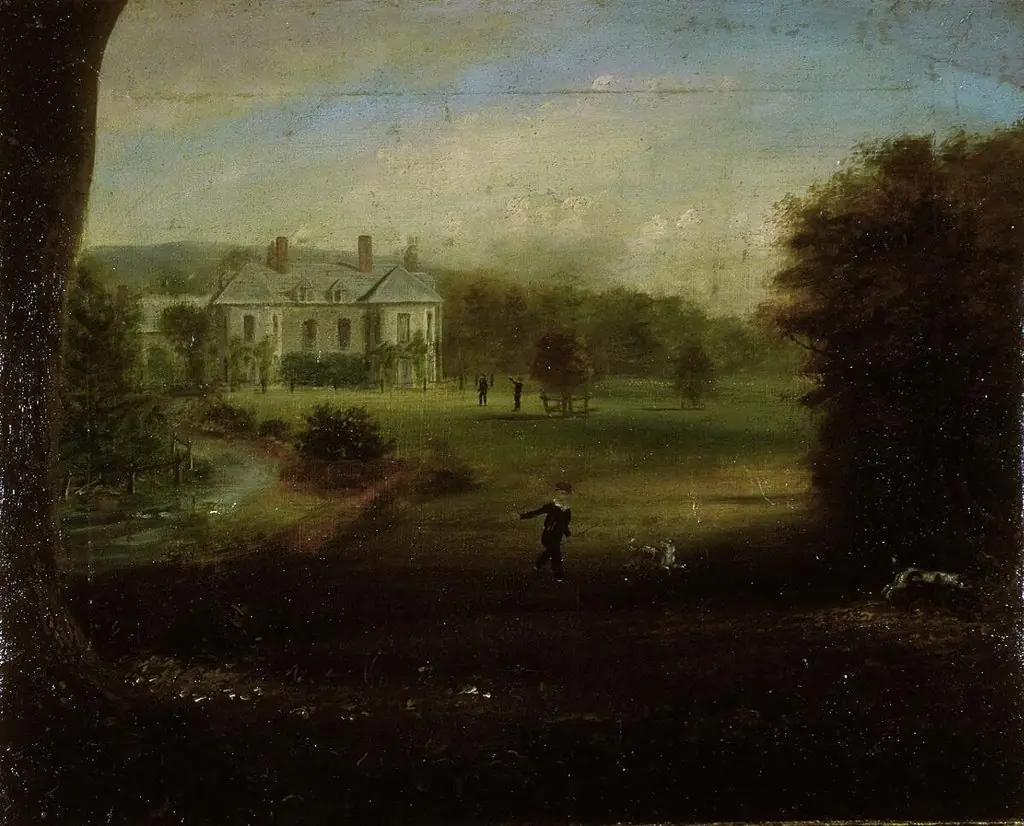 view of Plas Gogerddan
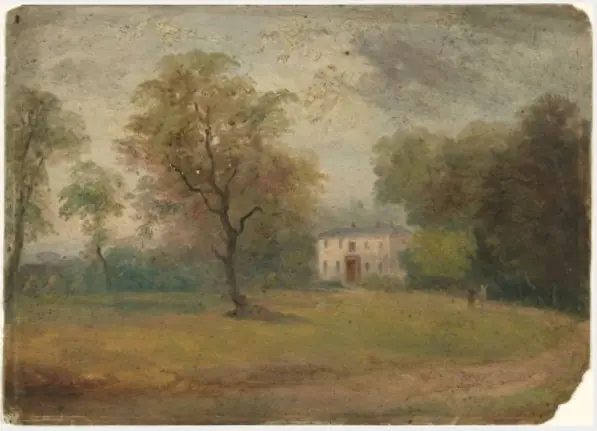 A House against Trees
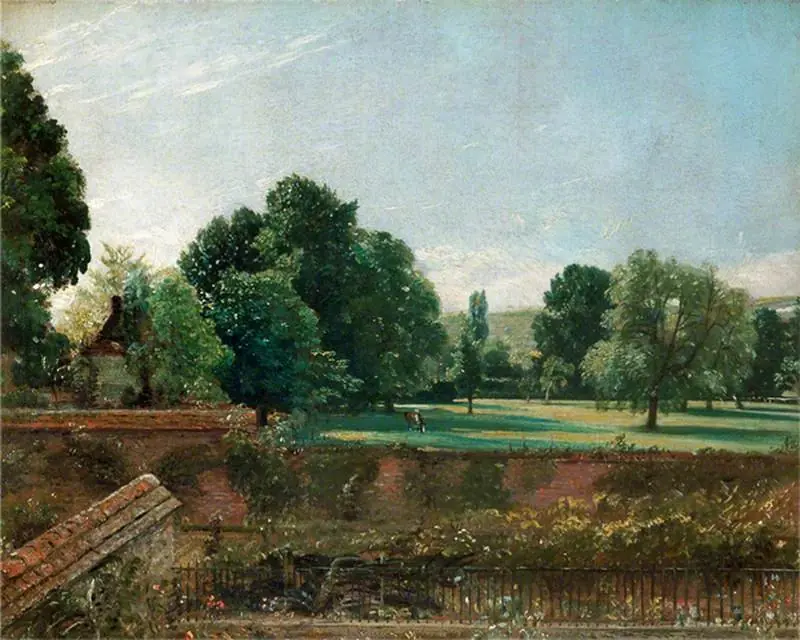 A View at Salisbury from Archdeacon Fisher's House
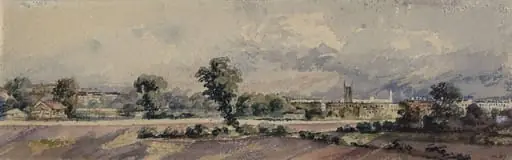 View from Gore Lane, Kensington, showing St. Luke's Church, Chelsea
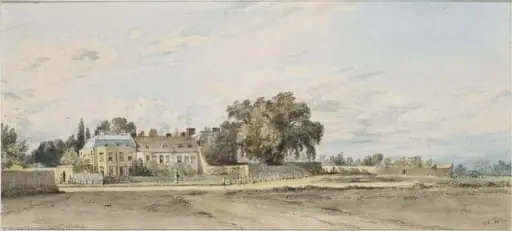 Houses at Putney Heath
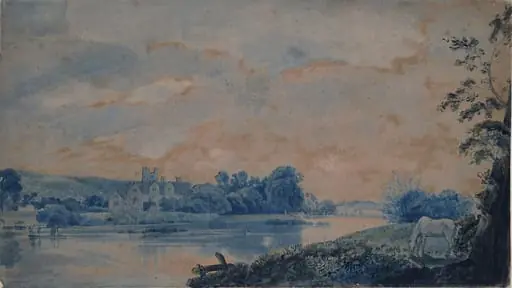 Bisham Abbey, on the Thames
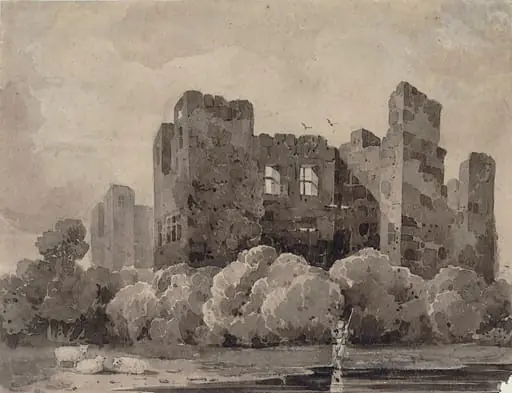 Kenilworth Castle
 Warwick Castle