Artwork
View of Niagara Falls
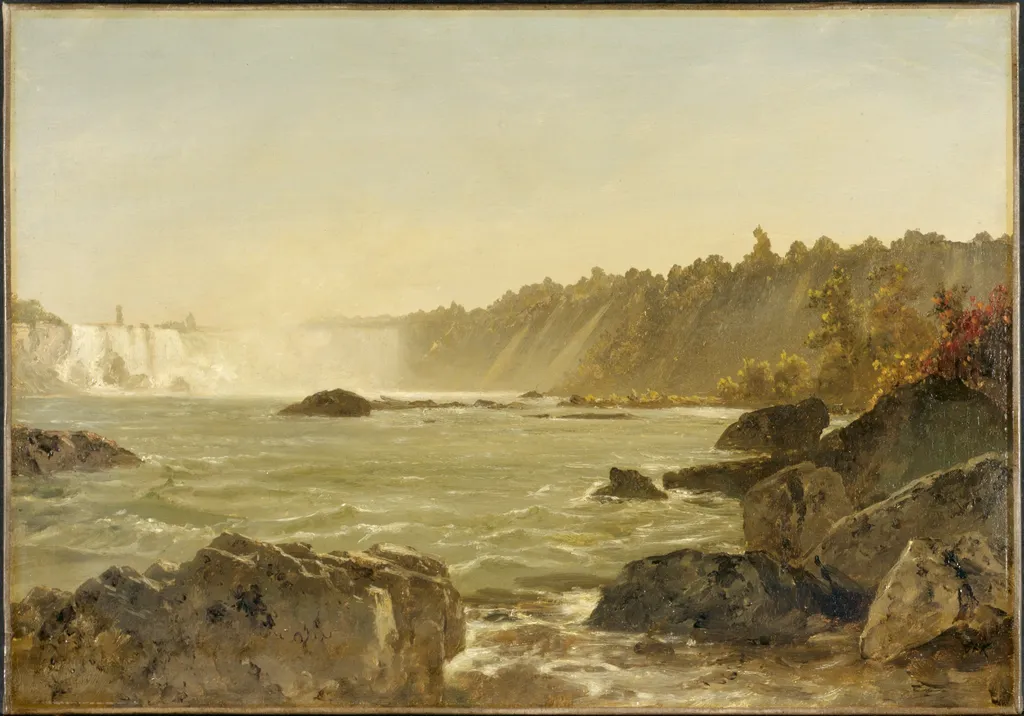
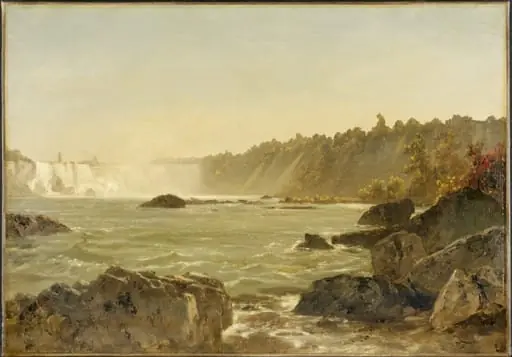
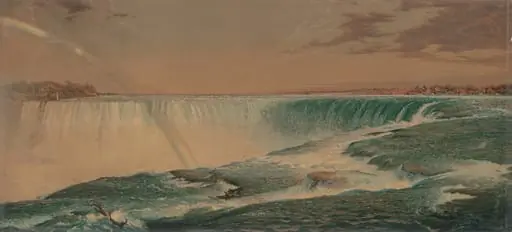
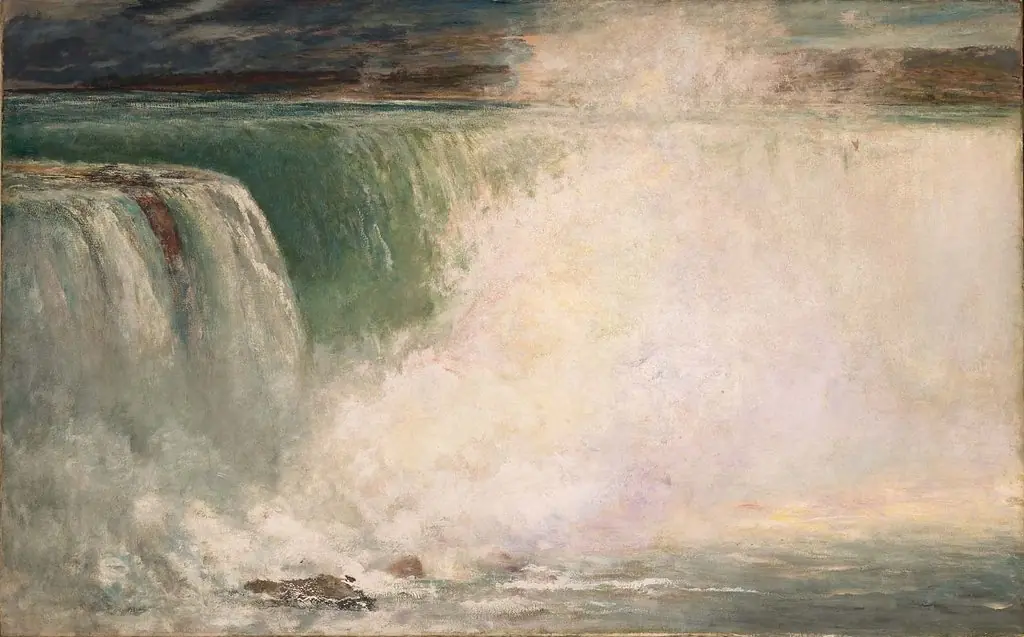
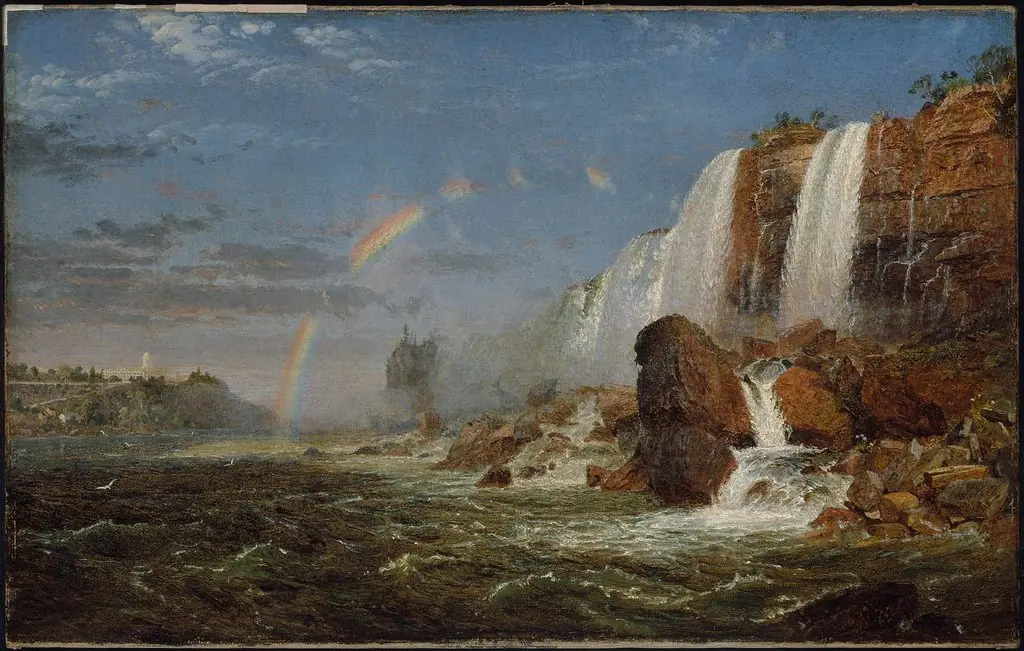
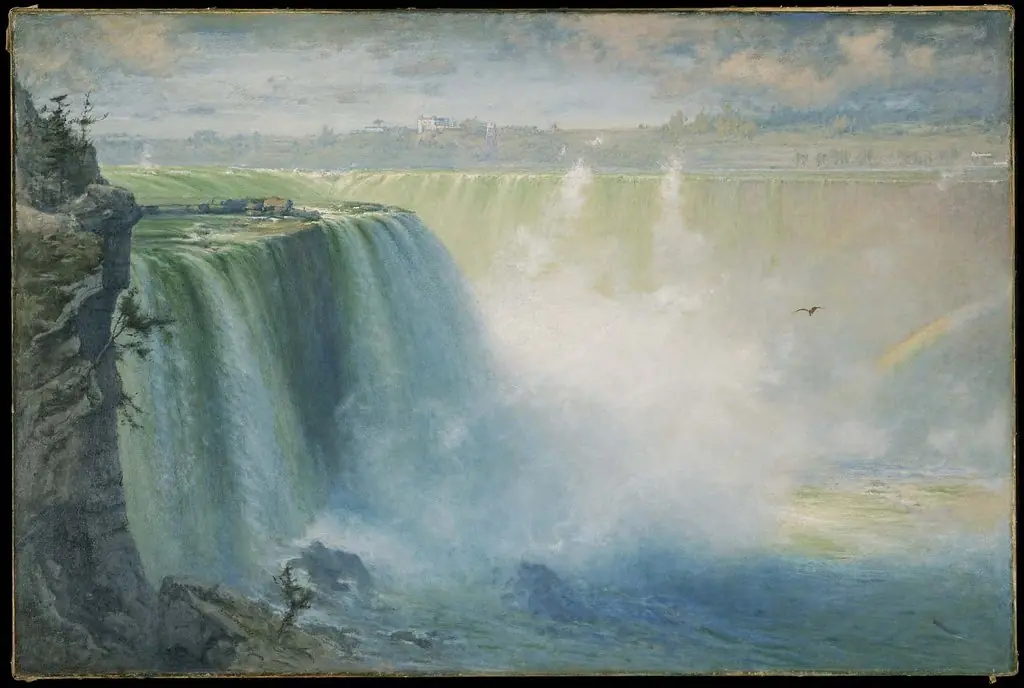
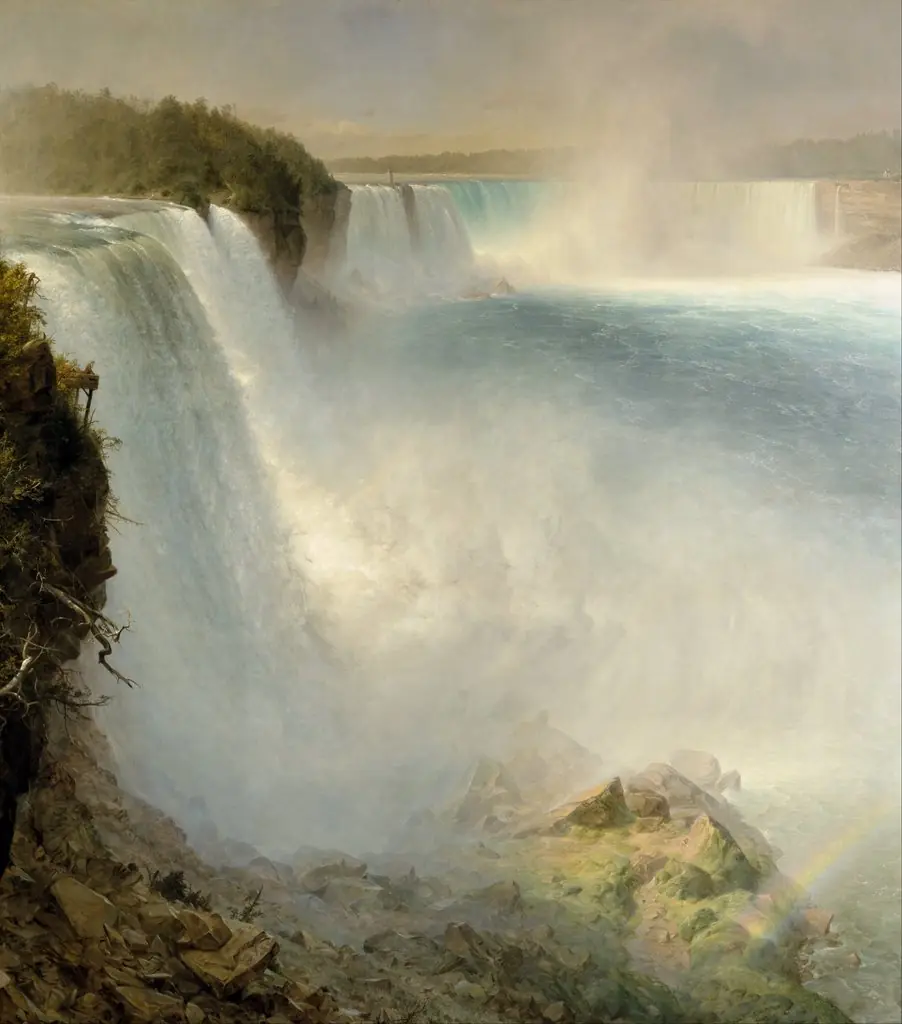
View of Niagara Falls is an oil painting by the Hudson River School artist John Frederick Kensett. It dates from 1851 and is held in the collection of the Cleveland Museum of Art.
About this work
Subject & Meaning
View of Niagara Falls depicts the iconic North American waterfall, symbolizing the sublime power of nature and the spirit of manifest destiny in mid-19th-century American art. Kensett's rendering emphasizes the falls' majestic grandeur, reflecting contemporary Romantic ideals that celebrated wilderness as both awe-inspiring and spiritually significant.
The work's subject underscores themes of exploration and national identity, positioning the natural landmark as a metaphor for boundless opportunity and the frontier ethos of the era.
Technique & Style
The surface retains its original luminosity, suggesting careful preservation of the oil medium.
John Frederick Kensett created View of Niagara Falls using oil paint on canvas around 1851. The work measures 35.9 centimeters in height by 51.2 centimeters in width, a format typical for landscape painting of the period. Kensett’s handling of atmosphere and light emphasizes the sublime qualities of the falls, reflecting Hudson River School sensibilities while demonstrating a refined, almost photographic precision in rendering water and rock forms. The surface retains its original luminosity, suggesting careful preservation of the oil medium.
History & Provenance
"View of Niagara Falls" is an oil-on-canvas painting dated 1851, created by American artist John Frederick Kensett. The work’s inception is recorded as January 1, 1851, and it was made in the United States. The painting measures 35.9 centimeters in height and 51.2 centimeters in width.
The painting entered the Cleveland Museum of Art’s collection in 1999, as indicated by its accession number 1999.210, and remains housed there. No earlier ownership or commission details are provided in the available sources.
Overview
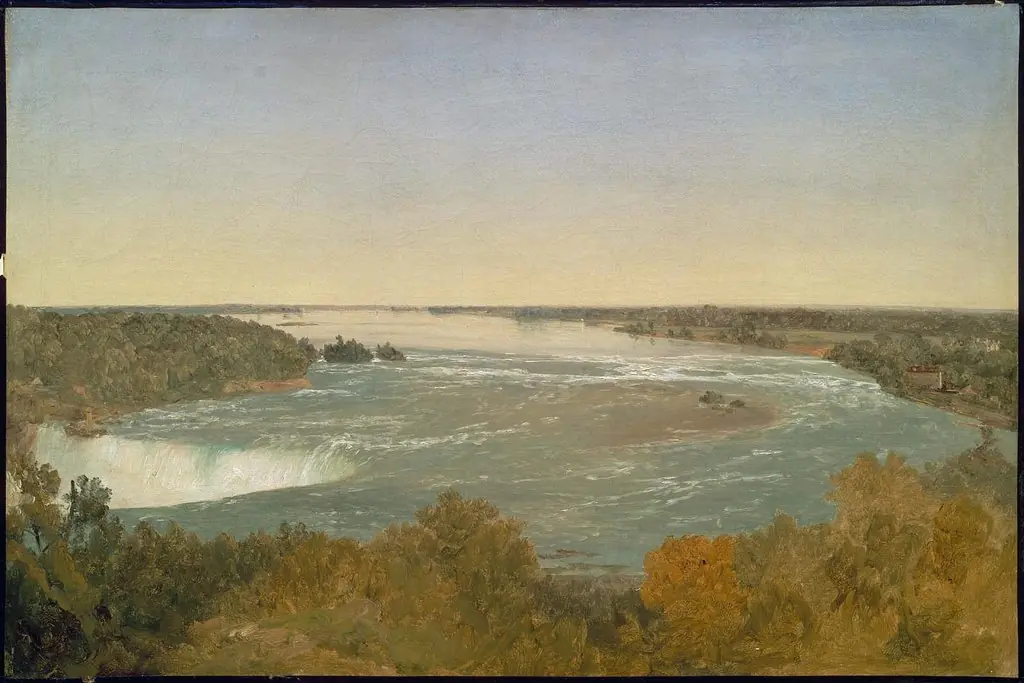
View of Niagara Falls, painted by John Frederick Kensett in 1851, is a seminal work of the Hudson River School that captures the American landscape with characteristic luminism. The composition features a rocky shoreline in the immediate foreground, where large, textured boulders anchor the viewer's perspective. Beyond this rugged edge, the water of the falls appears in muted, greenish-gray tones, receding into the middle distance where the cascading mist meets a pale yellow sky.
Kensett employs a restrained palette and precise brushwork to emphasize the stillness and atmospheric clarity of the scene, avoiding the dramatic romanticism often associated with earlier depictions of the site. Created during a period when the artist was refining his signature style of quiet observation and light effects, this oil painting reflects the mid-19th-century American fascination with the sublime power of nature while maintaining a sense of serene order. The work stands as an important example of Kensett's early maturity, bridging his earlier detailed topographical studies with his later, more atmospheric coastal scenes.
Context
Created during a period when the Hudson River School and related movements celebrated the American landscape, the painting aligns with contemporary interest in documenting iconic natural sites. Niagara Falls, a popular subject for artists and tourists alike, served as a symbol of the country’s grandeur and the expanding appreciation of scenic tourism in the 1850s.
Own this work as a print
Artist & collection

Artist
John Frederick Kensett was an American landscape painter and engraver born in Cheshire, Connecticut.