Artwork
Tysoe Saul Hancock, his wife Philadelphia, their daughter Elizabeth and their Indian maid Clarinda
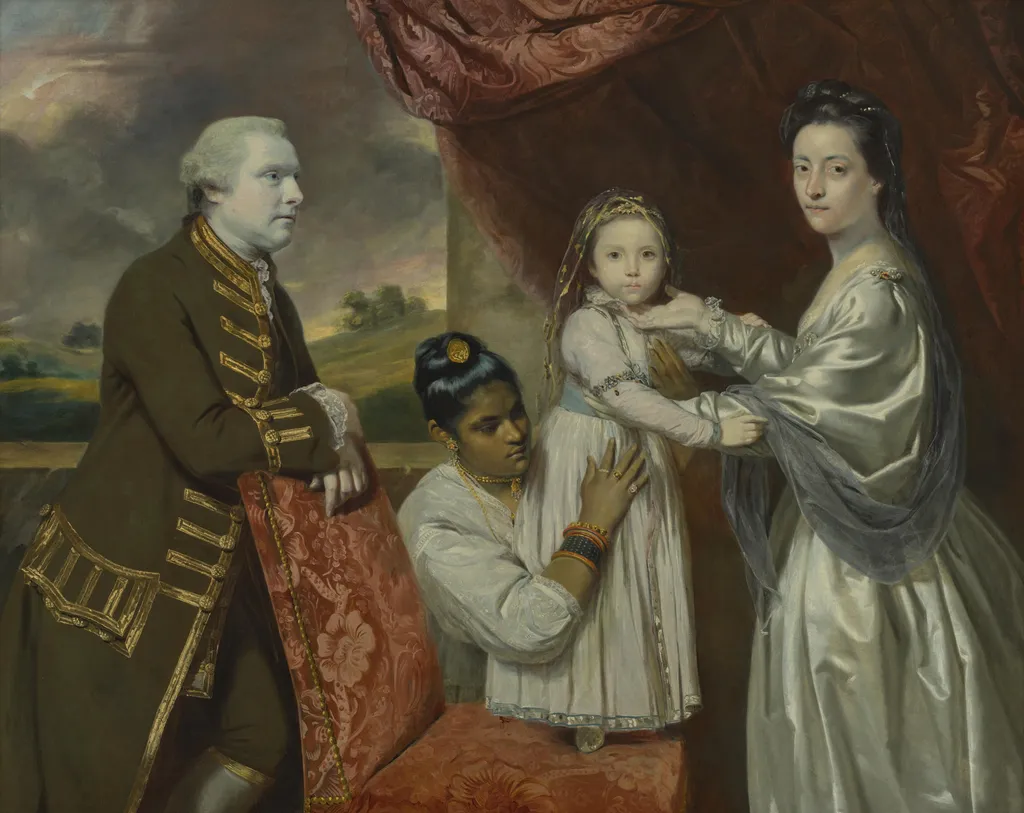
Tysoe Saul Hancock, his wife Philadelphia, their daughter Elizabeth and their Indian maid Clarinda is an oil painting by the Rococo painting artist Joshua Reynolds. It dates from 1766 and is held in the collection of the Gemäldegalerie Berlin.
About this work
Subject & Meaning
The child Elizabeth, later known as Eliza de Feuillide, is positioned centrally, drawing attention to her role as the family’s heir and future social connector.
The portrait depicts Tysoe Saul Hancock, his wife Philadelphia, their daughter Elizabeth, and an Indian maid named Clarinda. Reynolds’s composition presents the family in an intimate domestic setting, with the figures arranged to emphasize their social hierarchy and relationships. The inclusion of Clarinda, an Indian attendant, reflects the presence of South Asian servants in British colonial households during the mid-eighteenth century.
The work underscores themes of empire, domesticity, and the intersections of race and class within the British elite.
The child Elizabeth, later known as Eliza de Feuillide, is positioned centrally, drawing attention to her role as the family’s heir and future social connector. The portrait thus functions as both a personal commemoration and a visual assertion of Hancock’s status within the British colonial establishment.
History & Provenance
The painting Tysoe Saul Hancock, his wife Philadelphia, their daughter Elizabeth and their Indian maid Clarinda was created in 1766 by Joshua Reynolds. It portrays Tysoe Hancock alongside his wife Philadelphia (née Austen), their daughter Elizabeth, and Clarinda, an Indian maid in the household. The work entered the collection of the Gemäldegalerie Berlin, where it remains on display.
Its dimensions are 140 cm in height and 171 cm in width, and it is categorized as a family portrait painted in oil on canvas.
Tysoe Saul Hancock, his wife Philadelphia, their daughter Elizabeth and their Indian maid Clarinda is an oil on canvas portrait painted by Joshua Reynolds in 1766. The work is catalogued in the inventory of the Gemäldegalerie Berlin under its accession number and has been displayed in exhibitions of the Berlin State Museums.
The painting entered the collection of the Gemäldegalerie Berlin and was accessioned there. It was included in the museum's 1975 exhibition "Eighteenth‑Century Portraiture" and subsequently featured in the 1998 retrospective "Joshua Reynolds: Master of the English Portrait".
Overview
This 1766 oil painting by Sir Joshua Reynolds presents a domestic scene featuring Tysoe Saul Hancock, his wife Philadelphia, their daughter Elizabeth, and their Indian maid Clarinda. Executed in a Rococo-influenced composition, the work is part of the collection of the Gemäldegalerie in Berlin and exemplifies Reynolds’s approach to group portraiture during the mid‑eighteenth century.
Technique & Style
Reynolds employs a refined brushwork and a soft, luminous palette characteristic of the Grand Style he advocated. The figures are rendered with careful modelling, set against a muted landscape background that recedes behind a red chair, creating depth while maintaining a harmonious, decorative quality.
Context
Created at a time when British portraiture was embracing a more elevated, idealised aesthetic, the work illustrates Reynolds’s role in shaping the visual language of the era. The inclusion of an Indian maid also reflects contemporary colonial connections and the presence of exotic figures within British domestic settings.
Own this work as a print
Artist & collection
Artist
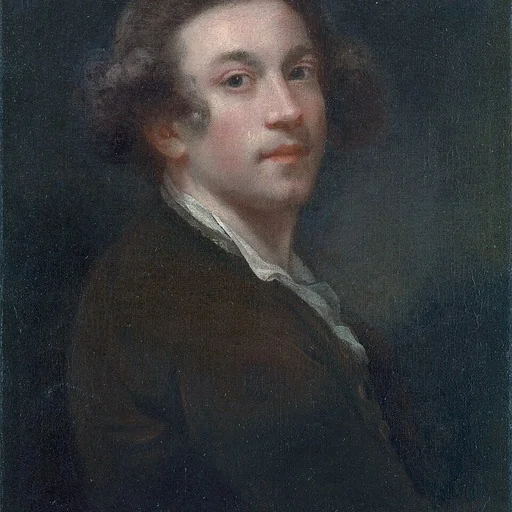
Sir Joshua Reynolds (16 July 1723 – 23 February 1792) was an English painter who specialised in portraits.

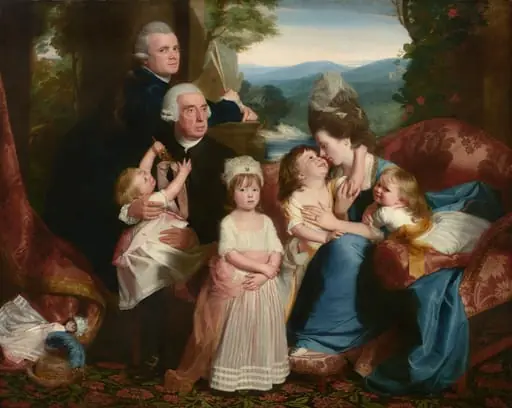 The Copley Family
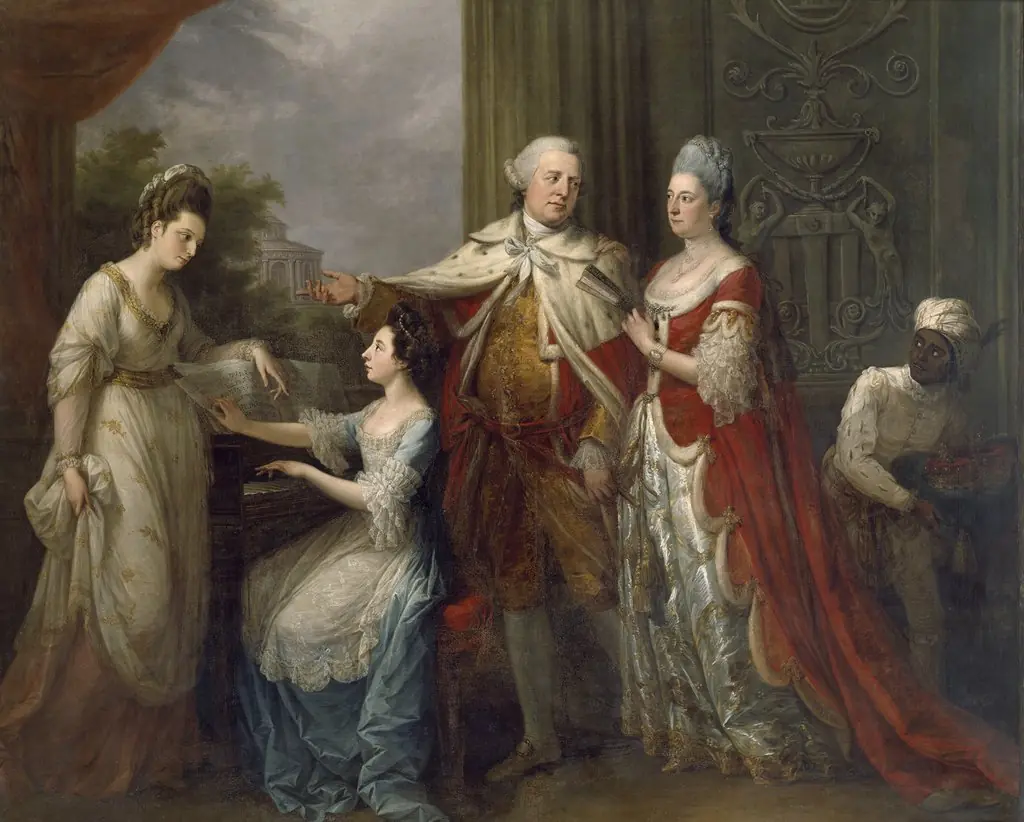 The Ely Family
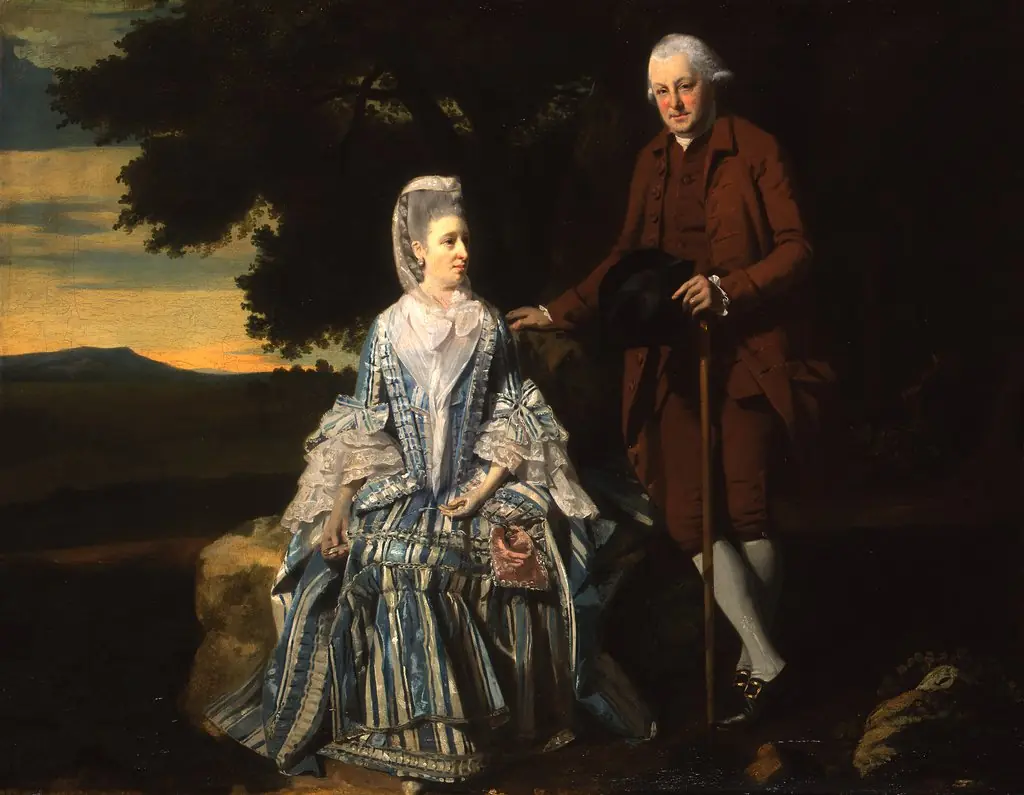 Portrait of a Married Couple in a Park
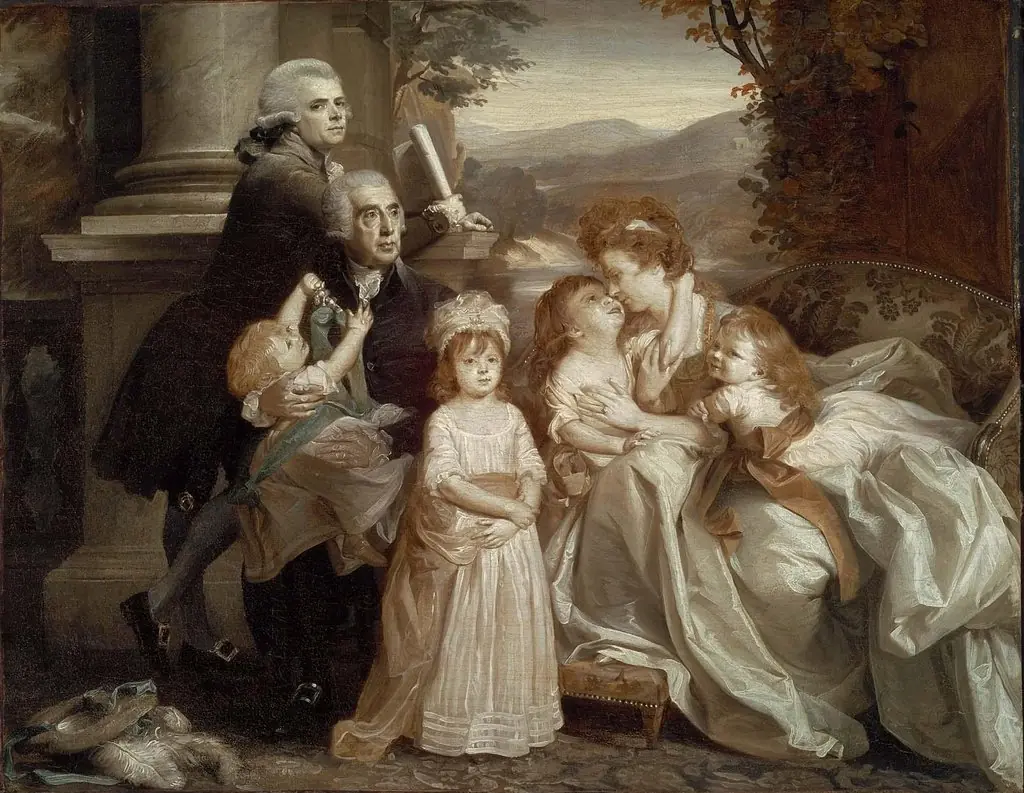 The Copley Family
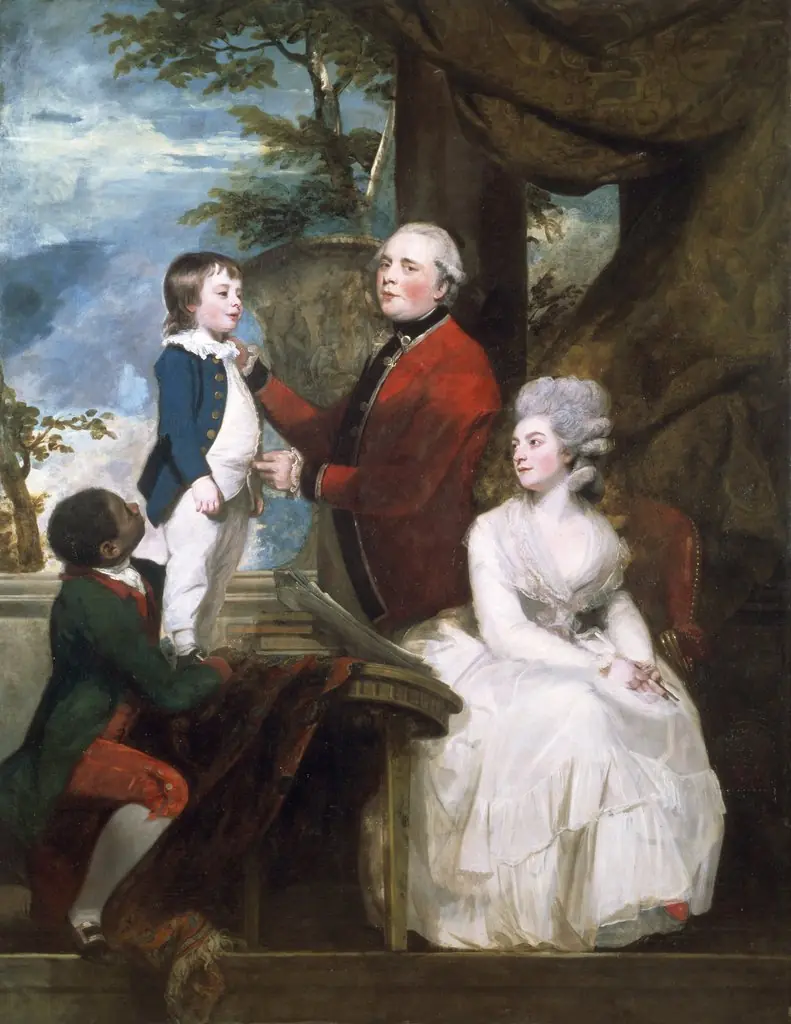 The Temple Family
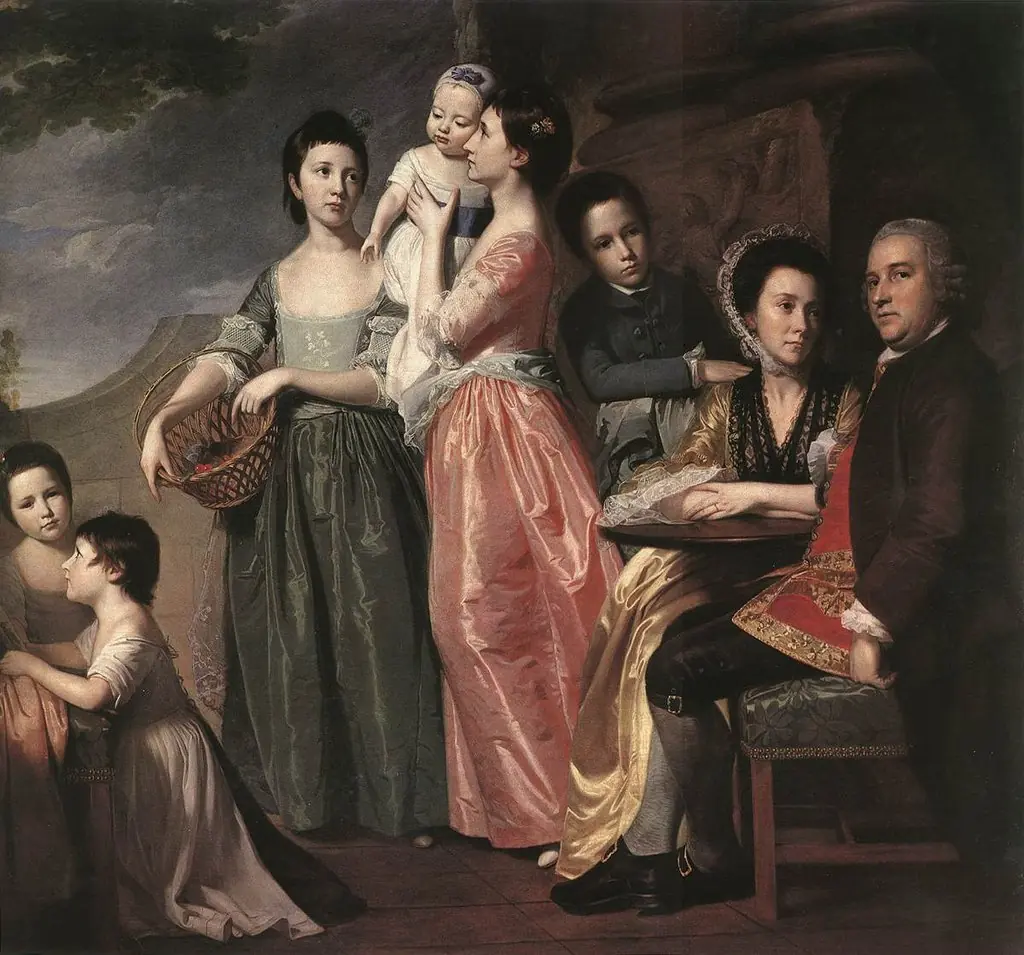 A large family piece
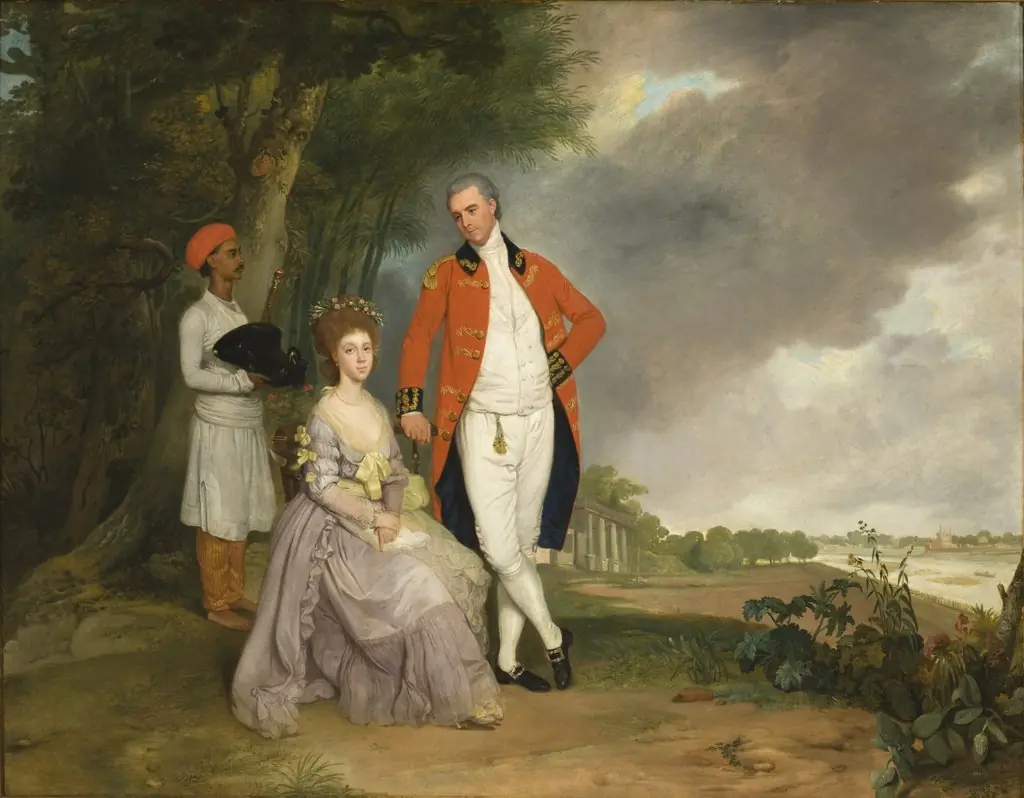 The Hon. William Monson and His Wife, Ann Debonnaire
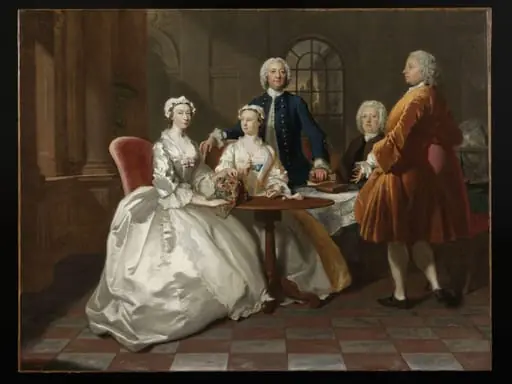 A portrait of the Vigor Family: Jane Vigor, Joseph Vigor, Ann Vigor, William Vigor and probably John Penn
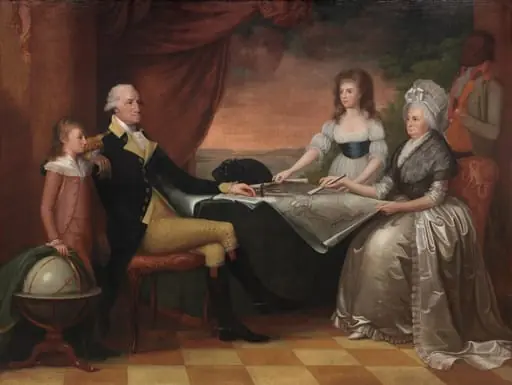 The Washington Family
 George, 2nd Earl Harcourt, his wife Elizabeth, and brother William
- Lady Elizabeth Delmé and Her Children