Artwork
Ecce Homo
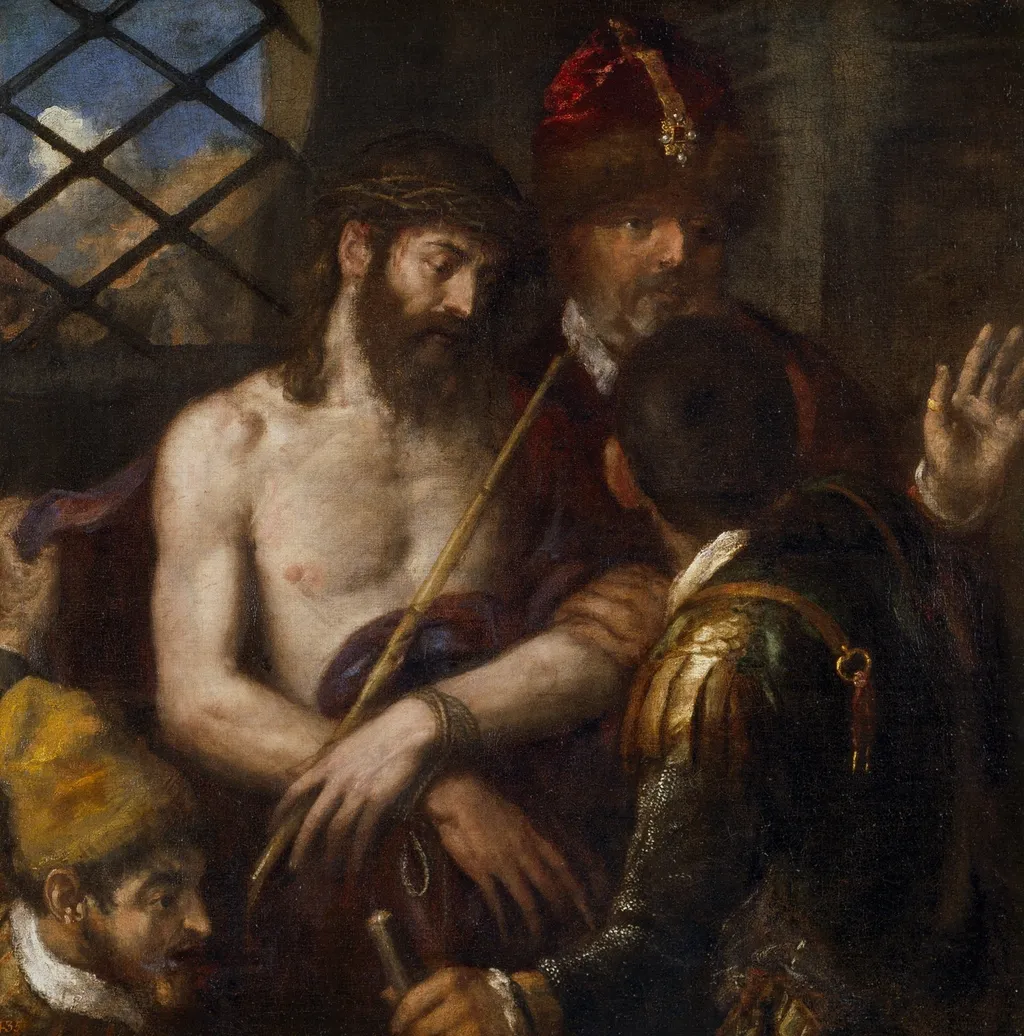
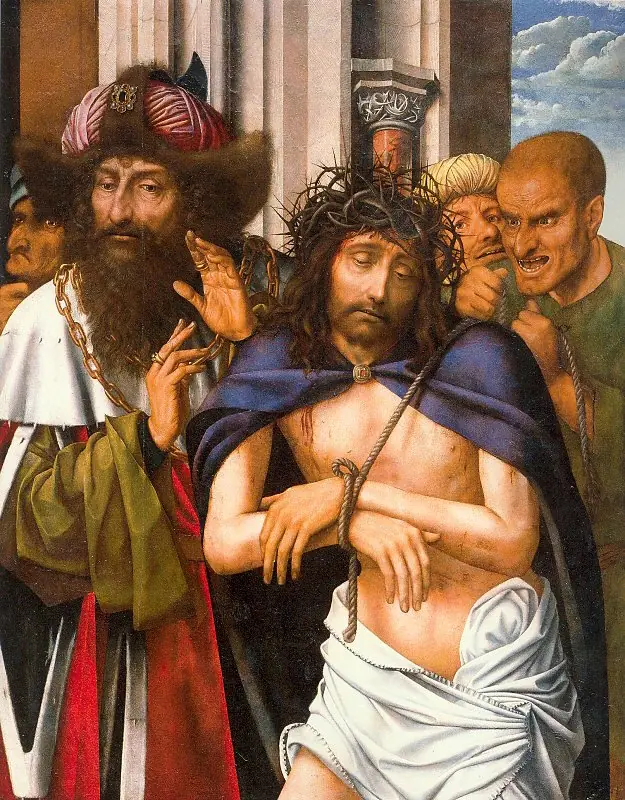
Ecce Homo is an oil painting by the High Baroque Italian artist Titian. It dates from 1565 and is held in the collection of the Museo del Prado.
About this work
Subject & Meaning
As a piece of religious art, the composition focuses on these two central figures to convey the theological weight of the accusation and subsequent sentencing.
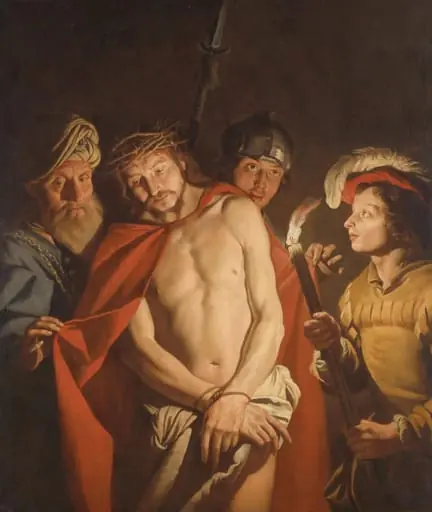
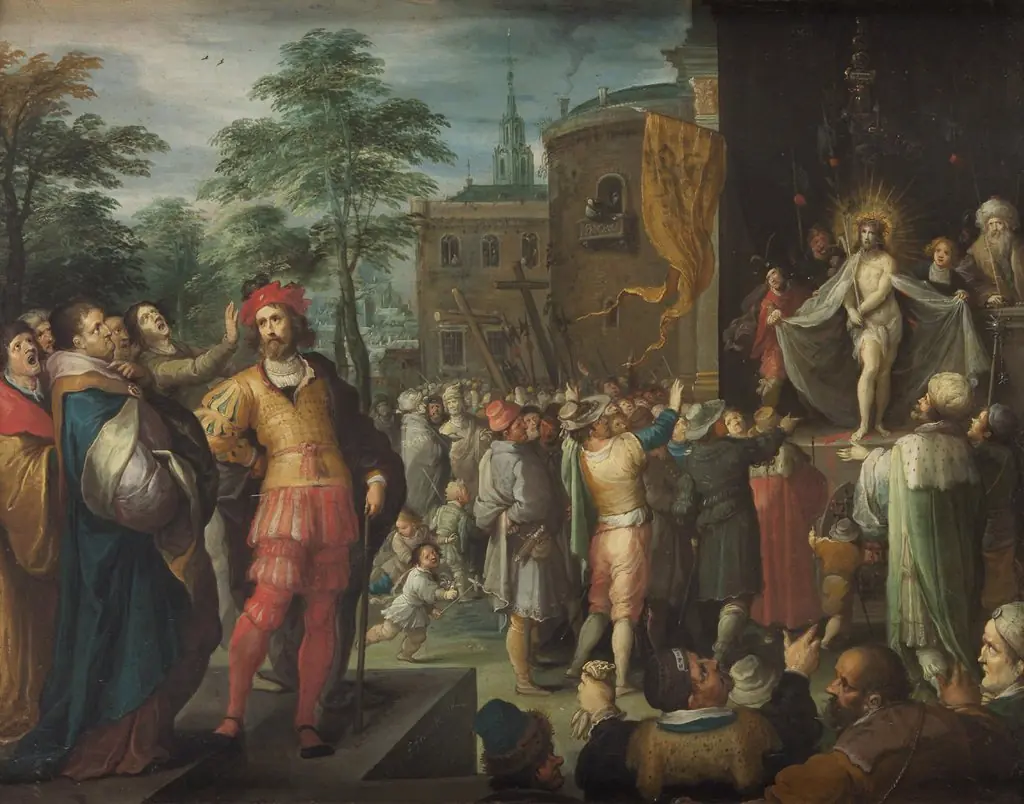
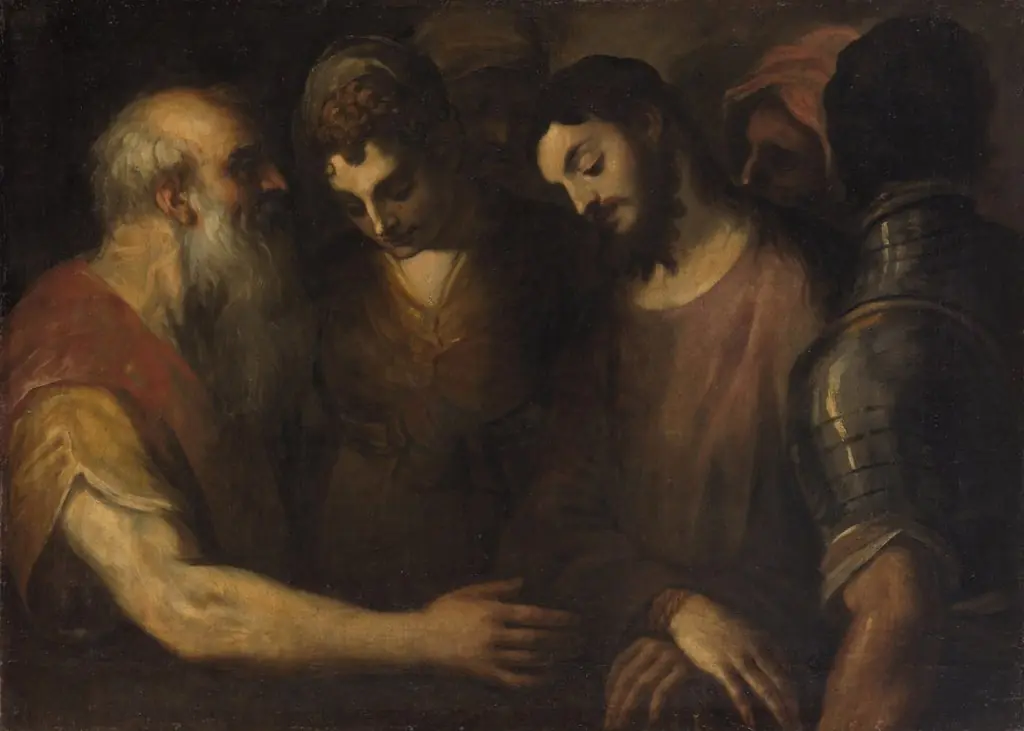
Titian's 1565 oil painting depicts the biblical scene of Ecce Homo, presenting Jesus Christ alongside Pontius Pilatus. The work illustrates the moment Pilate presents the scourged Christ to the crowd, a pivotal narrative in the Passion of Christ. As a piece of religious art, the composition focuses on these two central figures to convey the theological weight of the accusation and subsequent sentencing.
The iconography serves to visualize the specific gospel account where the governor displays the suffering Messiah, emphasizing themes of judgment and sacrifice inherent to the subject matter.
Technique & Style
Executed in 1565, this religious painting by Titian utilizes oil paint applied to a canvas support. The work measures 100.5 cm in height and 100.8 cm in width. Stylistically, the composition focuses on the depiction of Jesus Christ and Pontius Pilatus, adhering to the conventions of the Ecce Homo genre. The piece is currently held in the collection of the Museo del Prado.
History & Provenance
The Ecce Homo in the Museo del Prado is dated to 1565 and is attributed to Titian. It entered the Prado’s holdings as Prado P00042, forming part of the museum’s collection of religious paintings. The work depicts the moment when Pontius Pilate presents Jesus to the crowd with the words “Ecce Homo.” Its dimensions are recorded as 100.5 cm in height and 100.8 cm in width.
Overview
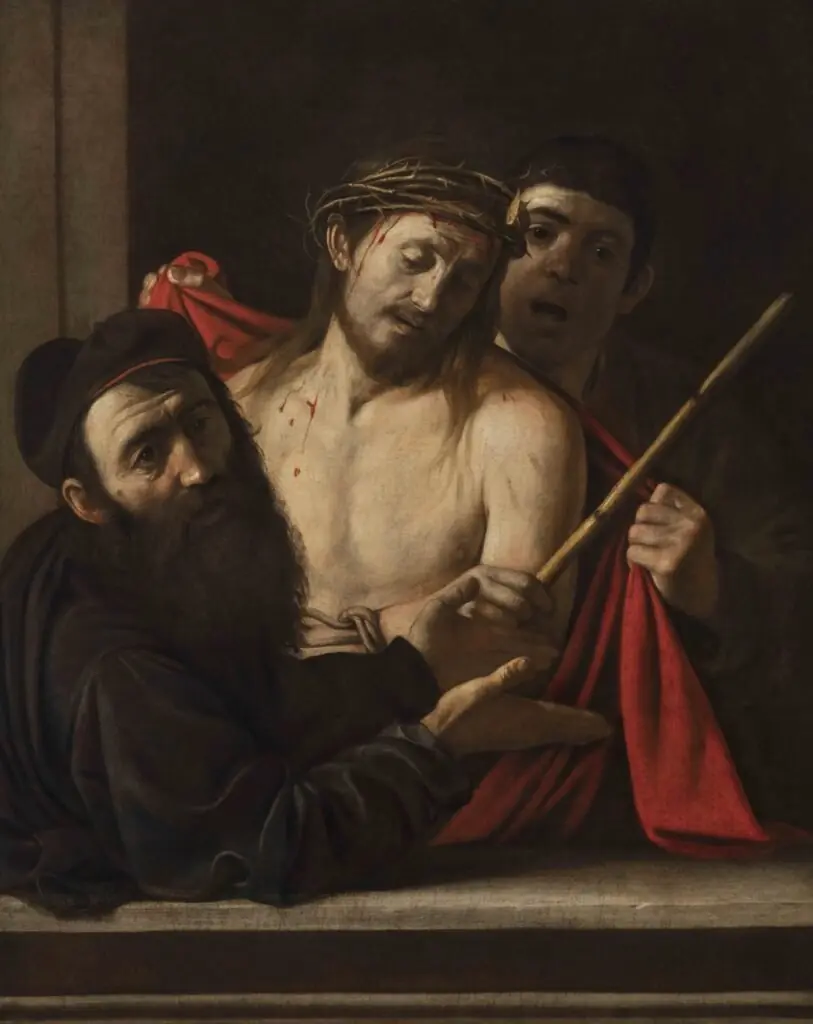
Titian’s Ecce Homo, executed in oil around 1565, portrays the moment when Pontius Pilate presents a crowned‑throned Christ to the crowd. The composition centers on a bearded, shirtless figure holding a staff, illuminated against a dark, tiled backdrop. A secondary figure in a red cap gestures nearby, while indistinct figures linger in the shadows, creating a compact, dramatic tableau.
Context
Titian, born Tiziano Vecellio in the Veneto around 1488‑1490, was a central figure of the Venetian Renaissance, renowned for his versatility across religious, mythological, and portrait subjects. Ecce Homo illustrates his mature period, when his command of color and light influenced contemporaries and later Baroque artists, situating the work within the transition from Renaissance naturalism to heightened emotional expression.
Own this work as a print
Artist & collection
Artist
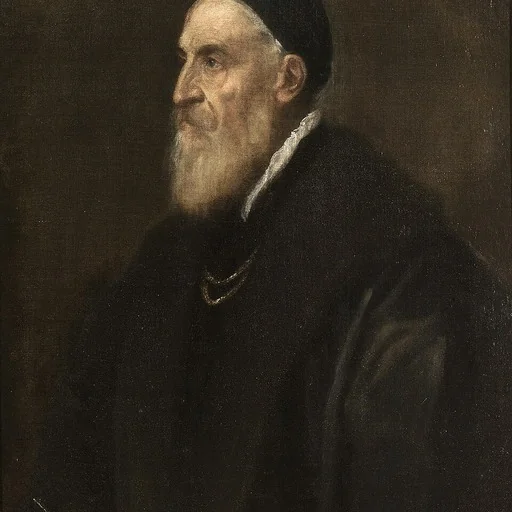
Tiziano Vecellio (Italian:; c. 1488/1490 – 27 August 1576), Latinized as Titianus, hence known in English as Titian ( TISH-ən), was an Italian Renaissance painter. The most important artist of Renaissance Venetian…