Artwork
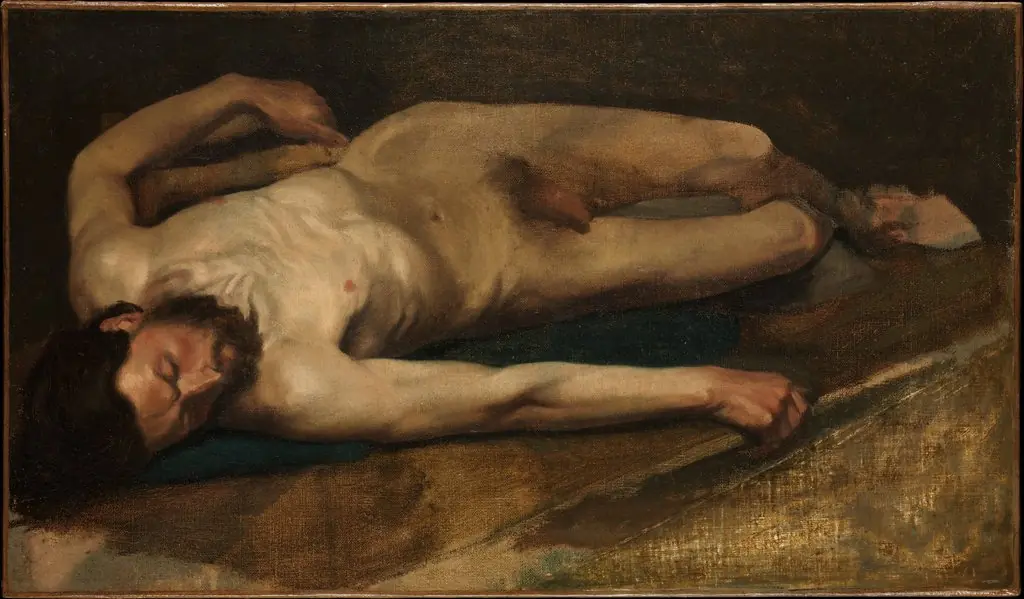
Study of a Nude Man
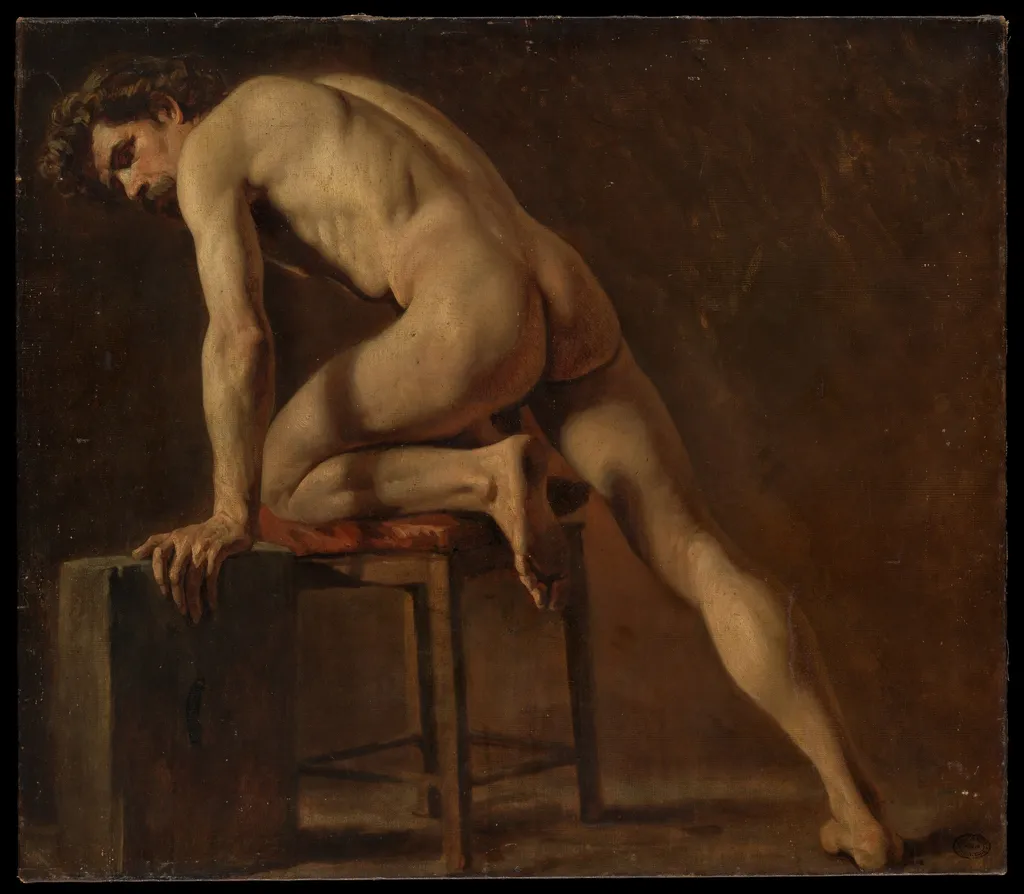
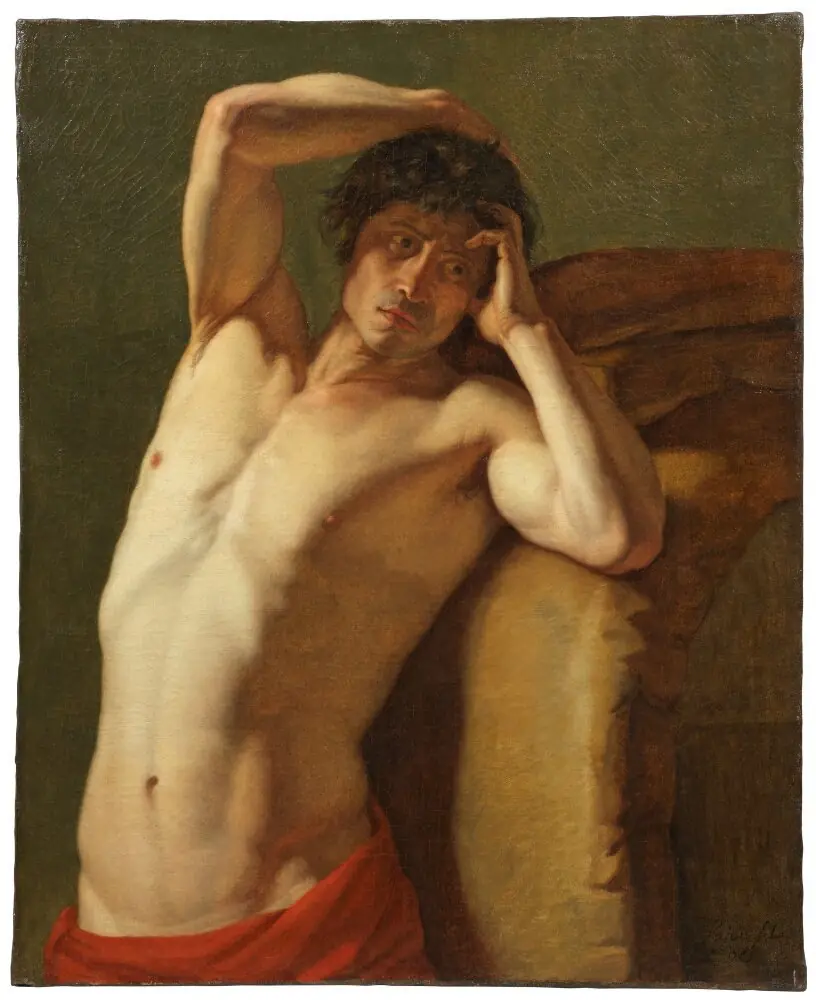
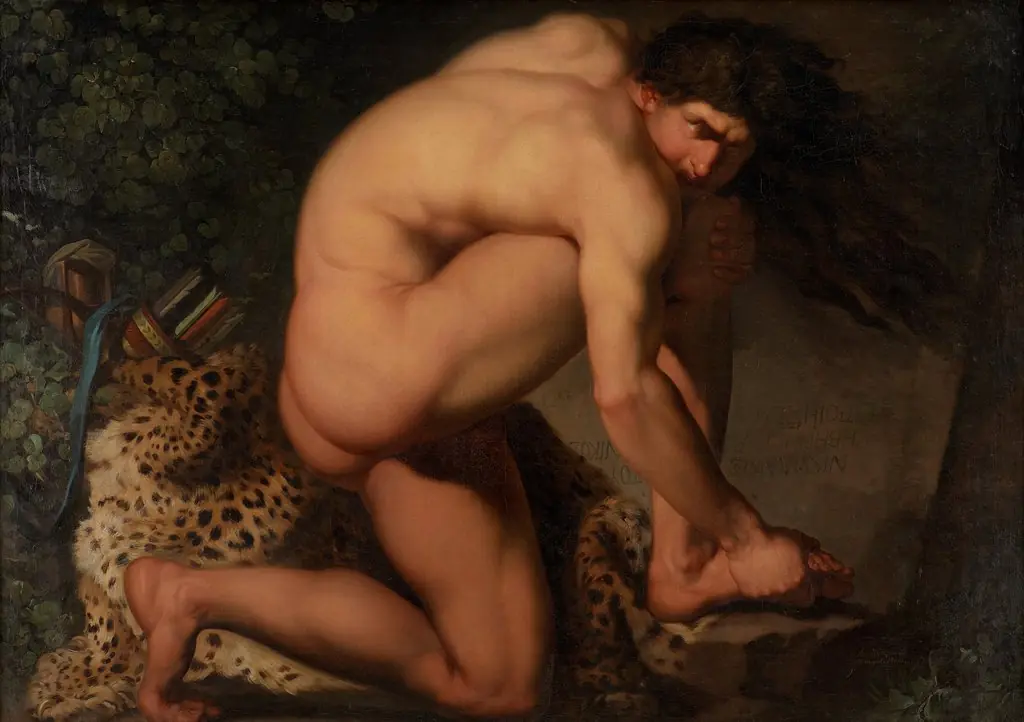
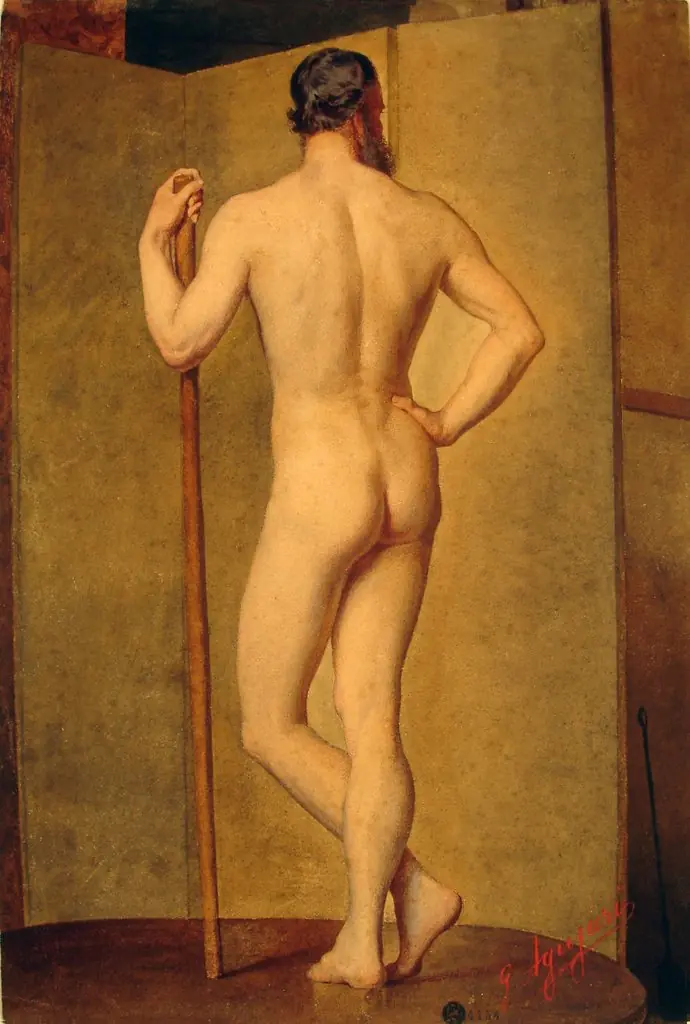
Study of a Nude Man is an oil painting by the Realist artist Gustave Courbet. It dates from 1840 and is held in the collection of the Metropolitan Museum of Art. Created in 1840, this oil painting presents a solitary nude male figure seated on a simple stool.
About this work
Technique & Style
Formal elements include restrained tonal modulation and a balanced spatial arrangement, contributing to the work's grounded presence despite its intimate scale.
The work is an oil painting executed on canvas, reflecting Courbet's characteristic approach to figurative representation. Its creation in 1840 aligns with the artist's early exploration of the human form within the nude genre, emphasizing naturalistic detail and compositional solidity. The handling of paint and rendering of the figure demonstrate a deliberate focus on anatomical accuracy and textural realism, consistent with mid-nineteenth-century academic practices.
Formal elements include restrained tonal modulation and a balanced spatial arrangement, contributing to the work's grounded presence despite its intimate scale.
Context
Study of a Nude Man, dated to 1840, is an oil painting on canvas attributed to Gustave Courbet. The work is currently held in the collection of the Metropolitan Museum of Art, where it was accessioned in 2021. As an early example of Courbet's engagement with the nude genre, the piece predates his mature Realist period, offering a glimpse into his formative years as an artist.
The attribution to Courbet, confirmed by the museum's 2021 acquisition, situates the painting within the broader trajectory of his oeuvre, which would later redefine French painting through its unidealized depiction of the human form.
Overview
Created in 1840, this oil painting presents a solitary nude male figure seated on a simple stool. The composition centers on the man's thoughtful posture, with his head bowed, right arm resting on a rectangular block, and feet planted on the floor. The subdued brown backdrop serves to isolate the figure, emphasizing his form and the subtle modeling of flesh.
Subject & Meaning
The work functions as a study of the human body, capturing a moment of quiet introspection. The model’s bent legs and lowered gaze suggest a private, perhaps contemplative state, while the straightforward rendering avoids idealization, aligning with a direct observation of the human condition.
History & Provenance
Painted by French realist Gustave Courbet, a leading figure who challenged academic norms in the mid‑19th century, the piece reflects his commitment to portraying subjects as seen rather than imagined. It entered the collection of The Metropolitan Museum of Art, where it remains on display.
Own this work as a print
Artist & collection
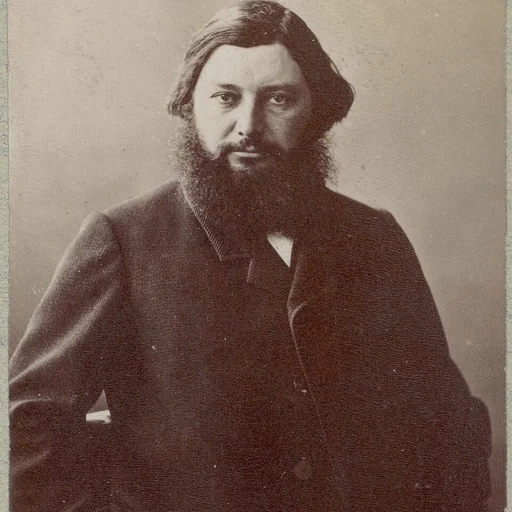
Artist
Jean Désiré Gustave Courbet (UK: KOOR-bay; US: koor-BAY; French:; 10 June 1819 – 31 December 1877) was a French painter who led the Realism movement in 19th-century French painting.