Artwork
Saint John the Baptist in the Desert
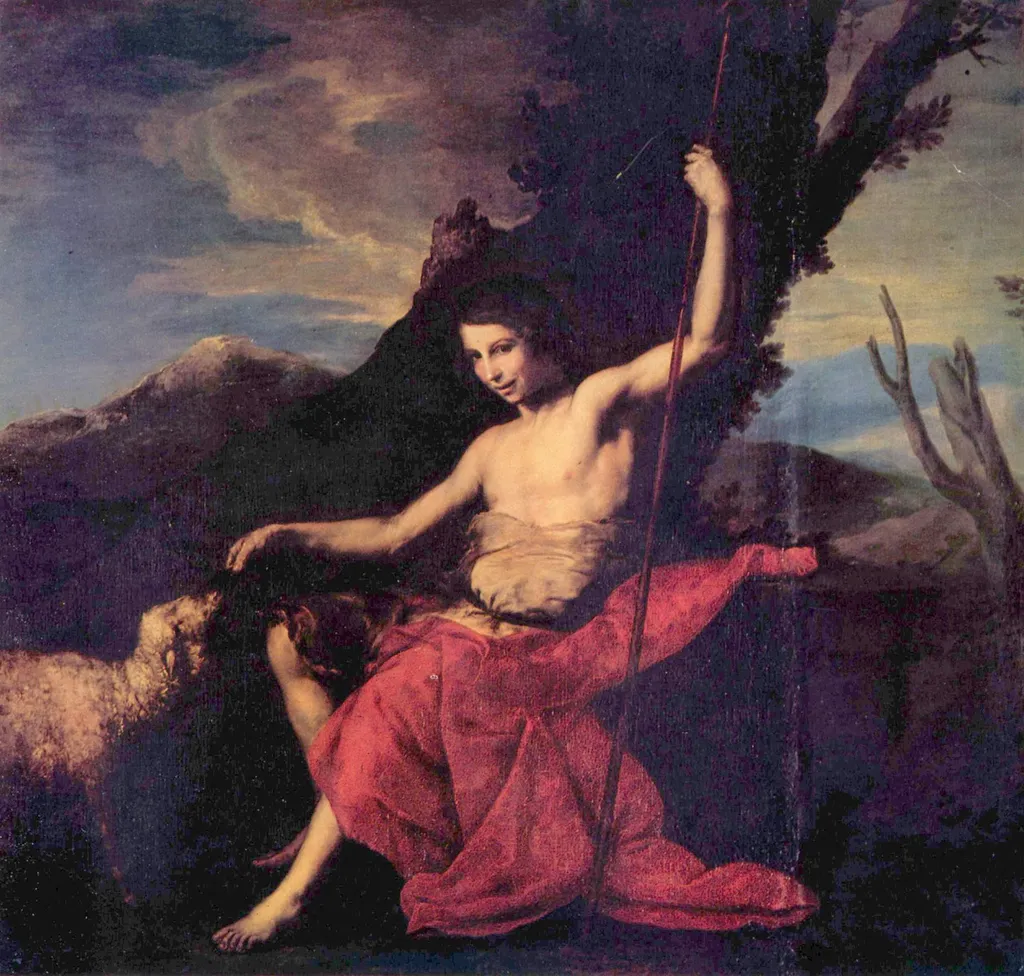
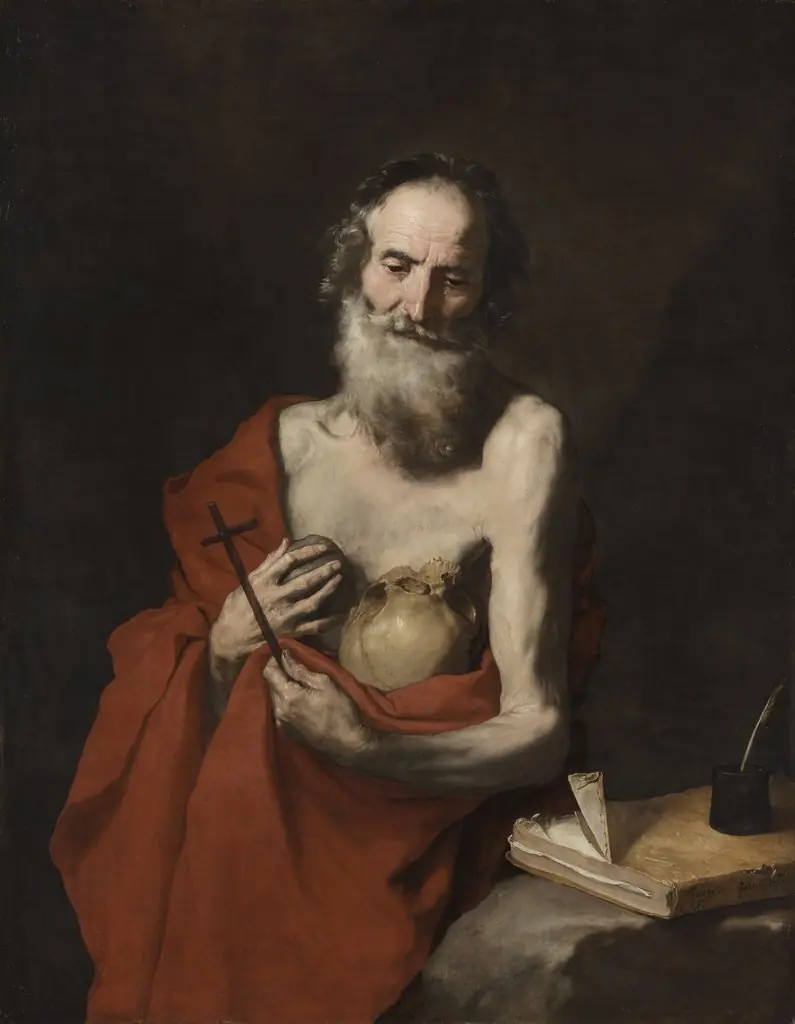
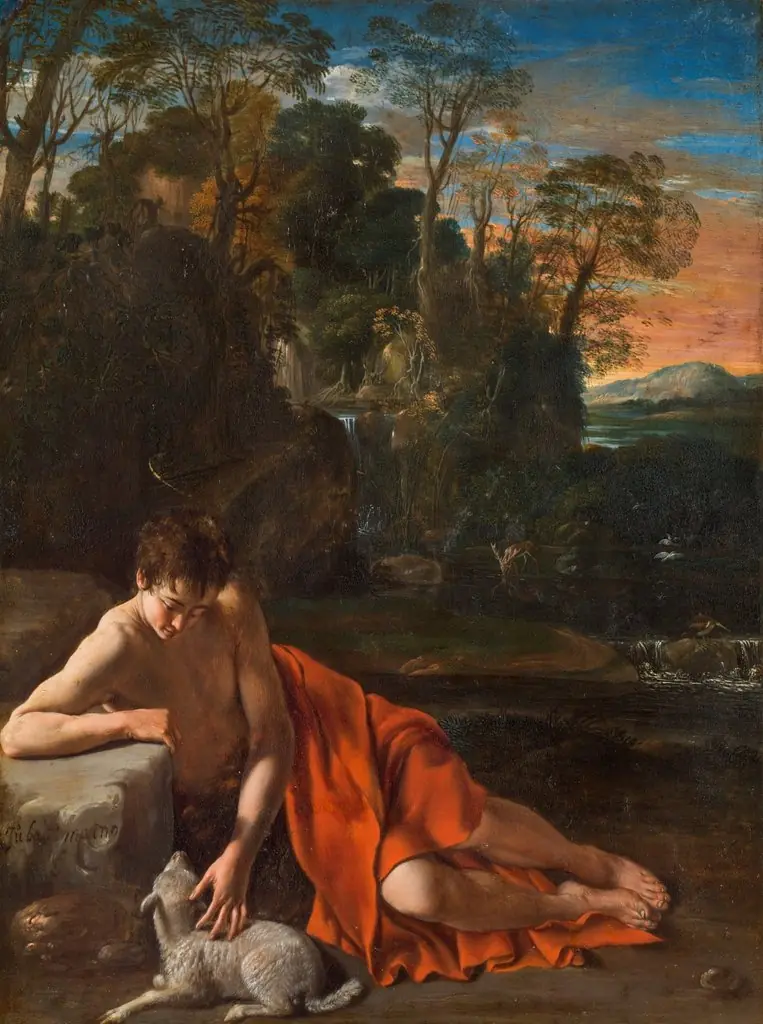
Saint John the Baptist in the Desert is an oil painting by the Early Baroque Italian artist Jusepe de Ribera. It dates from 1641 and is held in the collection of the Museo del Prado.
About this work
Subject & Meaning
The painting shows John the Baptist in the wilderness, clothed in animal skins and holding a cross, symbols of his ascetic life and prophetic role.
The painting shows John the Baptist in the wilderness, clothed in animal skins and holding a cross, symbols of his ascetic life and prophetic role. Ribera emphasizes his solitary presence in a barren landscape, highlighting themes of spiritual isolation and penance. The work reflects Counter-Reformation ideals of contemplative devotion, portraying the saint as both penitent and herald of Christ. Its composition underscores the moral and theological significance of retreat and sacrifice in Christian iconography.
The piece was created by Jusepe de Ribera in 1641, executed in oil on canvas, and originally belonged to King Ferdinand VII of Spain before entering the collection of the Museo del Prado in Madrid.
Technique & Style
Executed in oil paint on canvas, this religious work depicts John the Baptist in a wilderness setting. The painting measures 182 cm in height and 150 cm in width. While specific details regarding the artist's brushwork, surface condition, or handling techniques are not provided in the available records, the material composition is firmly established as oil on canvas. The piece is currently held in the collection of the Museo del Prado in Madrid.
History & Provenance
Saint John the Baptist in the Desert is an oil-on-canvas religious painting by Jusepe de Ribera dated 1641. The Wikidata record for the work lists additional inception dates of 1644 and 1650, reflecting scholarly uncertainty about when Ribera executed the canvas.
The painting entered the Spanish royal collection and is documented as having been owned by Ferdinand VII of Spain. It is now held by the Museo del Prado, housed within the Royal Palace of Madrid. No further details of commission, intermediate ownership, or acquisition history are recorded in the available sources.
Saint John the Baptist in the Desert is held by the Museo del Prado in Madrid, housed within the Royal Palace of Madrid complex. The work entered the Spanish royal collection under Ferdinand VII of Spain, from whose ownership it passed into the museum's holdings. No specific inventory or accession number is recorded in the available sources, and no exhibition history beyond its current placement at the Prado is documented.
Legacy
The painting shaped Baroque religious imagery through its stark chiaroscuro and austere composition, influencing later Spanish artists who adopted Ribera's dramatic portrayal of saints in isolation. Contemporary accounts note its role in establishing the saint's image as a symbol of penitential solitude, a motif that recurred in 18th-century devotional works across Europe.
Overview
Saint John the Baptist in the Desert is a 1641 oil painting by Jusepe de Ribera, a prominent figure in Neapolitan art during the Spanish Baroque period.
Own this work as a print
Artist & collection
Artist
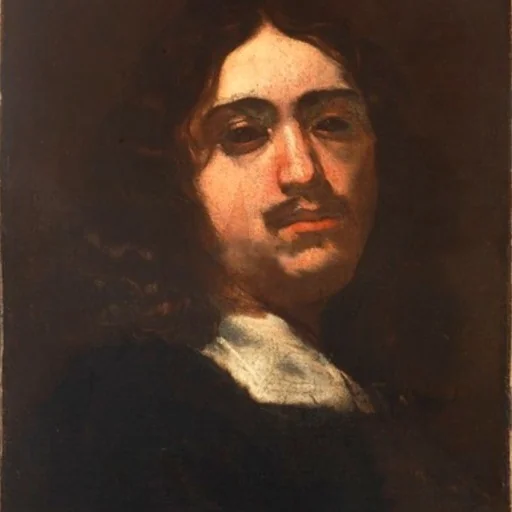
Jusepe de Ribera (Valencian:; baptised 17 February 1591 – 3 November 1652) was a Spanish painter and printmaker.