Artwork
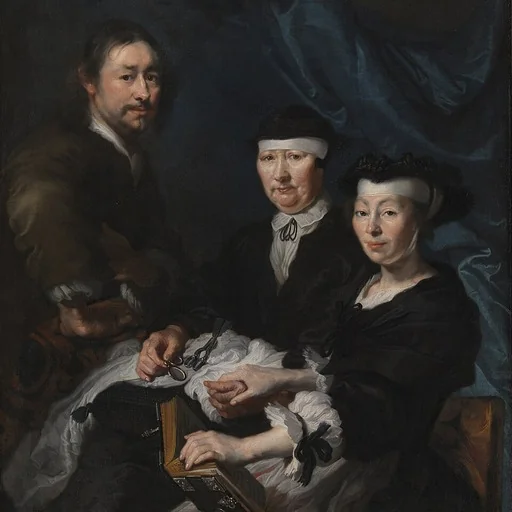
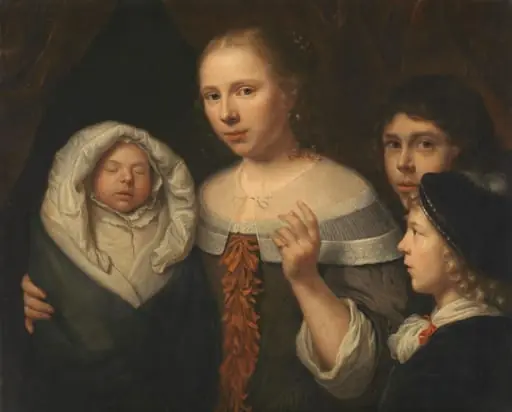
The Artist with his Family
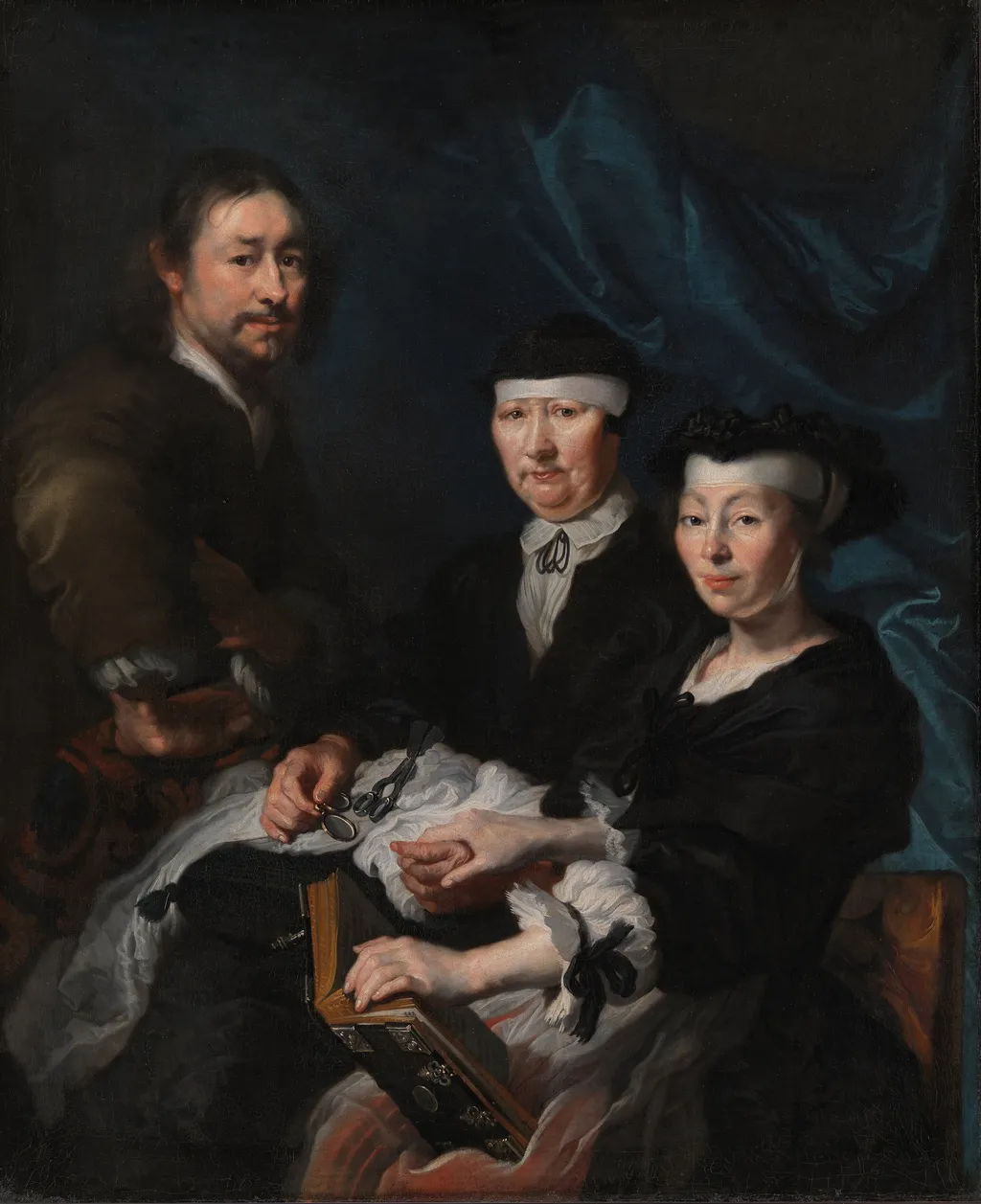
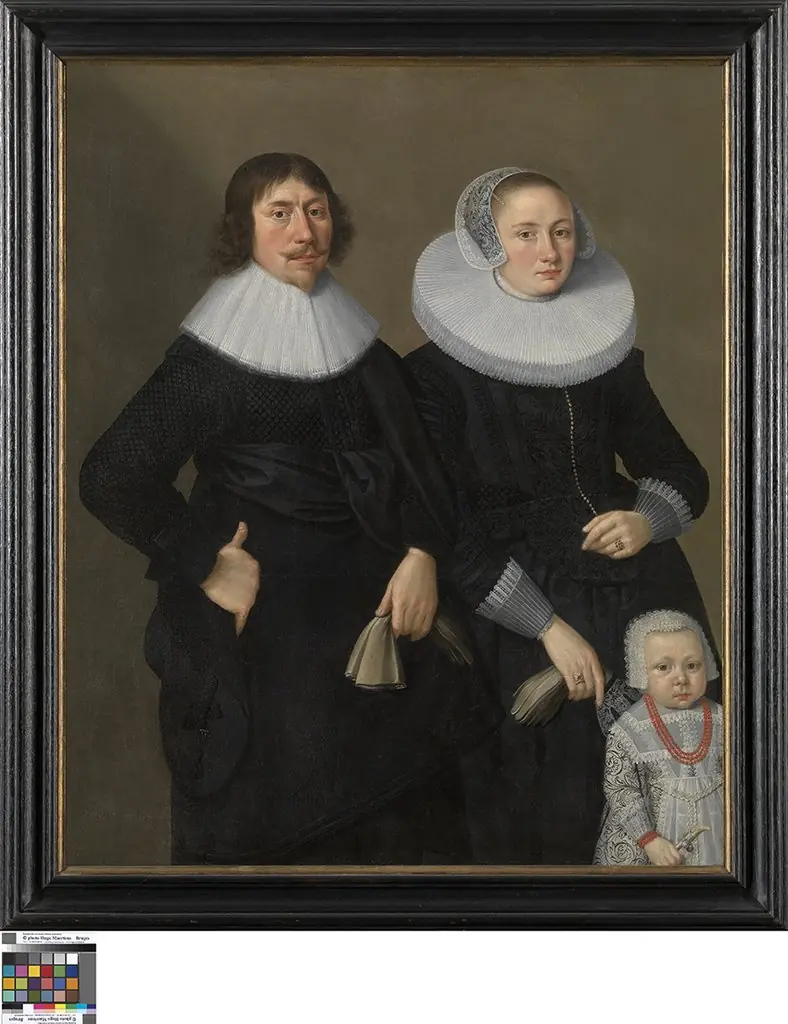
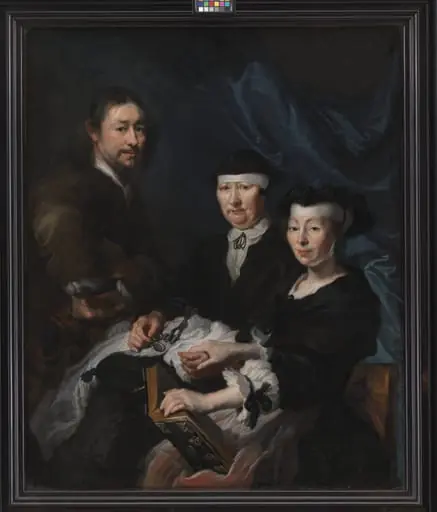
The Artist with his Family is an oil painting by the Dutch Golden Age artist Karel van Mander III. It dates from 1650 and is held in the collection of the Statens Museum for Kunst.
About this work
Overview
Painted around 1650, this oil portrait by Karel van Mander III depicts the artist alongside two women, likely his wife and daughter.
Painted around 1650, this oil portrait by Karel van Mander III depicts the artist alongside two women, likely his wife and daughter. The composition is intimate and restrained, set against a deep blue background with subtle fabric folds. The figures are rendered in somber attire with crisp white linens, emphasizing dignity over ornamentation. The medium allows for fine detail in texture and light, characteristic of Dutch portraiture of the period.
Subject & Meaning
The central figure, the artist, holds scissors and a scrap of fabric, tools of his trade, suggesting identity through labor rather than status symbols. The woman to his right holds a small box, possibly containing sewing supplies or personal effects. The grouping conveys domestic harmony and shared domesticity, reflecting values of quiet industry and familial unity common in mid-17th-century Dutch households.
Technique & Style
Van Mander employed chiaroscuro to model forms with soft gradations of light and shadow, enhancing the three-dimensionality of faces and fabrics. The dark background isolates the figures, focusing attention on their gestures and textures. Brushwork is precise yet unobtrusive, particularly in the rendering of lace collars and the sheen of woolen garments, demonstrating technical control typical of Northern European portraiture.
History & Provenance
The painting has been in the collection of Statens Museum for Kunst since at least the 19th century, acquired as part of Denmark’s broader effort to document Nordic and Dutch artistic traditions. Its attribution to Karel van Mander III is supported by stylistic parallels with his known works and documented family connections. No significant alterations or restorations are recorded in its modern history.
Context
Created during the Dutch Golden Age, the work reflects a shift from grand portraiture to quieter domestic scenes, favored by middle-class patrons. Artists often portrayed themselves and their families to assert professional identity and moral virtue. The absence of lavish settings or symbols of wealth aligns with Calvinist ideals of modesty, while the inclusion of tools underscores the dignity of craft.
Legacy
Though not widely exhibited outside Denmark, the painting remains a representative example of familial portraiture in 17th-century Dutch art. It contributes to scholarly understanding of how artists negotiated personal and professional identity within domestic spaces. Its preservation offers insight into the visual culture of non-noble households during a period of artistic flourishing.
Own this work as a print
Artist & collection