Artwork
Lohan
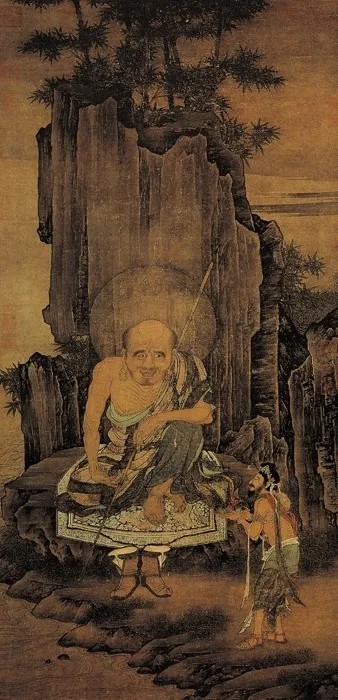
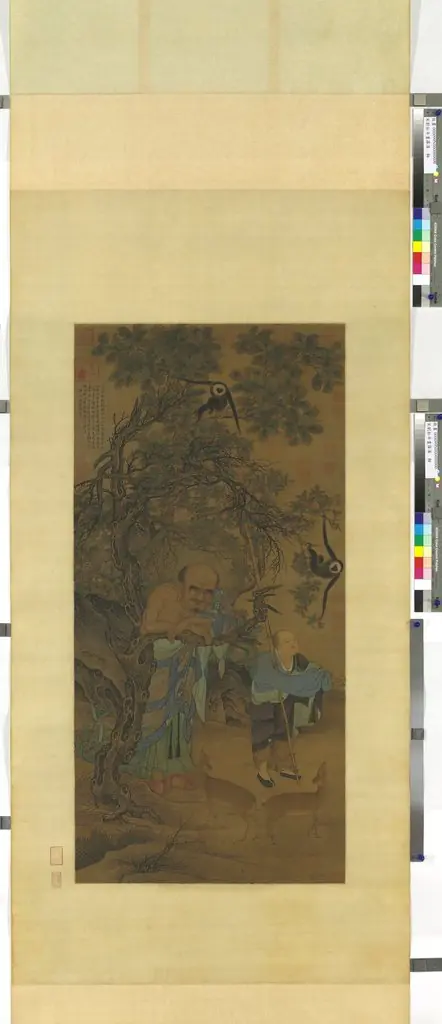
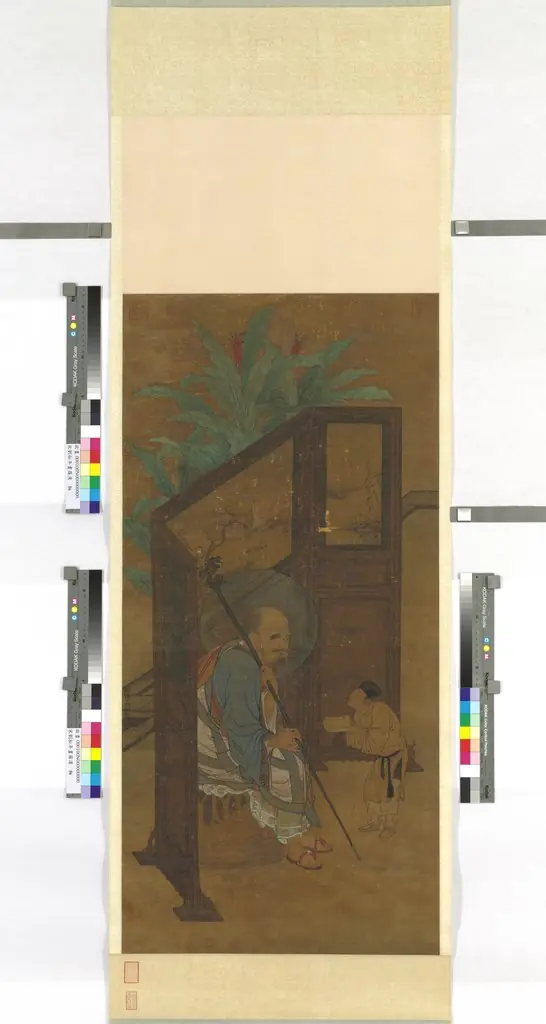
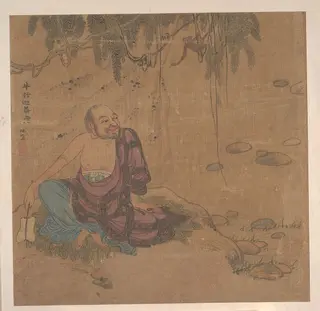
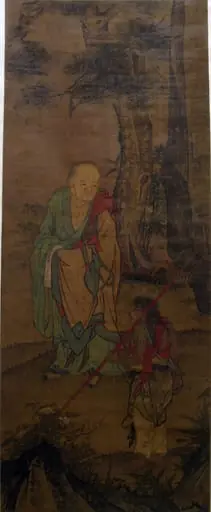
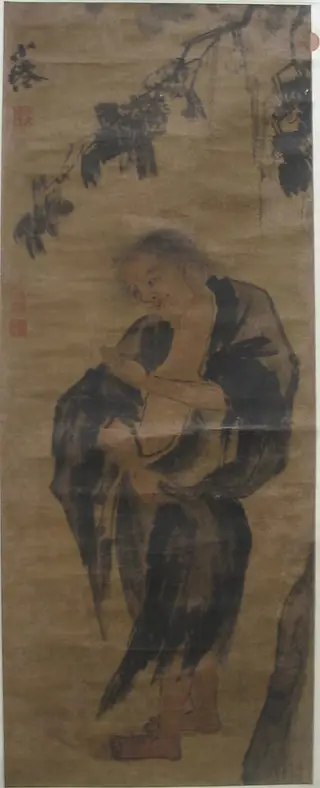
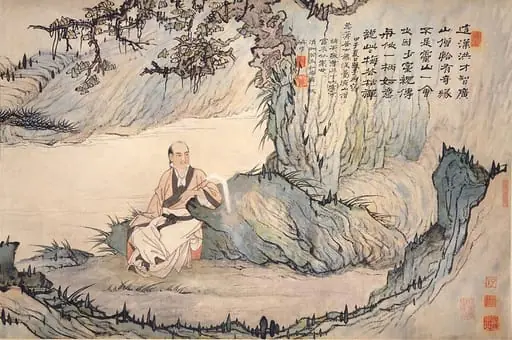
Lohan is an unspecified painting by the Song dynasty painting artist Liu Songnian. It dates from 1207 and is held in the collection of the National Palace Museum.
About this work
Overview
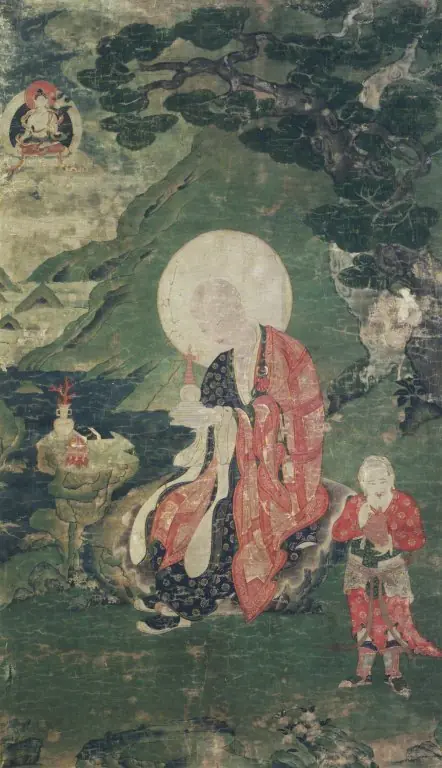
Created in 1207 by Liu Songnian, a court painter of the early Southern Song, Lohan is an ink-and-wash composition that presents a solitary monk seated before a massive rock outcrop. The figure is attended by a youthful boy, and the scene is set against a muted, earth‑toned background that suggests a quiet, natural setting.
Subject & Meaning
The central figure represents a lohan, a Buddhist disciple who has attained enlightenment, a motif common in Chinese religious art. The calm demeanor of the monk contrasted with the animated expression of the boy conveys a dialogue between spiritual serenity and youthful vigor, emphasizing the transmission of wisdom across generations.
Technique & Style
Executed in the refined court style of the Southern Song, the painting employs delicate brushwork and subtle tonal variations to model the rock formation and foliage. Liu’s handling of ink washes creates atmospheric depth, while restrained coloration, predominantly browns and muted greens, enhances the sense of tranquility and spatial recession.
History & Provenance
Liu Songnian, one of the Four Masters of the Southern Song, served at the Imperial Academy of Painting in Hangzhou, eventually becoming a painter‑in‑attendance to the court. Lohan remained within the imperial collection and is now housed in the National Palace Museum, where it continues to illustrate the court’s aesthetic priorities during the dynasty’s later period.
Artist & collection
Artist
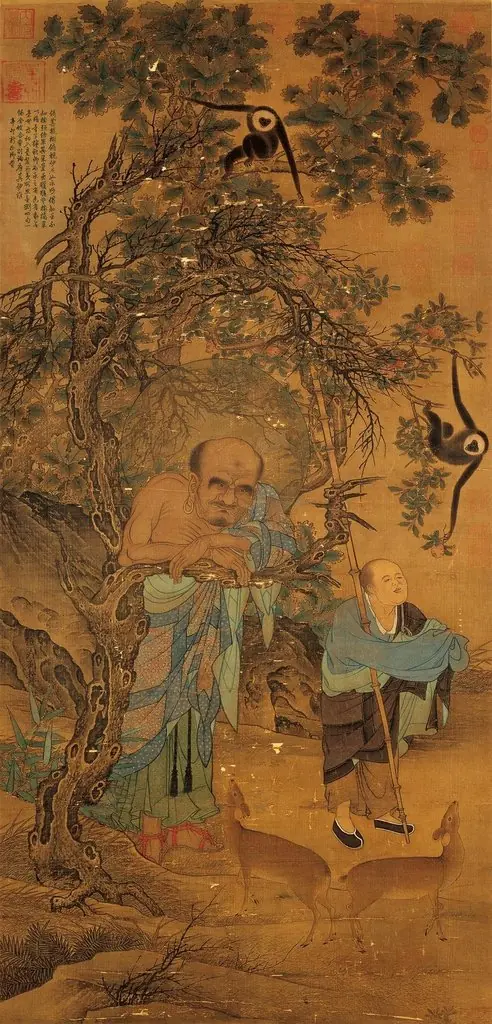
Liu Songnian (刘松年 or traditional Liu Sung-nien, 1174–1224 CE), was a Chinese landscape painter during the early Southern Song Dynasty (1127–1279).