Artwork
Virgin and Child with Saints Stephen, Jerome and Maurice
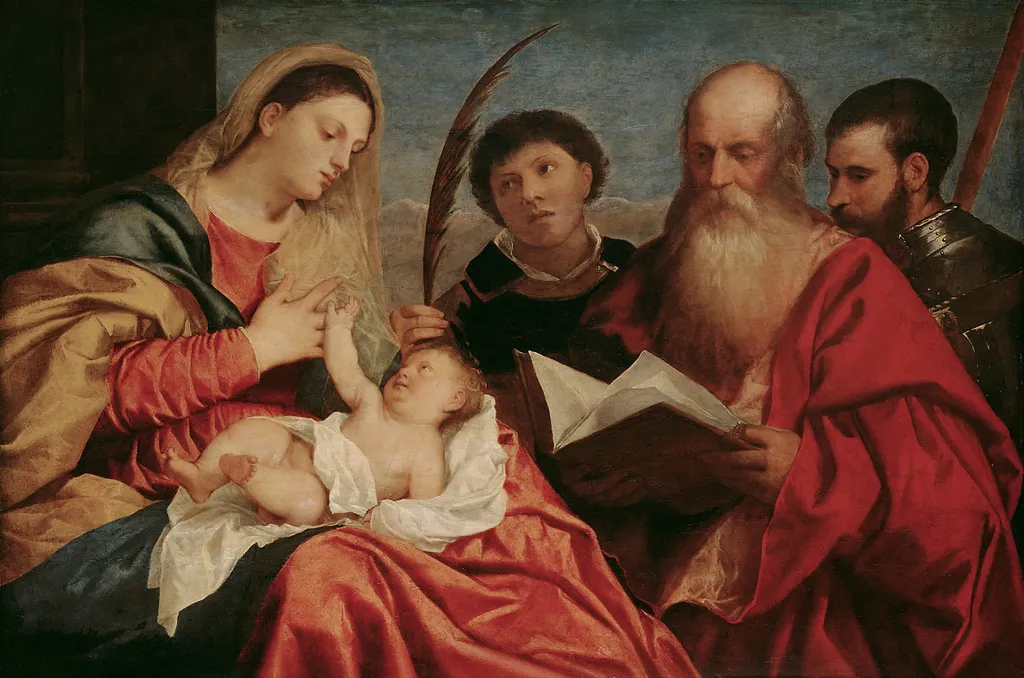
Virgin and Child with Saints Stephen, Jerome and Maurice is an oil painting by the High Renaissance artist Titian. It dates from 1520 and is held in the collection of the Kunsthistorisches Museum.
About this work
Virgin and Child with Saints Stephen, Jerome and Maurice is a religious work by Titian, painted around 1520.
Virgin and Child with Saints Stephen, Jerome and Maurice is a religious work by Titian, painted around 1520. It was created with oil paint on canvas. The picture shows the Virgin Mary with the Christ Child and three saints in a calm group.
The painting is part of the collection at the Kunsthistorisches Museum in Vienna. It is also known as the Virgin with Three Saints. The work does not belong to a specific movement.
If you’re curious, check out the Kunsthistorisches Museum.
Subject & Meaning
This religious work depicts a sacra conversazione, presenting the Virgin Mary and the Christ Child in the company of three saints. The composition follows a scheme popularized by Giovanni Bellini, featuring half-length figures arranged across a horizontal format against a cloudy sky. Unusually, the Virgin is positioned to the left rather than the center, framed by a door-like structure while interacting with the Child on her lap.
The accompanying saints are identified by specific attributes: Stephen appears in a dalmatic holding a martyr's palm; Jerome is portrayed as an elderly figure in red robes with a book; and Maurice is shown wearing armor and carrying a lance. The painting represents a devotional gathering, uniting these holy figures in a shared sacred space.
Technique & Style
The painting is executed in oil on poplar panel and measures 92.5 cm in height by 138 cm in width. It follows a horizontal format typical of early sixteenth-century sacre conversazioni, with the Virgin and Child positioned at left and the three saints, Stephen, Jerome, and Maurice, arranged to the right in a shallow, stage-like space. The composition emphasizes the Virgin’s interaction with the Christ Child, who sits on her lap amid abundant drapery, while Jerome appears as an elderly, red-robed scholar holding a book, Stephen wears a deacon’s dalmatic and martyr’s palm, and Maurice stands armored with lance.
A cloud-streaked sky provides a neutral backdrop, and Mary is framed by an architectural recess that sets her apart. Recent restoration revealed pentimenti beneath later repaints, indicating areas of direct master intervention in passages such as the drapery and the Child’s figure.
Handling shows Titian’s early Venetian manner: luminous color, softly blended modeling, and a preference for tactile, weighty drapery that organizes the scene’s depth. The palette relies on warm reds and golds for the saints’ vestments, contrasted with cooler blues and whites for the Virgin’s mantle, reinforcing the hierarchy of figures.
History & Provenance
Dated to approximately 1520, this oil painting on poplar panel was first documented in 1659 within the collection of Archduke Leopold Wilhelm of Austria. Since that initial record, the work has consistently been attributed to Titian, a view supported by scholars such as Cavalcaselle, Ricketts, Fischel, and Suida. Historical debate has surrounded its relationship to a similar composition in the Louvre; while some experts like Adolfo Venturi considered the Paris version the prototype, others including Gronau speculated this panel might be the work once recorded in the Aldobrandini collection in Rome.
Tietze alternatively suggested both known versions were workshop repetitions of a lost original. Modern restoration efforts have revealed high-quality passages beneath later overpainting, confirming direct intervention by the master in specific areas. The painting remains in the Kunsthistorisches Museum in Vienna, having entered the imperial holdings through the Archduke's acquisition.
The painting is held in the Kunsthistorisches Museum in Vienna, where it has been part of the collection since at least 1659. Historical records indicate it was originally acquired by Archduke Leopold Wilhelm of Austria, who is listed as a former owner before the work entered the museum's holdings. While the museum is the current custodian, the provided sources do not specify a unique inventory or accession number for the piece.
The available documentation mentions the work's presence in Vienna but does not record any specific exhibition history, dates, or temporary loans to other institutions.
Context
The painting, dated 1520 and executed in oil on poplar (92.5 × 138 cm), exemplifies a sacra conversazione within the High Renaissance Venetian school and is housed in the Kunsthistorisches Museum, Vienna, where it entered the collection of Archduke Leopold Wilhelm.
Scholars have long debated its status: Gronau and Ricketts regarded the Vienna version as an earlier, more elaborate autograph work, while later writers such as Venturi and Tietze identified it as a workshop replica of a lost prototype; technical study revealed direct intervention by Titian, underscoring its significance in the development of the genre.
Legacy
The work was first documented in 1659 among the possessions of Archduke Leopold Wilhelm and has been part of the Kunsthistorisches Museum’s collection ever since, establishing its enduring presence in museum narratives. Its composition adapts the sacra conversazione format associated with Giovanni Bellini, yet places the Virgin to the left and surrounds the Child with an elaborate drapery that distinguishes it from contemporary models. The discovery of a related, larger version in the Louvre, long debated as the probable prototype, has fueled scholarly discussion of Titian’s workshop practice and reinforced the painting’s reputation.
Contemporary attribution has been upheld by multiple 19th‑ and early‑20th‑century authorities, cementing its status in the history of Venetian art.
Overview
Titian's painting, "Virgin and Child with Saints Stephen, Jerome and Maurice," created around 1520, depicts a sacred gathering. This religious work, executed in oil on canvas, is also known by the shorter title, "Virgin with Three Saints." It is currently housed within the collection of the Kunsthistorisches Museum in Vienna, where it represents a significant example of the artist's early 16th-century output.
Artist & collection
Artist
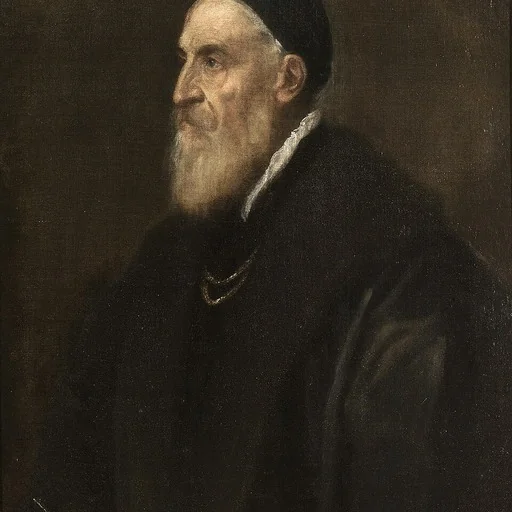
Tiziano Vecellio (Italian:; c. 1488/1490 – 27 August 1576), Latinized as Titianus, hence known in English as Titian ( TISH-ən), was an Italian Renaissance painter. The most important artist of Renaissance Venetian…

 Madonna and Child with Saints Peter and Paul
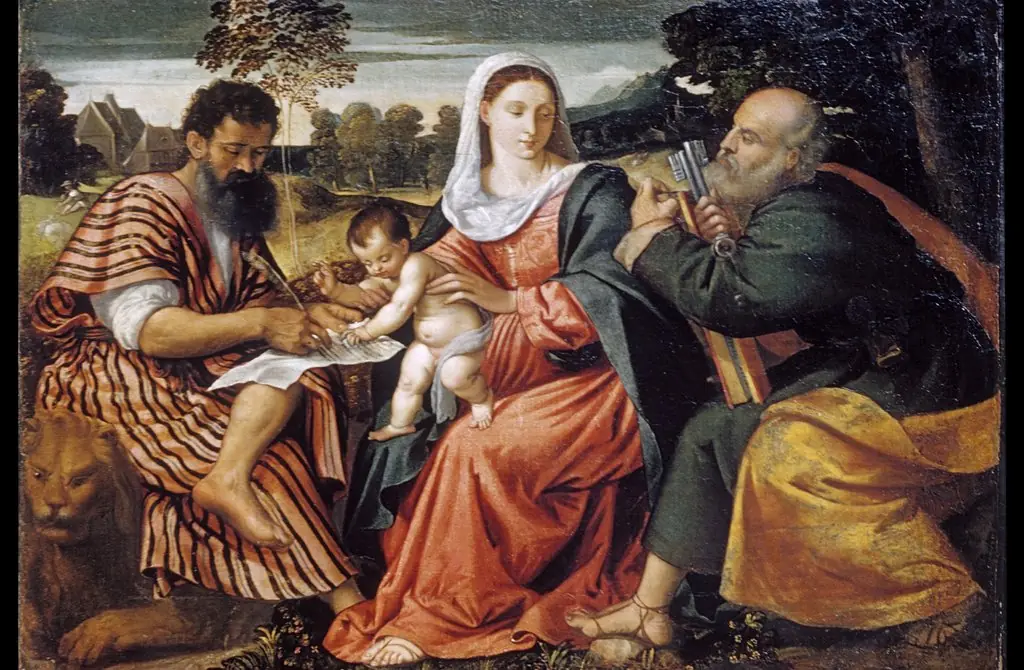 Madonna and Child with Saints Mark and Peter
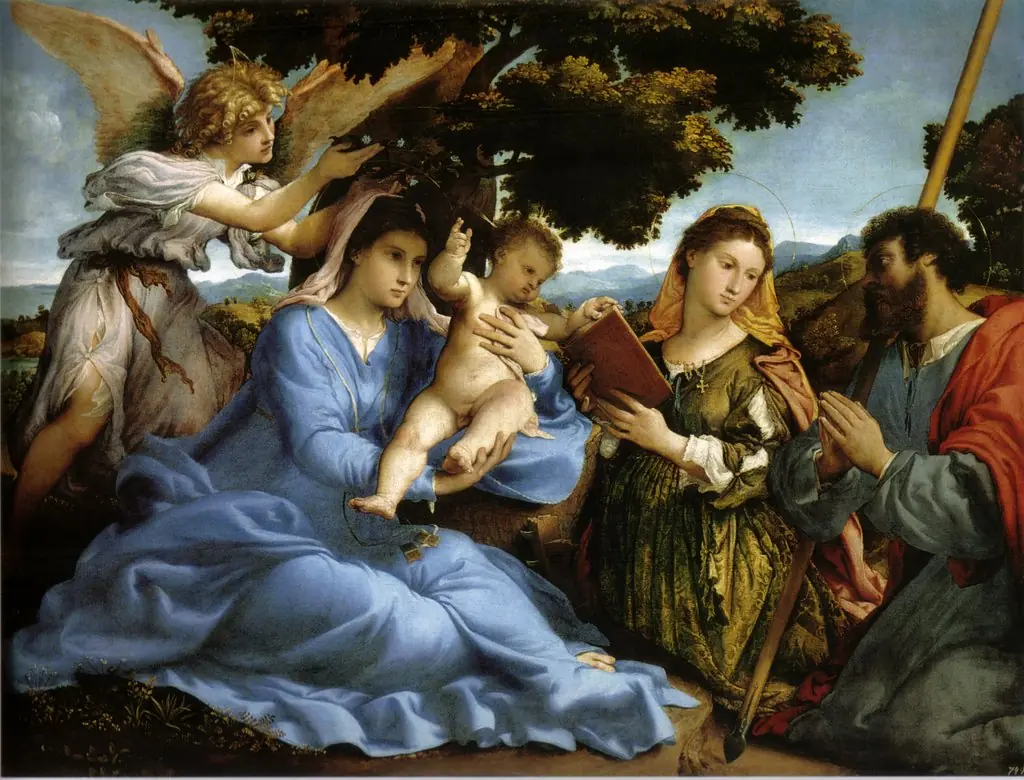 Madonna and child with Saint Catherine, Saint James the Greater, and an angel
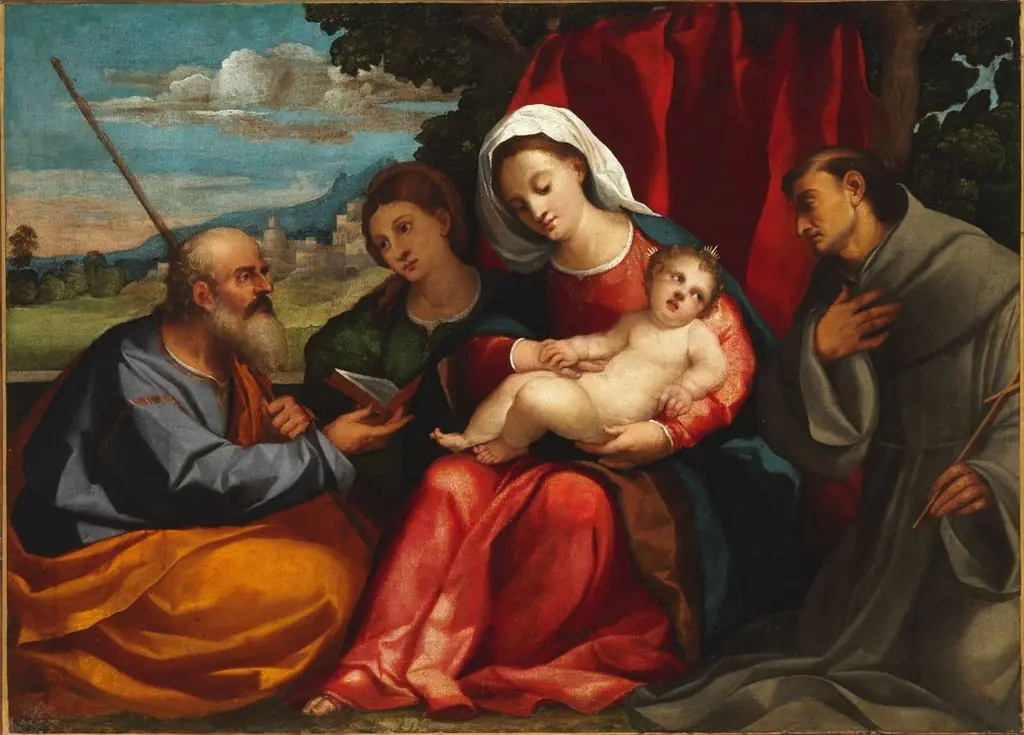 The Holy Family with a Female Saint and Saint Francis of Assisi
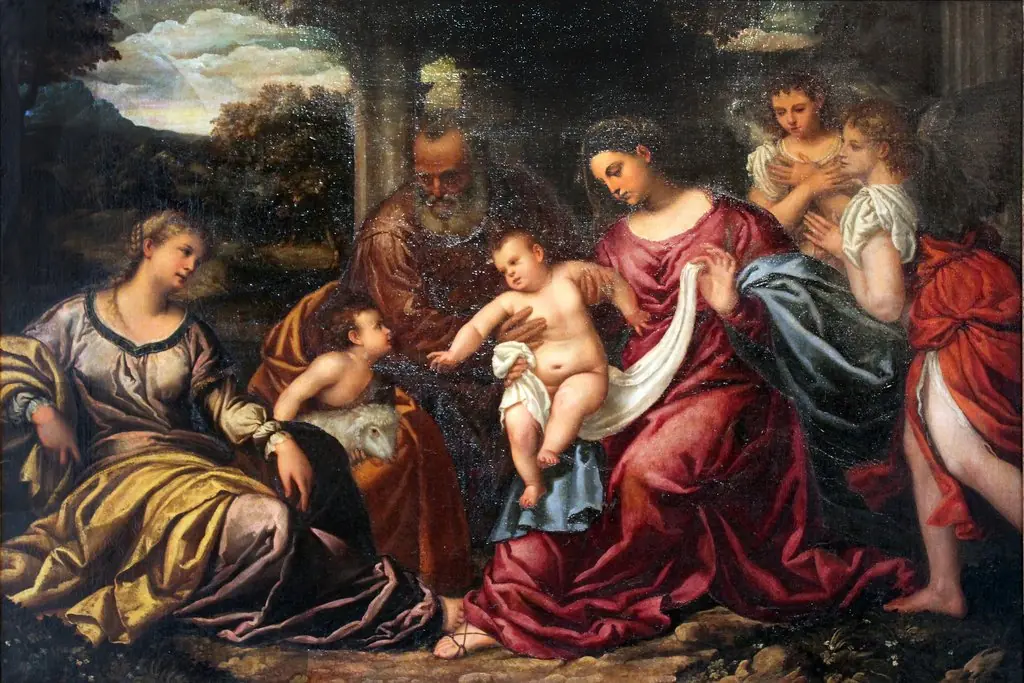 The Holy Family
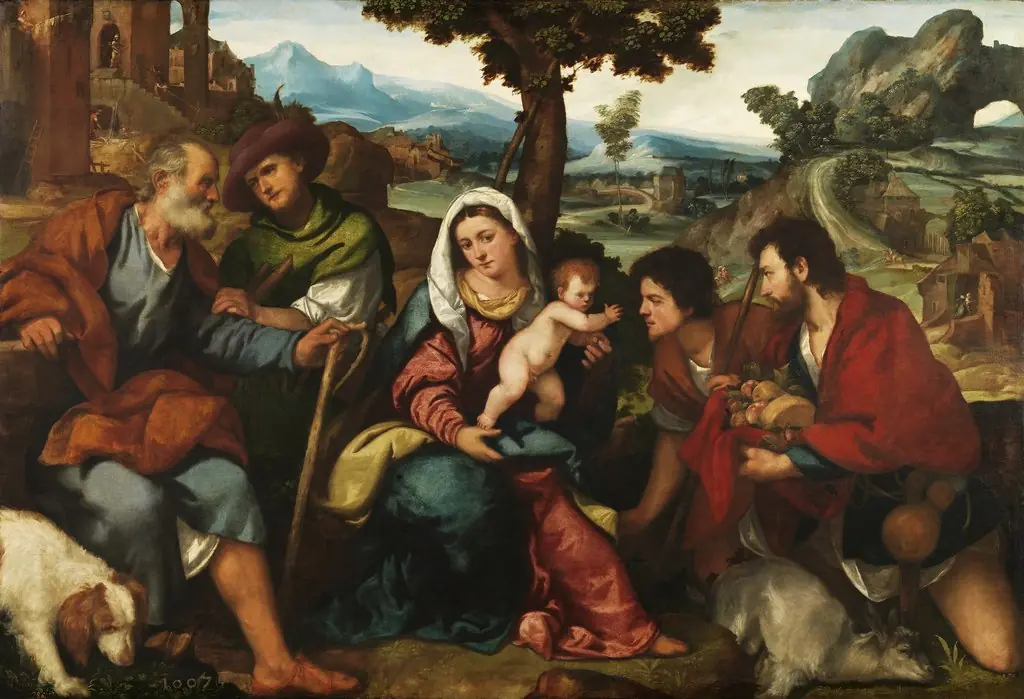 The Adoration of the Shepherds
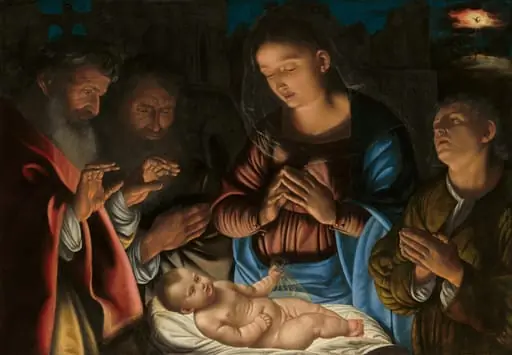 The Adoration of the Shepherds
 Presentation of Christ in the temple
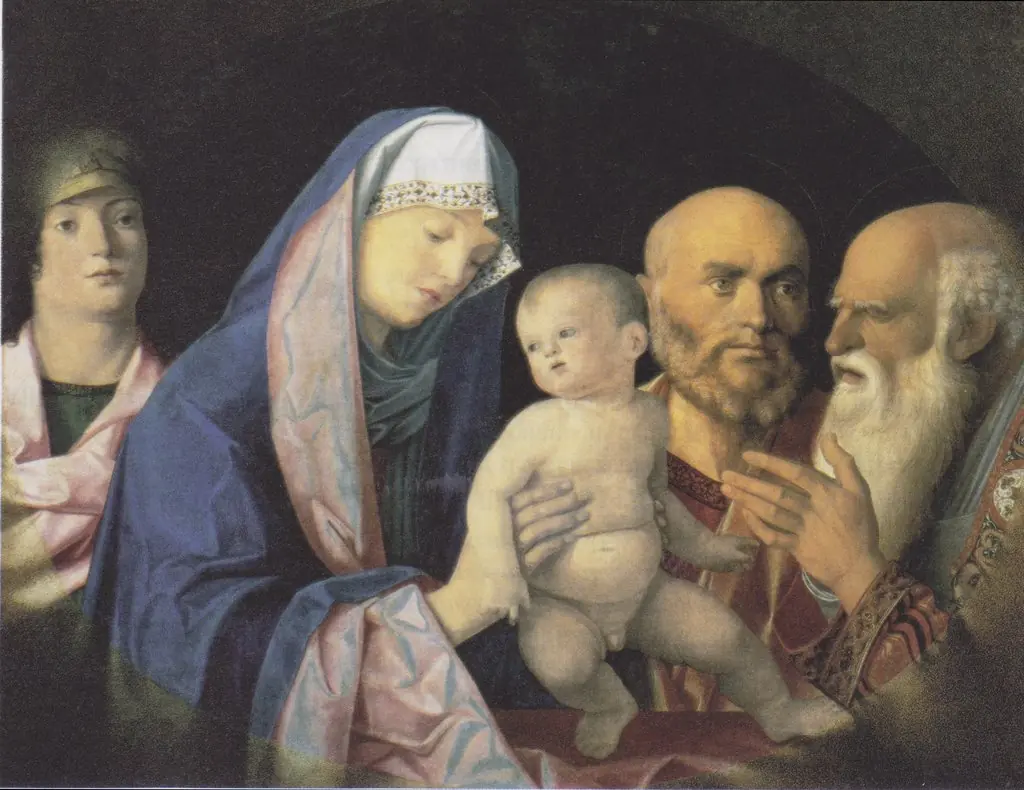 Presentation of Jesus
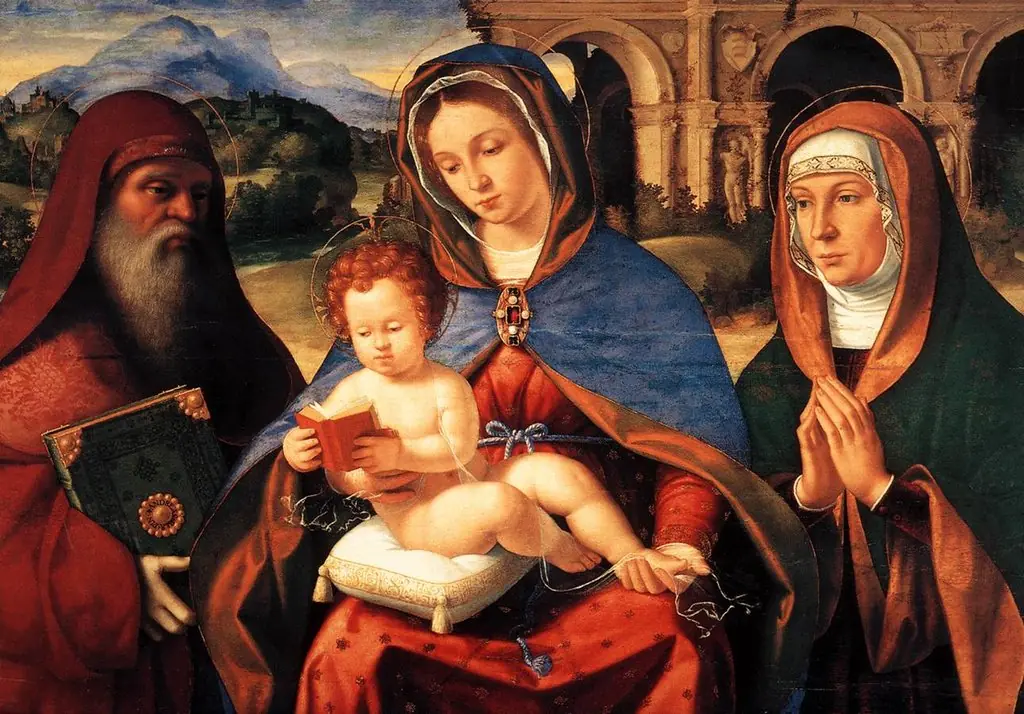 Madonna Baglioni