Artwork
The Abduction of the Sabine Women
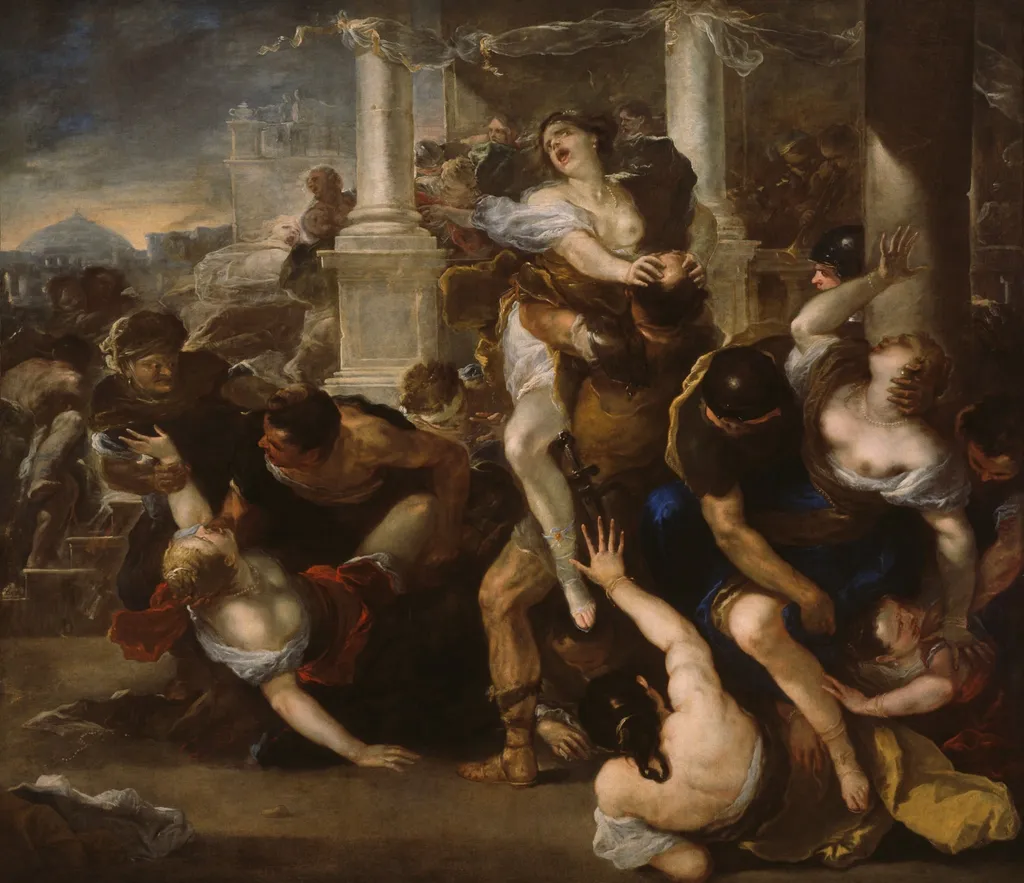
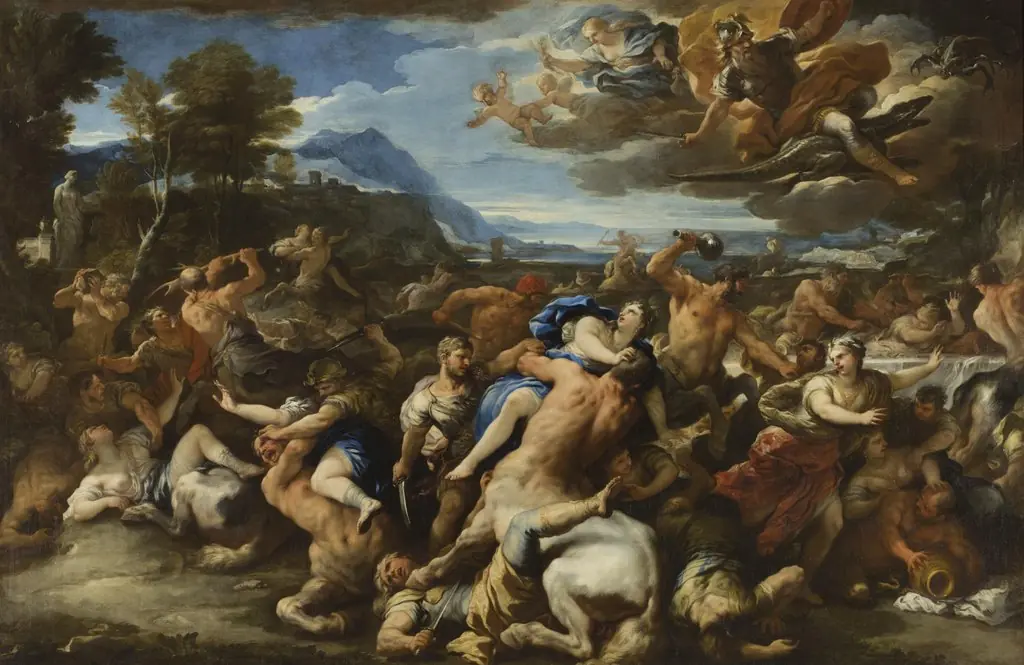
The Abduction of the Sabine Women is an oil painting by the Baroque artist Luca Giordano. It dates from 1675 and is held in the collection of the Art Institute of Chicago.
- Accession no.
- 111620
- Credit line
- Major Acquisitions Centennial Endowment; Charles H. and Mary F. S. Worcester Collection
About this work
Overview
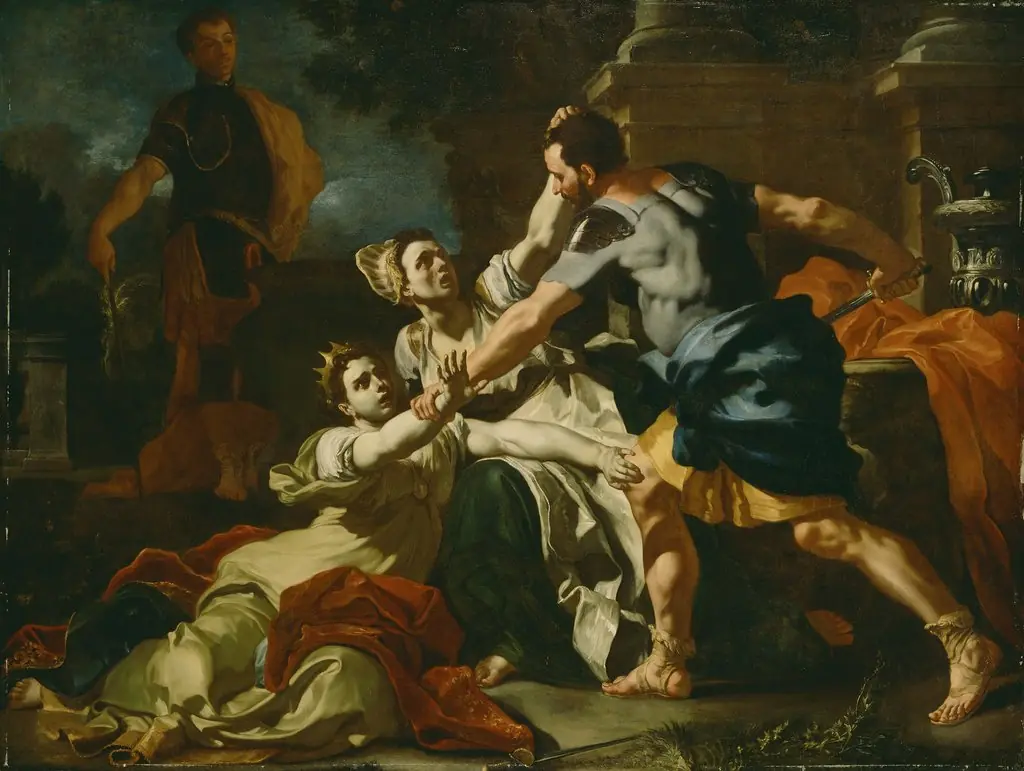
Luca Giordano's 'The Abduction of the Sabine Women' is a monumental oil-on-canvas painting depicting a pivotal, violent moment from Roman mythology. Characterized by dynamic brushwork and theatrical composition, the work showcases Giordano's mature style.
Subject & Meaning
The painting illustrates the mythological event where Romans, facing a bride shortage, abducted Sabine women during a festival. This ancient narrative serves as the backdrop for Giordano's exploration of drama and movement.
Technique & Style
Giordano employed his signature rapid, bold brushwork ('Luca fa presto') to capture vivid gestures. The composition reflects both geometric complexity and influences from earlier treatments of the subject, with notable use of chiaroscuro for dramatic effect.
History & Provenance
Created at the end of the 17th century, this work reflects Giordano's evolution from emulating (e.g., Peter Paul Rubens) to transforming established styles, marking a peak in his career as Italy's most acclaimed and traveled artist at the time.
Context
The painting's style and themes are set against the broader backdrop of 17th-century Italian art, where mythological subjects and dynamic compositions were prevalent. Giordano's approach, however, stands out for its energetic and theatrical qualities.
Legacy
While specific long-term impacts of 'The Abduction of the Sabine Women' on subsequent art movements are not widely highlighted, the piece remains a testament to Giordano's innovative style and influence on late Baroque painting techniques.
Own this work as a print
Artist & collection

Artist
Luca Giordano was an Italian late-Baroque painter and printmaker in etching. Giordano was one of the most celebrated artists of the Neapolitan Baroque, whose vast output included altarpieces, mythological paintings and…