Artwork
Judith with the head of Holopherne
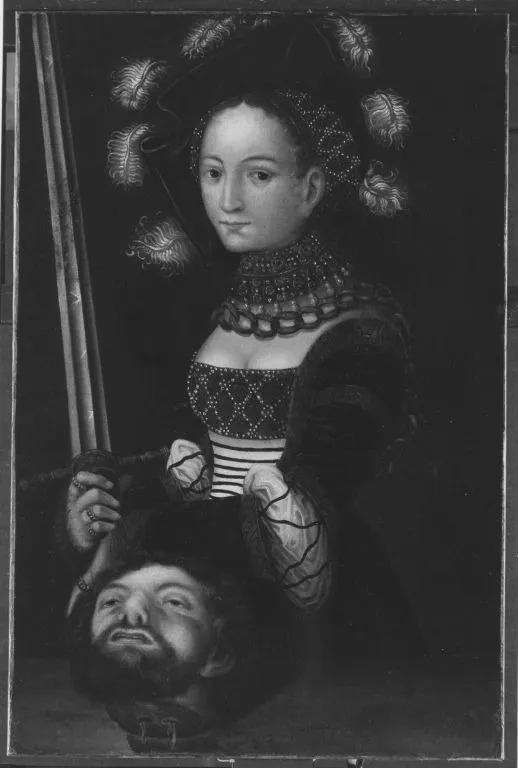
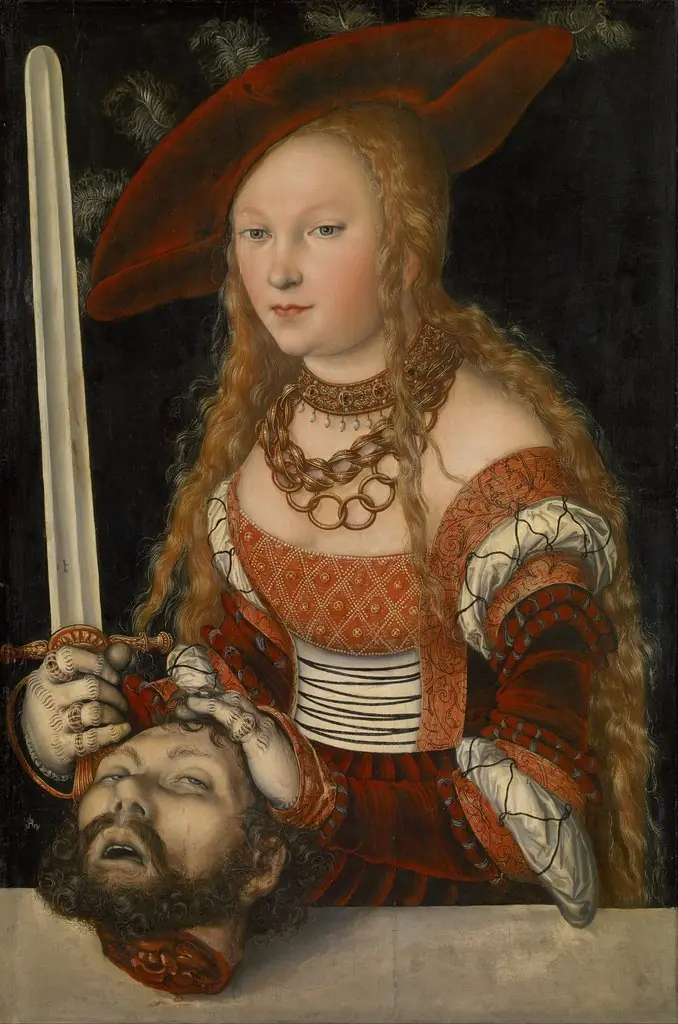
Judith with the head of Holopherne is an oil painting by the Early Baroque Italian artist Lucas Cranach the Elder. It is held in the collection of the Bavarian State Painting Collections.
About this work
Subject & Meaning
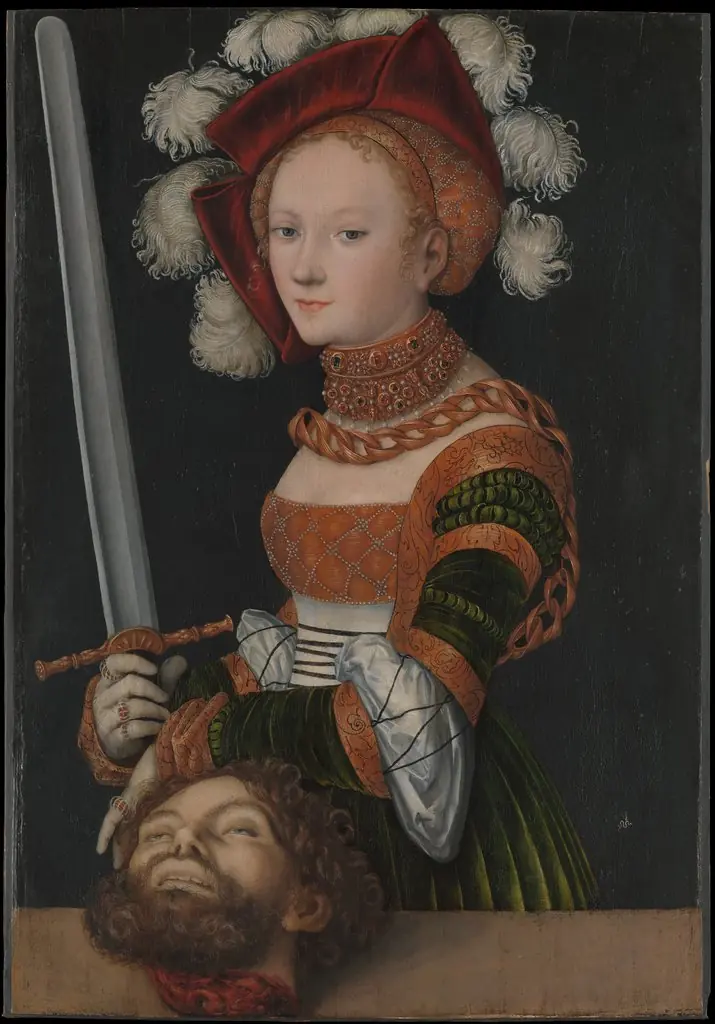
Cranach's composition centers on Judith as the principal figure, with the beheaded head of Holofernes rendered as a secondary motif within the scene.
The painting depicts the Old Testament heroine Judith alongside the severed head of Holofernes, the Assyrian general she beheaded to deliver her besieged city of Bethulia. Cranach's composition centers on Judith as the principal figure, with the beheaded head of Holofernes rendered as a secondary motif within the scene. The work is classified as religious art, situating the narrative within the biblical tradition of divine deliverance through feminine virtue.
As a copy after Cranach's earlier treatment of the same subject, the painting perpetuates the iconographic formula the artist popularized in the German Renaissance: Judith presented as a richly attired, composed figure whose beauty and resolve contrast with the gruesome trophy of her victory. The subject carries symbolic weight as an emblem of faith triumphing over tyranny, and of chastity and divine providence overcoming brute power, themes that resonated strongly in Cranach's milieu and that the Alte Pinakothek version transmits through the established Cranach iconography.
History & Provenance
The painting titled Judith with the Head of Holopherne is an oil-on-canvas work dated to the year 1700. It is attributed to Lucas Cranach the Elder and is currently held within the collection of the Bavarian State Painting Collections, specifically under the Wittelsbacher Ausgleichsfonds. The artwork is located at the Alte Pinakothek in Munich.
Sources describe the piece as a copy of an original painting by Lucas Cranach the Elder that also resides in the Alte Pinakothek. The work depicts the biblical figures Judith and the beheaded head of Holofernes.
The work is held in the Alte Pinakothek, Munich, as part of the Bavarian State Painting Collections. It is inventoried under the Wittelsbacher Ausgleichsfonds with the dimensions 88.5 cm in height and 59.5 cm in width.
No exhibition history is provided in the cited sources.
Overview
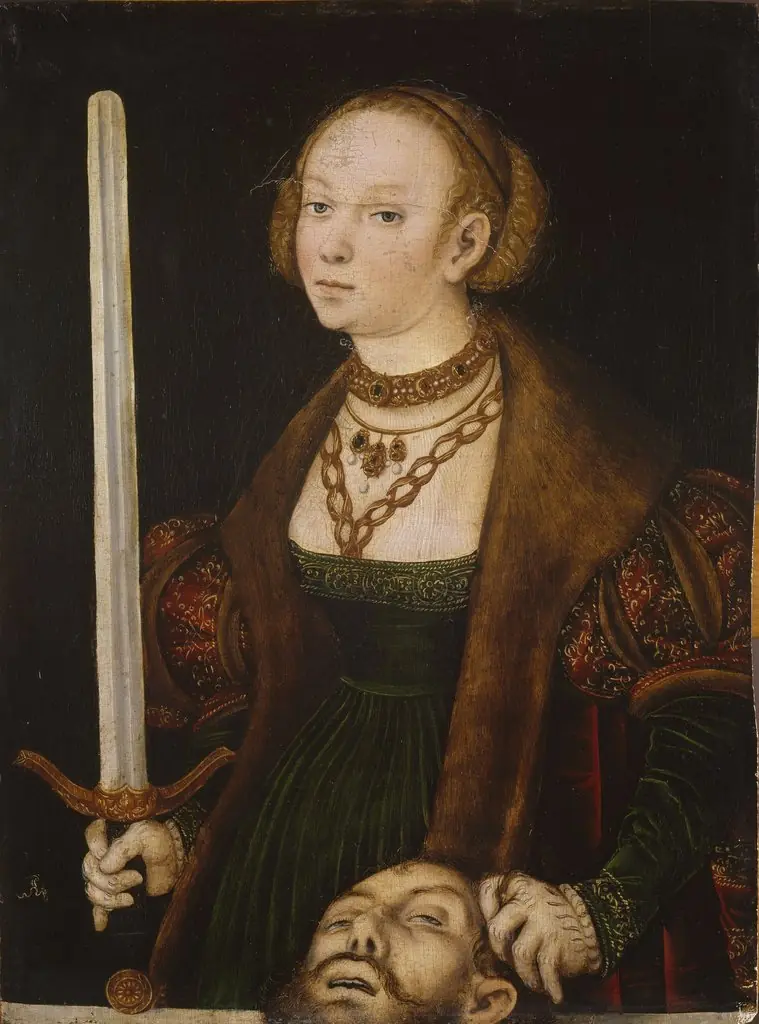
Lucas Cranach the Elder, a leading German painter of the Renaissance, produced an oil painting titled Judith with the Head of Holofernes. The work portrays the biblical heroine Judith clutching the severed head of the Assyrian general Holofernes, a subject frequently revisited by artists of the period.
Technique & Style
Cranach employs a strong chiaroscuro, casting the figures against a deep, dark background that heightens the dramatic contrast between light and shadow. The heroine’s dark, high‑necked dress and feather‑adorned hat are rendered with precise brushwork, while the lifelike rendering of the head’s closed eyes and open mouth adds a visceral realism.
Context
The Judith motif was popular among Northern Renaissance artists, who used it to explore moral and religious ideas. Cranach’s version aligns with his broader oeuvre of portraiture and biblical scenes, integrating Germanic portrait conventions with the dramatic intensity associated with early Baroque influences.
Artist & collection
Artist
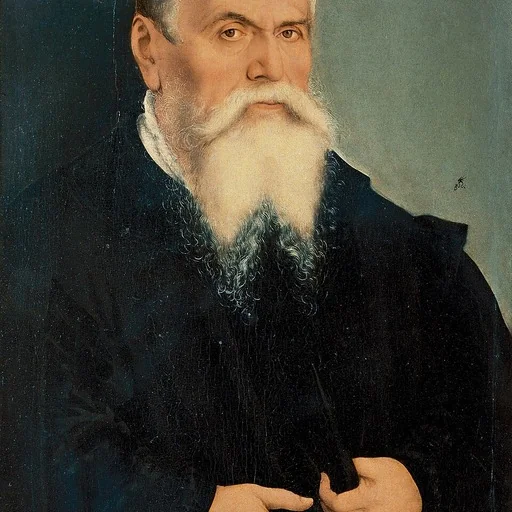
Lucas Cranach the Elder was a German Renaissance painter and printmaker in woodcut and engraving.