Artwork
Lucretia
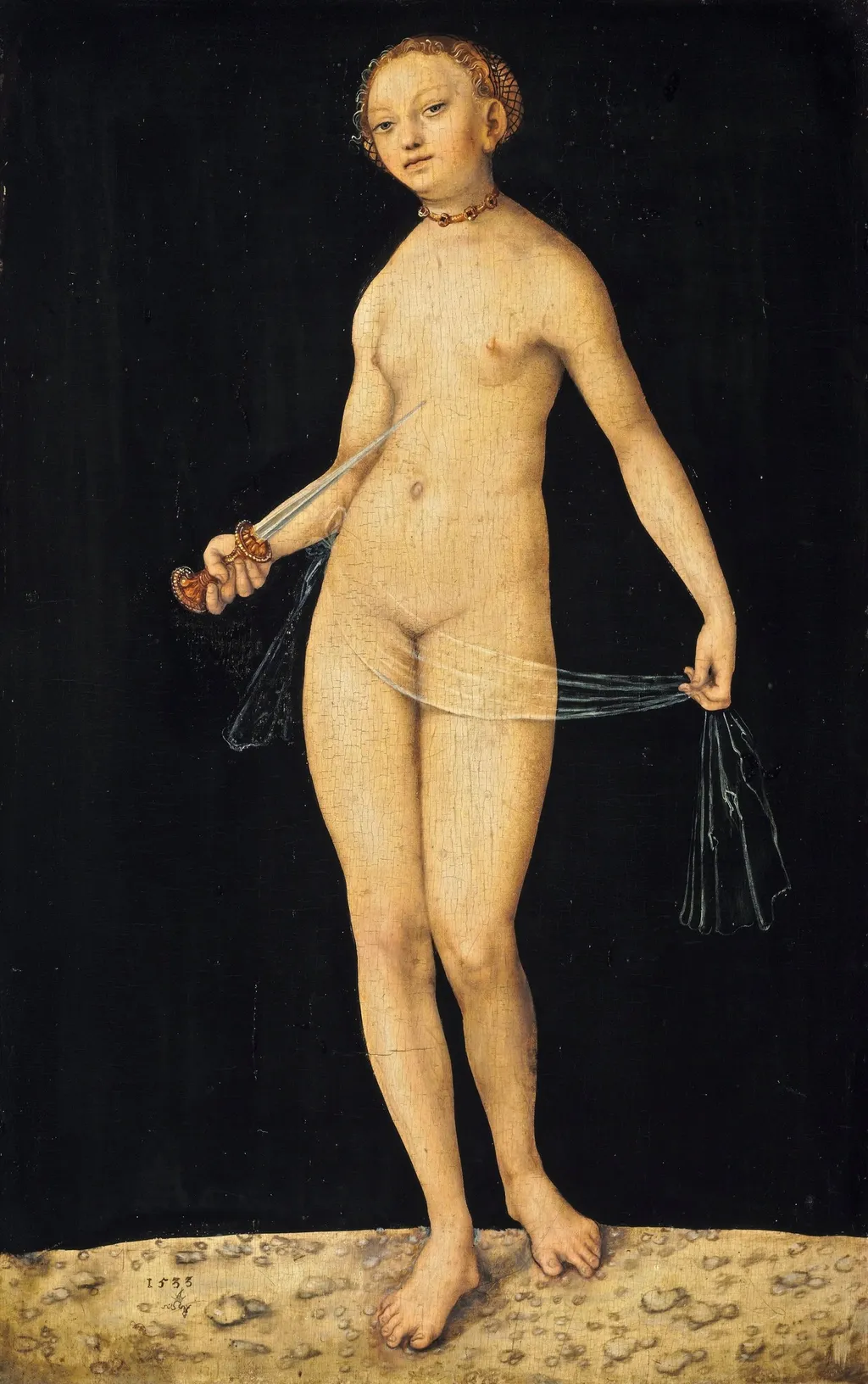
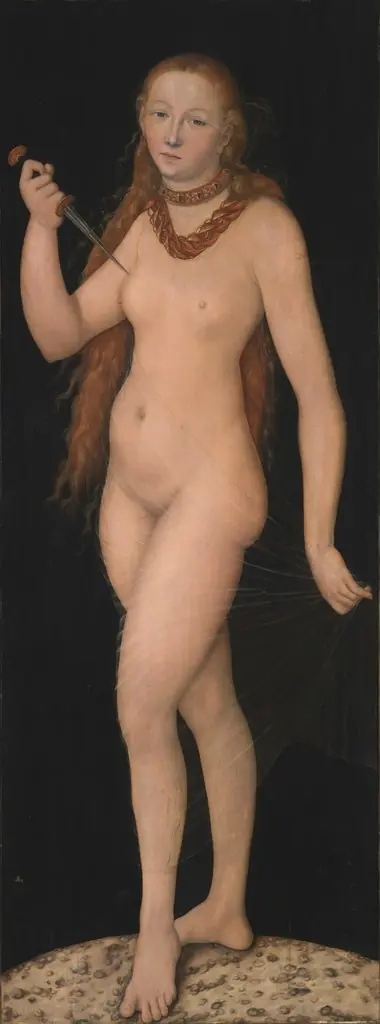
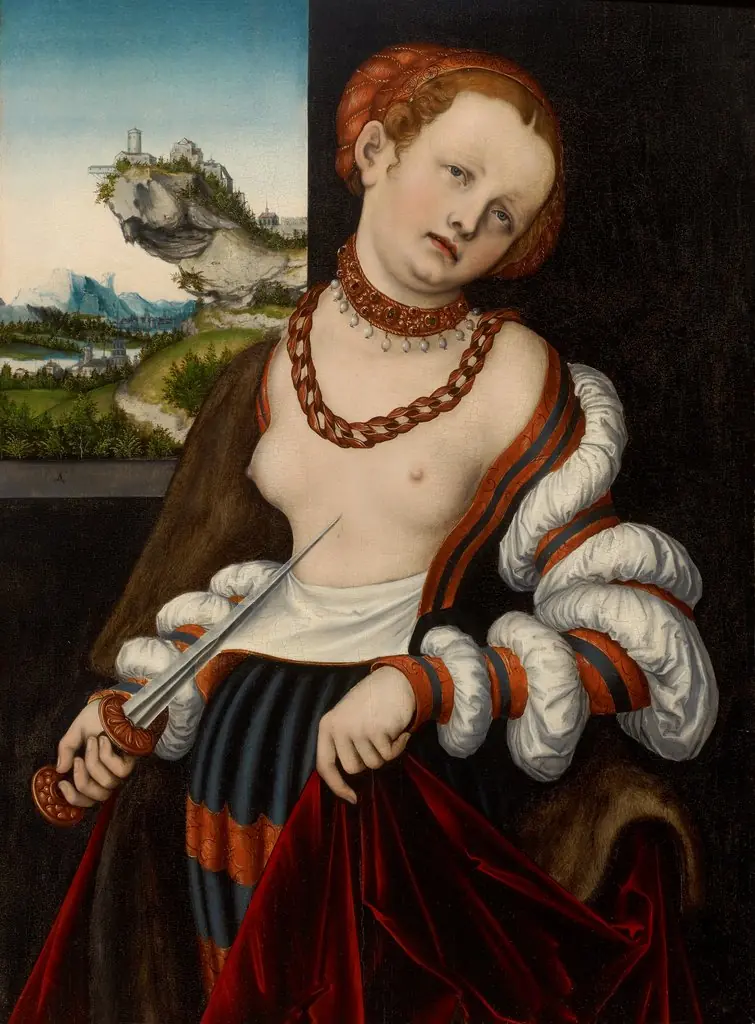
Lucretia is an oil painting by the Northern Renaissance artist Lucas Cranach the Elder. It dates from 1533 and is held in the collection of the Gemäldegalerie Berlin.
About this work
Overview
9 centimeters, the work depicts the Roman heroine at the moment of her suicide and is held in the Gemäldegalerie in Berlin.
Lucretia is an oil painting on wood panel executed in 1533 by Lucas Cranach the Elder, the leading painter of the German Renaissance and court artist to the Electors of Saxony. Measuring 37.3 by 23.9 centimeters, the work depicts the Roman heroine at the moment of her suicide and is held in the Gemäldegalerie in Berlin. Signed and dated in the lower left corner with Cranach's winged serpent insignia and the year 1533, the painting exemplifies the artist's celebrated series of female nudes drawn from classical history and mythology, a genre that occupied a significant place within his prolific output and contributed to his stature as the most successful German artist of his generation.
History & Provenance
The painting is dated 1533 and bears Cranach's winged serpent insignia with elevated wings in the lower left corner, confirming its execution during the artist's mature period in Wittenberg, where he had served as court painter since 1505. The work is now owned by the Staatliche Museen zu Berlin and housed in the Gemäldegalerie. Its provenance includes ownership by Ludwig Knaus before its acquisition by the museum. The panel has been subject to scholarly attribution review; while the Gemäldegalerie revised its attribution to Lucas Cranach the Elder in 2010, earlier literature by Flechsig in 1900 had assigned it to Hans Cranach, the artist's son. The painting's small scale and the presence of the date and monogram distinguish it from many workshop versions of the Lucretia theme, suggesting it may be a primary version rather than a later replication.
Context
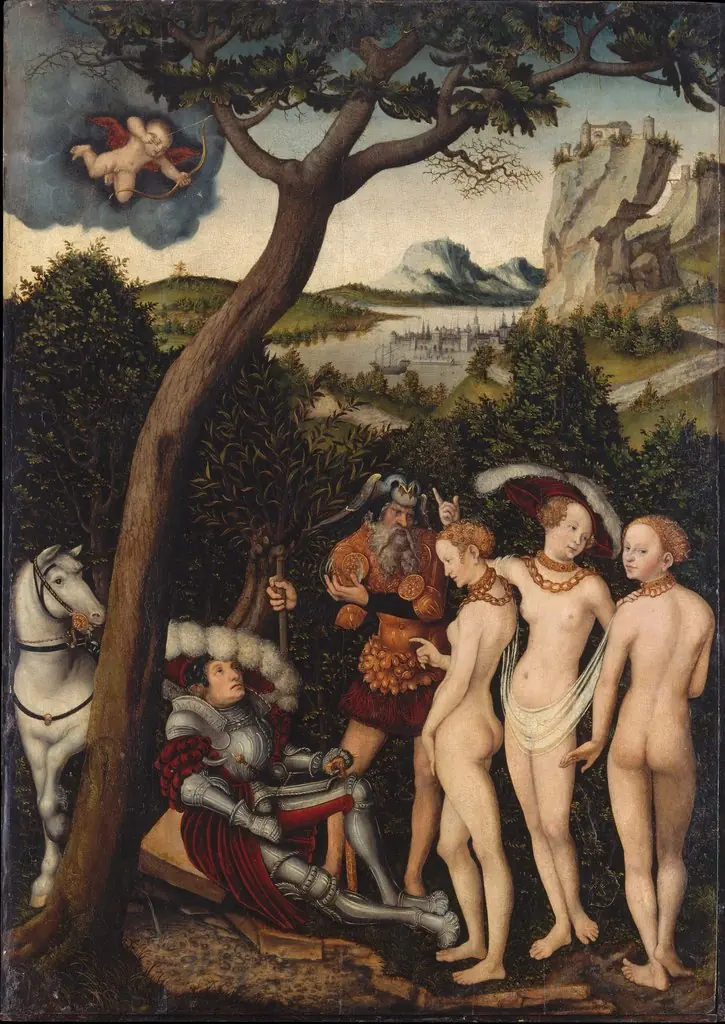
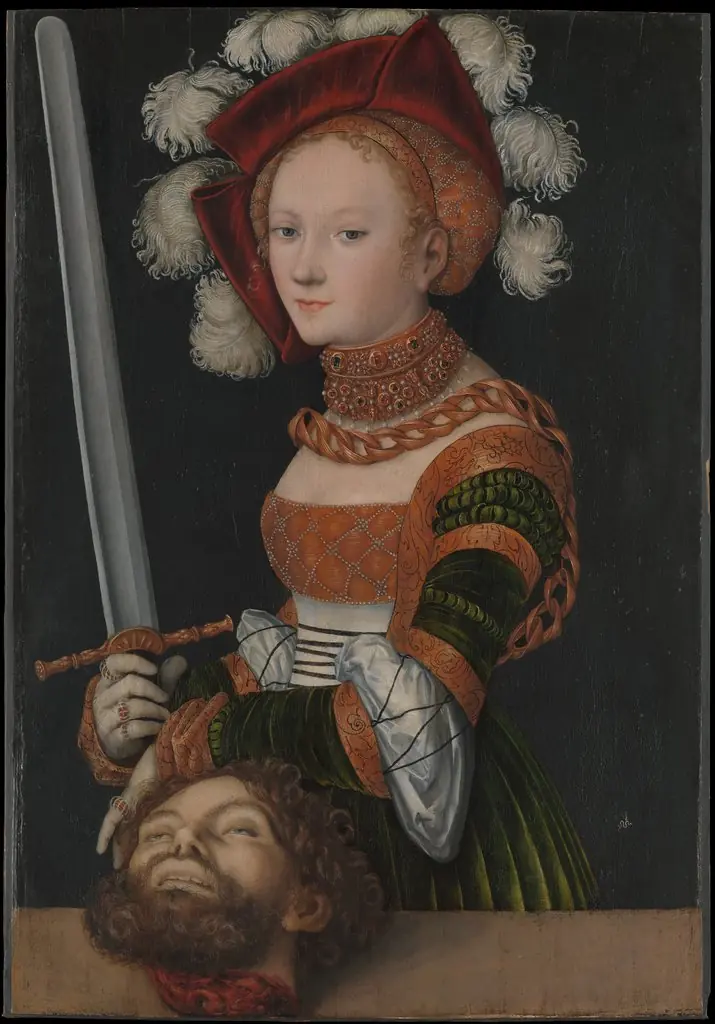
Cranach's Lucretia belongs to a broader corpus of works through which he and his workshop repeatedly treated female subjects from biblical, mythological, and historical sources. The artist ran a large workshop that produced numerous versions of successful compositions, and his son Lucas Cranach the Younger continued to create variants of his father's works for decades after the elder Cranach's death in 1553. The Lucretia theme held particular appeal within this production system, as it offered legitimate occasion for the depiction of the female nude. Cranach's treatment of such subjects must be understood within his dual role as court painter to the Electors of Saxony and as a close friend and visual propagandist for Martin Luther and the Protestant Reformation. While his religious and portrait work served the Reformation cause directly, his classical and mythological nudes occupied a parallel strand of his practice that satisfied courtly and humanist tastes for rarefied elegance and sensual beauty. Art historians have characterized his approach to the female form as converting the Renaissance model of Giorgione's Venus into a distinctively northern idiom expressed through stylized elongation and ornamental detail.
Legacy
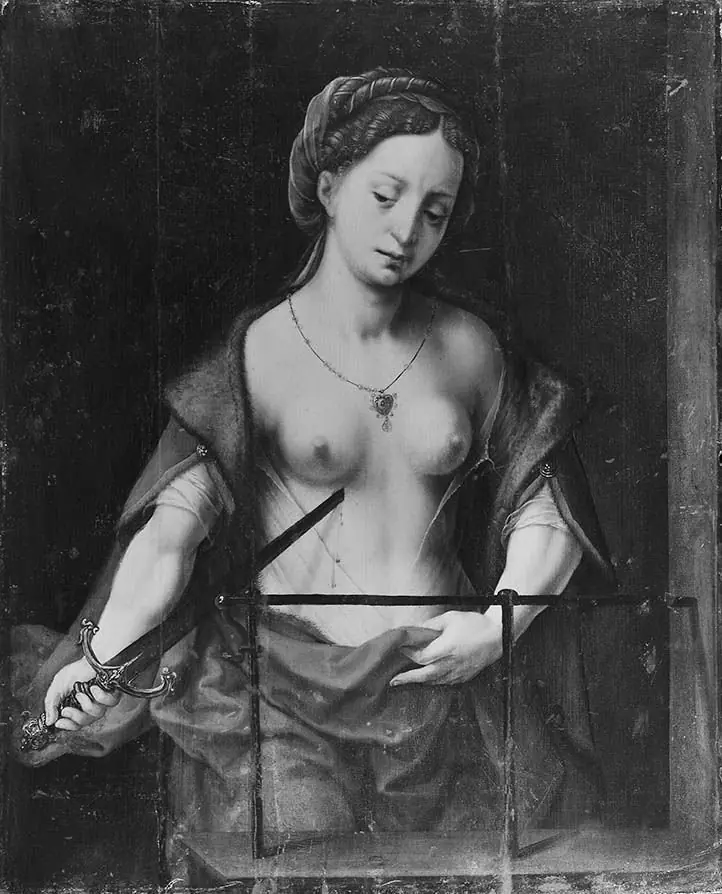
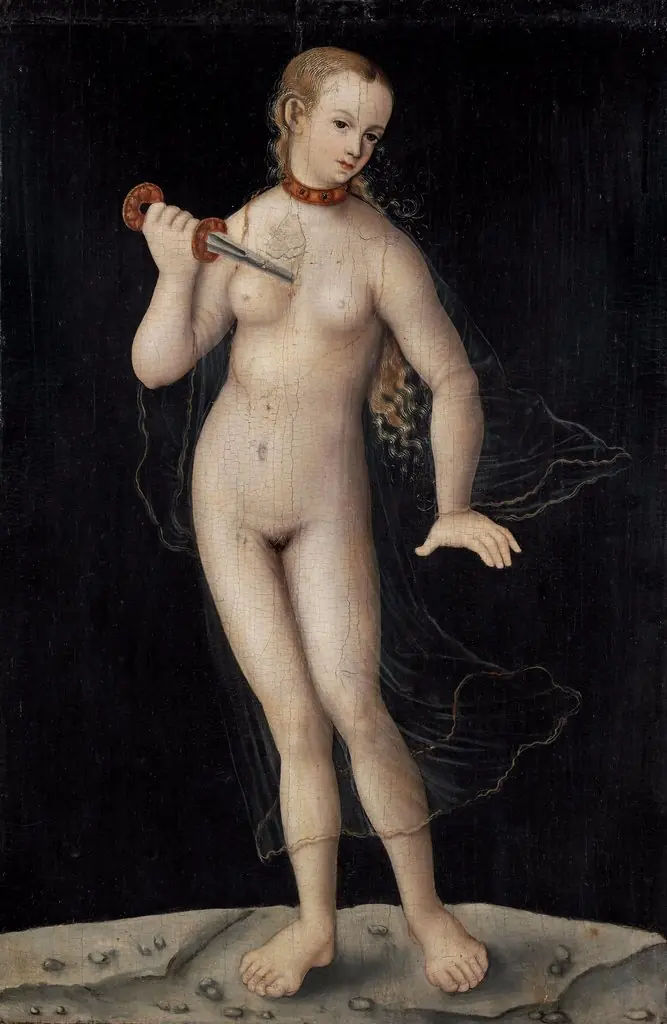
Cranach's Lucretia and related treatments of the theme contributed to a visual formula that proved extraordinarily durable within the Cranach workshop and beyond. The Museum of Fine Arts, Houston, holds another version titled The Suicide of Lucretia, which, like the Berlin panel, is distinguished by the presence of the artist's monogram and date. The Houston painting's exhibition history includes showings in Japan in 1999 and 2016-2017, demonstrating the continuing international scholarly and public interest in Cranach's treatment of this subject. The proliferation of Lucretia images from the Cranach workshop, numbering in the dozens according to museum records, attests to the commercial viability and cultural resonance of the theme. These works have become important documents for understanding the place of the female nude in Northern Renaissance art, the operation of artist workshops in the period, and the complex interplay between moral narrative and erotic display in sixteenth-century visual culture. The Berlin panel, with its secure date of 1533 and intact scholarly attribution, remains a touchstone for the study of this significant aspect of Cranach's oeuvre.
Own this work as a print
Artist & collection
Artist
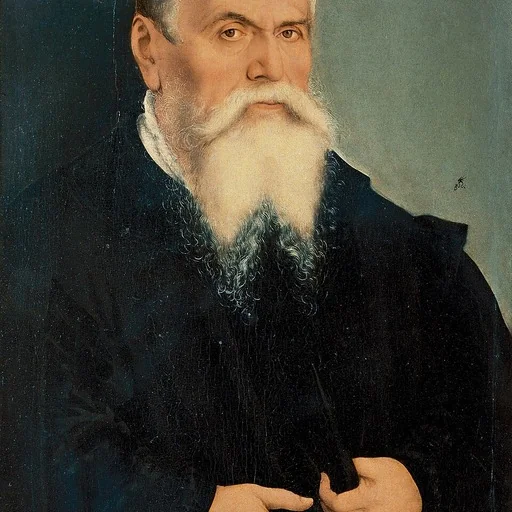
Lucas Cranach the Elder was a German Renaissance painter and printmaker in woodcut and engraving.