Artwork
Suicide of Lucretia
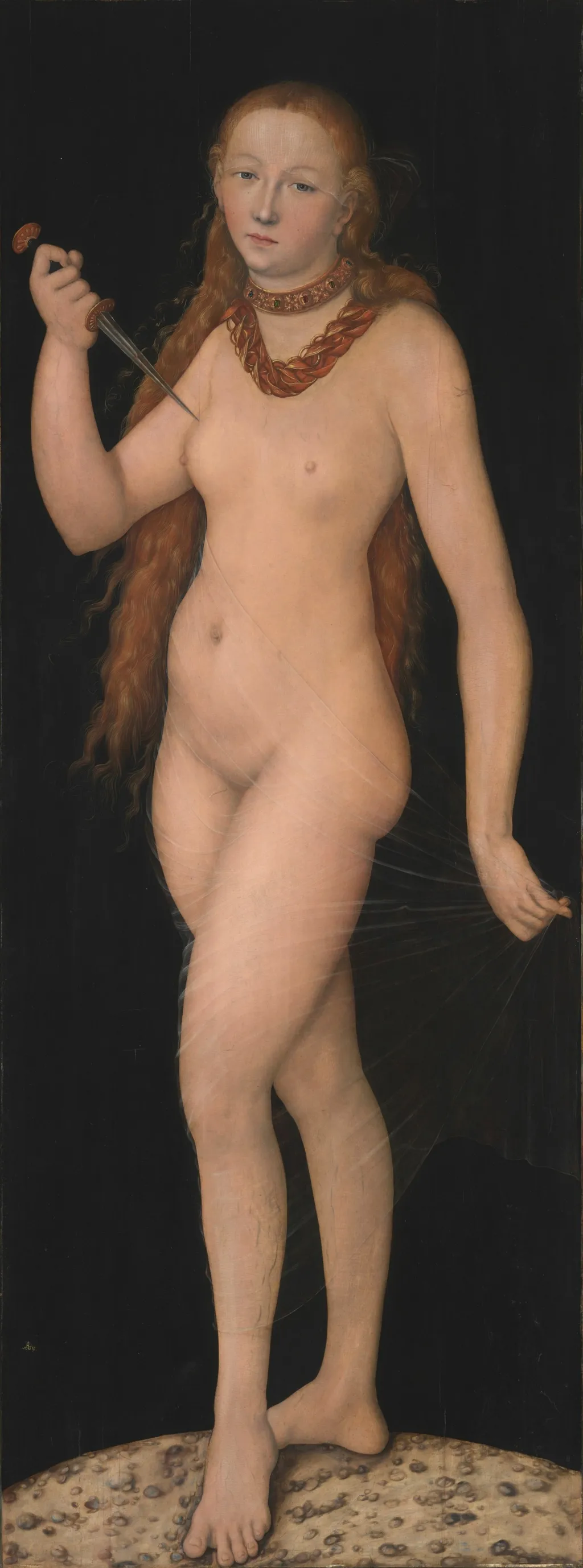
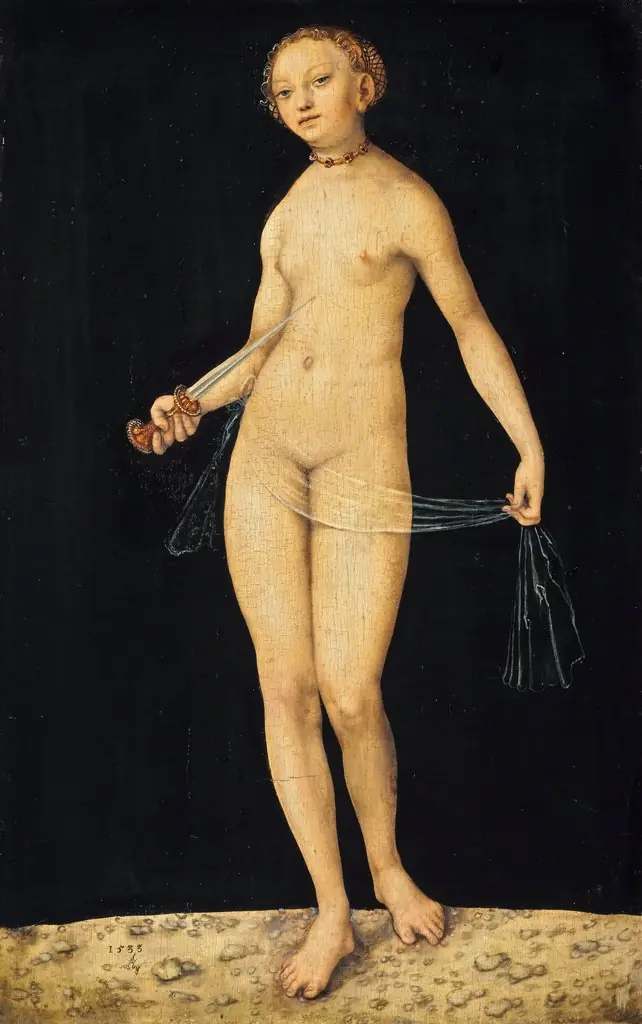
Suicide of Lucretia is an oil painting by the Northern Renaissance artist Lucas Cranach the Elder. It dates from 1530 and is held in the collection of the Alte Pinakothek.
About this work
Subject & Meaning
The painting depicts the suicide of Lucretia, a legendary Roman noblewoman whose self-inflicted death became a foundational myth of republican virtue.
The painting depicts the suicide of Lucretia, a legendary Roman noblewoman whose self-inflicted death became a foundational myth of republican virtue. According to the tradition, Lucretia took her own life after revealing that she had been violated by Sextus Tarquinius, an act of shame that catalyzed the overthrow of the Roman monarchy. Cranach's choice of this subject fits within the Northern Renaissance fascination with morally instructive classical narratives, presenting the heroine as a model of chastity, honor, and resolve.
The work is classified as a history painting, a genre reserved for elevated narratives drawn from antiquity, scripture, or legend. The narrow vertical format of the panel, considerably taller than it is wide, isolates the figure against a plain ground, focusing attention entirely on Lucretia's gesture and expression. This compositional economy strips away distracting narrative detail and concentrates meaning on the act itself, transforming the painting into a meditation on virtue, vulnerability, and tragic resolve.
Technique & Style
Suicide of Lucretia is executed in oil paint on a lime panel, a support characteristic of Lucas Cranach the Elder's panel production of the period. The vertical format is markedly elongated, measuring 194 cm in height against only 75 cm in width, lending the composition a slender, columnar emphasis that frames the standing figure of Lucretia. As a history painting, the work is rendered in the polished, linear manner associated with Cranach's workshop, with the smooth limewood support providing a fine, even ground for the careful modeling and crisp contours typical of his oil technique.
History & Provenance
The painting Suicide of Lucretia by Lucas Cranach the Elder was created in 1530. Executed in oil paint on a lime panel, the work measures 194 cm in height and 75 cm in width. It is currently held in the collection of the Alte Pinakothek in Munich. The artwork depicts the historical figure Lucretia and falls within the genre of history painting.
Suicide of Lucretia is held by the Alte Pinakothek in Munich, where it is catalogued under inventory number 2127. The work entered the museum collection in 1809 and has been displayed in the permanent exhibition of German Renaissance paintings. It was featured in the 1930 Munich exhibition "Alte Meister im Alten Pinakothek" and again in the 2005 retrospective "Lucas Cranach the Elder: Paintings and Drawings" at the same institution.
Overview
Lucas Cranach the Elder's 'Suicide of Lucretia' (1530) depicts the Roman noblewoman Lucretia at the moment of her self-inflicted death, a subject the artist revisited frequently throughout his career. The composition isolates the figure against a stark black background, a technique that heightens the dramatic focus on her pale skin and the gleaming gold of her jewelry. Lucretia stands with one foot resting on a textured stone slab, her body angled slightly to the side to reveal the tension in her pose.
She holds a dagger in her right hand, poised to strike, while her left hand grips a small round object, possibly a mirror or a piece of jewelry, symbolizing her virtue or the vanity associated with her tragic fate. Her long, flowing red hair cascades over her shoulder, contrasting with the heavy gold necklace adorning her neck. Painted in oil, the work exemplifies Cranach's mature style, characterized by elongated proportions, smooth modeling, and a refined, almost courtly elegance even in scenes of violence.
Created during the height of the Reformation, this painting reflects the artist's continued engagement with classical and moralizing themes, blending humanist interest in antiquity with the expressive intensity typical of German Renaissance art.
Context
Cranach’s treatment of Lucretia aligns with the early 16th‑century German interest in classical moral narratives, often used to comment on contemporary notions of chastity and civic virtue. The work’s stark composition underscores the didactic purpose typical of history paintings of the period.
Artist & collection
Artist
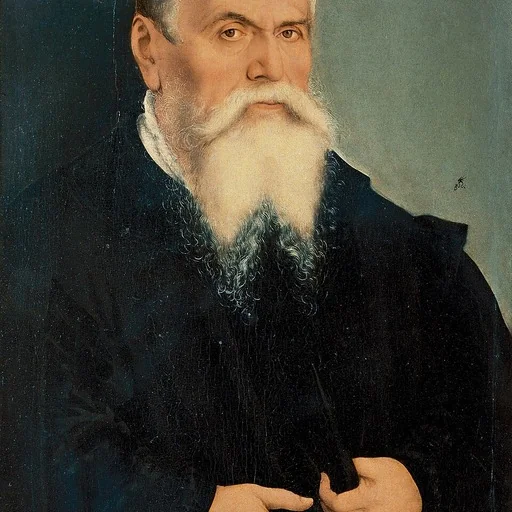
Lucas Cranach the Elder was a German Renaissance painter and printmaker in woodcut and engraving.