Artwork
The suicide of Lucretia
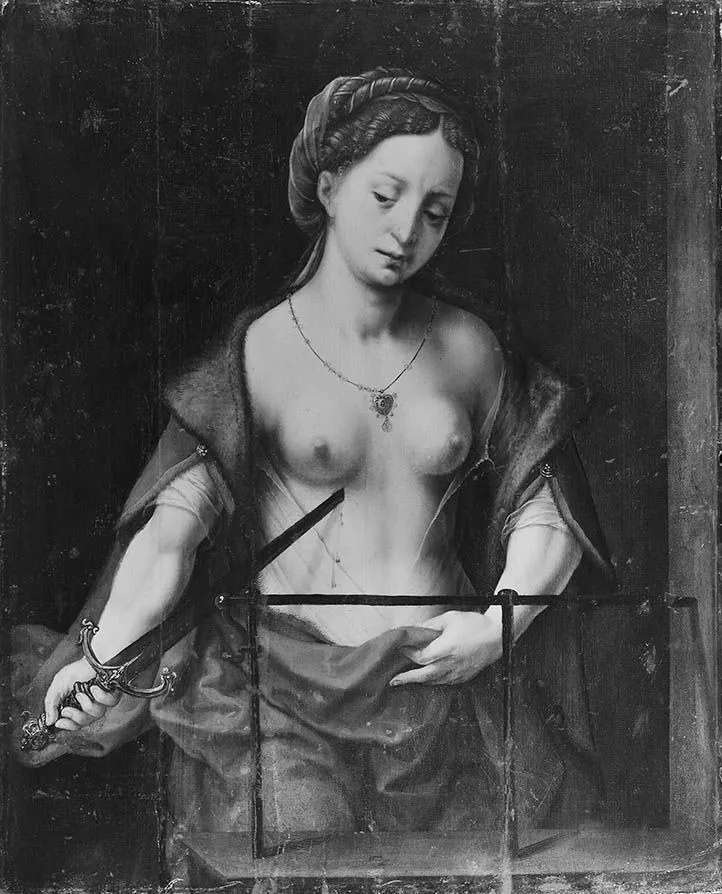
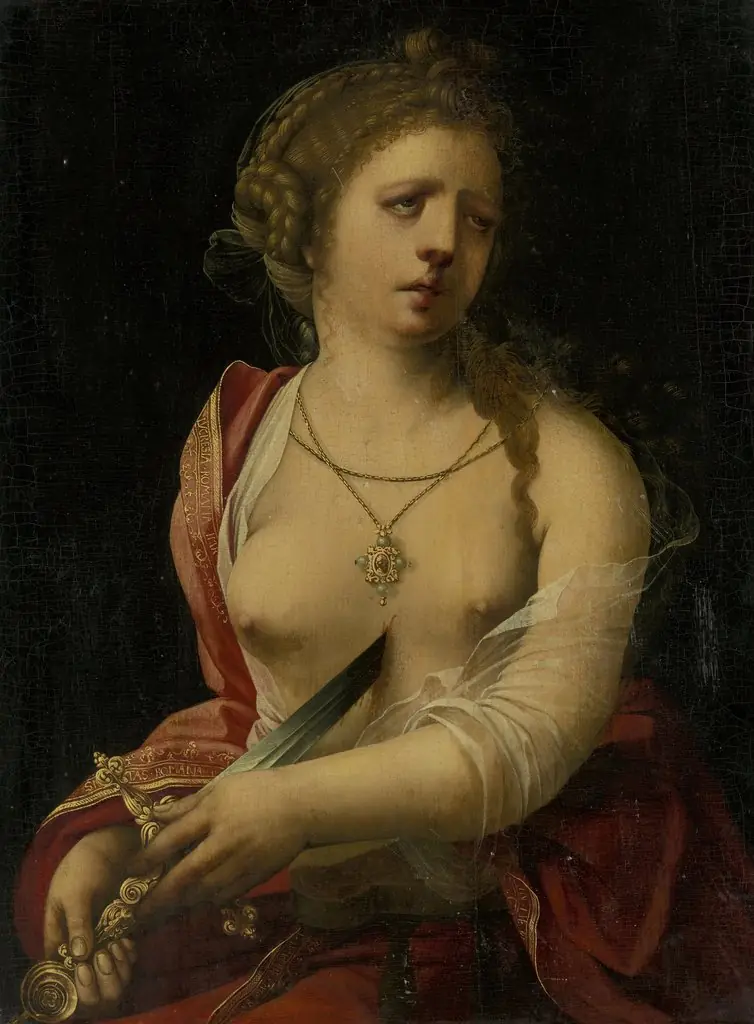
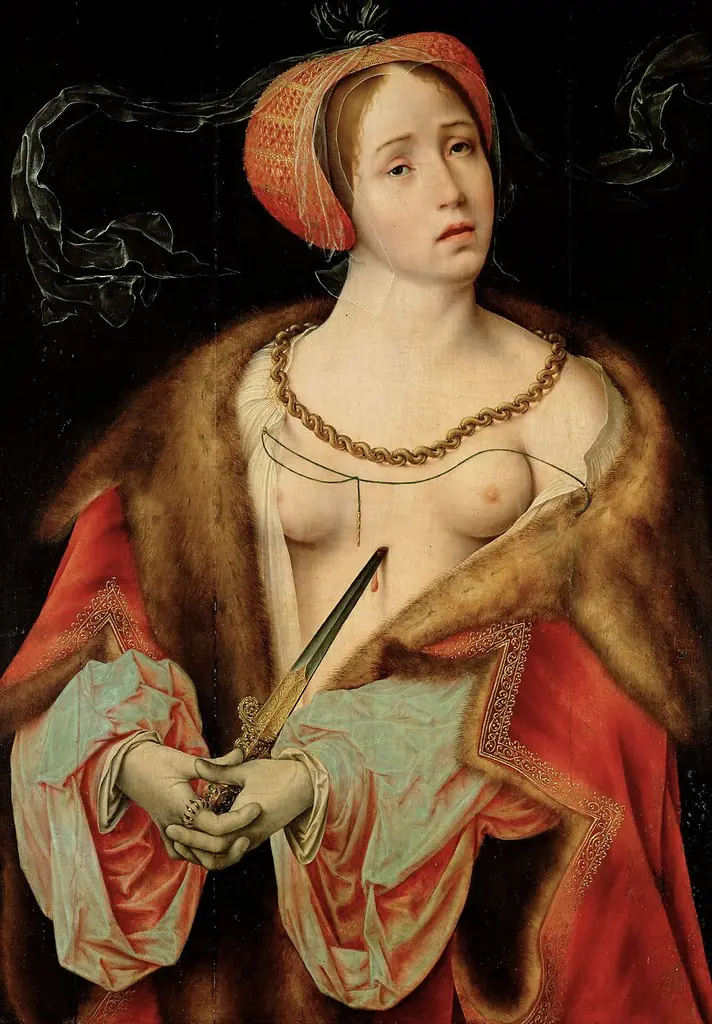
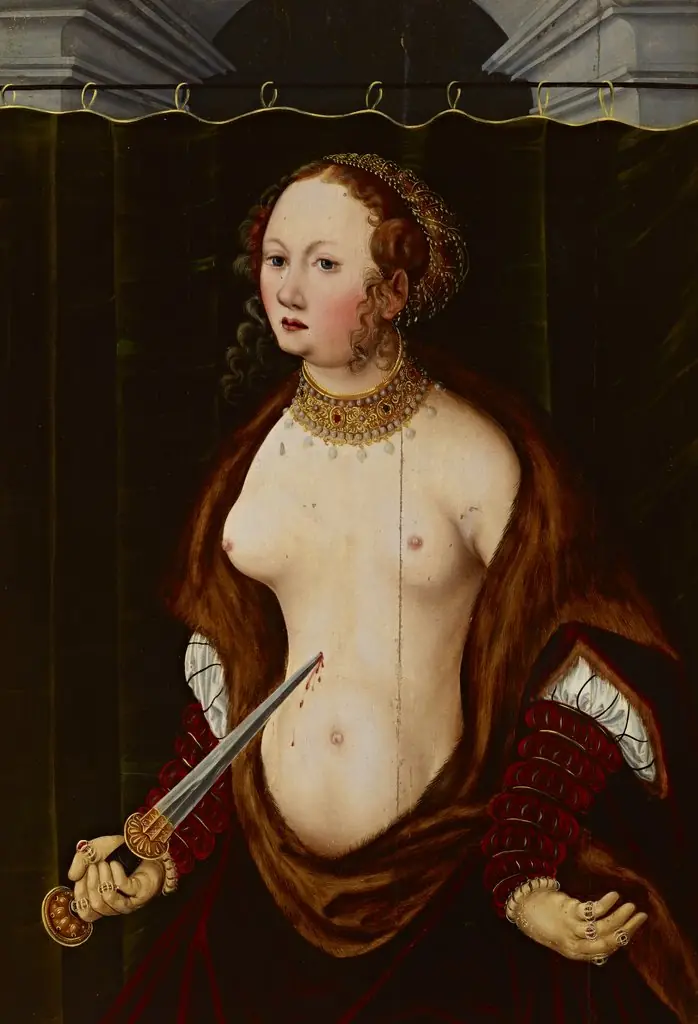
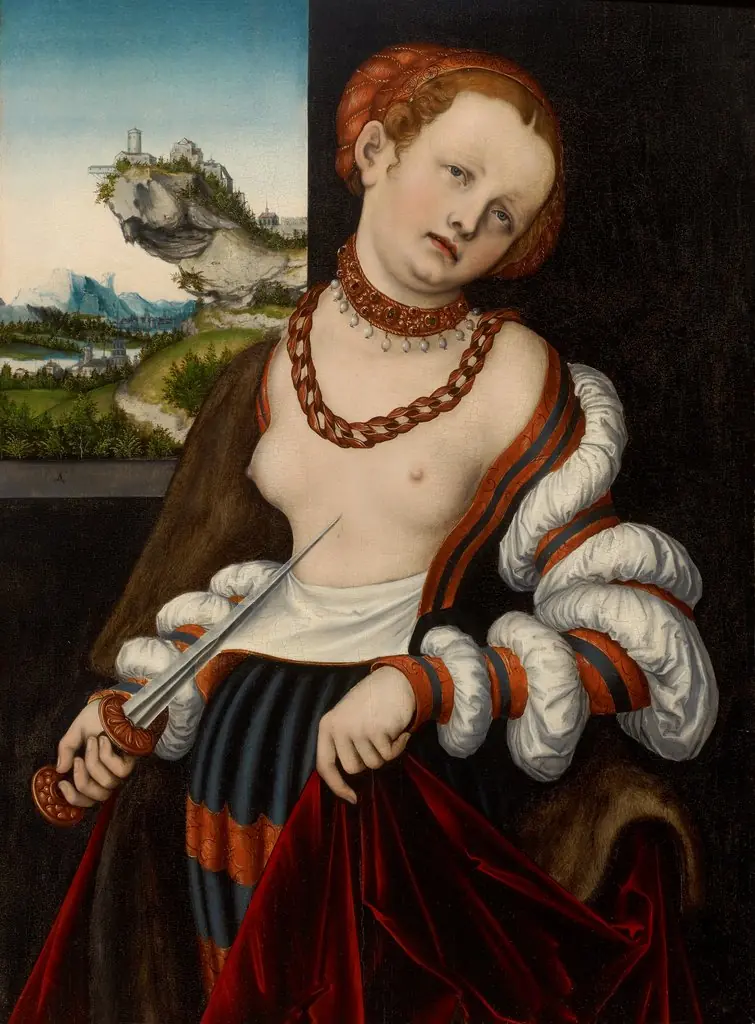
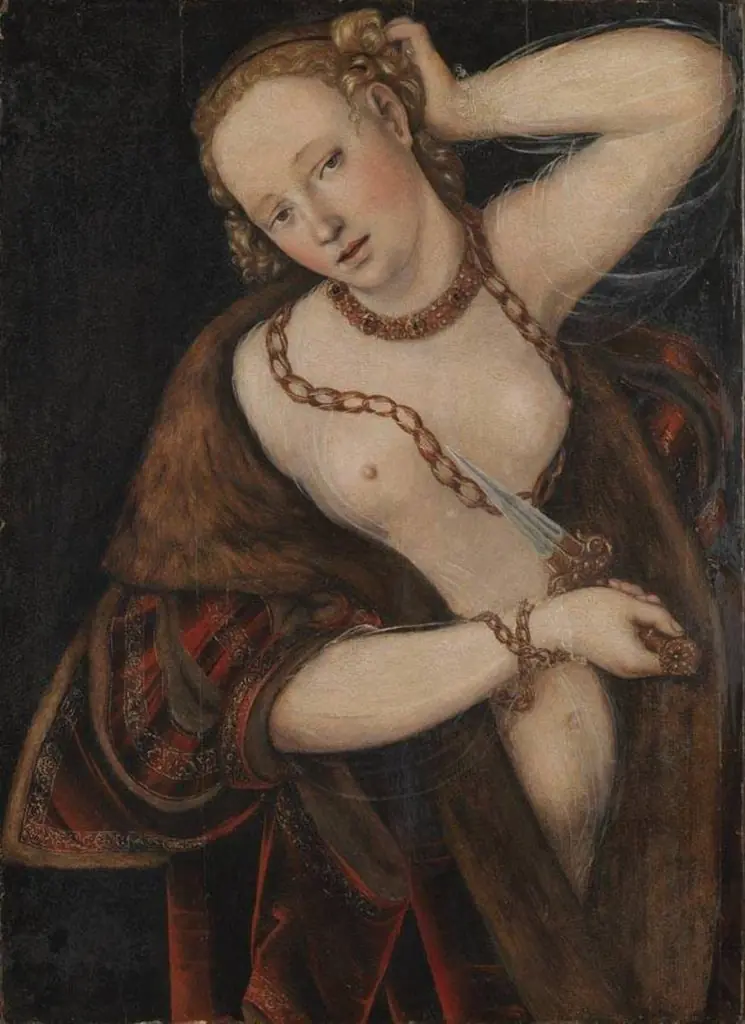
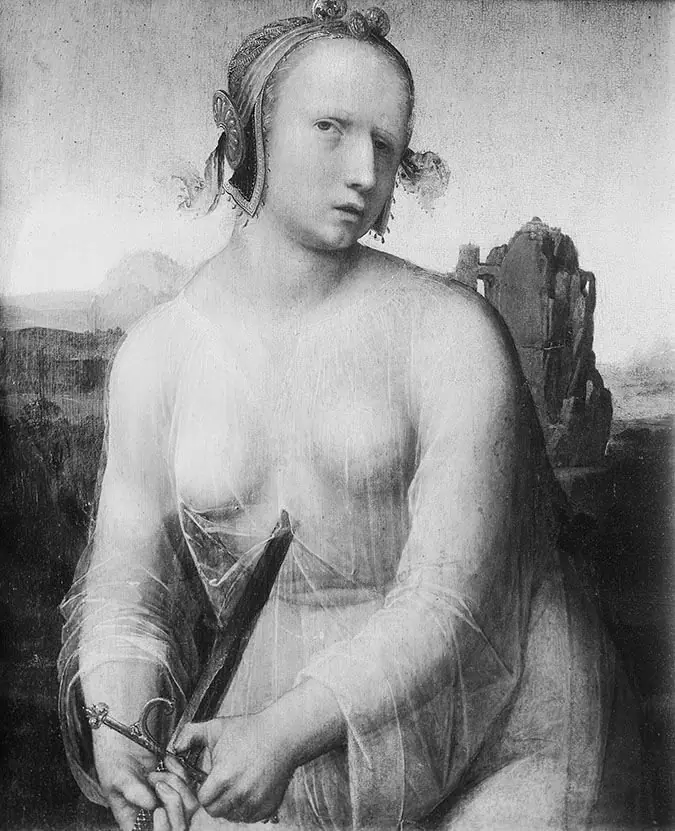
The suicide of Lucretia is an oil painting by the Mannerist artist Unknown. It dates from 1540 and is held in the collection of the Bavarian State Painting Collections. The work, executed in oil on canvas, depicts a solitary female figure positioned before a darkened backdrop.
About this work
Subject & Meaning
Symbolically, the dagger, modest attire, and somber expression convey both personal anguish and broader commentary on the consequences of violated chastity.
The work portrays Lucretia in the moment of self‑inflicted death, a narrative drawn from Roman legend that emphasizes virtue and martyrdom. The composition uses traditional iconography of a solitary figure with a dagger, underscoring themes of honor, betrayal, and tragic sacrifice. Symbolically, the dagger, modest attire, and somber expression convey both personal anguish and broader commentary on the consequences of violated chastity.
The painting thus functions as a moralizing history piece that critiques political corruption and celebrates steadfastness amid injustice, resonating with Renaissance ideals of civic virtue and personal integrity.
Technique & Style
The Suicide of Lucretia is executed in oil paint on an oak panel, a support characteristic of mid-sixteenth-century Northern European panel painting. The work is modest in scale, measuring 53.3 cm in height by 43 cm in width. Classified as a history painting, it treats the narrative subject of Lucretia's suicide, a theme drawn from classical antiquity that was frequently rendered in the history-painting tradition of the period. The combination of oil medium and oak support is consistent with established mid-1500s practice in the region.
History & Provenance
The suicide of Lucretia was created in 1540 as an oil painting on oak panel, depicting the tragic figure of Lucretia in a history painting genre. It was executed in the mid-16th century and is attributed to an anonymous artist within the Bavarian State Painting Collections, specifically housed in the Alte Pinakothek and Germanisches Nationalmuseum in Munich. The work's provenance is tied to these institutions, which hold it as part of their permanent collection under the genre of history painting.
The painting is held in the Alte Pinakothek in Munich, with the work also associated with the Bavarian State Painting Collections and the Germanisches Nationalmuseum. Executed in oil on oak panel, it measures 53.3 cm in height by 43 cm in width.
No specific accession number or documented exhibition history is provided in the available sources.
Context
The suicide of Lucretia is a 1540 oil painting on oak panel measuring 53.3 cm by 43 cm, classified as a history painting and attributed to an anonymous artist within the Bavarian State Painting Collections, Germanisches Nationalmuseum, housed in the Alte Pinakothek in Munich. Contemporary scholarship identifies the work as part of the Northern Renaissance tradition, reflecting early Netherlandish influences on German history painting and emphasizing moral narratives around virtue and transgression. The painting’s provenance and thematic focus have been discussed in studies of 16th‑century depictions of female suicide, situating it within broader debates about gender and agency in early modern art.
Its reception over subsequent centuries has oscillated between moralizing interpretations and later psychoanalytic readings, underscoring its enduring significance in art historical discourse.
Overview
The work, executed in oil on canvas, depicts a solitary female figure positioned before a darkened backdrop. She is clothed in a simple tunic covered by a draped mantle, her hair gathered back, and she holds a knife in her right hand while gazing at it. One arm rests on a ledge, and the composition is illuminated by a soft light that accentuates her skin against the surrounding shadows.
Artist & collection