Artwork
The Virgin and the Child, Saint John and Angels
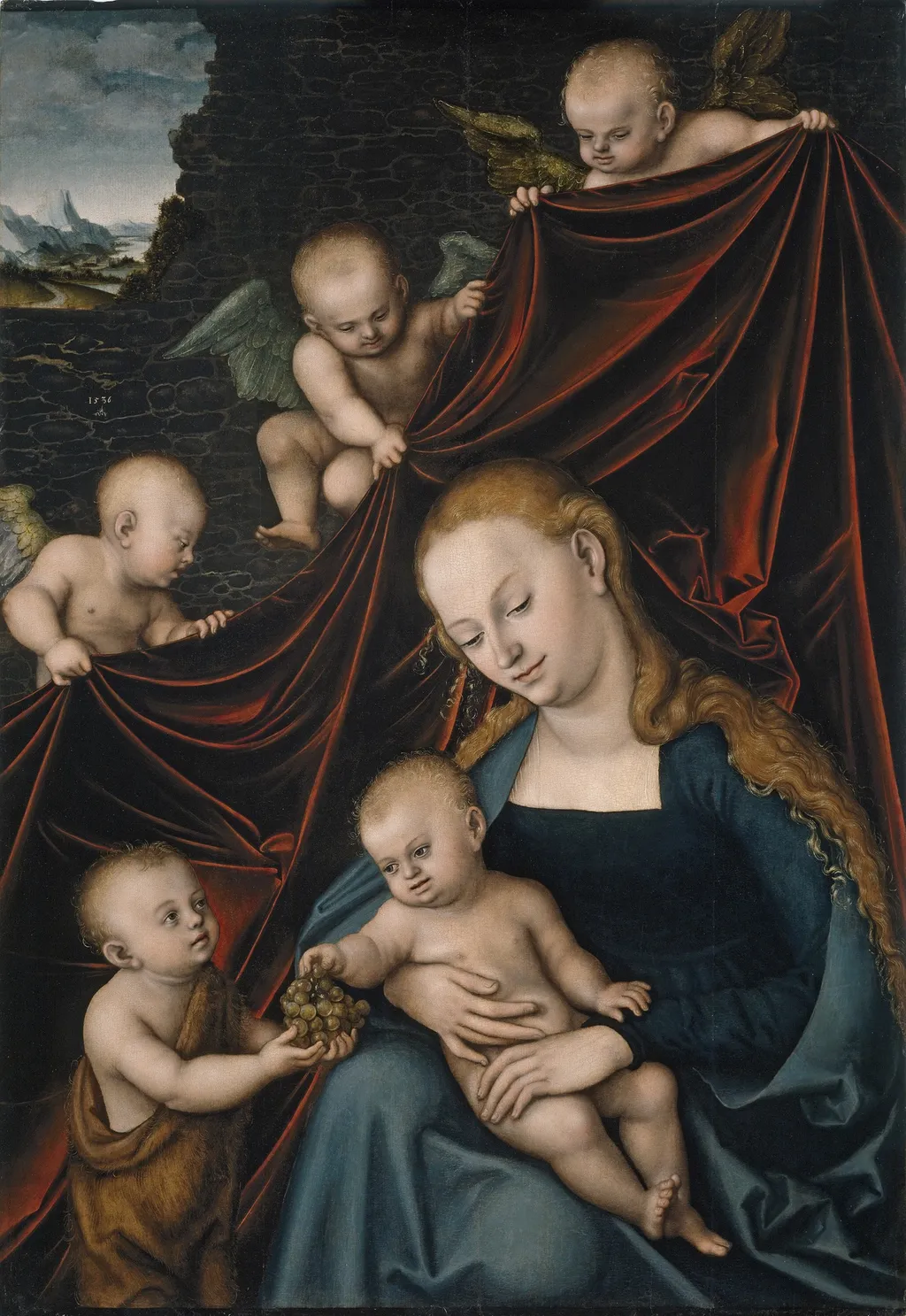
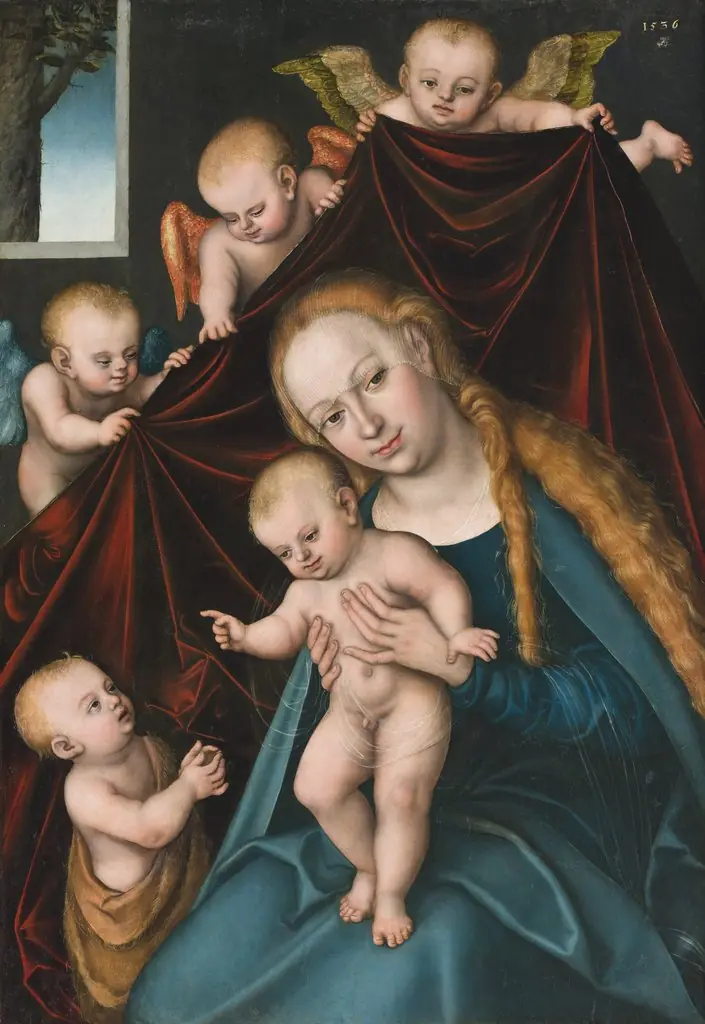
The Virgin and the Child, Saint John and Angels is a paint painting by the Northern Renaissance artist Lucas Cranach the Elder. It dates from 1536 and is held in the collection of the Museo del Prado.
About this work
Subject & Meaning
As a work of religious art, the imagery focuses on the holy family and divine figures, adhering to traditional Christian iconography of the period.
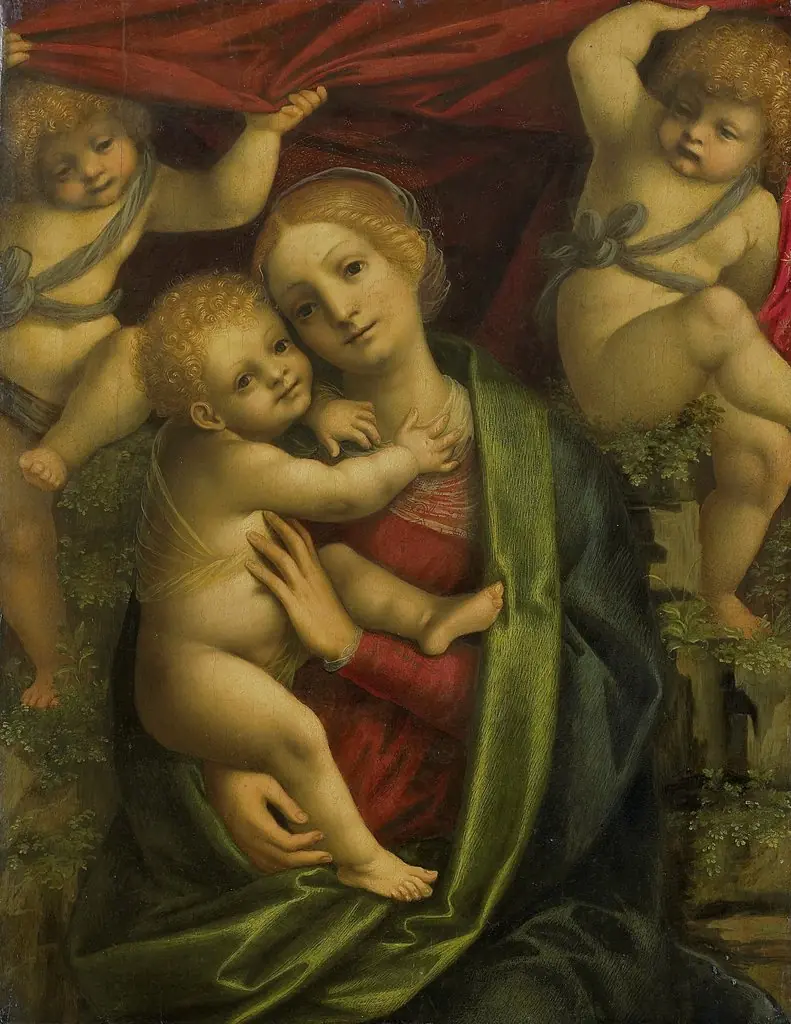
This religious panel painting presents a devotional scene centered on the Madonna and Child. The composition features the Virgin Mary holding the Christ Child, accompanied by the child Saint John the Baptist and a group of angels. As a work of religious art, the imagery focuses on the holy family and divine figures, adhering to traditional Christian iconography of the period.
The inclusion of the young John the Baptist alongside Jesus and Mary serves to foreshadow their future roles in salvation history, a common thematic element in sixteenth-century German religious painting.
Technique & Style
Created in 1536, The Virgin and the Child, Saint John and Angels is a religious painting executed in paint on a panel support. The work measures 121.3 cm in height and 83.4 cm in width. As a panel painting by Lucas Cranach the Elder, it depicts the Madonna and Child accompanied by Saint John and angels. The piece is currently held in the collection of the Museo del Prado.
Overview
Created in 1536 by Lucas Cranach the Elder, this oil painting presents a devotional tableau titled The Virgin and the Child, Saint John and Angels. Executed on canvas, the work now belongs to the collection of the Museo del Prado in Madrid. It brings together the Virgin Mary, the infant Christ, the youthful Saint John the Baptist, and a group of attendant angels within a compact, intimate composition.
History & Provenance
The painting was completed in the mid‑16th century, a period when Cranach was active in the court of Saxony. It entered the Spanish royal collection before being transferred to the Prado, where it has been on display since the museum’s early acquisitions. Documentation traces its ownership through several noble families, confirming its status as a valued devotional image.
Context
Cranach’s workshop frequently produced intimate religious scenes for private devotion, and this work reflects the Protestant‑leaning yet still Marian‑friendly climate of early‑modern Germany. The inclusion of Saint John the Baptist, a common motif in Cranach’s oeuvre, underscores the artist’s interest in linking the infant Christ with his future martyrdom, a theme resonant in contemporary theological discourse.
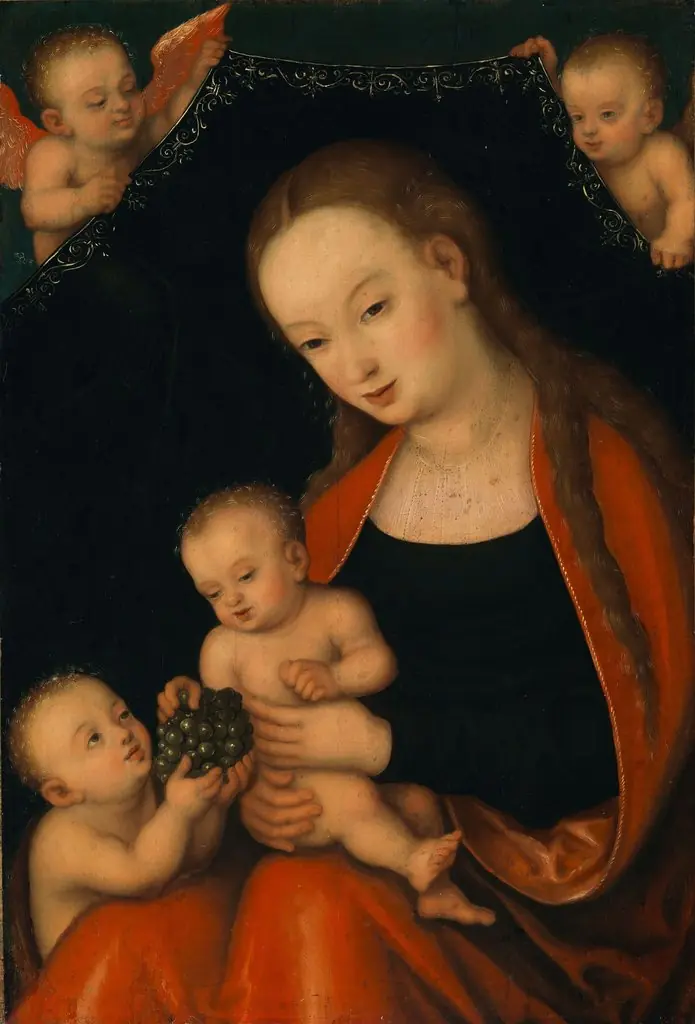
Own this work as a print
Artist & collection
Artist
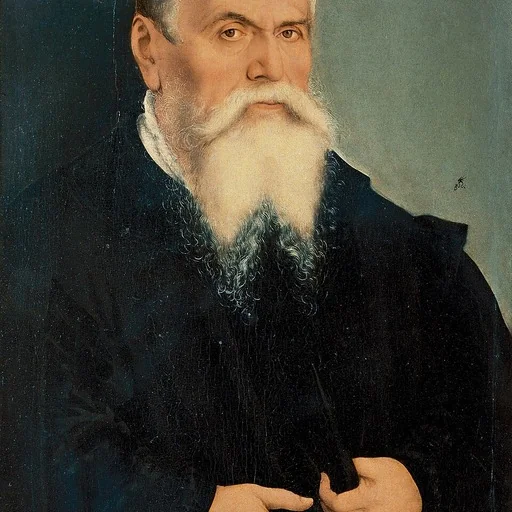
Lucas Cranach the Elder was a German Renaissance painter and printmaker in woodcut and engraving.

 Madonna and Child with Infant Saint John the Baptist and Angels
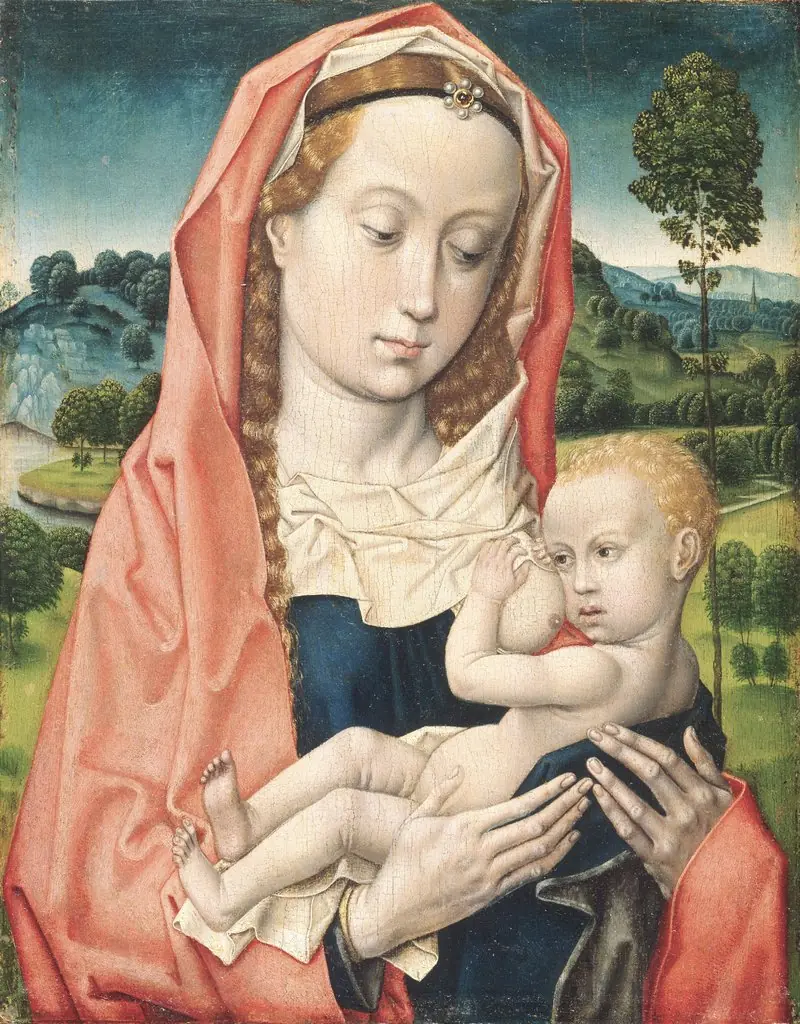 Virgin and Child
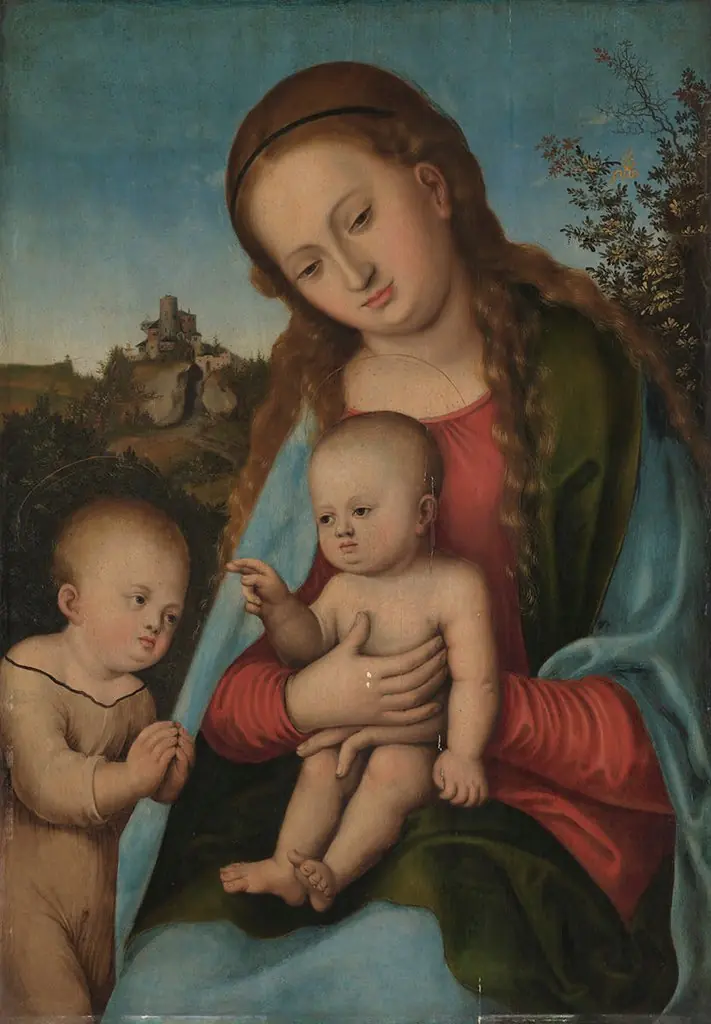 The Virgin and Child and St. John the Baptist as a boy
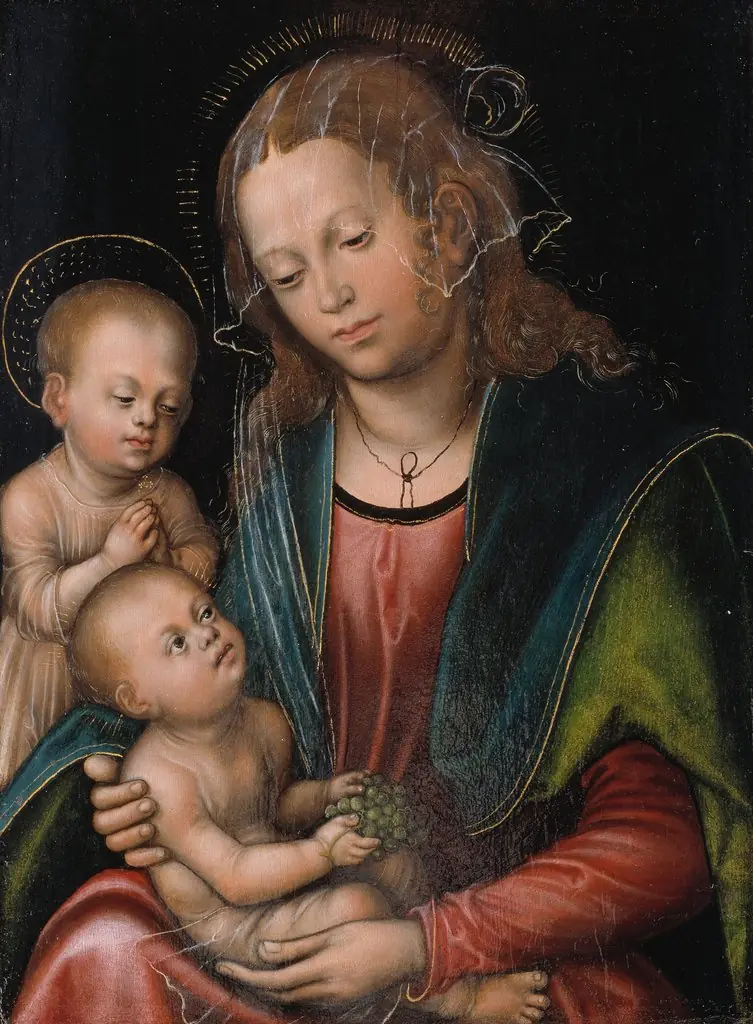 Virgin and Child Adored by the Infant St John
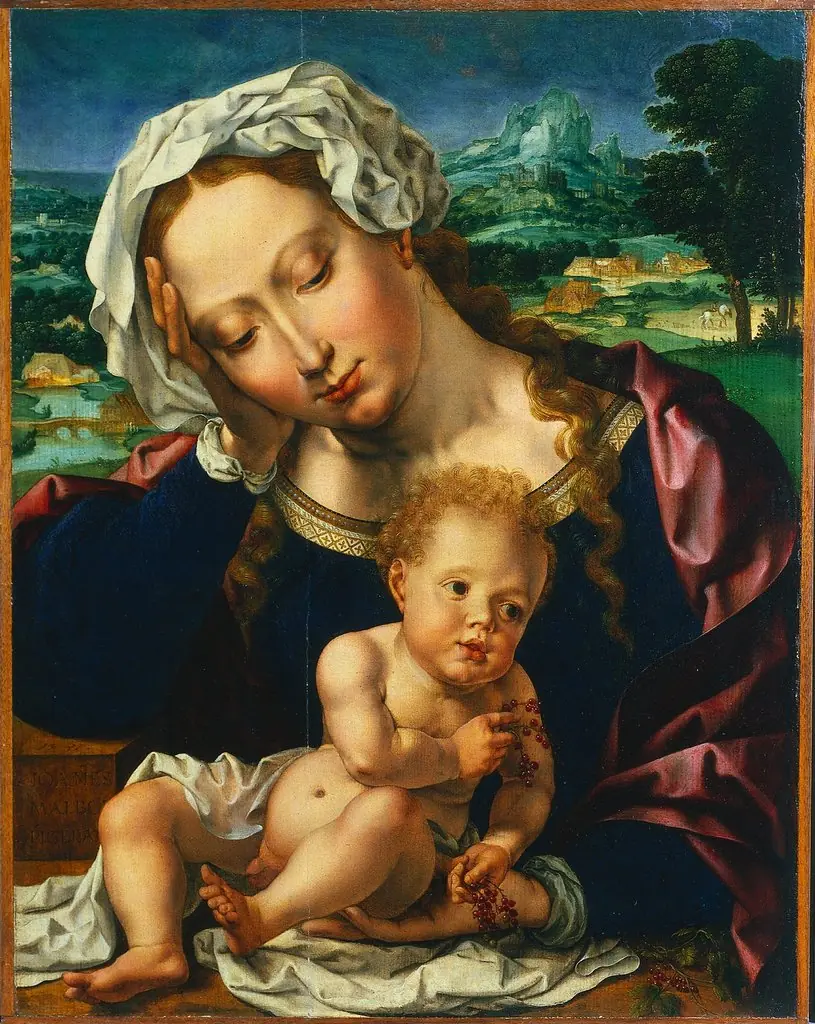 Virgin and Child in a Landscape
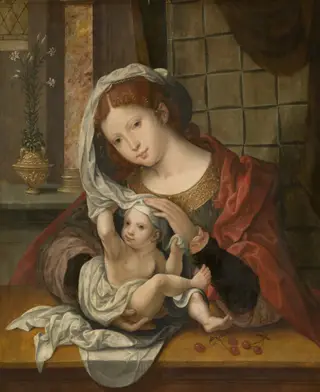 Madonna
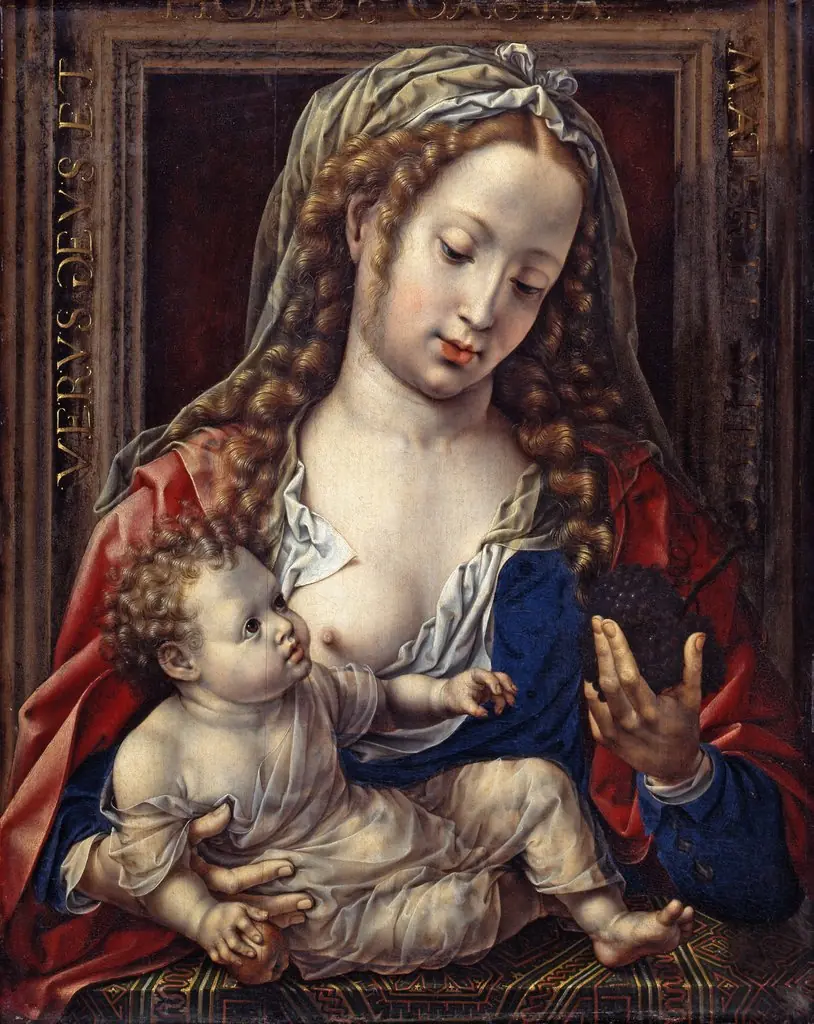 Mary with the Christ-child
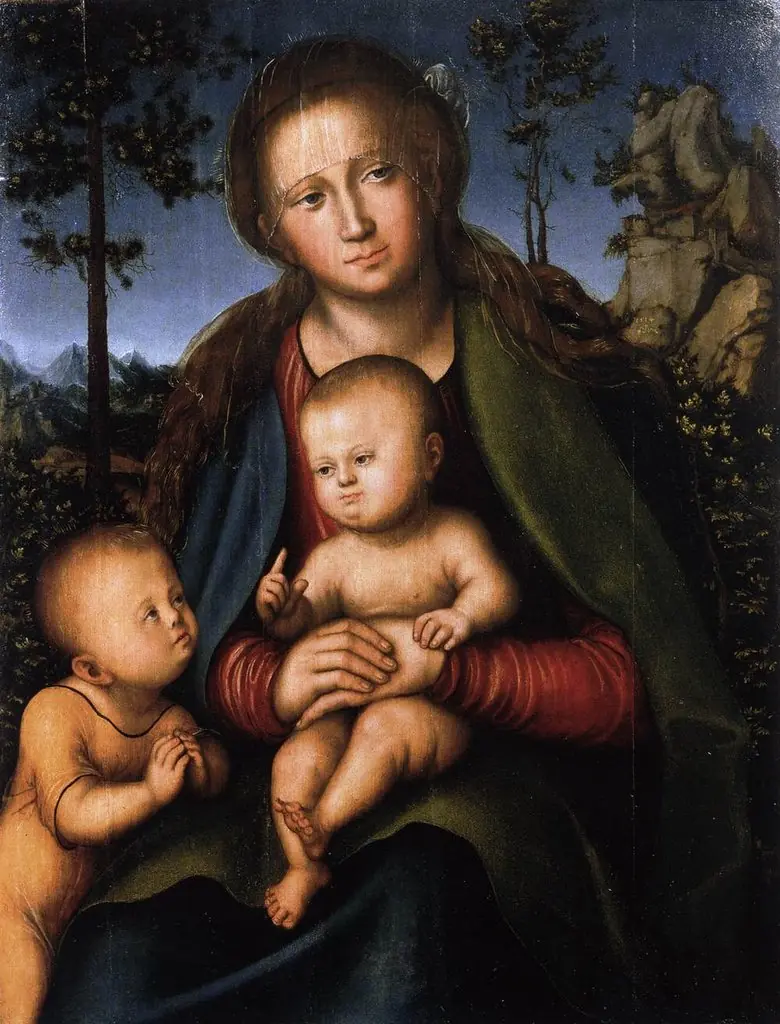 Madonna with Child with Young John the Baptist
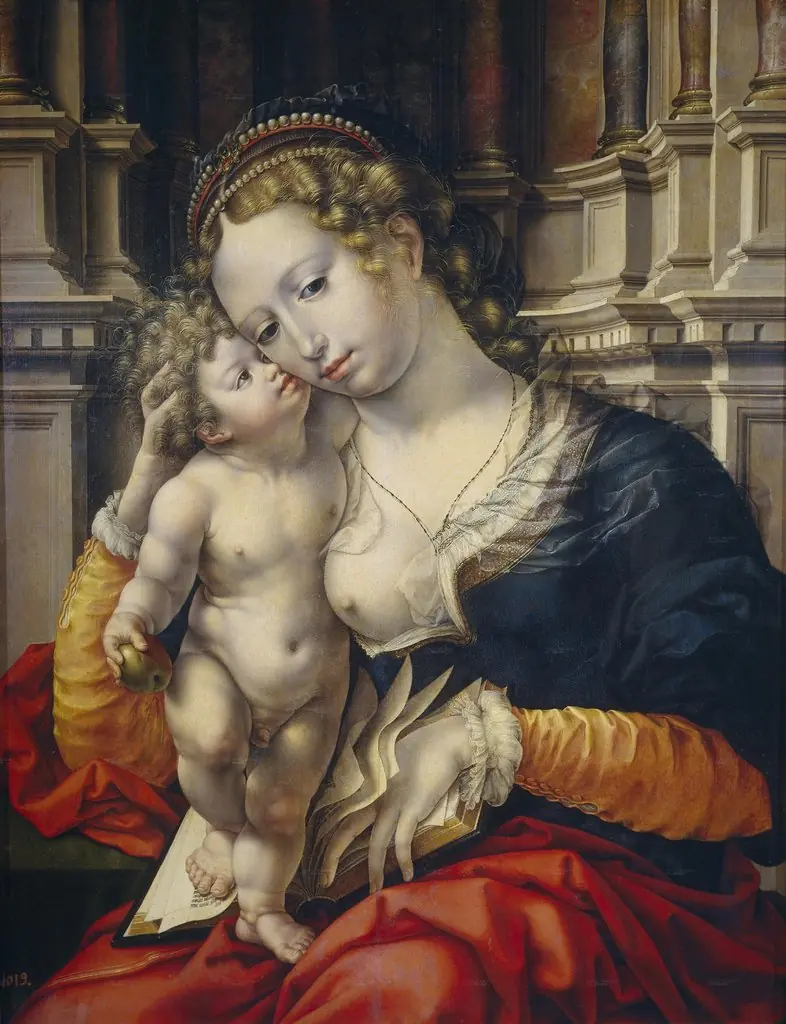 The Virgin and Child
 Virgin and Child
 Mary and Child
- The Virgin and Child with Infant John the Baptist and Angels